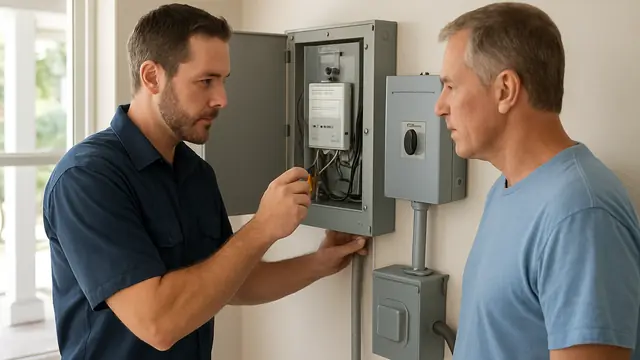
Do not remove an electrical panel cover, touch exposed conductors, bypass protection, or repeatedly reset a fault. Keep clear of smoke, sparks, burning odors, hot equipment, standing water near electricity, and downed lines, then call qualified help.
You are relaxing in your 30A home when the kitchen lights suddenly dim, brighten, or pulse. Maybe it happens only when the air conditioner starts. Maybe several rooms flicker together. Perhaps a guest reported it in your vacation property, and you are wondering whether the cause is a loose bulb, an overloaded circuit, or something more serious.
Flickering lights usually mean the electrical system is experiencing an interruption, voltage change, loose connection, or equipment problem. Some causes are minor. Others can create heat inside a switch, fixture, electrical panel, or service connection. The safest immediate action is to turn off any appliance that clearly triggers the flickering and stop using a switch, outlet, or fixture that feels warm, smells burned, or makes crackling sounds.
Why Are My Lights Flickering in 30A?
The pattern matters. One flickering light commonly points to that bulb, fixture, dimmer, or switch. Several lights flickering on one circuit may indicate a loose connection or overloaded branch circuit. Lights throughout the house flickering together may involve the main panel, service conductors, meter connection, utility supply, or a large appliance drawing excessive current.
A branch circuit is the wiring from the panel to a group of lights, outlets, or appliances. A loose connection or sudden demand can change the voltage reaching your lights.
Common Causes of Flickering Lights
A Loose or Failing Bulb
A loose bulb can lose contact as it warms or vibrates. An LED bulb may also flicker when its internal driver fails.
An Incompatible Dimmer
Some LED bulbs need an LED-rated dimmer. An incompatible combination may shimmer, flash at low settings, or hum.
A Worn Switch, Socket, or Fixture Connection
A damaged bulb socket, aging switch, or loose terminal can interrupt power intermittently. You may notice flickering when the switch is touched, a door closes, or a ceiling fan runs.
A Heavily Loaded Circuit
Lights may dim when a microwave, hair dryer, vacuum, or other high-demand appliance starts on the same circuit. A slight momentary dip can occur, but repeated or severe flickering deserves attention.
A Loose Neutral Connection
The neutral conductor completes a normal 120-volt circuit. If it becomes loose, some lights may become unusually bright while others dim. This can damage electronics and appliances and should be evaluated promptly.
A Panel, Service, or Utility Problem
Loose breakers, overheated panel connections, damaged service conductors, or utility-side voltage problems can affect multiple rooms. Whole-home flickering is more concerning than one blinking fixture.
Safe Checks a Homeowner Can Perform
Without removing covers, note the affected rooms, appliances running, and whether lights dim, brighten, or turn off.
If only one lamp flickers, turn it off, allow the bulb to cool, and confirm that it is the correct type and wattage. Reinstall it firmly without overtightening. Trying a compatible known-good bulb is a reasonable next step.
For an LED light on a dimmer, move the dimmer through its range. Flickering only at the lowest setting may indicate incompatibility.
Check whether the issue begins when the air conditioner, refrigerator, pool equipment, or another large load starts. Look through the closed panel door to see whether a breaker has tripped, but do not remove the cover.
If the whole property flickers, ask whether a nearby home is affected. The utility may be involved, but severe symptoms still require an electrician.
What You Should Not Attempt
Do not remove the electrical panel cover, tighten service connections, handle meter equipment, or test live conductors unless you are trained and licensed. Energized parts may remain live even when the main breaker is off.
Do not keep resetting a breaker that trips repeatedly or replace it with a larger breaker. Breaker size is selected to protect the wiring from overheating.
Avoid taping a switch in place, bending bulb contacts, using oversized bulbs, or continuing to operate a buzzing dimmer. These shortcuts may hide the symptom without correcting the cause.
Signs the Flickering Is Urgent
Turn off the affected circuit when it can be done safely and call for electrical service promptly if you notice:
- A burning or hot-plastic odor
- Crackling, sizzling, or buzzing
- Scorch marks, discoloration, or melted plastic
- Lights becoming dramatically brighter and dimmer
- Flickering in multiple rooms
- A warm panel, breaker, switch, or outlet
- Repeated breaker trips
- Shocks or tingling from metal appliances
- Flickering after water intrusion or storm damage
If you see smoke, active arcing, or fire, leave the area and call emergency services.
How a Licensed Electrician Diagnoses the Problem
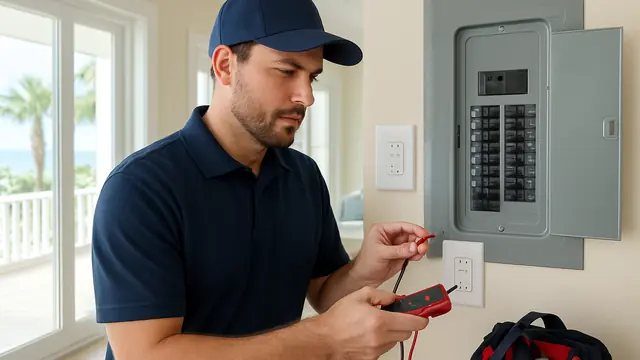
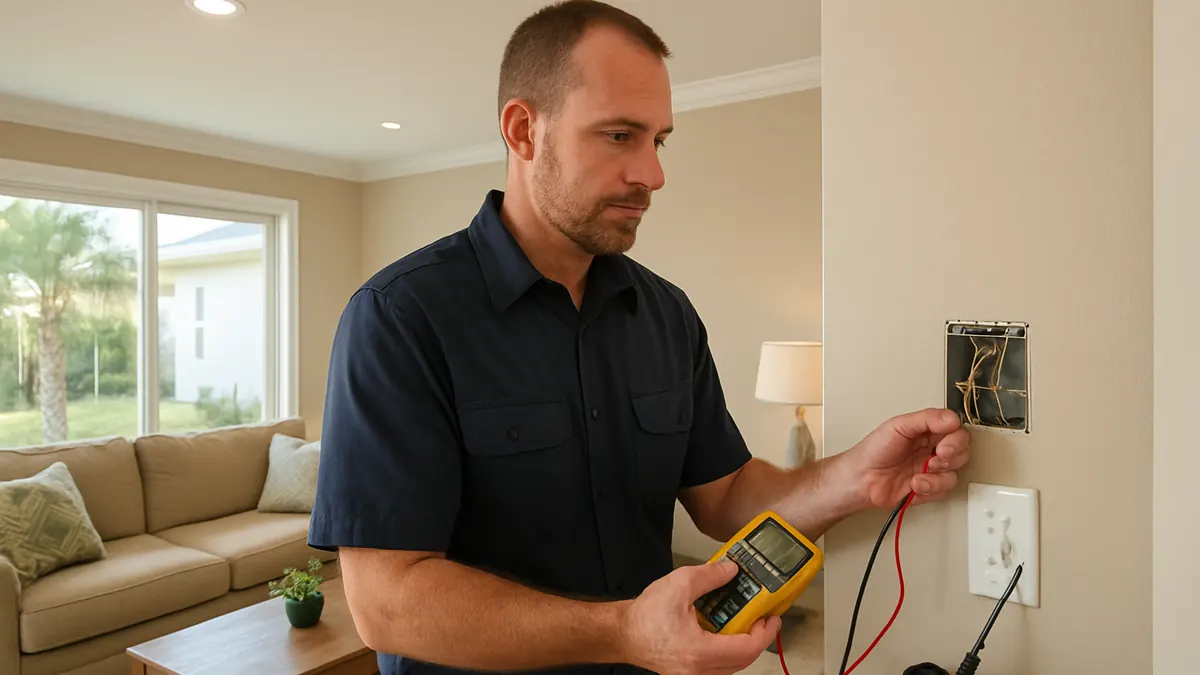
An electrician begins by asking when the problem occurs and which circuits are involved. The technician may test voltage at fixtures, receptacles, and the panel while loads are operating. This shows whether the fluctuation is isolated or system-wide.
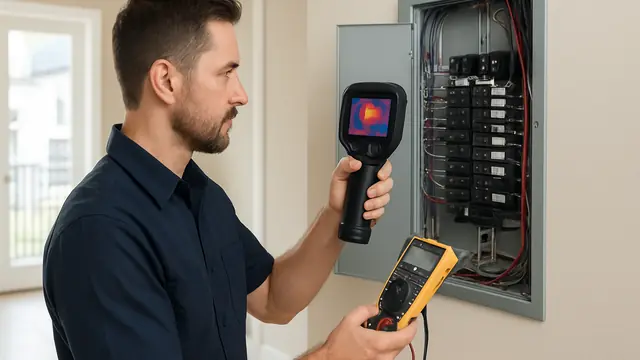
The inspection may include the bulb, socket, dimmer, wiring, breaker, neutral bar, and service equipment. Thermal and current testing may reveal overheating or excessive load.
If the problem appears to be on the utility side, the electrician can document the voltage behavior and help coordinate the next step with the power provider.
Repair Options From Least to Most Invasive
The simplest repair may be replacing a defective bulb with the correct type. An incompatible dimmer can often be replaced with an LED-rated model.
A loose connection at a switch or fixture may be re-terminated, and a worn socket or switch can be replaced. When a circuit is overloaded, the solution may involve moving portable loads, installing a dedicated circuit, or correcting an improper shared load.
A defective breaker or damaged panel connection may require component replacement. If service conductors, meter equipment, or the main panel are deteriorated, more extensive work may be necessary. Complete replacement should be recommended only when testing shows that a repair would be unsafe or insufficient.
Factors That Affect the Cost
- Cost depends on how difficult the cause is to locate, whether one fixture or the whole property is affected, and whether damaged parts are accessible.
- Other factors include fixture access, dimmer type, panel condition, concealed wiring, dedicated-circuit needs, permitting, and utility coordination.
- A proper diagnosis prevents spending money on fixtures when the real problem is a loose neutral or service connection.
Prevention and Maintenance
Use bulbs that match fixture ratings and dimmer requirements. Avoid running several high-wattage portable appliances on the same circuit. Have buzzing switches, warm outlets, or repeated breaker trips inspected instead of waiting for failure.
Keep the panel directory accurate and use licensed professionals for renovations.
For a rental property, ask cleaners or property managers to report flickering, warm switches, and breaker activity immediately. A small symptom between guest stays is easier to investigate than an intermittent failure during full occupancy.
Take the Next Appropriate Step
If you are asking, "Why are my lights flickering in 30A?" determine whether the symptom affects one fixture, one circuit, or the entire property. Replace a simple defective bulb when appropriate, but do not ignore repeated flickering, unusual brightness changes, heat, odor, noise, or breaker activity. A licensed electrician can locate the actual fault and recommend the least invasive safe repair.
About this guide: This resource provides general homeowner education, not a remote diagnosis. Actual conditions, code requirements, equipment, and safe repair options must be evaluated at the property.