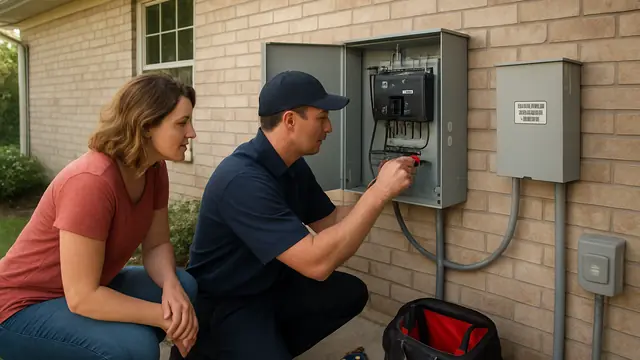
Do not remove an electrical panel cover, touch exposed conductors, bypass protection, or repeatedly reset a fault. Keep clear of smoke, sparks, burning odors, hot equipment, standing water near electricity, and downed lines, then call qualified help.
You may first notice the problem while using an ordinary appliance. The lights over the sink fade when the microwave starts, a bedroom lamp flashes when the washing machine changes cycles, or several rooms briefly go dark and return. In a DeFuniak Springs home, flickering can come from a simple lamp problem, but it can also reveal a loose electrical connection or unstable voltage.
The safest immediate action is to stop using any device that clearly causes severe flickering. Turn off the affected circuit if a switch, outlet, fixture, breaker, or panel is hot, buzzing, discolored, or giving off a burned smell and you can reach the breaker safely. Do not remove the panel cover or touch exposed wiring.
Why Are My Lights Flickering in DeFuniak Springs?
A light flickers when the voltage or electrical connection supplying it is not steady. Voltage is the electrical pressure that moves current through a circuit. When it drops, the light dims. When contact is repeatedly interrupted, the light flashes.
One flickering fixture usually indicates a local problem. Several fixtures on one circuit may share a loose connection or excessive load. Widespread flickering may involve the panel, main neutral, service conductors, meter connection, or utility equipment.
Common Causes of Flickering Lights
The Bulb Is Loose or Failing
A bulb can lose contact in its socket, especially if it is loose or exposed to vibration. LED bulbs may also flash when the internal driver deteriorates.
The Fixture or Switch Has a Weak Connection
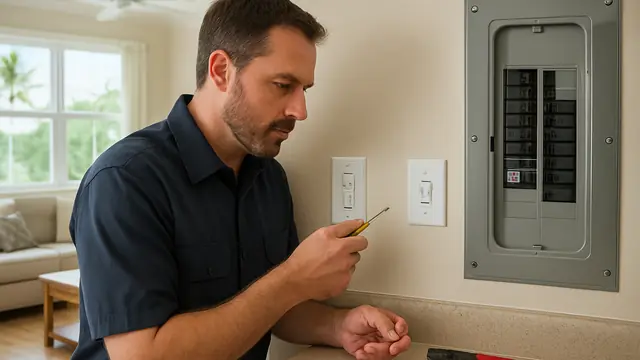
A loose terminal, worn socket, aging switch, or damaged dimmer can interrupt power. The light may react when the switch is moved or the fixture warms up.
The Dimmer Is Not Compatible With the LED
Many older dimmers were designed for incandescent bulbs. When paired with LEDs, they can produce pulsing, humming, or flickering at certain settings.
A Circuit Is Carrying Too Much Load
Portable heaters, hair dryers, cooking appliances, vacuums, and other high-demand devices can create voltage drop when they share a circuit with lighting. A branch circuit runs from one breaker to its connected outlets, lights, and equipment.
A Motor Is Drawing Excessive Starting Current
Refrigerators, air conditioners, pumps, and washing machines use extra current when starting. A small, brief dim may occur, but pronounced flicker can indicate a weak connection or equipment problem.
A Neutral Connection Is Loose
A loose neutral can cause some lights to become brighter while others dim. It can expose appliances and electronics to damaging voltage and create heat at the failing connection.
Safe Checks for Homeowners
Record which rooms are affected, how long the flicker lasts, and what was running at the time.
For one replaceable bulb, turn the light off and let it cool. Make sure it matches the fixture rating and is seated firmly. Replace it with a compatible known-good bulb if available.
- If a dimmer controls the light, test the full range. Flickering only near the lowest setting often indicates a bulb-and-dimmer mismatch.
- Unplug portable high-demand appliances one at a time and see whether the symptom changes. This does not prove the wiring is safe, but it gives the electrician useful information.
- Check the panel only from the outside. A tripped breaker may sit between the on and off positions. Do not keep resetting it if it trips again.
What You Should Never Attempt
Do not open the panel, meter base, service disconnect, or hardwired appliance. Incoming service can remain energized even when the main breaker is off.
Do not tighten suspected loose connections while the system is live. Do not replace a breaker with one of higher amperage. A larger breaker can allow wiring to overheat.
Avoid makeshift repairs such as holding a switch in a certain position, bending socket tabs, or using extension cords as permanent circuits. A symptom that disappears temporarily is not necessarily repaired.
Urgent Warning Signs
Flickering requires faster attention when it is accompanied by:
- Burning or hot-plastic odors
- Crackling, sizzling, humming, or popping
- Warm or discolored outlets and switches
- A hot breaker or panel surface
- Lights becoming much brighter than normal
- Repeated breaker trips
- Appliances shutting down or restarting
- Shocks from appliances or metal fixtures
- Smoke, sparks, or visible arcing
- Flickering after water exposure
If smoke, fire, or active arcing is present, leave the property and call emergency services.
How a Licensed Electrician Diagnoses Flickering Lights
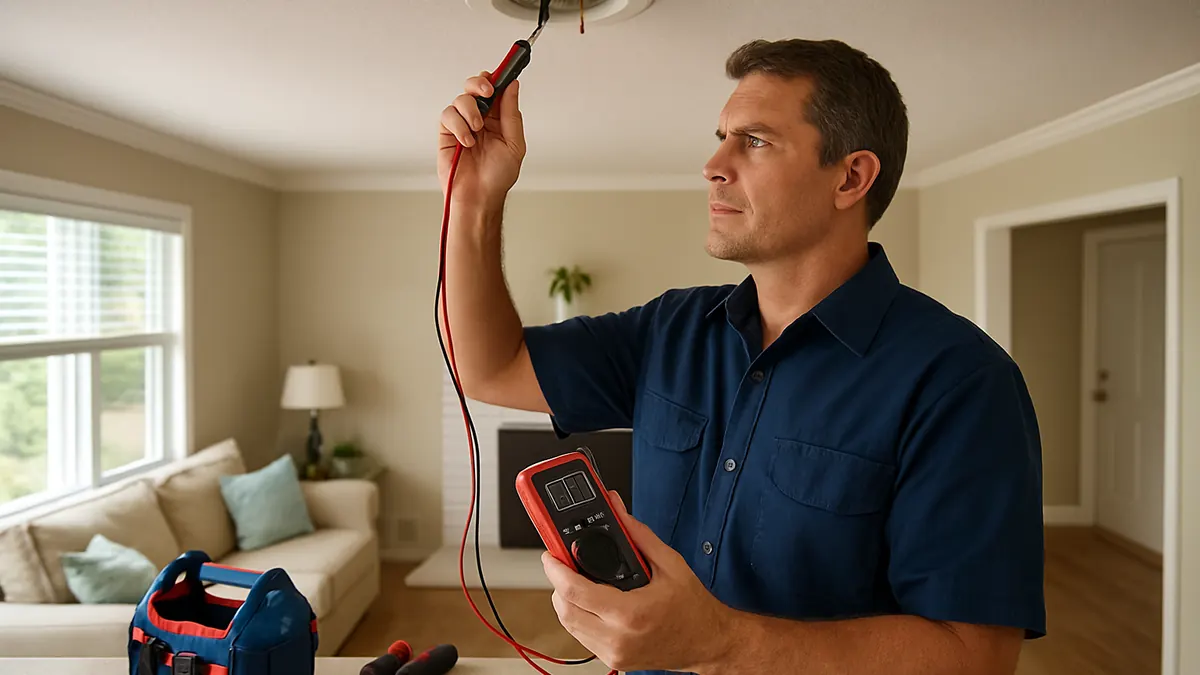
The electrician first determines the scope of the problem. Testing may start at the fixture and move through the switch, branch-circuit wiring, breaker, panel, and service.
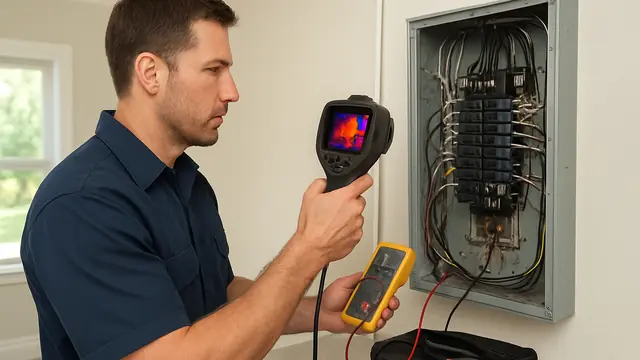
Voltage measurements taken with loads on and off can show whether the drop occurs when an appliance starts. Current testing can reveal an overloaded circuit or a motor drawing more than expected. Thermal testing may locate a connection that becomes hot under load.
The electrician may inspect junction boxes, conductor terminations, neutral connections, breakers, grounding, bonding, and service equipment. If the voltage problem enters from the utility side, the findings can support utility evaluation.
Repair Options From Simple to More Extensive
A compatible bulb replacement is the least invasive solution. If a dimmer is the cause, it may be replaced with one designed for the installed LED lamps.
A worn switch, damaged socket, or defective fixture may be repaired or replaced. Loose connections in accessible boxes can be re-terminated, and heat-damaged material can be addressed.
If circuit demand is excessive, loads may be moved to another appropriate circuit, or a dedicated circuit may be installed. A malfunctioning appliance may need equipment repair rather than electrical-system replacement.
A defective breaker or damaged panel connection may be replaceable after testing. More extensive panel, feeder, neutral, or service work is recommended only when a localized repair will not be safe.
What Influences the Cost?
- Cost depends on the cause, access, and diagnostic time. A flickering table lamp is faster to isolate than an intermittent whole-home voltage problem.
- Other factors include ceiling height, fixture design, concealed wiring, panel condition, whether a new circuit is needed, and whether permits or utility coordination are involved.
- A clear record of when the flicker occurs can reduce guesswork.
Prevention and Electrical Maintenance
- Use bulbs that meet the fixture's wattage, enclosure, and dimmer requirements. Avoid operating multiple high-demand portable devices on one circuit.
- Have repeated breaker trips, buzzing controls, warm outlets, and appliance shutdowns investigated early. Keep the panel directory readable.
- Before adding major equipment, confirm that the circuit and panel can support it. Electrical connections should be made inside approved boxes by qualified professionals.
Choose the Next Step Based on the Symptoms
When asking, "Why are my lights flickering in DeFuniak Springs?" notice whether one fixture, one circuit, or the entire home is affected. A bulb or dimmer correction may solve an isolated issue. Widespread flickering, abnormal brightening, heat, odor, sound, or repeated trips requires prompt professional diagnosis. An electrician can identify the fault and start with the least invasive safe repair.
About this guide: This resource provides general homeowner education, not a remote diagnosis. Actual conditions, code requirements, equipment, and safe repair options must be evaluated at the property.