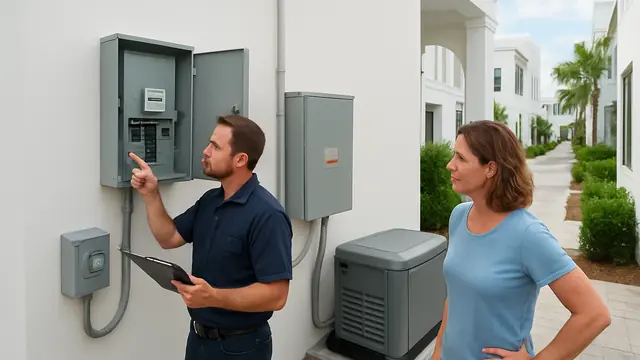
Do not remove an electrical panel cover, touch exposed conductors, bypass protection, or repeatedly reset a fault. Keep clear of smoke, sparks, burning odors, hot equipment, standing water near electricity, and downed lines, then call qualified help.
You turn on the dining-room lights in your Alys Beach property, and the fixtures begin to shimmer. Later, the bathroom lights pulse when a hair dryer is used. In another room, an LED fixture flashes only when the dimmer is set low. Flickering can be easy to dismiss because the lights may return to normal, but the pattern can reveal whether you are dealing with a bulb problem, incompatible controls, an overloaded circuit, or a loose electrical connection.
The safest immediate step is to stop using any fixture, switch, outlet, or appliance that is hot, discolored, buzzing, or giving off a burned smell. If one appliance clearly triggers the symptom, turn it off. Do not open the electrical panel or remove device covers to investigate live wiring.
What Flickering Lights Usually Mean
Lights need steady voltage and secure connections. Flickering occurs when that supply is interrupted at the lamp, control, circuit, panel, service, or utility connection.
One flickering fixture often has a local problem. Several affected fixtures suggest a shared circuit, while unrelated areas flickering together can point to the panel, service, or incoming voltage.
Why Lights Flicker in Alys Beach
LED Bulbs and Dimmer Controls Do Not Match
Not every LED is dimmable or compatible with every dimmer. Mismatches can cause flashing, humming, delayed start, or unstable low-level dimming.
A Bulb or Lamp Base Is Loose
A loose bulb may lose contact as it warms. A damaged socket can create the same symptom even after the bulb is tightened.
A Switch or Dimmer Is Wearing Out
Internal contacts can deteriorate. You might see flickering when the control is moved, hear a faint crackle, or notice that the switch plate feels warmer than similar switches.
A Large Appliance Changes the Load
Hair dryers, cooking equipment, vacuums, pumps, and air-conditioning equipment can draw enough current to dim lights on a shared circuit.
A Loose Splice Is Interrupting Power
Wires are joined inside approved electrical boxes. If a splice loosens, resistance increases and voltage at the light may become unstable. Resistance also creates heat, which is why repeated flickering should not be dismissed.
A Neutral or Service Connection Is Failing
The neutral is the return path for normal 120-volt circuits. A loose neutral can cause unpredictable brightness changes across different circuits. This is urgent because voltage may rise on one side of the system while dropping on the other.
Safe Observations You Can Make
Record the affected rooms, appliances operating, dimmer position, and whether the lights brighten, dim, or turn off.
When only one replaceable bulb is affected, switch the light off and let it cool. Confirm that the bulb is approved for the fixture and, if a dimmer is present, labeled as dimmable. Install a compatible known-good bulb.
- If every lamp on one dimmer flickers together, suspect the dimmer, bulb compatibility, or a shared connection.
- Look at the panel from the outside only. Note whether a breaker is in a middle or tripped position. Do not remove the cover or touch conductors.
- Turn off portable high-demand appliances and note whether the symptom stops. Continuing flicker still requires testing.
What Homeowners Should Not Do
Do not tighten wires behind a switch, replace a breaker, open the meter base, or work inside the panel unless you are trained, licensed, and equipped for energized electrical work.
Do not install a higher-amp breaker because a circuit seems overloaded. The breaker protects the wire. Increasing breaker size without confirming conductor capacity can allow the wiring to overheat.
Do not use extension cords as a permanent way to move loads between rooms. Do not cover a buzzing dimmer or keep operating a fixture that smells hot or shows discoloration.
When Flickering Requires Urgent Service
Schedule prompt electrical service when flickering affects multiple rooms, becomes more frequent, or is accompanied by another warning sign:
- Lights brighten far above normal
- A switch, outlet, breaker, or panel feels hot
- You hear buzzing, sizzling, popping, or crackling
- There is a burning smell or visible discoloration
- Breakers trip repeatedly
- Electronics restart when the lights flicker
- The symptom began after water entered the property
- Metal appliances produce a shock or tingling sensation
- The panel or meter area shows visible damage
Smoke, active sparks, or fire require evacuation and an emergency call.
How a Licensed Electrician Finds the Cause
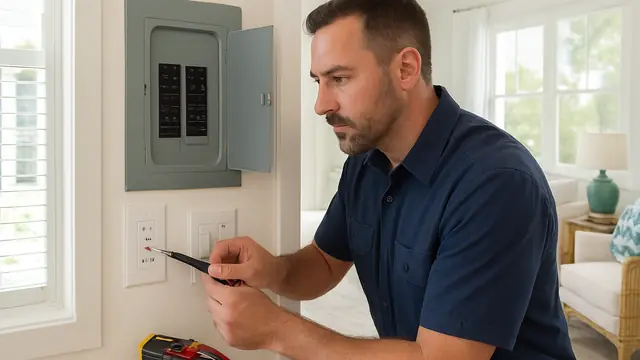
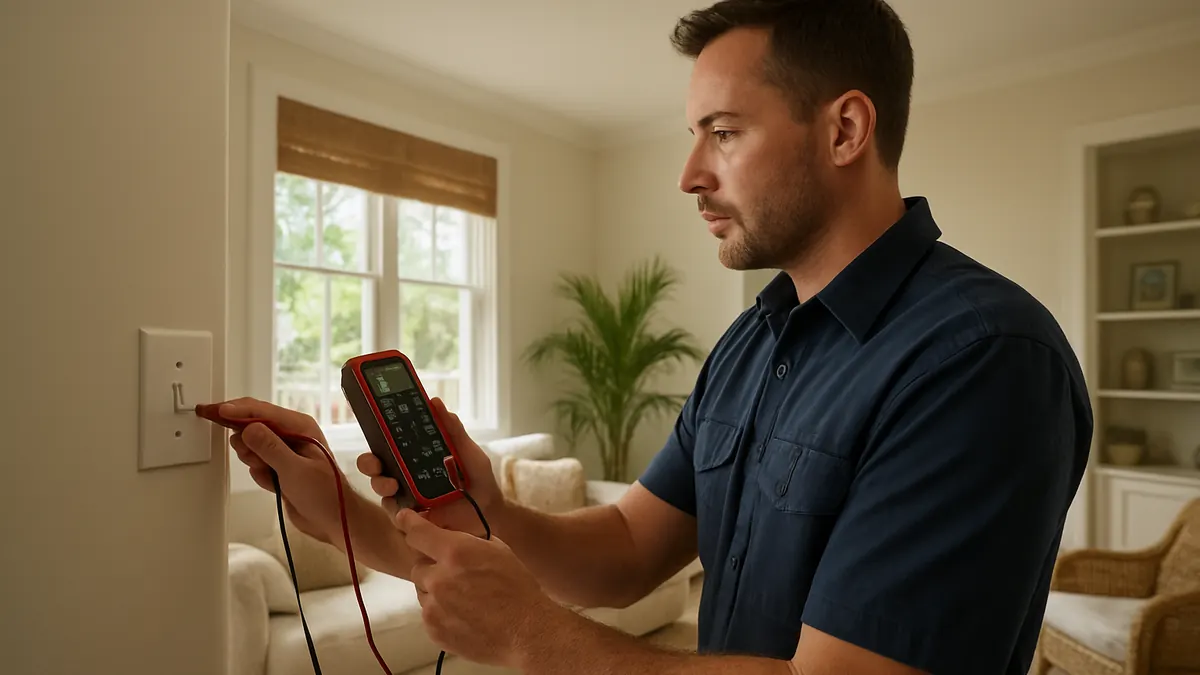
The electrician first separates fixture problems from circuit-wide and service-wide problems. Voltage readings may be taken at the affected light, nearby receptacles, the breaker, and the main service. Measurements under load show whether voltage drops only when equipment starts.
The technician may check dimmer compatibility, switches, conductors, junction boxes, breakers, neutral bars, grounding, bonding, and service components.
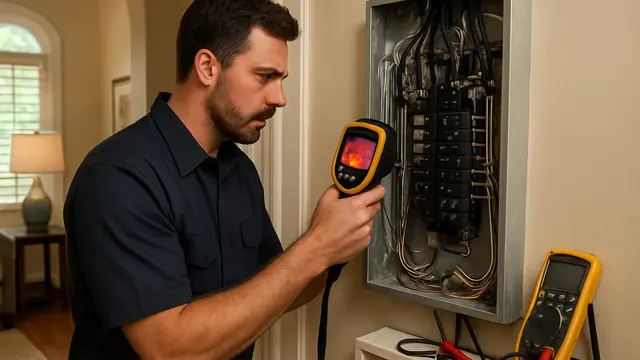
Thermal and current testing can reveal a hot connection or overloaded circuit. Unstable incoming voltage may require utility evaluation.
Repair Choices From Simple to More Involved
A compatible bulb replacement is the least invasive option. If the lamps are correct but the dimmer is not, installing an LED-compatible dimmer may resolve the issue.
A worn switch, damaged socket, or loose fixture connection can often be repaired at the device. A loose splice inside an accessible junction box may be re-terminated after heat-damaged materials are removed.
If the circuit is overloaded, an electrician may redistribute loads, install a dedicated circuit, or correct an improperly shared circuit. A defective breaker can be replaced with the correct listed component after the wiring is tested.
Panel, feeder, neutral, or service repairs are more extensive. Replacement is considered when components are damaged, improperly modified, obsolete, or unsafe to repair. A responsible recommendation begins with diagnosis, not an automatic full-system replacement.
What Affects the Cost
Cost is influenced by the location of the fault, how often it occurs, and the time required to reproduce it. A bulb or dimmer problem is more straightforward than an intermittent splice hidden in a wall or ceiling.
Fixture access, panel condition, wiring, parts, permits, and utility coordination also affect cost. Integrated LEDs may require a driver or fixture replacement.
Preventing Future Flickering
Use bulbs that match fixture labels and dimmer compatibility lists. Avoid overloading a circuit with multiple portable heating, drying, or cooking appliances.
Have major equipment evaluated before installation, keep the panel directory accurate, and report warm or buzzing devices early.
For a property occupied by guests, provide simple instructions for reporting flickering and avoid asking guests to reset breakers repeatedly. Arrange inspection between stays when a symptom has been reported, even if the lights later appear normal.
Homeowner FAQs
Why Does the Light Flicker Only When I Lower the Dimmer?
The LED bulb and dimmer may not be compatible, or the dimmer may not support stable operation at that low setting.
Is Flickering From a Ceiling-Fan Light Always a Wiring Problem?
No. Vibration can loosen a bulb, and a remote receiver or LED module may fail. The fixture still needs attention if flickering continues with a compatible bulb.
Can One Bad Appliance Make Lights Flicker?
Yes. A motor with a starting problem or equipment drawing excessive current can create a voltage dip. Stop using the appliance if the symptom is strong or new.
Why Do Lights Flicker When Nothing Large Is Running?
The cause may be a loose connection, failing switch, faulty driver, panel issue, service problem, or utility fluctuation. Testing is needed to identify the location.
Is It Safe to Leave the Lights on Until an Electrician Arrives?
Only when there is no heat, odor, noise, discoloration, severe brightness change, or repeated breaker activity. Turn off the affected circuit if any warning sign is present and it is safe to do so.
Make the Next Decision Based on the Pattern
When you ask, "Why are my lights flickering in Alys Beach?" start with the pattern: one lamp, one control, one circuit, or the entire property. A compatible bulb may solve an isolated problem, but repeated flickering, unusual brightness changes, hot devices, buzzing, odor, or multi-room symptoms require professional testing. A licensed electrician can identify whether the issue is at the fixture, circuit, panel, service, or utility connection and recommend the least disruptive safe repair.
About this guide: This resource provides general homeowner education, not a remote diagnosis. Actual conditions, code requirements, equipment, and safe repair options must be evaluated at the property.