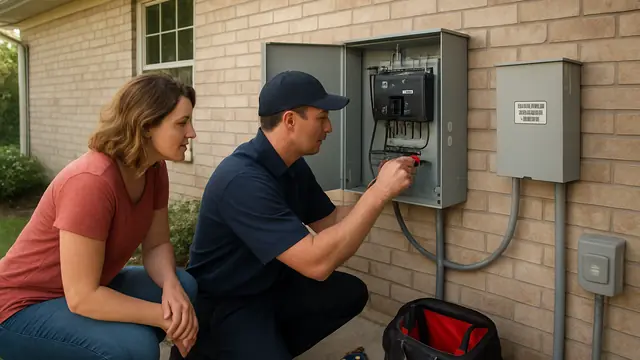
Do not remove an electrical panel cover, touch exposed conductors, bypass protection, or repeatedly reset a fault. Keep clear of smoke, sparks, burning odors, hot equipment, standing water near electricity, and downed lines, then call qualified help.
You lose utility power in DeFuniak Springs, the standby generator starts, and the home initially seems protected. Then the well pump starts, the air conditioner tries to follow, and the generator breaker trips. In another home, the generator never shuts down, but the lights pulse and the engine speed rises and falls as appliances cycle. These signs may point to overload, a large motor-starting surge, inadequate fuel delivery, or a control problem. The safe immediate action is to turn off optional high-demand appliances, leave protective devices in place, and avoid repeatedly recreating the same failure.
What size standby generator does your home need in DeFuniak Springs? The answer comes from the actual electrical loads the generator must support.
Begin With the Loads That Cannot Wait
Essential loads commonly include refrigeration, lighting, internet service, medical equipment, selected receptacles, and cooling.
A home that relies on a private well must include the well pump. Without it, the generator may run while faucets and toilets remain unusable. Sewage, lift, or sump pumps may also be essential, and their motor-starting demand must be calculated.
Running Watts and Starting Watts Are Different
Running watts describe the power an appliance needs after it reaches normal operation. Starting watts describe the brief extra demand required by motors and compressors when they begin moving.
A refrigerator has a modest running load but still needs extra startup power. Air conditioners, heat pumps, well pumps, and pool pumps can create much larger surges. The calculation must include loads already operating when the largest motor starts.
What Size Standby Generator Does Your Home Need for Heating and Cooling?
The answer depends partly on the type of HVAC system.
An air conditioner or heat pump uses a compressor and fan motors. The compressor's starting requirement can be one of the largest events the generator must handle. Electric resistance heat, including auxiliary or emergency heat strips, can require substantial continuous power.
A generator that runs a heat pump in cooling mode may not support all electric heat strips. The electrician reviews the nameplates, thermostat strategy, and expected outage operation because each HVAC mode can have a different demand.
Whole-Home Coverage Versus Managed Coverage
"Whole-home generator" can describe a fully connected system with managed appliances, selected backup circuits, or broad operation with few restrictions.
Load management allows lower-priority equipment to be delayed when generator demand becomes high. An electric water heater may be paused while a well pump or air conditioner starts. After demand drops, the control restores the delayed load.
This approach can provide comfortable coverage without oversizing, but the homeowner should know which loads may be interrupted and in what order.
Safe Checks Before Calling an Electrician
Write down the appliances and systems that must remain available during an outage. Separate true necessities from conveniences that can wait.
Photograph accessible nameplates on HVAC equipment, well-pump controls, water heaters, pool equipment, and other large loads without opening enclosures.
Record generator fault codes and what had just started or stopped. Note major additions made since installation. You may switch off optional loads at normal controls or breakers, but do not remove covers or touch internal wiring.
What the Homeowner Should Not Attempt
- Do not install a larger breaker to prevent trips. Breakers protect wires and equipment from excessive current.
- Do not bypass a transfer switch or load-management control. A delayed appliance may indicate that the control is preventing an overload.
- Do not attempt to measure live current inside the panel unless you are qualified and equipped for energized electrical work.
Do not change generator fuel settings, regulator adjustments, gas piping, propane connections, or grounding and bonding. Incorrect work can create electrical, fire, fuel, and carbon-monoxide hazards.
When Generator Sizing Becomes an Urgent Safety Issue
- An occasional managed-load delay is not necessarily a failure. Repeated stalling, breaker trips, overload alarms, severe dimming, or unstable engine speed require prompt diagnosis.
- Stop using the generator if you notice smoke, arcing, a burning odor, melted insulation, damaged conductors, or unusual heat at the generator or transfer equipment.
- Treat a gas odor or fuel leak as an emergency and follow the fuel provider's safety instructions.
If a carbon-monoxide alarm sounds, leave the home immediately and call emergency services. Do not operate the generator again until the exhaust and installation have been inspected.
How a Licensed Electrician Calculates Generator Capacity
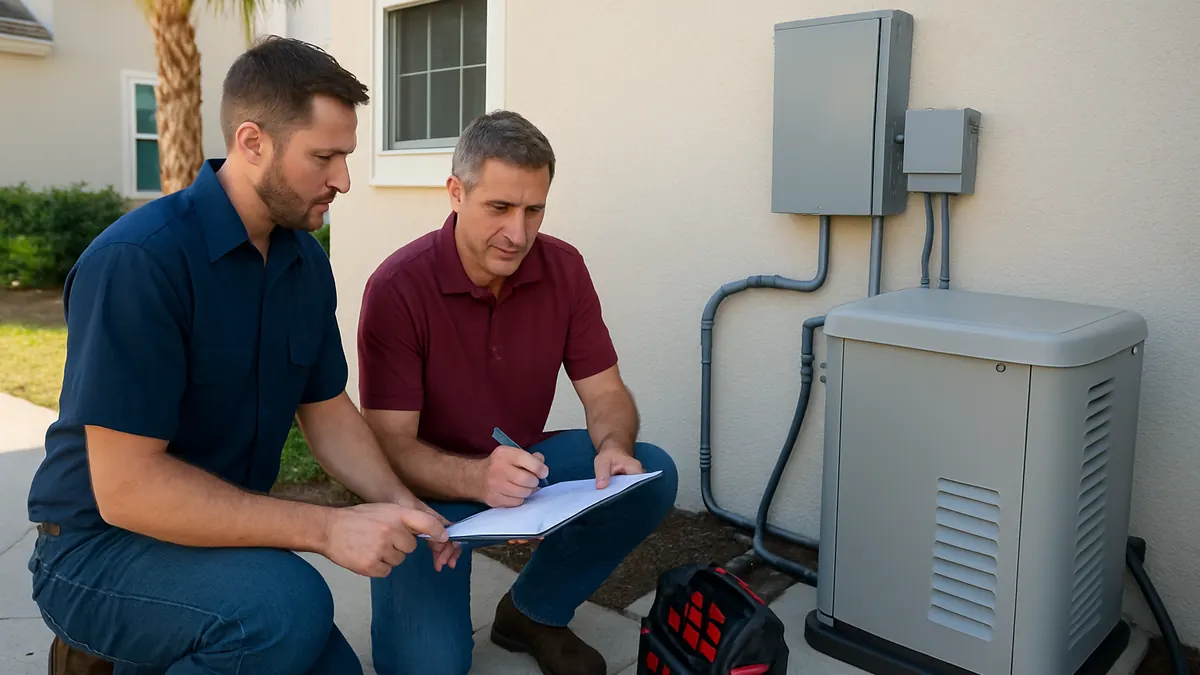
The electrician starts with an outage-use interview. This identifies essential loads, optional loads, and equipment that can be automatically managed.
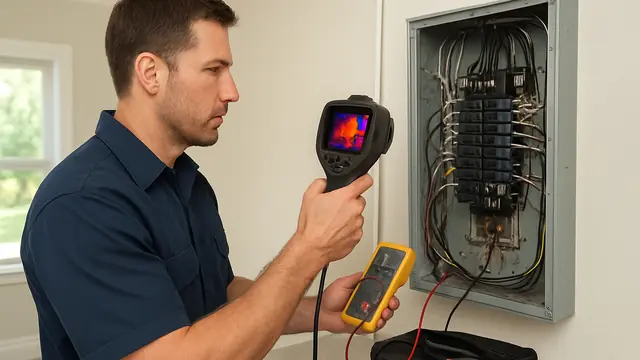
The electrical inspection covers the service, panels, transfer switch, generator breaker, HVAC systems, well or sewage pumps, water heating, cooking equipment, laundry, refrigeration, and other major loads.
The electrician calculates running demand, the largest motor-starting event, and likely operating sequences.
The generator's output rating is checked for the intended fuel. Natural-gas pipe sizing, propane supply, pressure, regulator capacity, and other fuel appliances are considered because the engine cannot produce full electrical output without adequate fuel.
The electrician also verifies conductors, breakers, transfer equipment, grounding, controls, clearances, exhaust placement, permits, and inspections.
Repair Options Before Complete Replacement
- The least invasive option may be changing the outage-use plan. An EV charger, electric dryer, range, shop equipment, or pool heater may simply remain off.
- If the system already has load management, the electrician tests its modules, wiring, and programming. Repairing a failed control can restore reliable sequencing.
- Additional approved load controls may be installed. Selected circuits may also be moved to an essential-load panel so the generator serves only the equipment that matters.
- Compatible starting-assistance equipment may reduce the starting demand of some air-conditioning compressors. It must be evaluated for the specific HVAC equipment.
- If voltage or frequency falls because the engine is not receiving enough fuel, gas-piping or regulator corrections may solve the issue.
- Generator replacement is appropriate when the required loads exceed available capacity and reasonable management cannot provide the desired coverage.
Cost Factors to Expect
Cost depends on generator capacity, transfer-switch design, load controls, panel condition, conductor length, trenching, fuel work, the equipment pad, permits, access, and restoration. Remote pump or detached-building circuits and existing wiring defects can expand the scope.
Preventive Maintenance and Planning
Service the generator according to the manufacturer's schedule. Oil, filters, batteries, spark plugs, cooling airflow, and fuel delivery all affect the unit's ability to carry its rated load.
Keep the generator enclosure clear of vegetation and stored materials. Confirm scheduled exercise cycles occur, but remember that an unloaded exercise does not prove full-load performance.
Request periodic testing that verifies transfer operation and realistic appliance sequencing. Review the load calculation whenever major electrical equipment is added or replaced.
Base the Decision on Measured Demand
What size standby generator does your home need in DeFuniak Springs? It needs enough capacity to support your essential electrical systems, start important motors such as HVAC or well pumps, and remain stable when realistic loads overlap. Fuel delivery and automatic load controls must support the same plan. A documented load calculation helps you avoid both an overloaded generator and unnecessary equipment capacity.
About this guide: This resource provides general homeowner education, not a remote diagnosis. Actual conditions, code requirements, equipment, and safe repair options must be evaluated at the property.