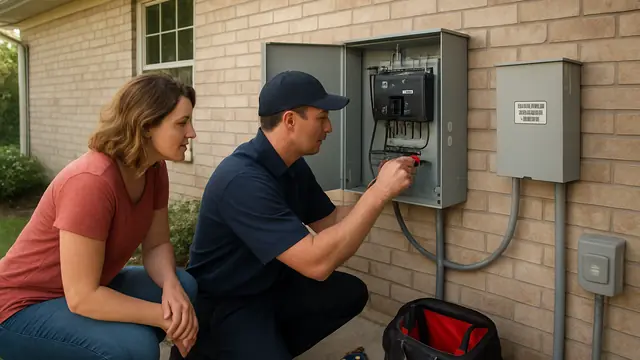
Do not remove an electrical panel cover, touch exposed conductors, bypass protection, or repeatedly reset a fault. Keep clear of smoke, sparks, burning odors, hot equipment, standing water near electricity, and downed lines, then call qualified help.
You finish vacuuming a room in your DeFuniak Springs home, unplug the cord, and notice that the outlet feels warm. Maybe a lamp has been flickering, a plug seems loose, or the receptacle is warmer than the wall even though the breaker never tripped. These details matter. A warm outlet often means that current is encountering resistance at a worn contact, loose wire, overloaded circuit, or damaged device.
Unplug anything connected to the receptacle and leave it unused. If it is hot, discolored, buzzing, crackling, sparking, melted, or producing a burning odor, turn off the correct breaker if you can do so safely. Do not remove the cover or touch wiring inside the box. A licensed electrician should evaluate the outlet before power is restored.
Why Electrical Resistance Creates Heat
Electricity should move through secure connections with minimal resistance. Resistance is opposition to the flow of current. When a connection becomes loose or damaged, electricity has to pass through a smaller or unstable contact point. Some electrical energy is then released as heat.
That heat may remain localized at one terminal or spread into the receptacle and wiring. A standard breaker may not trip when a loose connection creates heat at one small point.
Common Causes of a Warm Outlet in DeFuniak Springs
Loose Terminal Screws or Wire Splices
Wires connect to a receptacle at terminals and may also be joined with approved connectors inside the box. If a terminal or splice loosens, resistance increases.
The outlet may still work at first, but repeated heating and cooling can worsen the connection and lead to intermittent power, buzzing, flickering, or odor.
Worn Internal Receptacle Contacts
Frequent plugging and unplugging can weaken the contacts that grip plug blades. A plug that slips out, droops, or loses power when moved may not be making adequate contact. Loose contact can create heat and arcing, an electrical discharge across a small gap that damages metal and plastic.
High Electrical Demand
Portable heaters, window or portable air conditioners, hair dryers, irons, microwaves, and countertop cooking appliances can draw considerable current. A high-demand device may reveal a weak connection that does not become warm under a smaller load.
Several devices may share the same branch circuit, which is the wiring protected by one breaker. Extension cords, adapters, and power strips do not create more capacity and can add weak connections.
Damaged Plugs, Cords, and Appliances
A failing appliance can make the outlet feel warm. Bent plug blades, a loose plug body, damaged cord insulation, or an internal equipment fault may generate heat that transfers into the receptacle.
If one device causes warmth in more than one outlet, stop using the device. Do not assume every receptacle is defective.
Improper Wiring or Previous Repairs
An outlet can overheat when wiring was installed incorrectly, a conductor was damaged, an unsuitable connection method was used, or too many wires were crowded into the box. A replacement device may also have been installed without correcting existing heat damage.
The front of the outlet may look normal while the connections behind it are loose or discolored.
Safe Checks You Can Perform
Unplug all equipment and allow the outlet to cool. Without removing the faceplate, look for dark marks, yellowing, cracks, melting, or enlarged plug openings. Inspect the appliance for bent blades, black marks, exposed wire, or a loose cord connection. Do not test damaged equipment elsewhere.
Recall what was operating when the warmth appeared and whether lights dimmed, power cut out, or the breaker tripped. Record those details for the electrician.
If the outlet remains warm with nothing plugged in, turn off the circuit if the breaker is clearly identified. The receptacle may be passing power to other devices downstream.
What a Homeowner Should Not Attempt
Do not remove the cover, loosen the receptacle, or touch internal conductors. A mislabeled panel or shared circuit can leave unexpected voltage in the box. Never repeatedly reset a breaker or replace it with a larger one.
Never hold a loose plug in place with tape, bend the blades to make them fit, or wedge furniture against the cord. Avoid running a permanent extension cord to another room as a workaround. These actions may conceal the symptom while creating another hazard.
When a Warm Outlet Is Urgent
Arrange prompt service when the receptacle is hot rather than mildly warm, when the temperature rises quickly, or when heat continues after equipment is unplugged.
Burning or fish-like odors, buzzing, popping, crackling, sparks, smoke, melted plastic, scorch marks, and repeated breaker trips are urgent warning signs. Flickering lights or intermittent power on the same circuit can also indicate a deteriorating connection.
If smoke continues or fire is visible, leave the building and call emergency services. Do not attempt to handle a burning electrical device with water.
How a Licensed Electrician Diagnoses the Problem
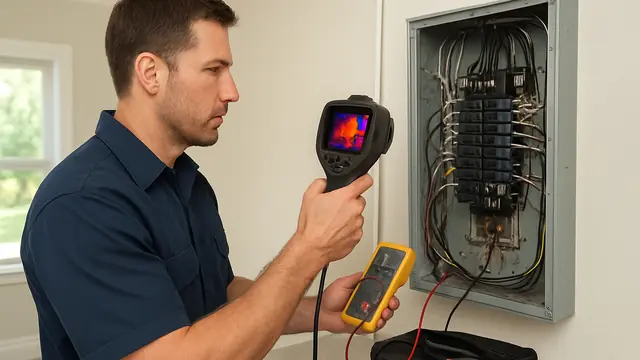
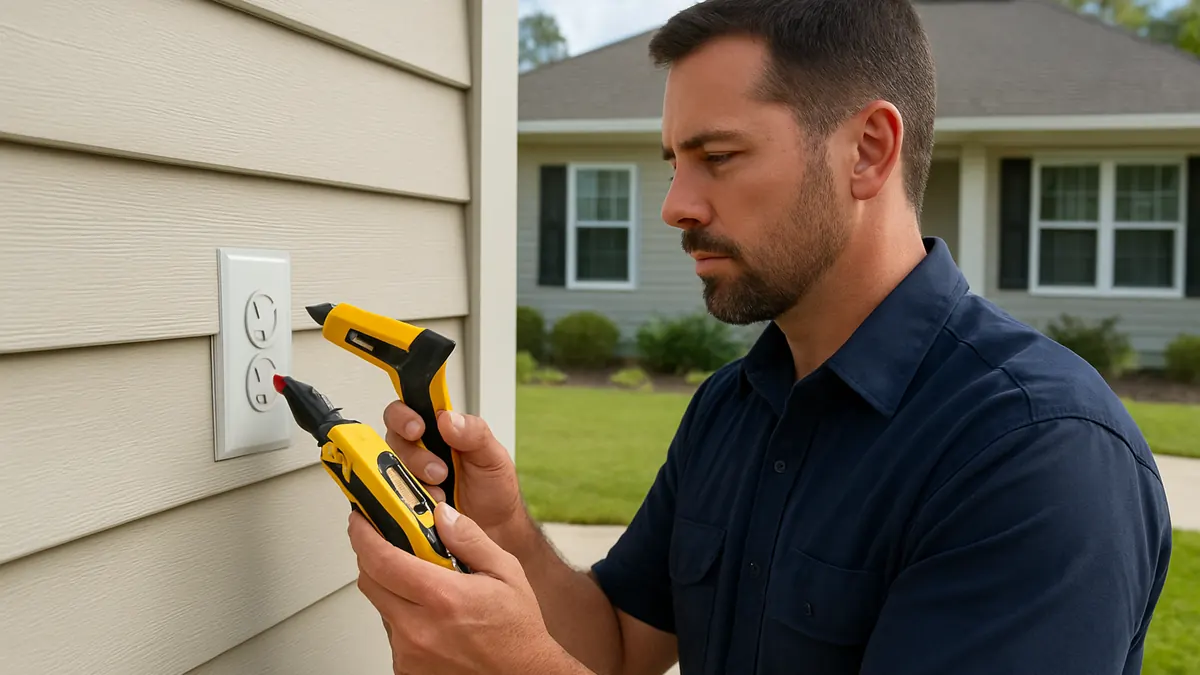
The electrician asks what was connected and what other symptoms occurred, then may test voltage, grounding, current draw, temperature, and voltage drop. Voltage drop is voltage lost as current moves through resistance and can reveal a weak connection.
After verifying the circuit is off, the electrician inspects the receptacle, terminals, splices, insulation, grounding, and box. Nearby devices, the breaker, and the panel connection may also be checked.
Repair Options Beginning With the Least Invasive
If a charger, cord, plug, or appliance caused the heat, removing or repairing that device may be the first step. The outlet should still be checked when it became noticeably warm.
A worn receptacle can usually be replaced with an appropriate device while preserving undamaged wiring. Loose terminals or splices can be remade with approved connections.
Heat-damaged connectors, insulation, or conductor ends may require limited wiring repair. If several high-demand devices share the circuit, the electrician may recommend redistributing loads or installing a dedicated circuit.
More involved repairs can include replacing damaged cable, correcting an improper box, or repairing the breaker or panel connection. The findings should determine the scope; a warm outlet does not automatically mean the home needs complete rewiring.
Factors That Affect Repair Cost
Cost depends on diagnostic time, access, receptacle type, wiring condition, and heat damage. GFCI or AFCI protection, concealed cable replacement, panel repairs, and new dedicated circuits add labor and materials.
Preventing Outlet Overheating
Replace receptacles that no longer grip plugs securely. Stop using cracked cords, damaged plugs, and adapters that become excessively hot.
Plug high-demand equipment directly into an appropriate outlet when required by the manufacturer. Avoid daisy-chaining power strips or using lightweight extension cords for heaters and cooking equipment.
Pay attention to early symptoms. A loose plug, faint buzzing sound, occasional flicker, or unexplained warmth may provide warning before visible damage develops.
Have the Source of the Heat Corrected
What causes an electrical outlet to feel warm in DeFuniak Springs may be a loose terminal, worn receptacle, overloaded circuit, or defective appliance. Unplug the equipment, stop using the outlet, and respond quickly to odors, noise, discoloration, or breaker activity. A licensed diagnosis can determine whether the repair is limited to the receptacle or needs to address wiring elsewhere on the circuit.
About this guide: This resource provides general homeowner education, not a remote diagnosis. Actual conditions, code requirements, equipment, and safe repair options must be evaluated at the property.