Do not remove an electrical panel cover, touch exposed conductors, bypass protection, or repeatedly reset a fault. Keep clear of smoke, sparks, burning odors, hot equipment, standing water near electricity, and downed lines, then call qualified help.
A bathroom outlet is dead just as guests are getting ready, or a kitchen receptacle stops working while a small appliance is running. You press RESET, feel the button move, and it pops out again. In an Alys Beach home, the same symptom can appear at a garage or exterior receptacle after rain or use of outdoor equipment.
A GFCI that will not reset may have no incoming power, may have failed internally, or may be detecting current escaping from the intended circuit. Unplug connected equipment, keep the area dry, and make one careful reset attempt. If the button will not latch, leave the circuit unused.
Notice How the Reset Button Behaves
If the button feels loose and produces no click, the GFCI may have no line power. The breaker could be tripped, an upstream GFCI may be open, or a connection may be loose.
If RESET clicks in but immediately releases, the device may be detecting a continuing ground fault in an appliance, the receptacle, the electrical box, or another protected outlet.
If it resets but trips later, the problem may be intermittent. Moisture, a warming appliance motor, a damaged cord, or a loose connection can create a fault only under certain conditions.
Why Won't My GFCI Outlet Reset in Alys Beach?
Loss of Power to the Device
Most receptacle-style GFCIs need power on their LINE terminals before they reset. A tripped breaker, failed connection, or another GFCI earlier in the circuit can interrupt that supply.
A breaker may appear almost on when tripped. Reset it by moving it fully to OFF and then ON. If it trips again, stop.
A Plugged-In Device Is Leaking Current
A blender, hair dryer, charger, refrigerator, pressure washer, lighting transformer, or extension cord can develop internal leakage while still appearing to work.
Unplugging everything matters because the problem may not be in the wall outlet. If the GFCI resets with all equipment disconnected, one connected item may be responsible.
Moisture Is Affecting the Circuit
Water can enter an exterior cover, garage box, cord connection, or equipment farther down the circuit. Condensation combined with corrosion, damaged seals, or contamination can create a conductive path.
Do not assume the visible GFCI is the wet location. It may protect an ordinary receptacle elsewhere.
The GFCI Has Failed
Modern GFCIs monitor their own protective function. When the electronics or trip mechanism can no longer provide reliable protection, the device may lock out.
Age, repeated operation, heat, corrosion, surges, or damaged terminals can cause failure. Replacing the device should be followed by circuit testing so an underlying fault is not missed.
Wiring or Connection Problems
Loose neutrals, reversed LINE and LOAD connections, damaged insulation, and improper splices can prevent resetting. The neutral is the conductor that normally carries current back to the electrical source. When that path is loose or connected incorrectly, the GFCI may not operate as expected.
Safe Checks Before Calling an Electrician
- Unplug everything from the affected receptacle and nearby outlets that also lost power. Include hidden loads such as power strips, garage appliances, and exterior transformers.
- Check other GFCI outlets in bathrooms, the kitchen, garage, laundry area, and exterior spaces. One device may protect several locations. Reset only dry, intact outlets.
- At the panel, move the suspected breaker fully off and then on once. Do not touch the panel if it is damp, hot, noisy, or visibly damaged.
- Look at the GFCI face. Stop if you see discoloration, cracking, a loose receptacle, water, corrosion, or a plug that fits unusually loosely.
What Not to Do
Do not repeatedly press RESET, tape the button down, or replace the GFCI with a standard receptacle. These actions can defeat shock protection.
Do not remove the cover plate to dry, tighten, or rewire the outlet unless you are qualified and have verified de-energization with proper equipment. One box can contain conductors from more than one circuit.
Do not run an extension cord from another room as a permanent workaround, especially through a wet area, doorway, or outdoor space.
When the Problem Is Urgent
Turn the breaker off, when safe, if there is a burning odor, smoke, buzzing, sizzling, heat, melted plastic, blackening, or repeated breaker operation.
Prompt professional attention is also needed after a shock, a tingling sensation from metal equipment, or water intrusion from a leak. Keep people away from the area.
A nonworking GFCI should be addressed quickly when it serves a refrigerator, required lighting, or an area used by renters or guests. Loss of power can create a second problem even without visible damage.
How an Electrician Finds the Fault
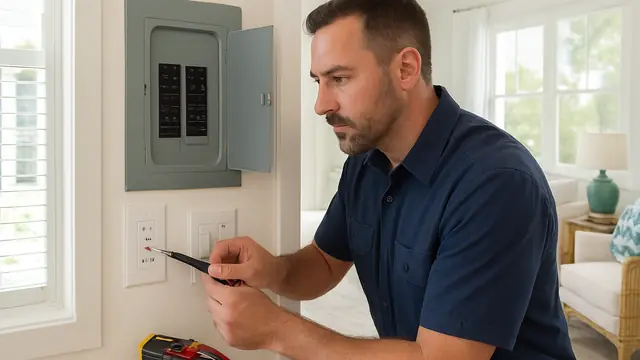
The electrician verifies voltage at the breaker, checks line and neutral integrity, and confirms whether power reaches the correct GFCI terminals.
The protected downstream wiring may then be disconnected. If the GFCI resets with the LOAD conductors removed, the fault lies elsewhere on the branch circuit. Successive boxes can be opened and tested to narrow the location.
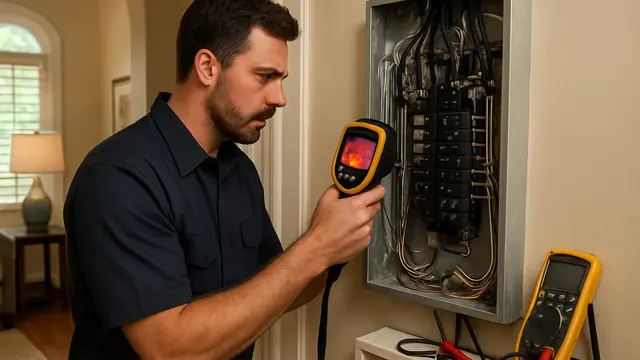
Diagnosis may include leakage-current testing, continuity checks, insulation-resistance testing, polarity verification, and inspection of connected equipment. The goal is to identify why the GFCI tripped, not merely to make the button stay in.
Repair Choices, Starting With the Simplest
The least invasive correction may be removing a defective appliance, replacing a damaged cord, resetting an upstream device, or repairing one loose connection.
If the GFCI has failed, it can be replaced with a properly rated device and both local and downstream protection can be verified. Exterior locations may also need a weather-resistant receptacle or improved cover.
A downstream fault may require replacing one receptacle, correcting corrosion, repairing a splice, or replacing a short cable section. Broader rewiring is considered only for extensive damage, improper shared neutrals, repeated unsafe alterations, or wiring that cannot be repaired in place.
What Determines Repair Cost?
The main factor is diagnostic complexity. A failed GFCI in an accessible box usually takes less time than an intermittent fault across several rooms or exterior locations.
Access, the number of protected outlets, moisture damage, equipment testing, panel issues, hidden cable damage, and code corrections can affect the work. A clear estimate should separate diagnosis, device replacement, wiring repair, and optional improvements.
Preventing Repeat Trips
- Test each GFCI monthly. Press TEST and confirm that power shuts off, then press RESET. A device that does not test correctly should be evaluated.
- Keep exterior covers closed, replace cracked gaskets, and avoid cord connections where water can collect. Inspect cords before using stored or outdoor equipment.
- Do not ignore a GFCI that repeatedly trips during the same activity. That pattern can help an electrician find the cause.
Restore Protection, Not Just Power
When the question is "Why won't my GFCI outlet reset in Alys Beach?" the goal is not simply to energize the receptacle. The circuit must have reliable ground-fault protection. Disconnect equipment, perform only the safe checks above, and leave the outlet off if it will not remain reset. A licensed electrician can distinguish a failed device from a wiring, appliance, or moisture problem and recommend the least invasive safe repair.
About this guide: This resource provides general homeowner education, not a remote diagnosis. Actual conditions, code requirements, equipment, and safe repair options must be evaluated at the property.