Do not remove an electrical panel cover, touch exposed conductors, bypass protection, or repeatedly reset a fault. Keep clear of smoke, sparks, burning odors, hot equipment, standing water near electricity, and downed lines, then call qualified help.
You are preparing to add an electric vehicle charger, replace a gas appliance with an electric model, or renovate the kitchen when the contractor asks: "What size electrical service does the house have?" The panel may look modern and the lights may work normally, but that does not prove there is enough capacity for the new equipment.
For an Alys Beach homeowner, the safest next step is to pause the electrical portion of the project until a licensed electrician performs a load calculation. Do not let anyone connect a large new appliance to an available breaker space without confirming the capacity of the entire service. If the main breaker is tripping, the panel smells hot, or lights are flickering across several rooms, stop using the suspected equipment and arrange prompt service.
A 200-amp service may be appropriate, but it is not automatic. The decision depends on existing demand, simultaneous use of major appliances, equipment condition, and future plans.
Why Service Size Matters Before an Upgrade
Electrical service includes more than the interior breaker panel. It also involves the service conductors, meter equipment, main disconnect, grounding and bonding system, and panel. Every major component must be properly rated.
The number on the main breaker may be 100, 125, 150, or 200 amps. It is a starting point, but an electrician must verify the rest of the installation. A 200-amp breaker does not make a system a true 200-amp service if other components are rated for less.
Capacity matters because large loads can overlap. Air conditioning may be running while the oven, dryer, water heater, pool equipment, and vehicle charger are operating. A load calculation estimates that demand in a structured way.
Clues That Your Alys Beach Home May Need 200 Amps
A renovation is adding several circuits
A kitchen project may include wall ovens, an induction cooktop, refrigeration, beverage equipment, dishwashers, and new receptacle circuits. One appliance may fit within the existing capacity, while a group of upgrades may not.
You are adding vehicle charging
The effect of an EV charger depends on its charging rate and the home's existing demand. Choosing the charger before checking capacity can cause delays or redesign.
The home has several major electric loads
Multiple HVAC systems, electric water heaters, pool or spa equipment, and pumps can contribute to peak demand. The electrician uses actual equipment ratings rather than assuming every large home needs the same service.
The main breaker or multiple circuits trip
A single tripping branch breaker often points to one circuit. A main breaker that trips during heavy use can indicate excessive demand or a defect requiring diagnosis.
The panel has no room for expansion
A full panel does not automatically require a larger service. A subpanel may solve a space problem when the service has sufficient capacity.
Safe Observations You Can Make
Without opening covers, find the main breaker rating and photograph the panel label and circuit directory. If the main disconnect is outside, photograph its label too. These images help during scheduling but do not replace inspection.
List major appliances and their fuel types. Include HVAC units, water heaters, cooking equipment, laundry appliances, pool systems, pumps, generators, solar equipment, battery storage, and vehicle charging. Add planned changes.
Notice when symptoms occur. If lights dim only when one compressor starts, that differs from widespread dimming, buzzing, or repeated tripping. Record the equipment in use and the breaker involved.
Work You Should Not Attempt
Never remove the metal panel cover surrounding the breakers. Dangerous energized parts can be exposed behind it.
Never install a higher-rated breaker to stop tripping. Breakers protect the wiring, and oversizing one can allow conductors to overheat.
Do not assume a tandem breaker, double-pole breaker, or subpanel can be added because space appears available. Panel labeling, bus limits, conductor sizes, and load capacity matter.
Avoid connecting a large load through adapters or extension cords. EV chargers, cooking appliances, and similar equipment require correctly sized permanent circuits.
When the Electrical Problem Is Urgent
Contact an electrician promptly if the main breaker trips, the panel or meter area feels unusually hot, or power drops out in several parts of the house.
Burning odors, crackling, smoke, scorch marks, melted plastic, or sparks require immediate action. Keep people away. Shut off power only when the disconnect can be reached safely, and call emergency services when smoke or fire is present.
Rust, water stains, or moisture around electrical equipment also deserve prompt attention. Energized equipment should never be opened or dried by a homeowner.
How a Licensed Electrician Evaluates the Service
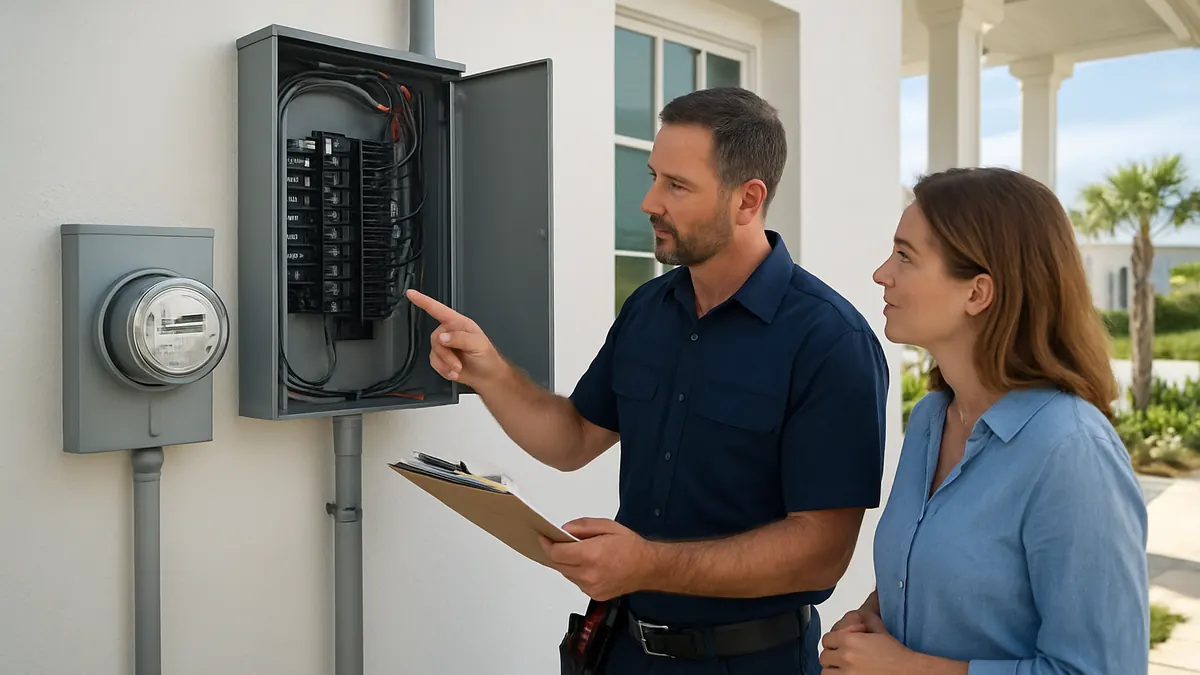
The inspection covers the service entrance, meter equipment, disconnect, panel, grounding and bonding, breakers, and visible branch wiring. The electrician looks for rating mismatches, heat damage, corrosion, loose connections, improper modifications, and excessive loading.
A load calculation estimates demand from general household use and major fixed appliances. It is more accurate than adding breaker numbers because breaker ratings show circuit protection, not actual simultaneous demand.
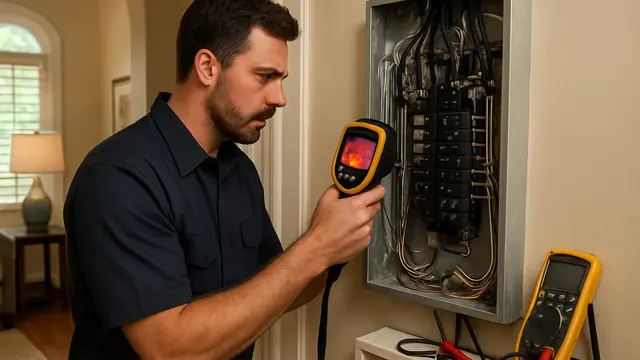
Voltage readings, current measurements, thermal imaging, and connection testing may help reveal a loose termination, failing breaker, or unbalanced loading. The electrician also compares the existing system with your project plans.
Solutions From Smallest to Most Extensive
The least invasive solution may be repairing a loose connection, replacing a failing breaker, correcting an overloaded branch circuit, or separating appliances that should not share a circuit.
- If the service has capacity but the panel lacks spaces, a subpanel may provide additional circuit positions. Reorganizing circuits may also help when done correctly.
- A load-management system can monitor demand and delay a selected load. This may allow certain vehicle chargers or other controllable equipment without an immediate full upgrade.
- A panel replacement can address damaged equipment while retaining the existing service rating if the calculation supports it.
When demand exceeds the existing service, a 200-amp upgrade may involve the meter base, conductors, main disconnect, panel, grounding and bonding, utility connection, permits, and inspection. Concealed routing and finished surfaces should be discussed before work starts.
What Determines Project Cost?
Cost depends on present service size, overhead or underground supply, equipment locations, conductor routing, accessibility, and whether the meter or panel must be relocated.
Grounding, branch-circuit condition, prior electrical work, permits, utility coordination, surge protection, generator or solar integration, and finish repairs can change the scope. Two homes with the same breaker rating may require very different work.
Planning and Maintenance
Schedule the electrical review early in the design process. Appliance specifications and HVAC selections should be available before the final calculation.
Keep the panel directory accurate and the working area clear. Have unexplained tripping, flickering, heat, or odors investigated rather than treating them as normal.
Retain permits, inspection documents, manuals, and load calculations. For homes not occupied continuously, ask the property manager or caretaker to report electrical warnings promptly rather than repeatedly resetting a breaker.
Does Your Alys Beach Home Need a 200-Amp Electrical Service?
A professional load calculation is the reliable way to answer the question. Panel appearance, home size, and open breaker spaces are not enough. If you are renovating, electrifying appliances, adding vehicle charging, or experiencing main-breaker problems, have the service evaluated before proceeding. A targeted repair, subpanel, or load-management system may be sufficient; when demand and future plans justify it, a 200-amp upgrade can provide the needed capacity.
About this guide: This resource provides general homeowner education, not a remote diagnosis. Actual conditions, code requirements, equipment, and safe repair options must be evaluated at the property.