Do not remove an electrical panel cover, touch exposed conductors, bypass protection, or repeatedly reset a fault. Keep clear of smoke, sparks, burning odors, hot equipment, standing water near electricity, and downed lines, then call qualified help.
An Alys Beach home can look polished during a showing. Lighting scenes respond from a keypad, appliances are built into cabinetry, and equipment may be hidden behind finished doors. Then an outlet fails, a smart switch flickers, the panel directory does not match the rooms, or the seller cannot explain a recent addition.
Do not remove decorative covers, open electrical panels, or test unfamiliar control equipment by trial and error. Record the symptoms and ask for a licensed electrical inspection while you still have time to evaluate the purchase. An electrical inspection checklist before buying a Northwest Florida home in Alys Beach should confirm that attractive finishes are supported by safe wiring, suitable circuit capacity, and serviceable equipment.
Match the Electrical System to the Home's Actual Loads
Begin by listing the equipment the property must support. A home may have multiple HVAC units, electric cooking, water heating, refrigeration, laundry equipment, exterior lighting, pool or spa systems, motorized shades, networking equipment, an elevator, a generator, or EV charging. Not every property has these features, but every major electrical load should be identified.
A licensed electrician can compare connected equipment with service capacity and panel arrangement. A load calculation may be needed to determine whether the system can handle expected simultaneous use and planned additions. Ask which features remain with the home and whether proprietary controls require special parts or service access.
Locate Every Panel, Subpanel, and Disconnect
A main panel may feed subpanels serving mechanical equipment, a garage, pool systems, or exterior loads. Buyers should know where each panel and disconnect is located and what it controls.
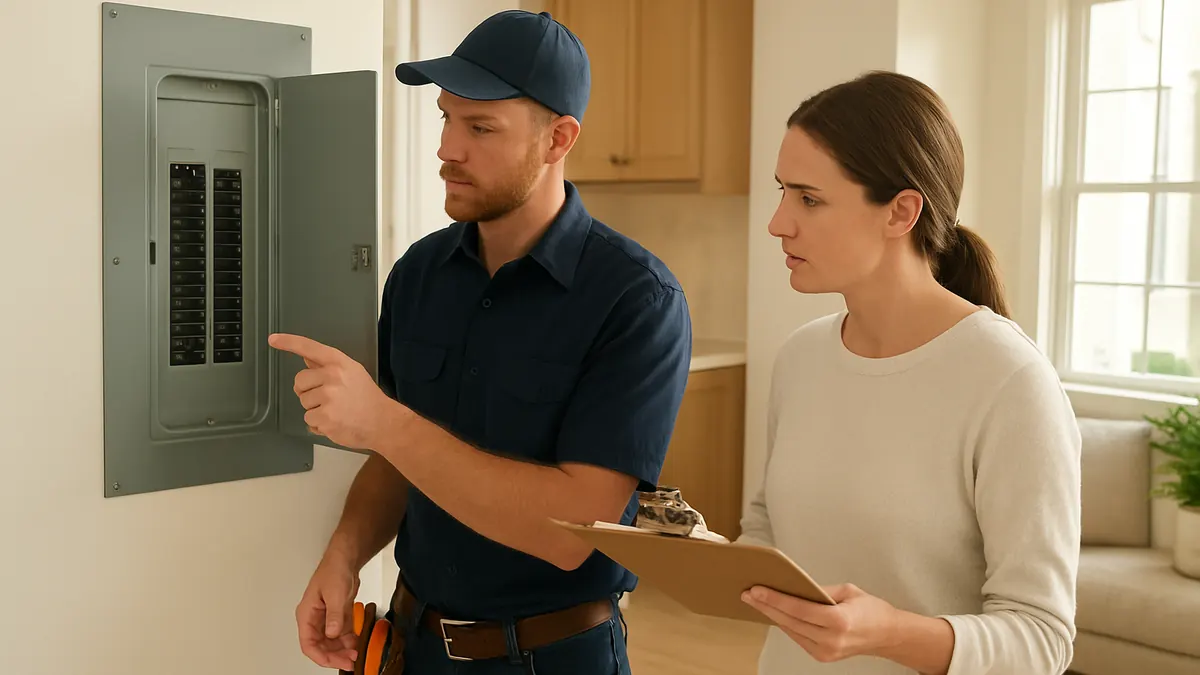
Panels should be accessible, dry, secure, and free from rust, scorching, missing covers, open spaces, or unusual sounds. Circuit labels should be specific enough to help during an outage.
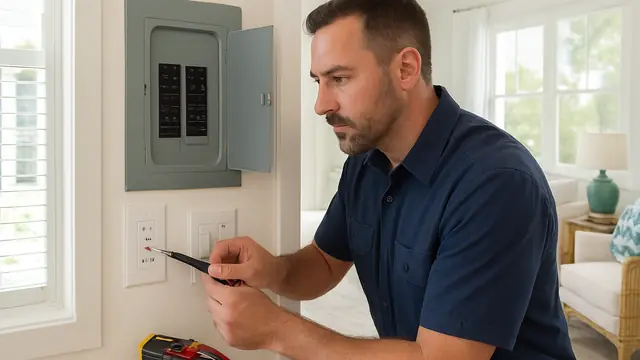
Do not remove the panel cover. The electrician can inspect internal conductor condition, breaker compatibility, neutral and grounding arrangements, and evidence of overheating or unapproved alterations.
Evaluate Smart Controls Without Overlooking Basic Wiring
Smart-home features can make lighting and climate control convenient, but they do not replace sound branch-circuit wiring. A keypad that works from an app may still be connected to a loose conductor, incompatible dimmer, or overloaded control module. Operate lighting scenes normally and note delays, buzzing, flickering, outages, or unusual heat. Ask whether the system requires a hub, password, installer account, or specialized programming.
The electrician evaluates safety and circuit performance. A separate automation specialist may be needed for programming or communication problems.
Check Kitchens, Bathrooms, Laundry Areas, and Garages
High-use rooms reveal many electrical problems. In the kitchen, test accessible countertop receptacles and confirm that major appliances operate without tripping breakers. In bathrooms and other damp locations, check for working GFCI protection. GFCI devices shut off power when they detect electricity leaking from its normal path.
Look for loose outlets, cracked plates, discoloration, plugs that fall out, or receptacles hidden behind permanently installed equipment. In laundry areas, ask whether the washer and dryer connections match the appliances included in the sale. In garages, note door-opener outlets, refrigeration, workshop equipment, EV charging, and storage that blocks panel access.
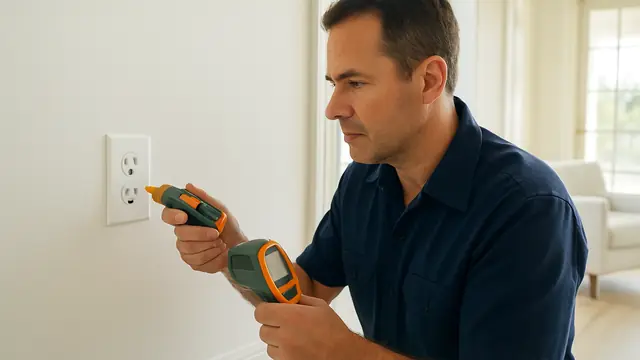
A receptacle tester can provide useful information, but buyers should leave testing beyond normal device operation to the inspector or electrician.
Inspect Exterior Amenities and Equipment
Exterior kitchens, lighting, pools, spas, and detached structures add circuits exposed to weather. Look for broken covers, loose boxes, corroded fittings, damaged conduit, temporary cords, or repeated water exposure.
Pool and spa equipment requires careful evaluation of GFCI protection, disconnects, grounding, and bonding. Bonding links conductive metal components to reduce dangerous voltage differences. It is different from grounding, although both are important.
Do not open pool panels or touch equipment while standing on wet surfaces. Any tingle from metal or water is an urgent warning.
Review Renovations, Equipment Replacements, and Documentation
Ask for permits, invoices, warranties, and contractor information for renovations, generators, pool changes, and added appliances. Records help establish what changed and who performed it.
Compare visible work with the seller's description. A remodeled room may have added lighting but no new circuit, while a wall-mounted television may conceal extension cords or inaccessible connections.
The least invasive solution may be correcting documentation, labeling circuits, replacing an incompatible control, repairing a connection, or adding one dedicated circuit. A whole-home rewire should be recommended only when the condition and extent of the wiring support that conclusion.
Safe Checks the Buyer Can Perform
Operate included equipment normally. Test visible GFCI devices with their built-in buttons when permitted. Observe whether lights dim when equipment starts or breakers trip. Ask the seller to demonstrate generator, EV, pool, and automation features, and confirm that codes, manuals, and warranties will transfer.
You may photograph visible labels and defects with permission. Do not loosen covers, insert tools, or reset the same breaker more than once.
What the Buyer Should Not Attempt
Never remove a panel cover, tighten electrical connections, replace breakers, pull switches from walls, or bypass a protective device. Do not use adapters to defeat grounding or extension cords as a permanent repair.
Do not assume a device is safe because it is hidden in cabinetry or controlled from a phone. Electrical hazards can exist even when the user interface looks modern.
Urgent Electrical Warning Signs
Burning smells, smoke, arcing, melted devices, hot outlets, repeated breaker trips, loud buzzing, exposed conductors, water inside equipment, or tingling from metal surfaces require prompt professional attention.
If a service connection, meter enclosure, or exterior panel appears damaged, keep clear and notify the responsible property representative. Utility equipment may require coordination with the electric provider.
How a Licensed Electrician Performs the Inspection
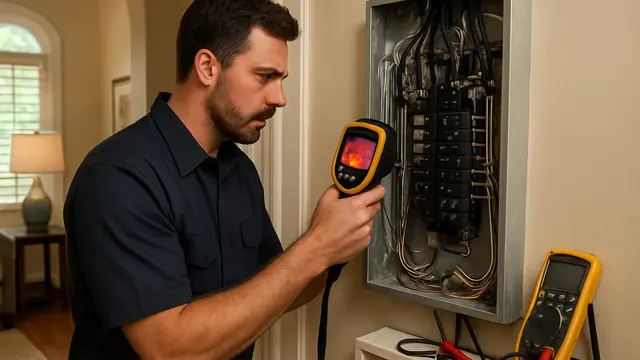
The electrician reviews service equipment, panels, grounding and bonding, visible wiring, receptacles, switches, protective devices, and dedicated circuits. Testing may include voltage, polarity, GFCI operation, load analysis, and thermal imaging. Findings should identify immediate hazards, needed repairs, optional improvements, and future upgrades.
Repair Choices and Cost Factors
Reasonable repairs begin with the smallest safe correction. Options may include replacing a damaged receptacle, correcting a loose termination, installing a suitable cover, replacing an incompatible dimmer, updating labels, or repairing a limited section of wiring.
More extensive work can include adding dedicated circuits, replacing damaged panel components, correcting grounding or bonding, upgrading service capacity, reorganizing controls, or replacing deteriorated outdoor equipment.
Cost depends on equipment, accessibility, finish protection, circuit count, control complexity, permits, part availability, and whether walls or cabinetry must be opened. Troubleshooting produces a better estimate than a visual guess.
Prevention After You Purchase
Keep electrical records with the home. Maintain a current panel directory. Test GFCI devices as directed and inspect exterior equipment after visible storm or water damage.
Before adding appliances, an EV charger, a spa, or additional climate equipment, have an electrician review circuit and service capacity. Coordinate smart-system updates with qualified providers so electrical changes and programming changes remain documented.
Homeowner FAQs
Do smart-home controls make an electrical inspection less important?
No. Smart controls add components and convenience, but the underlying wiring, breakers, grounding, and protective devices still require evaluation.
Should every panel be replaced when buying a luxury home?
No. Replacement depends on condition, capacity, compatibility, defects, and supportability, not the home's price or appearance.
Can an electrician evaluate the generator during the same visit?
The electrician can inspect electrical connections and transfer equipment. Complete generator evaluation may also involve fuel, engine, or manufacturer-specific service.
What if the seller has no records for recent electrical work?
The lack of records does not prove the work is unsafe, but it increases the importance of a detailed inspection and clear written findings.
Is a warm dimmer always defective?
Some dimmers produce normal heat, but excessive heat, discoloration, odor, buzzing, or erratic operation should be evaluated.
Verify the System Behind the Finishes
An electrical inspection checklist before buying a Northwest Florida home in Alys Beach gives you more than a list of defects. It shows whether the electrical service, controls, outdoor systems, and dedicated circuits can support the way the property is designed to be used. Addressing questions before closing allows you to plan repairs, request documentation, and make a better-informed decision without assuming that either age or appearance tells the whole story.
About this guide: This resource provides general homeowner education, not a remote diagnosis. Actual conditions, code requirements, equipment, and safe repair options must be evaluated at the property.