Do not remove an electrical panel cover, touch exposed conductors, bypass protection, or repeatedly reset a fault. Keep clear of smoke, sparks, burning odors, hot equipment, standing water near electricity, and downed lines, then call qualified help.
You may be installing a larger heat pump, converting a water heater to electric, building a workshop, or upgrading a kitchen when someone warns that your electrical service may be too small. You may also have a main breaker that trips when the dryer, range, and air conditioner run together.
Not every electrical problem requires a 200-amp upgrade. A loose connection, failing breaker, overloaded circuit, or defective appliance can create similar symptoms. Stop using equipment that repeatedly causes a trip, do not increase breaker sizes, and arrange a licensed evaluation. Burning odors, sizzling, smoke, or heat damage require immediate action.
Whether your DeFuniak Springs home needs a 200-amp electrical service should be decided through inspection and a formal load calculation. That process determines both whether the existing system is safe and whether it can support current and planned demand.
Begin With the Difference Between Service Size and Panel Size
The service includes the panel, meter equipment, conductors, main disconnect, grounding, and bonding.
Installing a larger panel does not automatically provide more power. A panel may have many spaces while being supplied by a 100- or 150-amp service, or it may be crowded while the service has adequate capacity.
A true 200-amp upgrade requires all affected service components to be properly sized and coordinated.
Symptoms That May Point to a Capacity Problem
The Main Breaker Trips During Normal Household Use
When the main breaker trips, the entire electrical demand or a service-level defect may be involved. It deserves professional diagnosis, particularly when it happens repeatedly.
Several New Loads Are Being Planned
An electric range, water heater, dryer, vehicle charger, workshop equipment, or added HVAC system can change expected demand. The combination matters most.
Lights Dim or Brighten in Several Areas
A brief dip when a motor starts can occur, but severe or repeated changes across the home may point to voltage drop, an overloaded system, or a loose service connection.
Breakers and Panel Spaces Have Been Heavily Modified
Crowded wiring, unapproved breaker types, or unclear labeling can make expansion difficult. Repair or reorganization may be enough, but inspection is necessary.
A Workshop or Detached Building Is Being Added
The electrician must account for tools, heating or cooling, receptacles, lighting, and feeder requirements. An empty space in the panel does not prove that the service can support the project.
Common Causes Behind These Warning Signs
Insufficient service capacity is one possibility, but it is not the only one. An overloaded branch circuit may be carrying too many appliances. A breaker may be worn or damaged. A conductor may be loose at a breaker, neutral bar, disconnect, or service connection.
A failing motor or heating element can draw abnormal current, while corrosion or heat damage can interfere with operation. Upgrading without diagnosing the cause can leave the original problem unresolved.
Safe Checks Before Scheduling Service
Without removing a cover, read the main breaker rating and any exterior disconnect rating. Photograph the labels for the electrician.
List major loads, including HVAC equipment, water heaters, cooking and laundry appliances, pumps, workshop equipment, pool or spa systems, chargers, and planned additions.
Write down the sequence that causes trouble. For example, note whether the main breaker trips only when the oven, dryer, and HVAC system overlap. Details about timing help the electrician reproduce the condition.
Check the exterior of the closed panel and meter equipment for rust, damage, staining, loose parts, or unusual sounds. Do not touch equipment that appears wet, damaged, or overheated.
What You Should Never Try
- Never remove a service panel or meter cover. The incoming conductors can remain energized even when the main breaker is off.
- Never replace a breaker with a higher rating simply because it trips. Breaker size must match the wiring and connected equipment.
- Do not place multiple wires under a breaker or install tandem breakers unless the equipment is specifically approved for that use.
- Never use adapters or extension cords as permanent supplies for dryers, ranges, vehicle chargers, heaters, or workshop equipment.
- Service-conductor, meter, and main-disconnect work should be performed only by qualified electricians with the required permits and utility coordination.
When the Situation Becomes Urgent
Stop and call for prompt help when you smell burning insulation, hear crackling, see sparks, find melted breaker material, or notice a panel that is hot to the touch.
A main breaker that will not stay reset, repeated loss of power in multiple rooms, or lights that swing between unusually bright and dim can signal a serious service issue.
If smoke or fire is present, leave the area and call emergency services. Do not throw water on electrical equipment. If the equipment is wet, keep your distance until it has been made safe.
How an Electrician Determines Whether 200 Amps Is Necessary
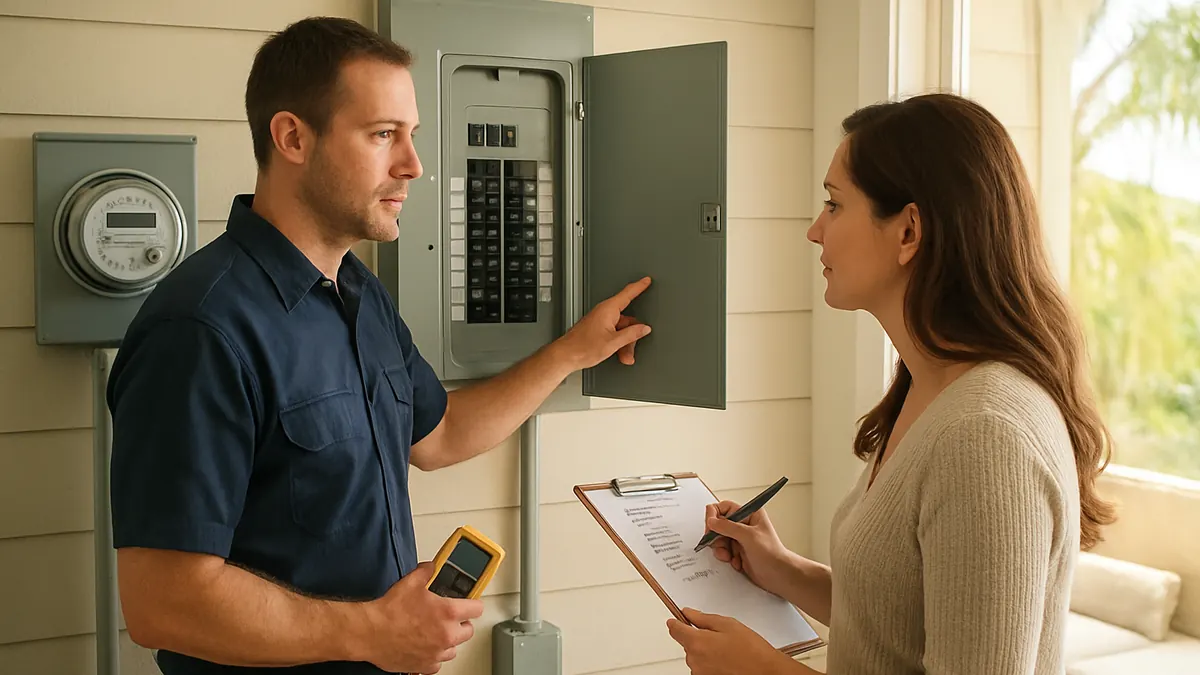
The electrician checks the service rating and condition of the meter base, conductors, disconnect, panel, breakers, grounding electrode system, and bonding connections.
A load calculation then estimates how much electrical demand the home is expected to place on the service. It considers general household use and the nameplate ratings of major appliances. Adding all breaker numbers is not a valid substitute because many circuits do not operate at maximum load simultaneously.
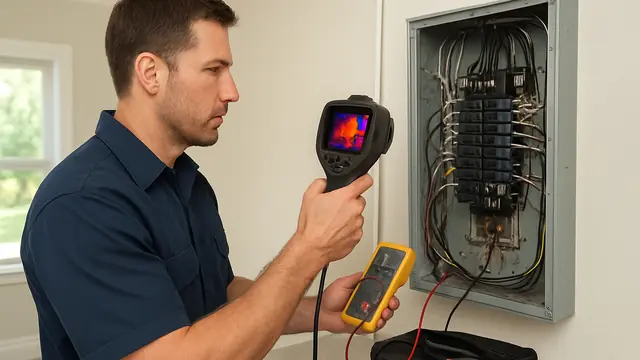
Voltage and current measurements, connection checks, and thermal imaging help distinguish inadequate capacity from equipment failure.
The recommendation should account for planned renovations and likely future loads, not merely today's minimum needs.
Repair Choices, Starting With the Simplest
- A targeted repair may involve replacing a defective breaker, repairing a loose termination, correcting an overloaded circuit, or fixing an appliance fault.
- Dedicated circuits can be added when the service has sufficient capacity but existing appliances are improperly sharing circuits. Loads may also be redistributed within the panel.
- If breaker spaces are the limitation, a subpanel can provide additional circuit positions without increasing the service rating.
- Load-management equipment may allow a controllable appliance, such as some vehicle chargers, to operate only when adequate capacity is available.
- A panel can be replaced at its current service rating when the enclosure or bus is damaged but the calculated capacity remains adequate.
- A full 200-amp service upgrade becomes reasonable when the calculation, equipment condition, and future plans show that smaller repairs will not provide sufficient capacity.
What Affects the Cost of an Upgrade?
Cost factors include existing amperage, equipment locations, conductor routing, utility supply type, accessibility, grounding condition, and circuit transfers.
Permits, utility scheduling, panel relocation, surge protection, finish repairs, and correction of unsafe prior work can change the scope.
Prevention and Long-Term Planning
- Have a load calculation completed before buying high-demand equipment. Give the electrician manufacturer specifications whenever possible.
- Keep the panel area clear, labels readable, and covers secured. Have repeated tripping, buzzing, flickering, or heat investigated instead of accepting it as normal.
- Document permitted improvements and keep copies of inspection records. Good records help future electricians understand what was changed and what capacity remains.
Does Your DeFuniak Springs Home Need a 200-Amp Electrical Service?
The answer is not determined by panel appearance or home size alone. A licensed electrician must inspect the full service, diagnose any warning signs, and calculate expected demand. Some homes need only a breaker repair, dedicated circuit, subpanel, or load-management solution. Others need a complete 200-amp upgrade to support present and future electrical use safely.
About this guide: This resource provides general homeowner education, not a remote diagnosis. Actual conditions, code requirements, equipment, and safe repair options must be evaluated at the property.