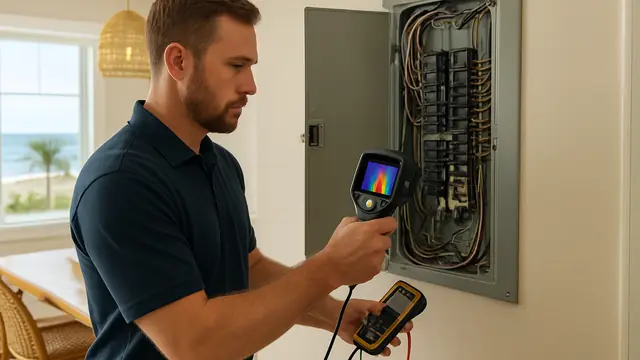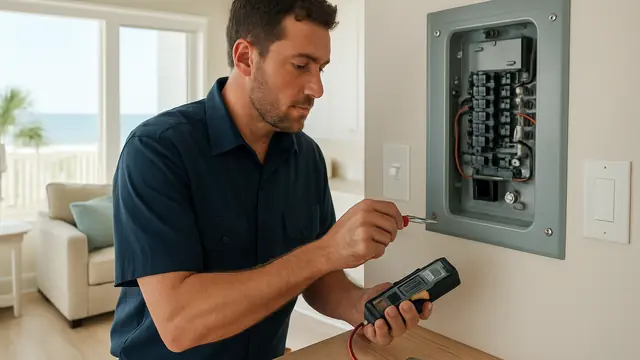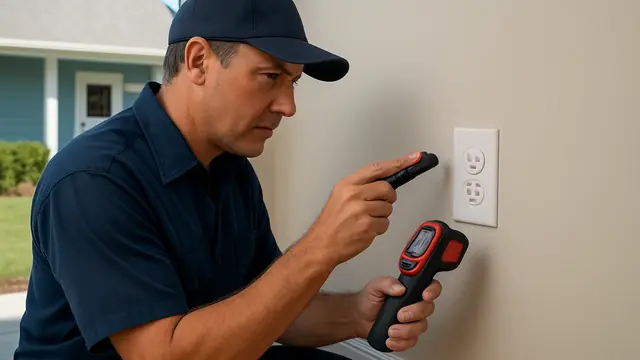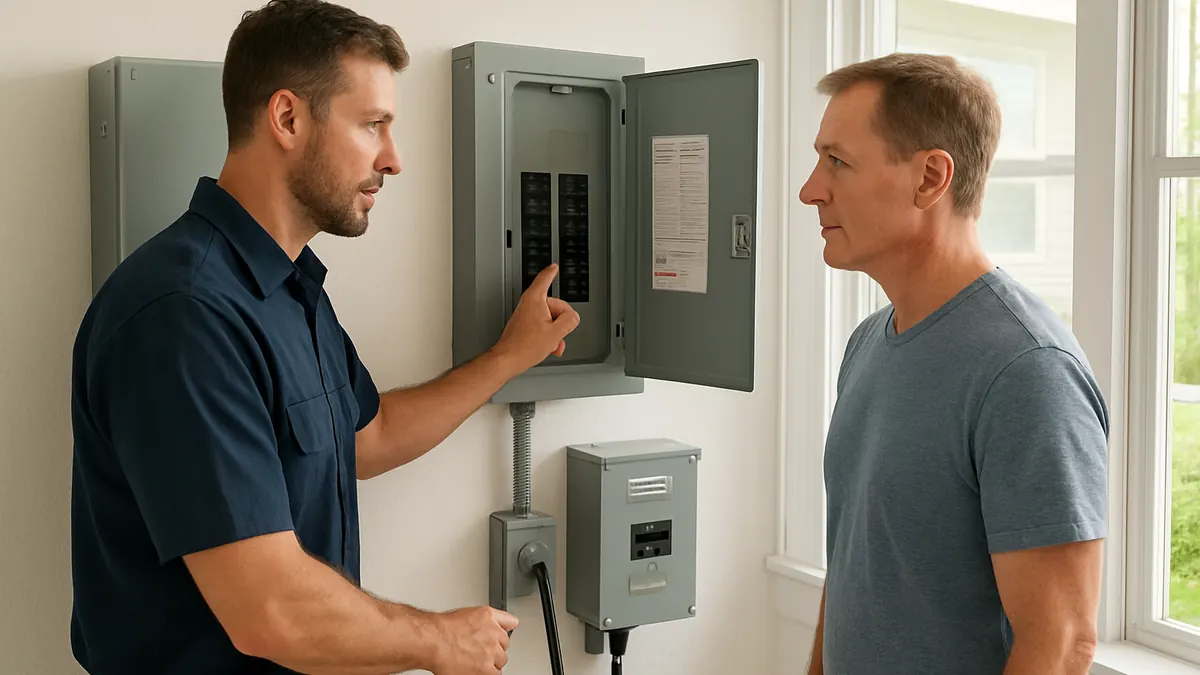
Do not remove an electrical panel cover, touch exposed conductors, bypass protection, or repeatedly reset a fault. Keep clear of smoke, sparks, burning odors, hot equipment, standing water near electricity, and downed lines, then call qualified help.
The storm has passed, power returns, and your air conditioner starts-but several kitchen outlets remain dead. A GFCI will not reset. Another protective device may have tripped, moisture may be present, or storm damage may be preventing a reset. Unplug appliances on that circuit and check for water, heat, smoke, or damage. If you find any warning sign, leave the circuit off.
A Northwest Florida hurricane electrical checklist in Callaway helps homeowners prepare for outages, generator use, wind-driven rain, and the electrical problems that often appear when power is restored.
Start With the Electrical Loads Your Household Depends On
Before a storm, identify the loads that matter most: refrigeration, essential lighting, communication devices, medically necessary equipment, and selected receptacles. Write down their breaker numbers and update inaccurate panel labels.
Locate the panel, service equipment, HVAC disconnects, and any generator inlet or transfer switch. No one should approach this equipment when the ground or enclosure is wet.
Most Common Hurricane Electrical Problems
GFCI Receptacles That Will Not Reset
GFCI protection is commonly used where electricity and moisture may meet. A GFCI may refuse to reset when power is absent, an upstream device has tripped, the receptacle has failed, or a ground fault remains.
Breakers That Trip After Power Restoration
A breaker may trip because too many loads restart at once. It may also be responding to wet wiring, damaged equipment, a short circuit, or an appliance that failed during the outage.
HVAC and Appliance Control-Board Damage
Modern equipment relies on electronic controls. Voltage spikes and unstable power can damage these components even when the appliance has no visible exterior damage.
Damaged Service Equipment
Wind, debris, or falling limbs can affect the service mast, weatherhead, meter enclosure, or cables attached to the home. Damage on the house side may require an electrician before the utility can safely reconnect service.
Unsafe Generator Loading
A generator can stall, overheat, or trip when too many appliances are connected. Large loads such as central air conditioning, electric water heaters, ranges, and clothes dryers may exceed the generator's capacity.
Safe Checks Homeowners Can Perform
Before the hurricane, press the test button on accessible GFCI and AFCI devices, then confirm they reset. An AFCI, or arc-fault circuit interrupter, helps detect dangerous electrical arcing. If a device will not test or reset during normal conditions, schedule service before the storm.
Inspect extension cords for damage and use only cords rated for the load and environment. Keep outdoor-rated cords out of standing water and walkways.
Unplug unnecessary electronics before conditions deteriorate. Plug-in surge strips provide limited point-of-use protection, while whole-home surge protection helps reduce surges entering through the service.
After the storm, look and listen before touching anything. Check for damaged covers, branches near lines, buzzing, burning odors, or water near electrical equipment.
If one circuit is dead, check the panel visually without removing its cover. A tripped breaker may sit between ON and OFF. Reset it only when the area is dry and there are no signs of damage. Move it fully to OFF and then to ON once. If it trips again, stop.
What a Homeowner Should Not Attempt
- Do not open the meter enclosure, remove the electrical panel cover, or tighten service connections. Parts inside can remain energized even when the main breaker is off.
- Do not patch storm-damaged wiring with tape or improvised covers. Hidden insulation damage or moisture may remain.
- Do not energize appliances that were submerged or soaked. Refrigerators, water heaters, HVAC equipment, washers, dryers, and other devices may hold moisture internally.
Never feed generator power into a household receptacle. Backfeeding bypasses normal safety controls and can energize utility lines. Use an approved transfer switch or listed interlock system installed for the specific equipment.
Do not place a generator near doors, windows, vents, or an attached garage. Electrical safety and carbon-monoxide safety must be handled together.
Warning Signs That Require Urgent Action
Leave the affected equipment off and call for help when you see smoke, sparks, scorch marks, melted plastic, exposed conductors, or water inside the panel.
A loud pop followed by partial power is urgent. Bright lights in one area and dim lights in another may indicate a damaged neutral and abnormal circuit voltage.
If anyone feels a shock or tingling sensation from an appliance, plumbing fixture, pool component, outdoor faucet, or metal surface, keep people away and disconnect power only if it can be done safely from a dry location.
For downed utility lines, stay well back and report them to the utility or emergency authorities. Do not assume cable, telephone, or electrical lines can be distinguished by appearance.
How a Licensed Electrician Diagnoses the Problem
The electrician determines whether the problem is on the utility side, in the home's service equipment, on one circuit, or in an appliance. Testing may include voltage measurements, grounding and bonding checks, protective-device testing, and inspection of the panel, outdoor equipment, and generator connection.
When moisture is suspected, the electrician may isolate the circuit and evaluate whether devices, cable, or equipment must be replaced. Simply allowing a component to dry may not remove conductive residue or corrosion.
Load behavior also matters. Tripping during simultaneous appliance restart may indicate overload; tripping with loads unplugged points toward wiring or protective-device trouble.
Repair Options From Minor to Extensive
A simple repair might be resetting an upstream GFCI, replacing a failed receptacle or weather-resistant cover, or correcting one loose connection.
The next level may involve replacing a damaged breaker, outdoor disconnect, generator inlet, appliance cord, or a limited section of cable. A surge protective device that has reached the end of its service life can often be replaced without changing the panel.
More extensive repairs may include replacing contaminated panel components, service conductors, the meter enclosure, mast, or complete panel. Replacement should follow testing and a physical-condition review.
What Affects the Cost of Hurricane Electrical Repairs
Cost depends on the number of affected circuits, type of equipment, accessibility, severity of water or physical damage, and whether utility coordination is required.
Permits, part availability, generator configuration, emergency conditions, and access through finished surfaces can also affect the total. A useful estimate follows a clear diagnosis.
Prevention and Seasonal Maintenance
Have recurring electrical symptoms evaluated before hurricane season. Breakers that trip, lights that flicker, hot receptacles, rust around equipment, and GFCIs that will not reset are not conditions to postpone.
- Maintain exterior covers and seals. Keep storage away from the panel. Confirm that the home has working smoke alarms and carbon-monoxide alarms with battery backup.
- Review generator capacity and instructions. Store fuel safely, never refuel a hot generator, and test the unit periodically under controlled conditions.
- After a significant storm, perform a visual check even when power seems normal.
Homeowner FAQs
Why does my GFCI have no light after the storm?
It may have lost incoming power, tripped because of moisture, failed internally, or be controlled by another GFCI or breaker. Unplug loads and have it checked if it will not reset.
Should I switch off large appliances when power goes out?
Turning off or unplugging large and sensitive loads can reduce the demand when power returns. Leave one light on so you know when service is restored.
Can I use my generator to run central air conditioning?
Only when the generator, transfer equipment, wiring, and load calculation are designed for that demand. Central air conditioning can require substantial starting current.
Is food in the refrigerator the biggest electrical concern?
Food safety matters, but do not create an electrical or carbon-monoxide hazard to save refrigerated items. Use generators and cords only in approved ways.
Do I need an inspection when everything appears to work?
Not after every minor outage. An inspection is appropriate when there was flooding, visible service damage, repeated tripping, unstable voltage, wet equipment, or unusual odors and sounds.
Complete Your Callaway Hurricane Electrical Checklist
A Northwest Florida hurricane electrical checklist in Callaway should organize essential loads, protective devices, generator procedures, safe post-storm checks, and clear stop points. The goal is not to diagnose live equipment yourself. It is to recognize when a simple reset is reasonable and when the circuit must remain off until it is tested.
About this guide: This resource provides general homeowner education, not a remote diagnosis. Actual conditions, code requirements, equipment, and safe repair options must be evaluated at the property.