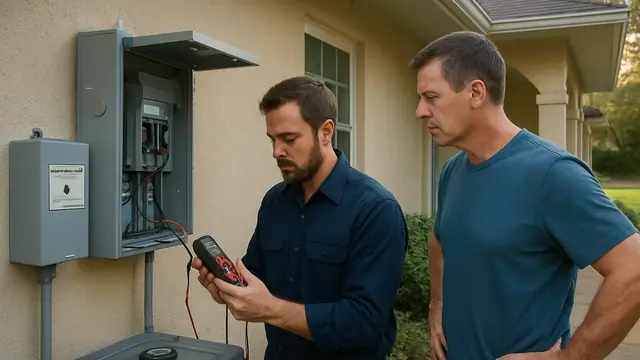
Do not remove an electrical panel cover, touch exposed conductors, bypass protection, or repeatedly reset a fault. Keep clear of smoke, sparks, burning odors, hot equipment, standing water near electricity, and downed lines, then call qualified help.
You go to use a bathroom outlet, garage refrigerator, kitchen appliance, or outdoor receptacle and discover there is no power. Pressing RESET does nothing, or the button clicks and immediately pops back out. For a Freeport homeowner, that symptom often means the GFCI is not receiving power, has failed internally, or is still detecting an electrical fault somewhere on the circuit.
Unplug everything connected to the affected outlet and any other outlets that stopped working at the same time. Make sure your hands and the surrounding area are dry. Try the reset button once. If it will not remain in, stop using the circuit and do not force the device.
Why a GFCI May Refuse to Reset
A ground-fault circuit interrupter monitors the current leaving on the hot conductor and returning on the neutral conductor. If a small amount of electricity takes another path, the GFCI opens the circuit to reduce the risk of shock.
Why Won't My GFCI Outlet Reset in Freeport?
The Breaker Has Tripped
A tripped breaker does not always look fully off. Its handle may rest near the ON position. Because many GFCI receptacles need power to latch, the reset button may feel dead when the breaker is open.
Move the suspected breaker fully to OFF and then back to ON once. If it immediately trips again, leave it off and call an electrician.
Another GFCI Is Controlling the Circuit
A standard-looking outlet or second GFCI can be downstream from another protective device. A tripped GFCI in a garage, bathroom, kitchen, laundry area, or exterior location may remove power from several outlets.
A Connected Appliance Is Leaking Current
Refrigerators, freezers, coffee makers, hair dryers, power tools, pressure washers, extension cords, chargers, and lighting transformers can develop current leakage.
If the GFCI resets with everything unplugged, reconnect devices one at a time and stop using the item that causes another trip.
Moisture Is Affecting an Outlet or Electrical Box
Water from rain, condensation, cleaning, a plumbing leak, or a damaged outdoor cover can enter a receptacle box or connected device. Moisture does not need to be obvious to create a fault.
A downstream exterior or garage receptacle may be the source even when the GFCI you are pressing is indoors.
The GFCI Has Reached the End of Its Service Life
GFCIs contain electronic components, contacts, and a mechanical trip assembly. Age, heat, repeated operation, corrosion, surges, and loose terminals can cause these parts to fail.
Some devices perform automatic self-tests and intentionally refuse to reset when they can no longer provide dependable protection.
The Wiring Has a Fault
Loose neutral conductors, damaged cable insulation, improper splices, crossed neutrals, and incorrect LINE or LOAD connections can prevent resetting.
LINE terminals receive incoming power. LOAD terminals provide GFCI-protected power to additional outlets. Incorrect placement can create nuisance trips, dead receptacles, or missing downstream protection.
Safe Checks You Can Make
Unplug every item from the affected GFCI and all outlets that lost power. Include power strips, extension cords, outdoor equipment, and appliances that may be switched off but still connected.
- Look for another tripped GFCI in nearby bathrooms, kitchens, the garage, laundry area, or outside. Reset only a device that is dry, intact, and cool.
- At the electrical panel, reset the suspected breaker once by moving it fully off and then on. Do not touch the panel if it is wet, hot, buzzing, or visibly damaged.
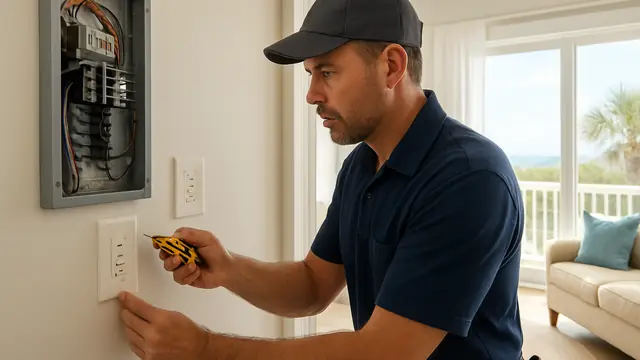
- Inspect the receptacle face without removing the cover. Stop if you see moisture, rust, cracking, discoloration, looseness, or signs of overheating.
What You Should Not Do
- Do not tape, wedge, or hold the RESET button. Do not press it repeatedly or keep cycling the breaker.
- Do not replace the GFCI with a standard receptacle just to restore power. This can remove required shock protection from more than one outlet.
- Do not remove the cover plate or pull the device from the box while the circuit may be energized. Do not move wires between terminals based only on color or guesswork.
- Never try to dry a damp receptacle with a hair dryer, heat gun, or cleaning chemicals.
When the Problem Is Urgent
- Turn the breaker off when safe and arrange prompt service if there is smoke, a burning smell, buzzing, crackling, melted plastic, dark marks, or unusual heat.
- Visible water near an outlet, fixture, appliance, or panel also requires immediate caution. Keep people away and do not touch electrical equipment while standing on a damp surface.
- Any shock or tingling sensation is urgent. Repeated trips involving both the GFCI and breaker may indicate damaged wiring, a short circuit, or defective equipment.
How a Licensed Electrician Diagnoses It
An electrician first verifies that the breaker is supplying proper voltage and that incoming power reaches the GFCI's LINE terminals. Neutral and grounding connections are inspected for looseness, damage, or improper sharing.
The GFCI is then tested to determine whether its electronics and trip mechanism are functioning. A device with proper incoming power that fails testing may need replacement.
If the problem appears downstream, the LOAD conductors may be disconnected. When the GFCI resets with those conductors removed, the electrician traces the remaining circuit section by section.
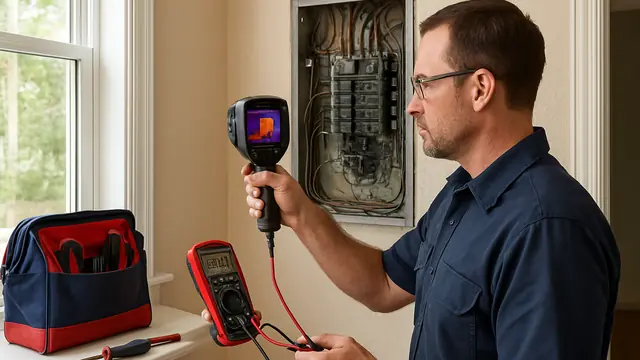
Voltage, polarity, continuity, insulation resistance, and leakage-current tests can help locate a wet box, damaged receptacle, failed appliance, loose splice, or cable fault.
Repair Options Starting With the Simplest
- The least invasive correction may be removing a faulty appliance, replacing a damaged cord, resetting an upstream GFCI, or tightening an approved connection.
- A failed GFCI can often be replaced in the existing box. The electrician should verify the LINE and LOAD conductors and test every downstream outlet for proper protection.
- Moisture damage may require replacing a cover, gasket, receptacle, or corroded component. A localized splice or cable problem may be repaired without replacing the entire circuit.
A dedicated circuit or broader rewiring may be recommended only when testing shows overload concerns, widespread damage, unsafe alterations, or wiring that cannot be repaired reliably in place.
Factors That Influence Repair Cost
The main factor is how quickly the fault can be located. Replacing one failed GFCI in an accessible box is usually simpler than tracing an intermittent problem through several outlets.
Access, the number of downstream devices, corrosion, moisture damage, panel condition, appliance testing, attic or crawlspace access, and repairs behind finished surfaces can affect the work.
Prevention and Maintenance Guidance
- Test GFCI outlets monthly. Press TEST and confirm power shuts off, then press RESET. A device that does not respond correctly should be inspected.
- Keep outdoor covers closed and replace cracked covers or damaged gaskets. Use weather-appropriate cords and equipment, and keep plug connections away from water.
- Inspect cords before use. Note what was operating and whether the trip followed rain, cleaning, or equipment startup.
Find the Fault Before Restoring the Circuit
When you are asking, "Why won't my GFCI outlet reset in Freeport?" do not assume the button itself is the only problem. The device may be responding to missing power, moisture, appliance leakage, damaged wiring, or a downstream fault. Perform only the safe checks described above and leave the circuit unused if the reset will not hold. A licensed electrician can locate the cause and begin with the least invasive reasonable repair.
About this guide: This resource provides general homeowner education, not a remote diagnosis. Actual conditions, code requirements, equipment, and safe repair options must be evaluated at the property.