Do not remove an electrical panel cover, touch exposed conductors, bypass protection, or repeatedly reset a fault. Keep clear of smoke, sparks, burning odors, hot equipment, standing water near electricity, and downed lines, then call qualified help.
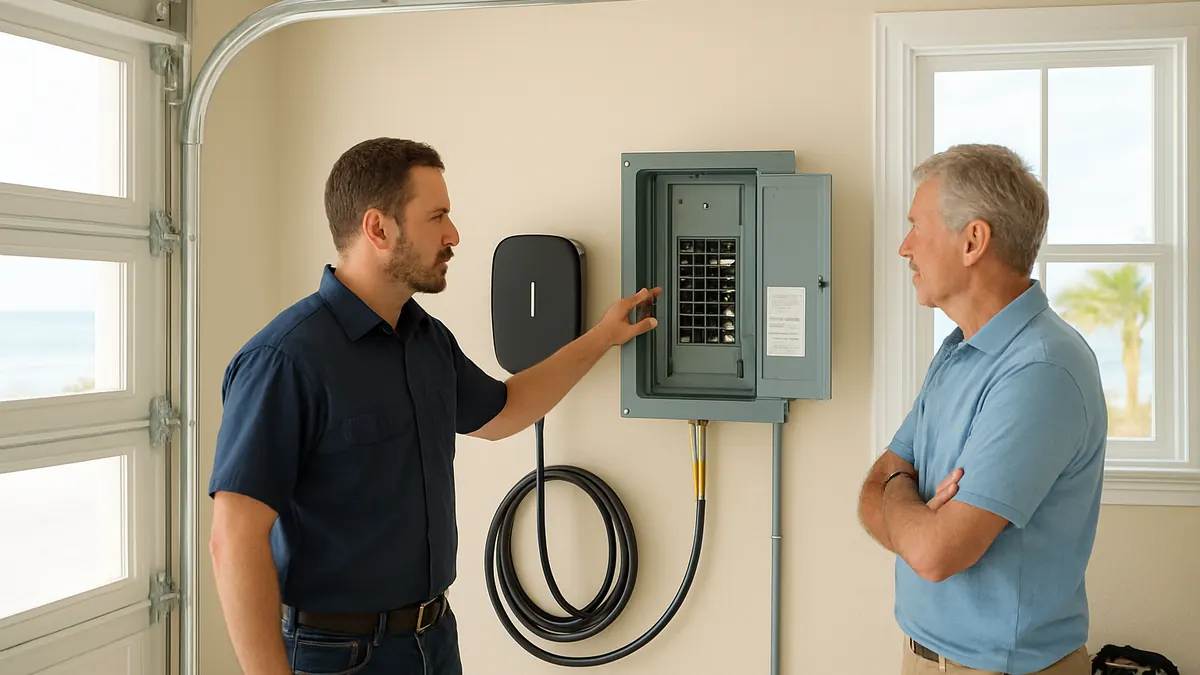
Your EV charger installation seemed straightforward until the installer asked about the home's main service, electric appliances, and future plans. The panel may have two open spaces, but the house also has central air conditioning, an electric water heater, cooking equipment, a dryer, and perhaps pool or workshop loads. You are now wondering whether the panel can safely handle charging while the rest of the home is operating.
Leave the Level 2 charger disconnected until a licensed electrician evaluates the service. Continue using only approved charging equipment as directed by the vehicle manufacturer. Do not use an extension cord, homemade adapter, or 240-volt outlet simply because the plug fits.
Level 2 home charging generally uses a 240-volt circuit and provides faster charging than a standard 120-volt connection. Panel capacity, breaker space, circuit design, and equipment condition must all be verified.
Can Your Electrical Panel Support a Level 2 EV Charger in Freeport?
It may. The answer depends on how much capacity remains after the home's expected loads are considered and how much charging power you actually need.
A high-output charger is not always necessary. When the vehicle is parked overnight and daily mileage is moderate, a lower Level 2 setting may replace the energy used without placing as much demand on the service.
The electrician must also confirm that the panel is sound, accepts the correct breaker, and has a suitable route to the charging location.
Why Open Breaker Spaces Do Not Settle the Question
- Open spaces show physical room for a new breaker. They do not prove that the utility service, main breaker, conductors, or panel have enough electrical capacity.
- The opposite can also be true. A full panel may have available service capacity, and an approved reconfiguration or subpanel may solve the space issue.
- A proper decision requires both a physical inspection and a load calculation.
Common Reasons Additional Work Is Needed
Existing Household Demand Is Close to the Limit
Cooling systems, electric heat, water heating, cooking equipment, dryers, pumps, pool equipment, and other fixed loads affect available capacity.
The Charger Is Set Higher Than Necessary
Many chargers can operate at different approved settings. Designing around the advertised maximum can create more demand and require larger conductors than your driving routine needs.
The Panel Is Full, Damaged, or Modified Incorrectly
Incorrect breakers, loose terminations, corrosion, overheating, missing covers, or overcrowding may require correction before adding a charger circuit.
The Charger Is Far From the Panel
Long routes can increase conductor size and labor. Finished walls, outdoor runs, detached buildings, and trenching affect the installation method.
An Existing Outlet Is Unsuitable
A 240-volt receptacle may have worn contacts, undersized wiring, improper grounding, or a mismatched breaker. The complete circuit must be verified.
Safe Checks You Can Complete
- Do not remove covers. Photograph the panel front, main breaker, equipment label, directory, proposed charger location, and any existing outlet.
- Find the charger's manual. Record its maximum current, adjustable settings, circuit requirements, and whether it is hardwired or plug-in.
- List major electric equipment and planned additions. A second EV, electric water heater, pool heater, workshop machine, or HVAC change may affect the design.
- Write down daily mileage and normal parking hours. This helps determine the lowest charging rate that still meets your routine.
What a Homeowner Should Not Attempt
- Do not remove the panel, meter, or receptacle cover. Service equipment can contain energized parts even when the main breaker is off.
- Do not replace a tripping breaker with a larger one. The breaker protects the wiring, and increasing its size without verifying conductor capacity can create overheating.
- Do not install a different breaker brand merely because it appears to fit. Breakers must be approved for the specific panel.
Do not use a dryer-outlet adapter, splitter, household extension cord, or improvised cable arrangement. Do not raise the charger's current after installation without another electrical review.
Signs That Make the Evaluation Urgent
- Stop charging if the connector, plug, receptacle, cable, breaker, or charger becomes unusually hot. Melting, discoloration, or burning odor are not normal charging symptoms.
- Repeated trips, buzzing, crackling, sparks, fault messages, flickering lights, or a main breaker that trips while charging require diagnosis.
- Arrange prompt service if the panel is rusty, damaged, warm, or exposed to moisture. Stay away from smoke, active arcing, or fire and call emergency services.
How a Licensed Electrician Diagnoses the Panel
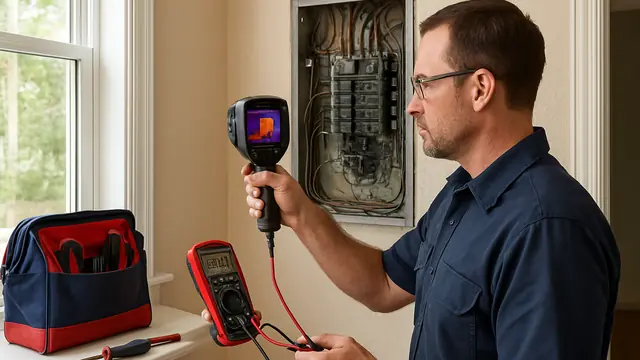
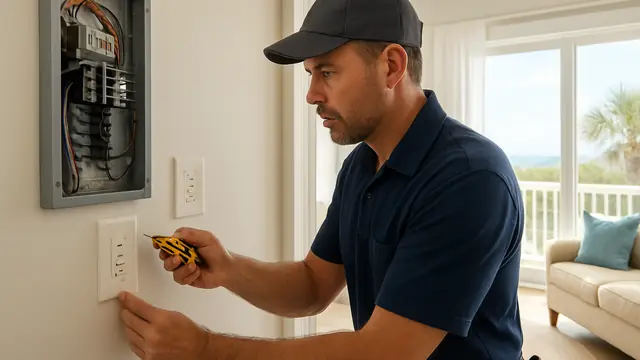
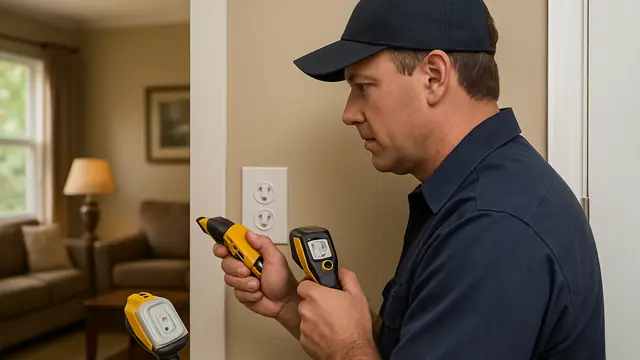
The electrician identifies the service and panel ratings, verifies the main breaker, checks available circuit positions, and confirms approved breaker types. Grounding, bonding, conductor sizes, terminations, heat damage, corrosion, and previous modifications are inspected.
A load calculation then includes the proposed charger. Adding all breaker ratings is not a valid substitute because those numbers do not represent calculated household demand. The National Electrical Code provides widely used safety requirements for electrical installations, including EV charging equipment and its branch circuit.
The electrician also evaluates the route, including length, wiring method, physical protection, outdoor exposure, mounting, voltage drop, and manufacturer instructions.
Repair and Installation Options
A dedicated circuit with the charger set to a moderate output may be the simplest solution. It can provide much faster overnight charging than Level 1 without using maximum output.
If the panel has capacity but no space, an approved reconfiguration or subpanel may help. A subpanel adds circuit positions but does not increase service capacity.
Approved load management may reduce or pause charging when household demand is high and resume when capacity becomes available. The Department of Energy describes smart charge management as a way to optimize charging and potentially reduce costly upgrades.
If the panel is defective or unsuitable, repair or replacement may be necessary. A service upgrade is considered when calculated demand exceeds capacity and less invasive solutions cannot meet the homeowner's needs.
Typical Factors Affecting Cost
Cost varies with charger amperage, breaker and conductor size, panel condition, service capacity, distance, wiring route, wall access, conduit, trenching, outdoor equipment, mounting, permits, inspections, and utility involvement.
Load management, a subpanel, existing defect correction, panel replacement, and service upgrades add different levels of work.
The estimate should identify the installed charging output so proposals can be compared accurately.
Prevention and Maintenance Guidance
- Keep the charger at the approved setting. Protect the cable from tires, doors, sharp edges, and standing water. Store the connector so dirt and moisture do not collect inside it.
- Inspect for cracking, looseness, discoloration, corrosion, heat marks, or cord damage. Stop charging if trips or fault messages become frequent.
- Have capacity reviewed before adding another charger or major appliance.
Make the Decision With a Load Calculation, Not a Guess
Can your electrical panel support a Level 2 EV charger in Freeport? It may support the proposed charger, a lower setting, or a load-managed installation. Other homes may need circuit reconfiguration, panel work, or a service upgrade.
The right approach begins with your driving needs and a complete evaluation of the service, panel, existing loads, and charger route. That identifies the least invasive safe option and helps prevent overheating, nuisance trips, and unnecessary upgrades.
About this guide: This resource provides general homeowner education, not a remote diagnosis. Actual conditions, code requirements, equipment, and safe repair options must be evaluated at the property.