Do not remove an electrical panel cover, touch exposed conductors, bypass protection, or repeatedly reset a fault. Keep clear of smoke, sparks, burning odors, hot equipment, standing water near electricity, and downed lines, then call qualified help.
You are preparing to leave your Freeport home when you notice a faint burning smell near the garage freezer outlet. The wall plate feels warm, although the breaker has not tripped. A loose receptacle connection, overloaded outlet, damaged plug, or deteriorating wiring may be creating heat. Unplug the freezer only if you can avoid the hot or damaged area. Turn off the identified circuit from a dry panel and do not leave the outlet energized unattended.
A Northwest Florida hurricane electrical checklist in Freeport should help you remove known hazards, protect essential equipment, prepare for an outage, and recognize damage after the storm.
Decide What Should Remain Connected
- Refrigerators and freezers are often left operating while power is stable, but a hot outlet, damaged cord, repeated trip, or burning odor changes that decision.
- Unplug televisions, computers, chargers, small appliances, and other nonessential electronics. This reduces exposure to voltage spikes and unexpected restarts.
- If water may enter the property, follow official evacuation and utility guidance. Never cross standing water to reach a panel or appliance.
Look for Heat and Loose Connections
- Warm outlets, switches, plugs, and breakers require attention. A loose connection creates resistance and heat, which may worsen while a freezer, pump, or motor runs.
- Look for discoloration, melted plastic, buzzing, loose plugs, or a scorched odor. Do not open the outlet.
- If a plug is hot, turn off the correct breaker rather than pulling it with bare hands. A licensed electrician should inspect the device and circuit.
Organize the Panel Before the Storm
- Use clear panel labels, and make sure another adult knows the panel location.
- A tripped breaker may rest between ON and OFF. It must be moved fully to OFF before one reset is attempted.
- Check only the panel exterior for water stains, rust, damage, heat, buzzing, or a burning smell.
Inspect Outdoor Equipment Safely
- Before high winds, look for loose fixtures, cracked receptacle covers, damaged cords, and objects that could strike electrical equipment.
- Move portable electrical devices indoors. Keep tools, cords, and decorative lighting out of rain and standing water.
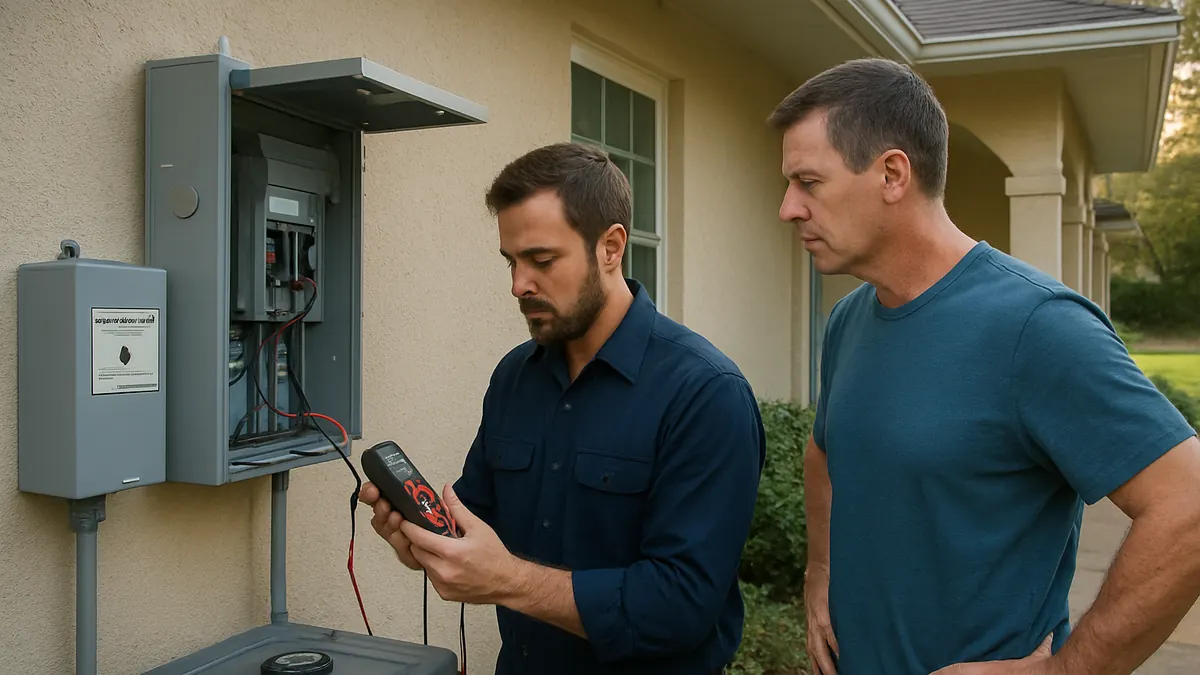
- Do not open an outdoor disconnect, meter enclosure, generator inlet, or equipment cabinet. Visible damage or water entry means the equipment should remain unused until evaluated.
Prepare Backup Power Correctly
Run a portable generator only outdoors and away from doors, windows, vents, garages, and other openings. Carbon monoxide in generator exhaust cannot be seen or smelled. Working carbon-monoxide alarms with battery backup are essential.
- Never connect a generator through a household or dryer outlet. Backfeeding can energize utility lines.
- Use approved transfer equipment that prevents generator and utility power from connecting together.
- Connect only supported loads. Use properly sized outdoor cords, keep connections dry, and never refuel a running or hot generator.
Safe Checks Homeowners Can Perform
Without opening electrical equipment, homeowners can:
- Test accessible GFCI receptacles before the storm
- Confirm smoke and carbon-monoxide alarms operate
- Charge phones, flashlights, radios, and power banks
- Photograph the panel directory and visible equipment
- Store printed emergency and service contacts
- Remove damaged extension cords from use
- Unplug sensitive or nonessential devices
A GFCI shuts off power when current leaks from its intended path. If it will not reset in dry conditions, leave it off.
What the Homeowner Should Not Attempt
- Do not replace breakers, alter generator wiring, splice damaged conductors, open the meter, or remove the panel cover.
- Never install a larger breaker to keep a circuit operating. Its rating is matched to the wiring.
- Do not touch fallen power lines or anything contacting them. Electricity can travel through wet ground, fences, trees, vehicles, and standing water.
- Avoid makeshift generator covers that trap exhaust or place flammable materials near hot equipment.
Signs That Make the Problem Urgent
Leave the area and contact the utility, emergency services, or an electrician when appropriate if you find:
- Smoke, fire, sparks, or a strong burning odor
- A hot or melted outlet, plug, switch, or breaker
- Water entering electrical equipment
- A damaged service line, meter base, or service mast
- A shock or tingling sensation from equipment or metal
- Lights becoming unusually bright while others dim
- A breaker that trips immediately after one reset
- A carbon-monoxide alarm activation
- A generator leaking fuel or operating erratically
Bright and dim lights together may indicate a damaged neutral. Turn off major loads and request evaluation.
How a Licensed Electrician Diagnoses the System
- The electrician uses the symptoms and timeline to narrow the cause.
- The inspection may include the service entrance, panel, affected circuit, receptacles, grounding and bonding, outdoor devices, surge protection, and generator transfer equipment.
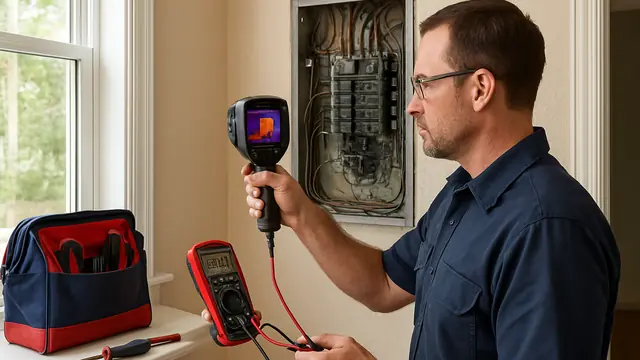
- Testing may include voltage, load, connection, insulation, and thermal checks. The electrician separates home, equipment, and utility faults before recommending repairs.
Repair Options Beginning With the Least Invasive
The least invasive repair may be replacing a damaged plug, cord, receptacle, switch, GFCI, or weatherproof cover after testing the circuit.
A suitable loose connection may be repaired, and a defective breaker replaced after the trip cause is identified.
Other options include installing a dedicated circuit for a heavy appliance, correcting grounding and bonding, replacing damaged outdoor equipment, adding surge protection, or installing approved generator transfer equipment.
Panel or service replacement may be needed when components are burned, water-damaged, corroded, or unsafe.
Factors That Affect Electrical Repair Cost
Cost depends on diagnostic time, component type, access, wiring condition, water exposure, equipment availability, permits, and utility coordination.
A receptacle repair is less extensive than replacing a feeder or service. Work involving concealed wiring, detached structures, generators, or a utility disconnection may require additional labor.
Restore Power Methodically After the Storm
Inspect the property visually before using electrical equipment. Do not enter areas with standing water, damaged wiring, or fallen lines.
When power returns, reconnect essential loads gradually. Watch for buzzing, flickering, odors, heat, or trips.
If a motor hums without starting or a breaker trips again after one safe reset, turn the equipment off. Water-exposed devices should not be energized simply because their surfaces look dry.
Prevention and Maintenance Guidance
Before hurricane season, repair warm outlets, loose plugs, flickering lights, and recurring trips. Test GFCIs, check outdoor covers, maintain surge protection, and service generator equipment according to its manufacturer.
Keep the panel accessible and accurately labeled. Review the plan with household members and anyone responsible for the property during an evacuation.
Complete Your Northwest Florida Hurricane Electrical Checklist in Freeport
A Northwest Florida hurricane electrical checklist in Freeport should begin with existing warning signs, not just storm supplies. A hot outlet, damaged cord, recurring trip, unsafe generator connection, or water-exposed device should be corrected or disconnected before the home is left unattended. After the storm, restore loads gradually and stop for heat, odors, partial power, repeated trips, or abnormal operation.
About this guide: This resource provides general homeowner education, not a remote diagnosis. Actual conditions, code requirements, equipment, and safe repair options must be evaluated at the property.