Do not remove an electrical panel cover, touch exposed conductors, bypass protection, or repeatedly reset a fault. Keep clear of smoke, sparks, burning odors, hot equipment, standing water near electricity, and downed lines, then call qualified help.
You are considering a Freeport home and imagining how you will use it after closing. Perhaps you want an EV charger, power tools in the garage, a pool, a generator, or another large appliance. During the walk-through, however, the panel has little open space, an exterior receptacle is dead, and a breaker trips when two appliances operate together.
Do not assume that adding a larger breaker or repeatedly resetting the existing one will solve the problem. Stop using any device that is hot, scorched, sparking, or repeatedly losing power. Leave panel covers and wiring in place, record what was operating when the symptom occurred, and arrange for a licensed electrician to inspect the system. An electrical inspection checklist before buying a Northwest Florida home in Freeport should evaluate present safety and whether the property can support your future plans.
Identify Present and Planned Electrical Loads
List the home's major electrical equipment, including HVAC systems, water heaters, cooking appliances, laundry equipment, pumps, pool or spa equipment, garage tools, generators, and EV charging if present.
Then list what you expect to add. A service that supports the current household may not have sufficient capacity for several new high-demand loads. A licensed electrician can perform a load calculation, which estimates the electricity that could be used at the same time.
Panel space and service capacity are separate questions. A panel may have empty positions but insufficient capacity, or adequate capacity with limited breaker space. Both conditions should be evaluated before an upgrade is recommended.
Review the Main Panel and Subpanels
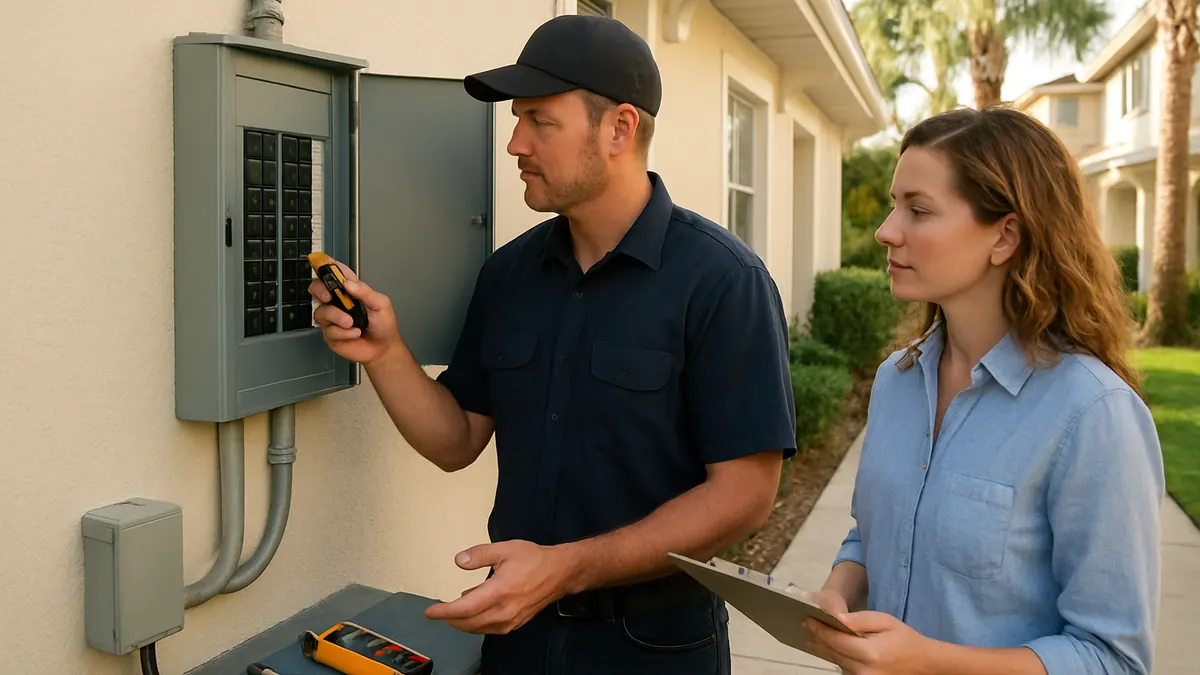
Locate the main panel and any subpanels serving garages, workshops, outdoor equipment, or other areas. Each should be accessible, dry, secure, and clearly identified.
Without opening an enclosure, look for rust, missing covers, open spaces, discoloration, buzzing, or a burning odor. Circuit labels should be specific.
A licensed electrician can inspect internal connections, breaker compatibility, conductor sizes, overheating, and neutral and grounding arrangements. These details cannot be verified safely by looking only at the panel door.
Understand Why a Breaker Trips
A breaker is a protective device. It may trip because a circuit is overloaded, an appliance is failing, a conductor is loose, insulation is damaged, or a short or ground fault is present.
Write down which lights, outlets, and appliances lost power and what was operating. A breaker that trips only when two high-demand appliances run together may indicate overload. One that trips immediately with little connected load may indicate a fault.
Do not install a larger breaker unless an electrician confirms that the wiring and equipment are designed for it. Oversizing can allow conductors to overheat.
Test Receptacles and GFCI Protection
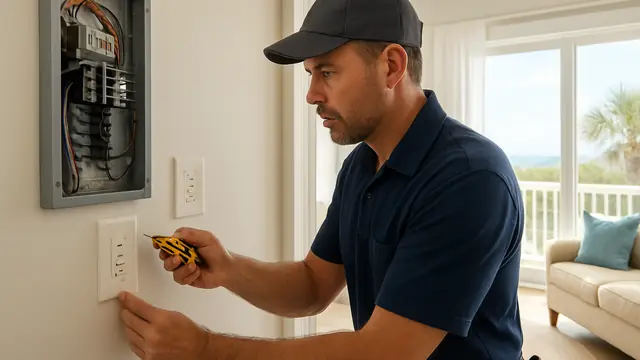
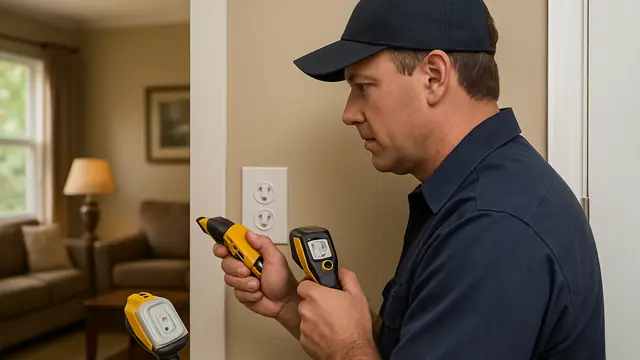
Check accessible receptacles for cracked plates, looseness, discoloration, unusual warmth, buzzing, or plugs that will not stay in place.
GFCI protection is important near water and in other required locations. It monitors current leaving and returning to a circuit and shuts off power when it detects an imbalance.
A device that will not reset may have failed, lost incoming power, or detected moisture or a wiring fault. Do not keep pressing reset. A three-prong outlet also does not prove that grounding is present.
Inspect Exterior Circuits and Property Features
If the property includes exterior lighting, a dock, pump, pool, spa, detached building, gate, or landscape equipment, include those systems in the inspection. Any feature transferring with the sale should be evaluated.
Look for broken weatherproof covers, loose boxes, damaged conduit, unsupported cable, corroded components, or extension cords used as permanent wiring. Ask where outdoor and detached-structure circuits can be disconnected.
For pool and spa equipment, the electrician should evaluate visible wiring, disconnects, GFCI protection, grounding, and bonding. Never touch electrical equipment while standing in water.
Check Major Appliances and Dedicated Circuits
Ask whether the range, dryer, water heater, HVAC systems, pumps, and other major equipment have dedicated circuits.
Operate included equipment normally and observe whether lights dim, receptacles lose power, or breakers trip. If an appliance was recently replaced, ask whether the circuit was evaluated because the new equipment may have different requirements.
Look for Additions or Improvised Wiring
Renovated rooms, converted garages, patios, storage buildings, and added equipment can introduce later wiring. Ask for permits, invoices, and contractor information when available.
Warning signs include cords routed through walls, open junction boxes, taped splices, loose cable, inaccessible connections, or high-demand devices sharing a general-purpose circuit.
Not every alteration requires extensive replacement. A limited correction may involve a proper box, cable protection, a new device, one dedicated circuit, or correction of an improper connection.
Safe Checks the Buyer Can Perform
Turn lights, fans, switches, and included appliances on and off normally. Use built-in test and reset buttons on visible GFCI devices if permitted. Confirm that panels and disconnects are not blocked.
Ask the seller to demonstrate any generator connection, EV charger, pool equipment, gate, pump, smart control, or detached-building power system included in the sale.
Record symptoms precisely. Note whether an outlet is always dead or loses power only when another device operates.
What the Buyer Should Not Attempt
Do not remove panel covers, meter enclosures, receptacles, switches, fixtures, disconnects, or control-box covers. Do not tighten terminals, move wires, replace breakers, or use test instruments without proper training.
Do not bypass GFCI protection, defeat grounding with adapters, or rely on extension cords as permanent wiring. Never reset a tripping breaker repeatedly.
Urgent Electrical Conditions
Burning smells, smoke, arcing, melted insulation, hot receptacles, repeated trips, loud buzzing, exposed conductors, water inside equipment, or a shock or tingling sensation require prompt attention.
If active smoke or sparking is present, leave the area. Notify the seller, property representative, electric utility, or emergency services as appropriate.
How a Licensed Electrician Diagnoses the Property
The electrician evaluates the service, panels, grounding and bonding, visible wiring, receptacles, switches, major circuits, outdoor equipment, and detached structures.
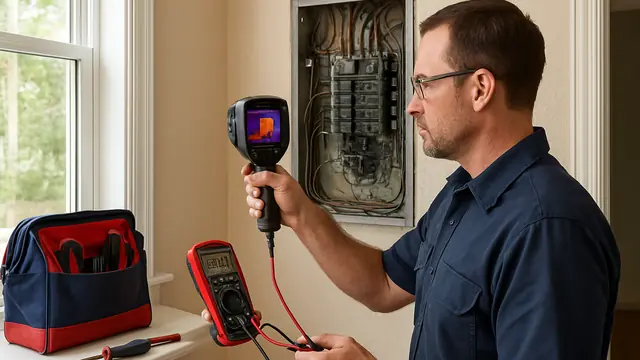
Testing may include voltage, polarity, grounding, GFCI operation, circuit tracing, load calculations, and thermal imaging. Written findings should distinguish hazards, necessary repairs, maintenance, and upgrades connected to your plans.
Repair Options and Cost Factors
Repairs should start with the least invasive safe solution. Options may include replacing a worn receptacle, correcting a loose termination, installing a cover, updating labels, repairing a cable section, or replacing one defective protective device.
More involved work may include dedicated circuits, subpanel work, grounding and bonding corrections, panel-component replacement, service upgrades, rewiring altered areas, or replacing damaged outdoor equipment.
Cost depends on access, distance, circuit size, panel condition, equipment needs, permits, trenching or wall access, and hidden damage. Planned upgrades should be priced separately from repairs required for safety.
Prevention and Maintenance After Closing
Keep panels and disconnects accessible. Maintain accurate circuit labels and electrical records. Test GFCI devices according to manufacturer guidance and replace damaged covers promptly.
Before adding an EV charger, generator, pool, hot tub, workshop equipment, or major appliance, request a load and circuit review.
Homeowner FAQs
Does a full panel mean the electrical service is inadequate?
Not necessarily. Panel space, breaker arrangement, and service capacity must be evaluated separately.
Can I use an extension cord for a garage appliance?
Extension cords are for temporary use and should not replace permanent wiring for regularly used or high-demand equipment.
Why does an exterior GFCI keep tripping?
Moisture, damaged equipment, deteriorated wiring, or a faulty device can cause repeated trips. The circuit should be diagnosed.
Should future upgrades be considered before closing?
Yes. Planned EV charging, generators, pools, workshops, or major appliances may affect service and circuit requirements.
Is every electrical defect expensive?
No. Many concerns involve a device, connection, cover, label, or limited circuit correction. Diagnosis determines the scope.
Confirm the Home Can Support Your Plans
An electrical inspection checklist before buying a Northwest Florida home in Freeport should answer two questions: Is the system safe and reliable today, and can it support the way you plan to use the property? A professional evaluation separates immediate repairs from optional improvements and prevents future projects from being built on uncertain electrical capacity.
About this guide: This resource provides general homeowner education, not a remote diagnosis. Actual conditions, code requirements, equipment, and safe repair options must be evaluated at the property.