Do not remove an electrical panel cover, touch exposed conductors, bypass protection, or repeatedly reset a fault. Keep clear of smoke, sparks, burning odors, hot equipment, standing water near electricity, and downed lines, then call qualified help.
The question often appears as electrical needs grow. You may be adding an electric vehicle charger, replacing appliances, finishing a garage, or planning a pool. You may also notice trips when large appliances run together, dimming lights, or a panel with no room for another circuit.
Those signs do not prove that your Freeport home needs a 200-amp electrical service, but the system should be checked before new equipment is connected. Stop using any appliance that repeatedly causes a trip and schedule a licensed inspection. Burning odors, crackling, or melted material require immediate help.
A professional evaluation can determine whether the problem is limited to one circuit or whether the home truly needs more service capacity.
Why Homeowners Consider a 200-Amp Upgrade
A service that handled earlier equipment may have less available capacity after electric water heating, larger HVAC equipment, cooking appliances, pumps, or vehicle charging are added.
A 200-amp service supports greater calculated demand, but it is not necessary for every property. The electrician evaluates installed equipment, simultaneous use, and future plans.
The rating applies to conductors, meter equipment, disconnect, panel, grounding, and bonding. Changing only the panel does not necessarily increase capacity.
Does Your Freeport Home Need a 200-Amp Electrical Service?
- The answer is more likely yes when a load calculation shows that current and planned equipment exceeds existing capacity, especially during a major renovation.
- Repeated trips do not prove the service is too small. A faulty appliance, loose connection, weak breaker, or overloaded circuit may be the cause.
- A full panel may need a subpanel rather than a service upgrade. Diagnosis should come first.
Common Situations That Trigger an Evaluation
Adding an Electric Vehicle Charger
Charger demand depends on its rating and speed. The answer may be a smaller charger, load management, or a service upgrade.
Replacing Several Fuel-Burning Appliances With Electric Models
Electric ranges, water heaters, and heating systems can add substantial demand, especially when combined.
Expanding the Home or Adding a Separate Structure
Added rooms, garages, or workshops may require lighting, receptacles, HVAC equipment, and dedicated circuits. The complete plan must be evaluated.
Installing Pool, Spa, or Outdoor Equipment
Pumps, heaters, lighting, and controls add demand and circuit requirements. Their specifications matter.
Experiencing Main-Breaker Trips
A main breaker that trips under ordinary use requires prompt diagnosis. Excessive total demand is possible, but so are a failing breaker or damaged connection.
Safe Checks a Homeowner Can Make
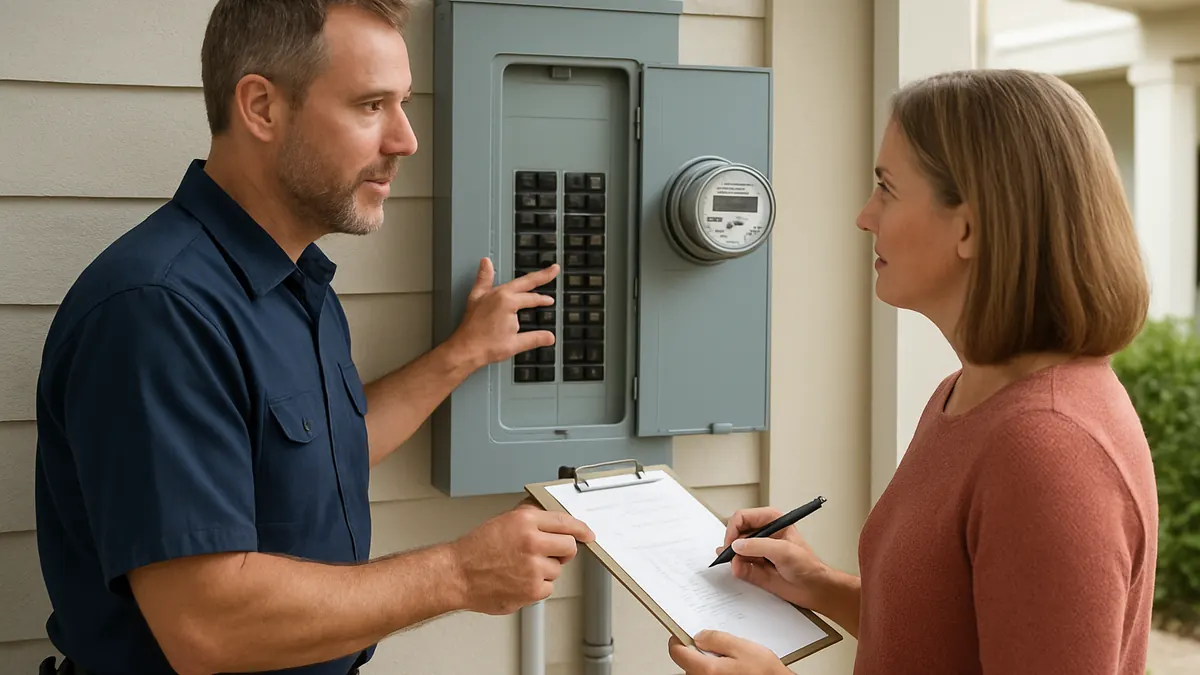
Read the main breaker rating without removing the cover. The electrician must still verify all service equipment.
List large loads and model information, including HVAC systems, water heaters, cooking and laundry appliances, pumps, pool or spa equipment, generators, solar components, batteries, tools, and chargers.
Record which appliances were running, which breaker tripped, and whether dimming affected one room or the whole home.
Inspect only closed equipment. Report rust, loose covers, staining, buzzing, unusual heat, or water, and do not touch damaged equipment.
What You Should Not Attempt Yourself
- Do not remove the dead front, which is the metal cover surrounding the breakers. Energized components are located behind it.
- Do not replace a breaker with one of a higher amperage. The breaker rating must protect the size and type of wiring connected to it.
- Do not add a subpanel, tandem breaker, or large-appliance circuit based only on physical space. Capacity and equipment limitations must be verified.
- Do not connect vehicle chargers, dryers, ranges, heaters, or other high-demand equipment with improvised adapters or extension cords.
- Do not open meter equipment or handle service conductors. These areas can remain energized even after the main breaker is switched off.
Warning Signs That Make the Problem Urgent
- A burning smell, smoke, sparks, crackling, melted plastic, scorch marks, or an unusually hot panel requires immediate attention. Call emergency services if there is fire or smoke.
- Prompt service is also needed when the main breaker trips repeatedly, several areas lose power together, or lights become unusually bright and dim.
- Water around the panel, disconnect, or meter is another urgent concern. Keep people away from wet equipment and do not attempt to dry or open it.
How a Licensed Electrician Diagnoses the System
- The electrician verifies the rating and checks conductors, meter equipment, disconnect, panel, breakers, grounding, and bonding.
- A load calculation estimates demand from household use and major equipment. Adding breaker numbers is not valid because they represent circuit protection, not simultaneous use.
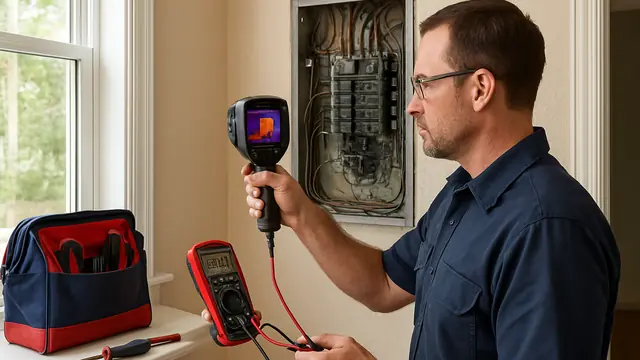
- Voltage readings, current measurements, thermal imaging, and connection checks can reveal overheating, failing breakers, or excessive loading.
- Future chargers, renovations, or HVAC additions should be included before selecting a solution.
Repair and Upgrade Options
Repair the Immediate Electrical Fault
The least invasive answer may be replacing a defective breaker, correcting a loose connection, repairing wiring, or servicing an appliance.
Install or Correct Dedicated Circuits
A properly sized dedicated circuit may solve the issue when service capacity is available.
Reorganize the Panel or Add a Subpanel
Circuit reorganization or a subpanel can add breaker spaces but does not increase service amperage.
Use Load-Management Equipment
Load management can reduce simultaneous demand by pausing a controllable load.
Replace the Panel Without Changing Service Size
A deteriorated or unsuitable panel can sometimes be replaced at the existing rating when the load calculation shows that capacity is sufficient.
Upgrade the Entire Service to 200 Amps
A complete upgrade may involve conductors, meter equipment, disconnect, panel, grounding and bonding, permits, inspection, and utility coordination.
What Affects the Cost?
Cost is influenced by the current service rating, equipment locations, accessibility, conductor length, overhead or underground utility connection, and whether components must be relocated.
Other factors include grounding corrections, surge protection, permits, utility scheduling, finish repairs, and correction of unsafe work.
A detailed proposal should state whether the project is a panel replacement at the same capacity or a complete service increase.
Prevention and Maintenance Guidance
- Plan capacity before buying major equipment and provide model numbers for the load calculation.
- Keep the panel dry, accessible, and accurately labeled. Do not store materials in front of it or cover required labels.
- Treat repeated tripping, flickering, buzzing, corrosion, or heat as service calls. Early diagnosis may allow a smaller repair.
- Keep permits, inspection results, manuals, and invoices for future additions.
Does Your Freeport Home Need a 200-Amp Electrical Service?
A load calculation and inspection provide the reliable answer. Your home may need more capacity for a charger, renovation, pool, workshop, or new appliances. It may instead need a breaker repair, dedicated circuit, subpanel, or load management. Address dangerous warning signs immediately and confirm capacity before adding a major load.
About this guide: This resource provides general homeowner education, not a remote diagnosis. Actual conditions, code requirements, equipment, and safe repair options must be evaluated at the property.