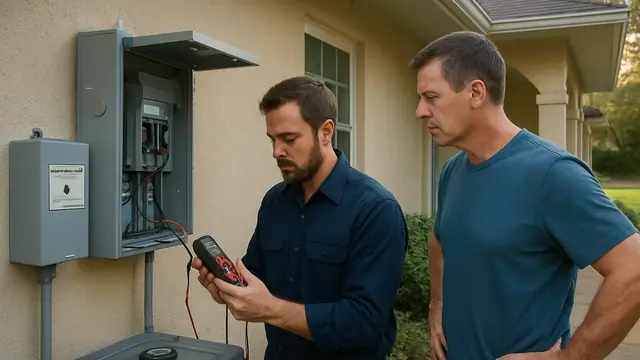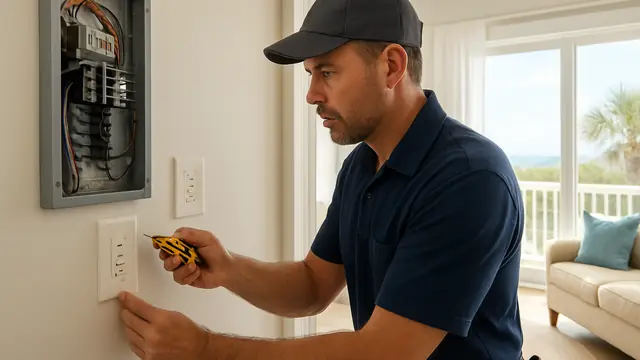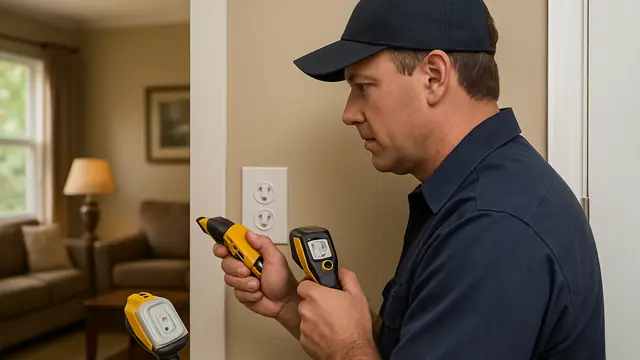
Do not remove an electrical panel cover, touch exposed conductors, bypass protection, or repeatedly reset a fault. Keep clear of smoke, sparks, burning odors, hot equipment, standing water near electricity, and downed lines, then call qualified help.
You plug in a countertop appliance, the breaker trips, and power disappears from part of the kitchen. On another day, the lights dim when the air conditioner starts, or you notice a warm spot near the breaker panel. In a Freeport home, these symptoms deserve attention.
Start by turning off or unplugging equipment on the affected circuit. Leave the electrical panel closed. You may reset a breaker once only when there is no smoke, burning odor, sparking, visible damage, or unusual heat. If it trips again, leave it off and call a licensed electrician.
Seven Signs Your Electrical Panel Needs an Inspection in Freeport
1. One Breaker Trips Again and Again
A breaker protects the wiring by opening the circuit when current exceeds a safe level. Repeated trips can result from too many devices sharing the circuit, a failing appliance, damaged wiring, a short circuit, a ground fault, or a breaker that no longer operates correctly.
Notice whether the breaker trips immediately or after equipment has run for several minutes. This timing can help the electrician narrow the cause.
2. Lights Flicker Beyond a Single Fixture
A loose bulb or worn switch can affect one light. Flickering in several rooms can indicate a loose connection, voltage drop, overloaded service, or neutral problem.
A brief dip may occur when a motor starts, but repeated dimming, pulsing, or sudden brightening should be inspected.
3. The Panel Smells Burned or Feels Abnormally Warm
A hot-plastic or scorched-insulation odor near the panel can signal overheating. Other warning signs include brown marks, melted material, paint discoloration, or concentrated warmth around one breaker.
Loose connections create resistance and heat even while a circuit continues working. Do not touch a hot panel or remove its cover. Smoke, flames, or sparks require emergency action.
4. You Hear Buzzing, Crackling, or Popping
A healthy breaker panel is usually quiet. Persistent buzzing may come from a loose component, while crackling or popping can indicate electrical arcing. Arcing occurs when current jumps across a gap instead of traveling through a secure connection.
Do not locate the sound by opening the enclosure. Stand back and schedule prompt service, especially when it is accompanied by odor, smoke, sparks, or heat.
5. A Breaker Handle Is Loose or Will Not Stay On
A breaker should move firmly from the tripped position to off and then on. A handle that wiggles, remains in the middle, immediately trips, or will not stay set may be damaged or may be reacting to an active circuit fault.
Unplug equipment before one reset attempt. If the breaker will not remain on, leave it off. Never tape or wedge it in position.
6. The Panel Has Visible Corrosion or Open Spaces
Rust, moisture staining, corrosion, missing filler plates, damaged covers, or gaps around conductors all deserve attention.
Moisture can damage breaker contacts and the internal bus that distributes power. Do not spray treatments inside the panel. Both the moisture source and equipment condition need evaluation.
7. Your Home Now Uses More Electrical Equipment
Electrical demand can increase after adding an electric water heater, larger HVAC equipment, workshop tools, a second refrigerator, an EV charger, pool equipment, or a remodeled kitchen. Breaker trips and dimming that begin after an addition may mean one circuit is overloaded or the overall service needs review.
Safe Checks You Can Perform Without Opening the Panel
Write down which breaker trips, what rooms lose power, what appliances were operating, and whether the event occurs immediately or after sustained use. Inspect accessible plugs, cords, switches, and receptacles for cracks, discoloration, warmth, or odor.
Unplug nonessential devices and stop using any appliance that triggers the problem. Stop testing if you see smoke, sparks, or heat damage.
What You Should Never Attempt Yourself
Do not remove the panel's dead front, which is the interior cover around the breaker handles. Energized service conductors may remain live even after the main breaker is turned off.
Do not tighten internal terminals, move conductors, replace breakers, or test live components unless you are properly licensed and equipped. Never install a breaker with a higher amp rating to stop nuisance tripping. The breaker must be sized to protect the wire from overheating.
Do not use homemade covers over openings or spray any product into electrical equipment.
Signs That Require Urgent Attention
Arrange prompt service when the same breaker repeatedly trips, lights flicker throughout the home, the panel makes unusual sounds, corrosion is visible, or a breaker will not remain reset. Symptoms following water intrusion, storm damage, remodeling, or installation of new equipment should also be addressed quickly.
Smoke, flames, active sparking, severe heat, or a strong burning odor are emergencies. Keep people away and call emergency services if fire or smoke is present.
How a Licensed Electrician Diagnoses the Cause
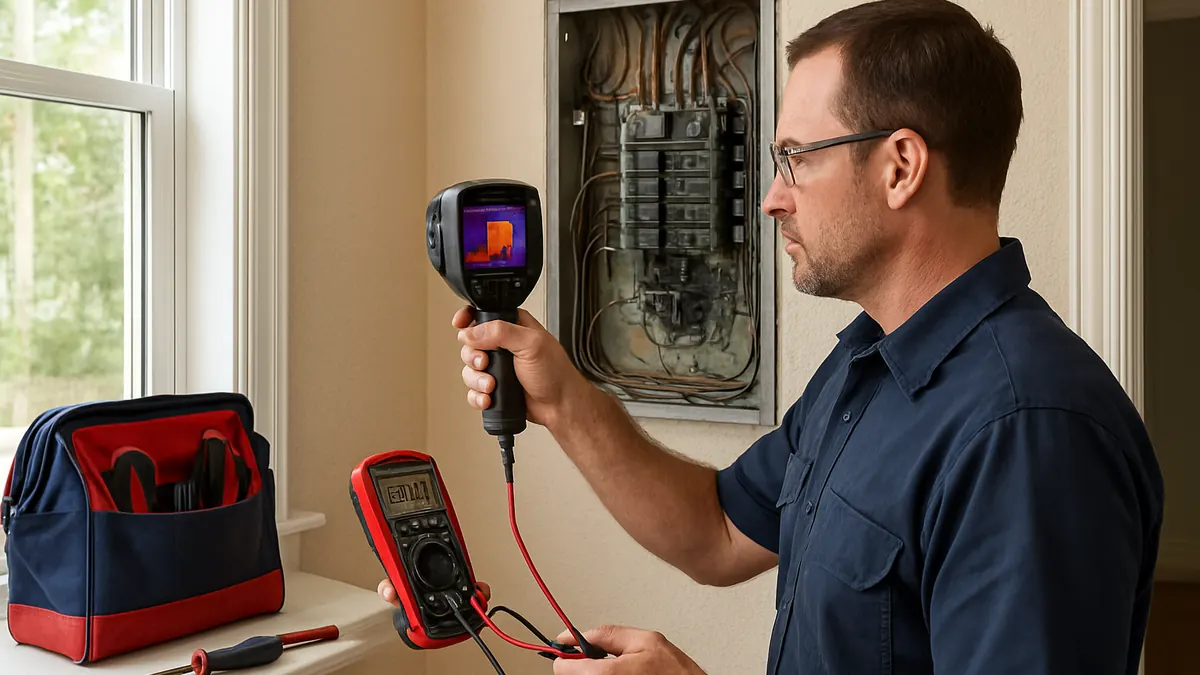
The electrician starts with the symptom history. The inspection may include the enclosure, breaker compatibility, conductor terminations, internal bus, grounding and bonding, circuit labels, corrosion, and signs of overheating or arcing.
Testing may involve voltage and current measurements, thermal imaging, circuit isolation, and checks of connected appliances.
If capacity is in question, the electrician performs a load calculation. This compares expected household demand with the rating of the service and panel. The process helps distinguish a faulty appliance or branch circuit from a panel, service, or utility-side problem.
Repair Options Starting With the Least Invasive
The smallest appropriate repair may involve replacing one damaged compatible breaker, correcting a loose approved connection, repairing a branch circuit, replacing a damaged receptacle, or removing a faulty appliance from service.
A dedicated circuit may solve an appliance overload. Other options include correcting incompatible breakers, adding a subpanel, improving surge protection, or installing approved load management.
Panel or service replacement is considered when the internal bus is damaged, corrosion is extensive, capacity is inadequate, the enclosure is compromised, or approved replacement parts are unavailable. Replacement should follow diagnosis rather than assumption.
Factors That Affect Cost
Cost depends on diagnostic time, panel location and accessibility, number of affected circuits, wiring condition, breaker availability, permitting, and utility coordination. A single breaker or branch-circuit repair is a different scope from adding circuits, installing a subpanel, or upgrading the service.
Previous modifications or concealed damage may increase the scope. The electrician should explain the problem and repair choices.
Preventing Future Electrical Panel Problems
Keep the panel dry, accessible, and free from storage. Maintain a clear circuit directory and correct missing filler plates. Use licensed electricians for remodeling and new equipment. Schedule an inspection after water exposure, repeated trips, major additions, or when the panel's history is unknown.
Schedule an Electrical Panel Inspection in Freeport
Seven signs your electrical panel needs an inspection in Freeport include repeated trips, widespread flickering, burning odor or heat, unusual sounds, unstable breakers, corrosion or open spaces, and increased household demand. A licensed inspection can identify the cause and determine whether a targeted repair, new circuit, subpanel, load-management solution, or replacement is appropriate.
About this guide: This resource provides general homeowner education, not a remote diagnosis. Actual conditions, code requirements, equipment, and safe repair options must be evaluated at the property.