Do not remove an electrical panel cover, touch exposed conductors, bypass protection, or repeatedly reset a fault. Keep clear of smoke, sparks, burning odors, hot equipment, standing water near electricity, and downed lines, then call qualified help.
You turn on the bathroom lights in your Lower Grand Lagoon home and they shimmer for several seconds. Later, the living-room lamps dim when the refrigerator starts, and an outdoor fixture flashes even after a new bulb is installed.
Begin with safe observation. Identify which lights flicker and whether the problem follows an appliance, switch, storm, or power interruption. Turn off any circuit or device that smells burned, feels hot, buzzes, crackles, sparks, or shows melted plastic. Do not open the panel or remove wiring devices. If the entire home flickers or some lights become unusually bright while others dim, call a licensed electrician promptly.
Why Are My Lights Flickering in Lower Grand Lagoon?
A light flickers when electricity is interrupted or voltage changes quickly.
A single light that flickers when its switch moves suggests a device or fixture problem. Several lights dimming together may share a circuit or neutral. Whole-home flickering can involve the main panel, service conductors, meter connection, or utility supply.
The Most Common Possible Causes
Loose Bulbs and Failing LED Components
A bulb may appear secure while making poor contact with the socket. LED lamps also rely on electronic drivers that can fail and produce pulsing.
Moisture or Damage at an Exterior Fixture
A cracked lens, failed gasket, damaged box, or deteriorated connection can allow moisture to reach the socket or wiring. Flickering exterior lights should be turned off and inspected rather than repeatedly reset.
Worn Switches and Receptacles
A switch with worn contacts may cause a light to flash when operated. Receptacles can also affect lights farther along the same circuit. If a plug feels loose, a cover plate is discolored, or a device makes noise, stop using it.
Overloaded or Shared Circuits
Portable heaters, countertop appliances, vacuums, hair dryers, and window air conditioners can draw substantial current. When several devices operate on one circuit, voltage can drop.
Air-Conditioning or Appliance Startup
Motor-driven equipment needs extra current when it starts. A slight, brief dim may be normal. Severe dimming, repeated pulsing, or flickering that continues while equipment runs may point to an appliance fault, loose connection, or inadequate circuit.
Loose Neutral or Service Conductors
A loose neutral is a serious possibility. Because the neutral helps balance voltage across household circuits, a weak connection may cause different areas to behave differently. Lights can brighten, dim, or pulse while electronics reset.
Safe Checks You Can Perform
Determine whether the symptom affects one fixture, one area, or the entire property. Write down the time, duration, rooms, and appliances operating. Note whether digital clocks reset or televisions turn off.
For one fixture, turn the light off and wait for the bulb to cool. Confirm it is fully seated, rated for the fixture, and appropriate for enclosed or outdoor use when required. Replace it with a known-good bulb.
If a dimmer is present, test the lights at full brightness. Confirm that both the dimmer and bulbs are designed to work together. A bulb marked "dimmable" can still flicker with an incompatible control.
Unplug portable appliances on the suspected circuit and test them one at a time. Inspect cords and plug faces for damage. From a safe distance, look for obvious exterior service damage, but never approach fallen lines or damaged meter equipment.
What a Homeowner Should Not Attempt
Do not remove a panel cover, meter enclosure, fixture canopy, switch, or receptacle to search for loose wiring. Some components can remain energized even when the main breaker is off.
Do not tighten panel lugs or neutral connections yourself.
Never install a larger breaker, bypass a dimmer, tape a breaker on, or use an extension cord as permanent wiring. Do not continue operating an exterior fixture that shows moisture, corrosion, scorching, or repeated failure.
Signs That Require Urgent Attention
Flickering is urgent when it spreads across several circuits, appears without a predictable load, or becomes more frequent. Lights that become much brighter than normal can indicate abnormal voltage.
Other warning signs include a burning odor, hot switch or panel, buzzing breaker, crackling in a wall, sparks, smoke, repeated trips, partial power loss, or electronics cycling on and off. Turn off the affected circuit if it is safe.
If smoke, fire, or active arcing is present, leave the property and contact emergency services. Do not touch wet electrical equipment or operate breakers while standing in water.
How a Licensed Electrician Diagnoses Flickering
The electrician begins by reproducing the symptom when possible. The technician may test the lamp, fixture, switch, dimmer, and nearby receptacles. Connections elsewhere on the circuit are checked because one loose device can affect everything downstream.
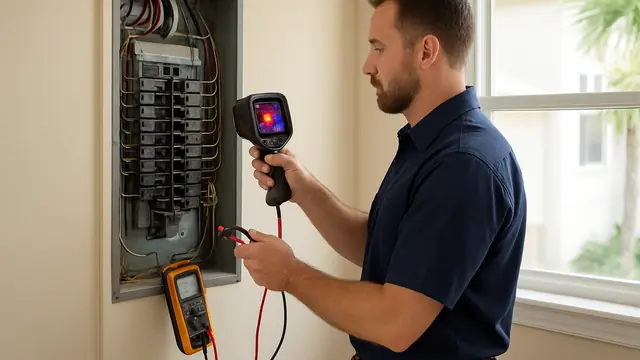
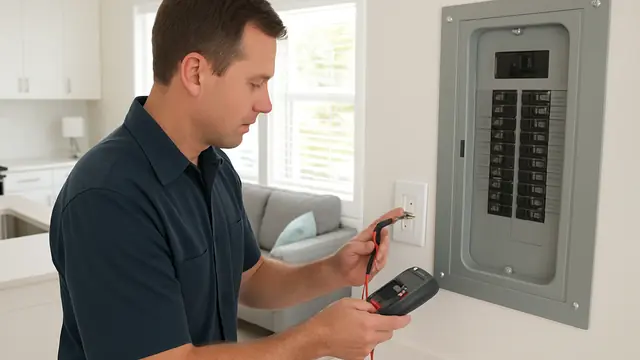
Voltage measurements reveal whether power remains stable. Current measurements show how heavily a circuit is loaded. Voltage-drop testing helps locate resistance caused by loose, damaged, or corroded connections.
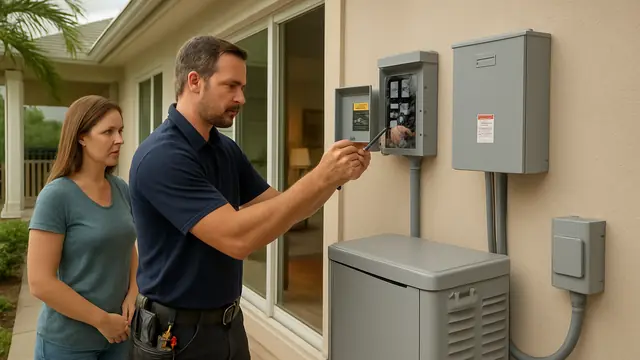
At the panel, the electrician checks breaker seating, conductor terminations, neutral and grounding connections, signs of overheating, and evidence of arcing. Service testing helps separate a household problem from a utility-supply problem.
Repair Options Beginning With the Least Invasive
A simple repair may involve replacing a bulb, installing the correct dimmer, changing a worn switch, repairing a fixture socket, or correcting an accessible loose connection.
For an exterior fixture, the electrician may replace damaged seals, repair the box, replace corroded components, or install a fixture rated for the location.
If the circuit is overloaded, the solution may be to redistribute loads or add a dedicated circuit. An appliance drawing excessive startup current may require appliance or HVAC service.
A damaged breaker or conductor termination can sometimes be repaired without full panel replacement. Replacement is appropriate when the panel has damaged bus work, widespread overheating, unsafe components, or insufficient capacity.
Typical Factors That Affect Cost
Cost depends on the location and complexity of the fault. A visible bad socket is easier to address than an intermittent connection hidden in a junction box or service assembly.
Accessibility, the number of affected circuits, panel condition, conductor damage, new wiring, permits, and utility coordination can influence the scope.
Prevention and Maintenance
Use bulbs that match the fixture, dimmer, and installation location. Keep exterior fixtures intact and replace cracked lenses, failed gaskets, and damaged covers. Do not exceed the fixture's wattage rating.
Avoid placing multiple high-current appliances on one circuit. Replace loose receptacles and worn switches before they develop heat damage. Have recurring breaker trips, buzzing, or dimming evaluated early.
Homeowner FAQs
Why Does My Outdoor Light Keep Flickering?
The cause may be a loose bulb, failing photocell, damaged socket, moisture intrusion, or loose wiring. Turn it off if water or heat damage is visible.
Can a Refrigerator Make the Lights Dim?
A brief, slight dip can occur at startup. Severe or prolonged dimming may indicate a circuit, appliance, or connection problem.
Why Do Lights Flicker Only at Certain Dimmer Settings?
The dimmer and LED bulbs may not be compatible, or the connected load may fall below the dimmer's operating range.
Can a Bad Receptacle Affect Ceiling Lights?
Yes. If the receptacle is earlier on the circuit, a loose connection there can interrupt power to lights downstream.
Is Whole-Home Flickering an Emergency?
It can be, especially when lights brighten and dim, the panel buzzes, or electronics reset. Arrange prompt evaluation.
Will Surge Protection Fix Flickering?
No. Surge protection limits brief voltage spikes. It does not repair loose wiring, overloaded circuits, failing equipment, or neutral problems.
Choose a Safe Next Step
Why are my lights flickering in Lower Grand Lagoon? A bulb, dimmer, switch, or exterior fixture may be responsible, but repeated symptoms can also reveal a loose splice, overloaded circuit, failing appliance, breaker issue, unstable neutral, or service fault. Make only safe observations, stop using anything that shows heat or arcing, and have a licensed electrician identify the least invasive reliable repair.
About this guide: This resource provides general homeowner education, not a remote diagnosis. Actual conditions, code requirements, equipment, and safe repair options must be evaluated at the property.