Do not remove an electrical panel cover, touch exposed conductors, bypass protection, or repeatedly reset a fault. Keep clear of smoke, sparks, burning odors, hot equipment, standing water near electricity, and downed lines, then call qualified help.
After a brief power interruption, the refrigerator display is blank, the soundbar will not turn on, and the thermostat has lost its schedule. When unrelated devices develop problems together, a Lower Grand Lagoon homeowner may be seeing the effects of a voltage surge.
Unplug equipment that smells burned, feels hot, or operates erratically. Leave any breaker off if it trips again after one reset. Do not open the electrical panel, handle damaged wiring, or keep testing an appliance that is sparking or buzzing. When several circuits or systems are involved, a licensed electrician should check the electrical service before replacement equipment is connected.
Whole-home surge protection is intended to reduce the voltage spike reaching equipment across the property. It is not an unlimited shield, but it can protect far more than portable electronics.
A Direct Answer: What Whole-Home Surge Protection Protects
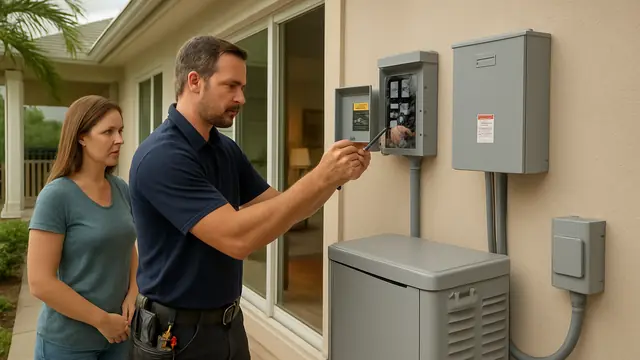
A whole-home surge protective device connects to the electrical system at the main panel or service equipment. During a short voltage spike, it provides a controlled route for much of the excess energy to move toward the grounding system.
It can help protect:
- Air conditioners, heat pumps, thermostats, and air-quality accessories
- Refrigerators, freezers, ovens, dishwashers, and laundry equipment
- Televisions, computers, charging stations, modems, and routers
- Security equipment, cameras, smart switches, and electronic doorbells
- Garage-door openers, ceiling fans, LED drivers, and lighting controls
- Pumps, water heaters, and other equipment containing circuit boards
Hardwired equipment can benefit too. However, the device does not repair wiring defects or automatically protect cable and communication lines.
Why a Small Voltage Spike Can Cause a Large Repair
Modern equipment often uses low-voltage control boards to manage motors, sensors, displays, and communication. Those boards are designed for a relatively stable electrical supply.
A short spike may damage a power supply, erase settings, or weaken a circuit board. The appliance may continue working temporarily, so delayed damage can be difficult to connect to the original event. Repeated smaller transients can also shorten equipment life.
Surges Can Start Outside or Inside the Home
- A nearby lightning strike can induce voltage on electrical, cable, or other conductive lines.
- Utility switching can also produce brief transients when power is interrupted, restored, or rerouted.
- Inside the home, motors and compressors create smaller disturbances when they start and stop. Air-conditioning equipment, refrigerators, pumps, and power tools are common sources.
- Loose neutrals, damaged service connections, failing breakers, or poor grounding can imitate surge symptoms. Those conditions require diagnosis and repair.
Safe Checks Before Calling an Electrician
Write down which devices changed behavior, whether they share one circuit, and whether the event followed a storm, outage, or flicker.
Look at plugs, cords, and receptacle faces without disassembling anything. Discoloration, melted plastic, soot, cracks, or a burned odor are reasons to stop using that equipment.
If a panel-mounted protector is already installed, check only its visible status indicator. Some units display normal protection with a green light and a problem with a red or unlit indicator. Follow the labeling for the specific device.
Check plug-in strips for a "protected" light. A power light alone does not confirm protection.
A breaker may be reset once if it is cool, quiet, and undamaged. If it trips again, leave it off. Repeated resetting can energize a fault over and over.
What the Homeowner Should Not Attempt
- Do not remove the panel cover to inspect, tighten, or replace the surge device. Parts of the service equipment may remain energized even after the main breaker is switched off.
- Do not use an incompatible breaker or force a device into a crowded panel. The equipment must be listed for the installation.
- Do not replace a tripping breaker with a larger size. A breaker protects the circuit wiring, and increasing its rating may allow dangerous overheating.
- Do not attach homemade ground wires to plumbing, outdoor metal, or another convenient object. Grounding and bonding must form an approved, continuous system.
- Do not assume a new appliance is safe to connect while lights are still changing brightness or other equipment is behaving abnormally.
When Surge Symptoms Become Urgent
Call for prompt service when you notice a burning smell, buzzing in the panel, crackling at an outlet, smoke, sparks, melted plastic, a hot panel cover, or breakers that trip immediately.
Lights that become unusually bright in one area while dimming in another can indicate a loose neutral. That condition may deliver excessive voltage to some circuits and should be evaluated urgently.
If smoke or fire is present, leave and contact emergency services. Do not touch the panel.
How a Licensed Electrician Diagnoses the Event
The electrician first determines which devices failed, when power changed, and whether one circuit or the entire service is affected.
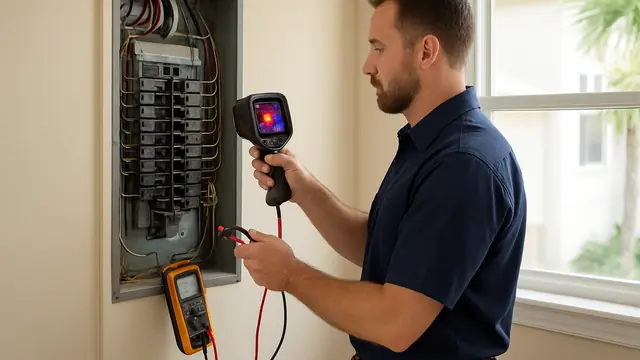
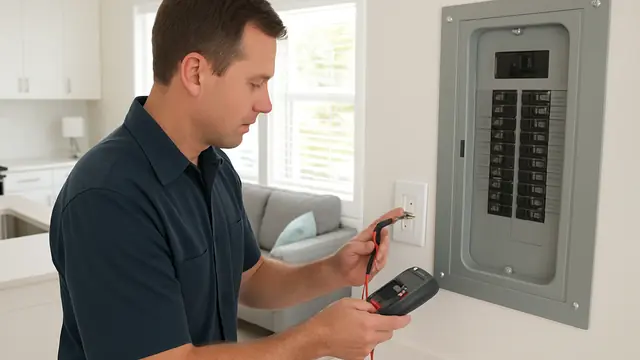
The main panel is inspected for overheated connections, damaged breakers, corrosion, improper wiring, and available capacity. Testing may include service voltage, neutral stability, grounding, bonding, and individual branch circuits.
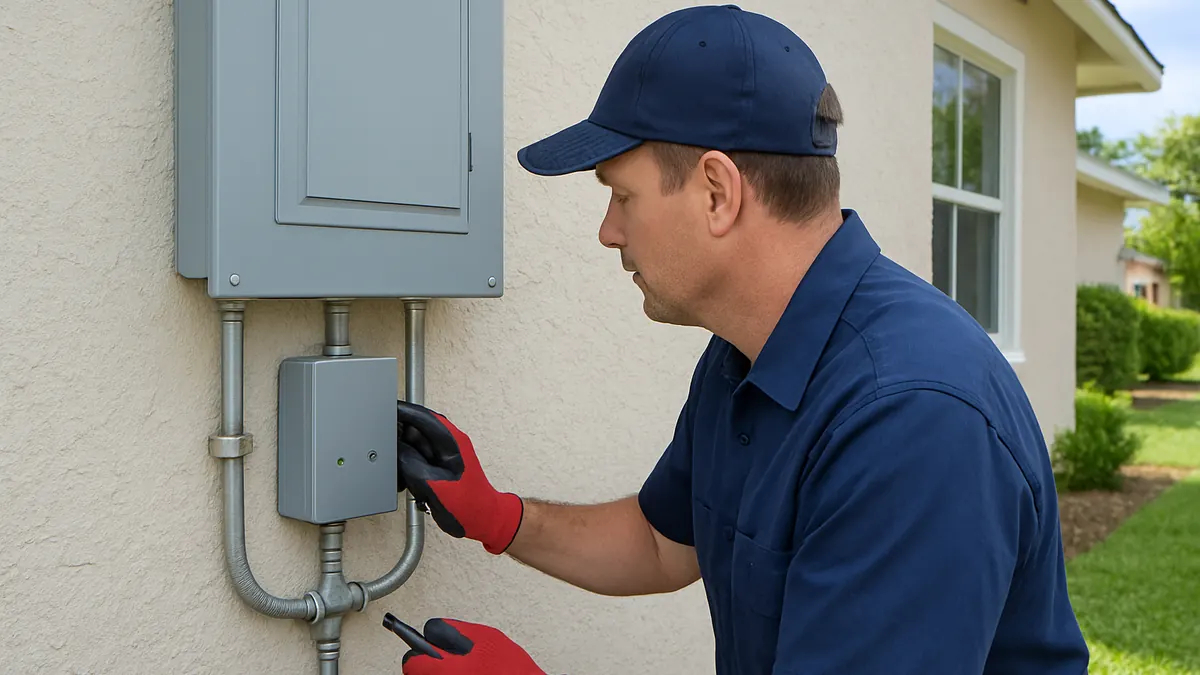
An existing surge protector is checked for status, rating, compatibility, breaker connection, and conductor routing. Short connection paths are important because extra conductor length can reduce how effectively the device limits voltage.
The electrician may also evaluate cable, satellite, telephone, antenna, or network entry points when damage affected connected equipment.
Repair Choices From Simple to Extensive
The least invasive repair may be replacing a failed point-of-use protector when testing shows the electrical system is stable.
If an existing whole-home protector has failed, it may often be replaced without replacing the panel. The electrician should verify why it failed and whether other damage is present.
When no panel-level protection exists, a compatible device may be installed through an approved breaker connection or external enclosure. Limited panel space does not automatically require replacement; manufacturer-approved breaker arrangements may be available.
Loose connections, grounding defects, damaged breakers, neutral problems, or overheated wiring should be repaired as part of the work. Surge protection cannot make those conditions safe.
Panel replacement becomes appropriate when the equipment is damaged, unsafe, obsolete, severely corroded, or unable to accept a compliant installation. It should follow inspection, not be the automatic first recommendation.
What Affects the Cost?
Cost depends on the protector's rating, connection method, panel brand and condition, available space, accessibility, grounding and bonding work, permitting, and any related electrical repairs.
Replacing a failed device in a sound panel differs from correcting service damage. Ask for the findings and recommendations to be explained separately.
Prevention and Routine Maintenance
Use a whole-home protector at the panel and listed point-of-use protectors for computers, televisions, and network devices.
Look at the whole-home unit's indicator periodically and after major electrical events. Replace a failed protector promptly; some devices continue passing normal power after protection is gone.
Keep the panel dry, clear, and accessible. Have flickering lights, recurring breaker trips, or repeated electronic failures investigated.
Decide What to Do Before Replacing More Equipment
What does whole-home surge protection actually protect in Lower Grand Lagoon? It helps protect appliances, HVAC controls, lighting components, smart-home devices, computers, televisions, internet equipment, and other electrical systems connected through the main panel.
If several devices failed together, lights are fluctuating, or an existing protector shows a fault, begin with a professional diagnosis. Correcting a neutral, grounding, or panel problem may be just as important as adding or replacing surge protection.
About this guide: This resource provides general homeowner education, not a remote diagnosis. Actual conditions, code requirements, equipment, and safe repair options must be evaluated at the property.