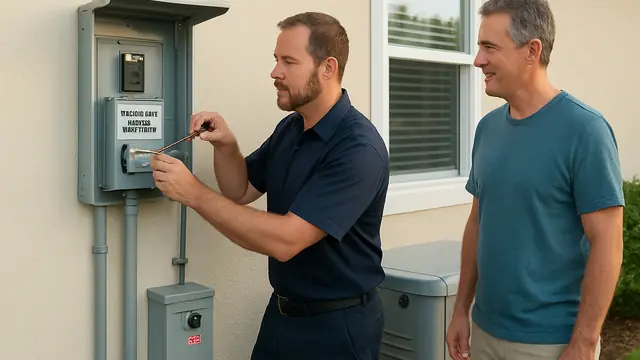
Do not remove an electrical panel cover, touch exposed conductors, bypass protection, or repeatedly reset a fault. Keep clear of smoke, sparks, burning odors, hot equipment, standing water near electricity, and downed lines, then call qualified help.
The breaker trips while you are getting ready for work, using a tool, or running several appliances. You reset it and everything works, but the next trip happens sooner. You may begin planning around the problem instead of addressing it.
A breaker that trips during normal use may be detecting excessive current or an electrical fault. Turn off or unplug equipment, reset the breaker once, and leave it off if it trips again. Repeated resets can reenergize damaged wiring or equipment.
Why Does My Circuit Breaker Keep Tripping in Lynn Haven?
The breaker may be reacting to overload, a short circuit, a ground fault, arcing, a failing appliance, a loose connection, or a defective breaker.
The timing matters. A delayed trip often suggests overload, while an immediate trip can indicate a short circuit. A trip linked to one switch, outlet, or appliance gives the electrician a useful starting point.
Overload: When Normal Devices Add Up to Too Much
- An electrical circuit can serve several outlets, lights, or appliances, but it has a fixed current limit. The breaker opens when demand exceeds that limit.
- Portable heaters, hair dryers, countertop appliances, vacuums, and power tools can overload a circuit when used together.
- An overload may develop gradually as the circuit warms. If reducing the number of devices stops the trips, that is useful information, but the circuit may still need evaluation.
One Appliance May Be Causing the Entire Problem
An appliance can trip a breaker because of a weak motor, damaged cord, failed heating element, internal short, or electrical leakage.
Motor-driven equipment draws extra electricity during startup. A worn or struggling motor may draw too much current. Damaged heating equipment may trip only after reaching a certain temperature.
Stop using equipment that repeatedly triggers a trip. Do not assume the appliance is safe merely because it operates for part of its cycle.
Short Circuits and Ground Faults
A short circuit occurs when conductors that should remain separated make unintended contact. This creates a rapid surge of current, and the breaker may trip immediately.
A ground fault occurs when electricity leaves its intended path and travels toward grounded metal, moisture, or another route. GFCI devices monitor for an imbalance between outgoing and returning current and shut off power quickly.
Both conditions can develop inside an outlet, switch, fixture, appliance, junction box, cord, or concealed cable. The damage may not be visible.
Loose Connections and Electrical Arcing
A loose connection can create resistance, heat, and arcing-electricity jumping across a small gap instead of flowing through a secure connection.
Arcing can happen at a worn receptacle, loose terminal, damaged cord, switch, wire splice, or cable. An AFCI breaker is designed to detect patterns associated with dangerous arcing.
The trip may occur only when a plug shifts, equipment vibrates, or the connection warms, making the problem appear inconsistent.
The Breaker Itself May Need Attention
Breakers can wear out from repeated trips or heat. A failing breaker may trip below its rated load, feel loose, refuse to reset, or become unusually warm.
Replacing the breaker without testing is not a reliable diagnosis. A new breaker may continue to trip because the original fault remains.
Safe Checks a Lynn Haven Homeowner Can Make
- Identify the area that lost power and note each affected light, outlet, and appliance. Your observations may be more useful than an incomplete panel directory.
- Unplug portable devices and turn off switches on the circuit. Move the breaker firmly to OFF before switching it back to ON.
- If it holds, reconnect one device at a time. Wait for appliances with motors or heating elements to begin operating. Stop if a particular device causes another trip.
- Inspect accessible cords and plugs for cuts, melting, dark marks, looseness, heat, or a burned odor. Stop using damaged items.
- Check nearby GFCI outlets. One tripped GFCI may interrupt downstream receptacles without their own buttons.
What You Should Never Do
Do not keep resetting a breaker that trips. The interruption is a warning, not an inconvenience to bypass.
Never install a breaker with a larger amperage rating to "handle" the load. The original rating protects the wiring. Increasing it without changing and properly designing the circuit can allow conductors to overheat.
Do not remove the panel cover or work inside outlets and switches. Turning off one breaker does not eliminate every electrical hazard.
Do not bypass AFCI or GFCI protection or depend on extension cords as permanent wiring.
When a Tripping Breaker Is Urgent
- Turn the breaker off and request professional help if you notice a burning smell, smoke, sparks, scorch marks, melting, buzzing, crackling, or sizzling.
- Also act promptly when equipment feels hot, someone receives a shock, the breaker trips instantly with devices unplugged, or water has entered electrical equipment.
- If smoke or fire is active, leave and call emergency services. Never use water on energized equipment.
How a Licensed Electrician Diagnoses the Problem
The electrician reviews when the circuit trips, how long it takes, what equipment is running, and whether moisture, movement, or vibration appears related.
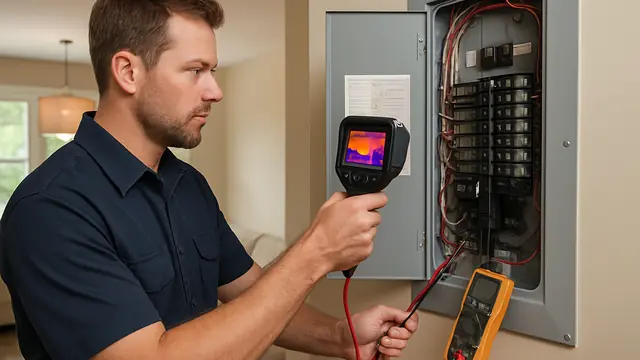
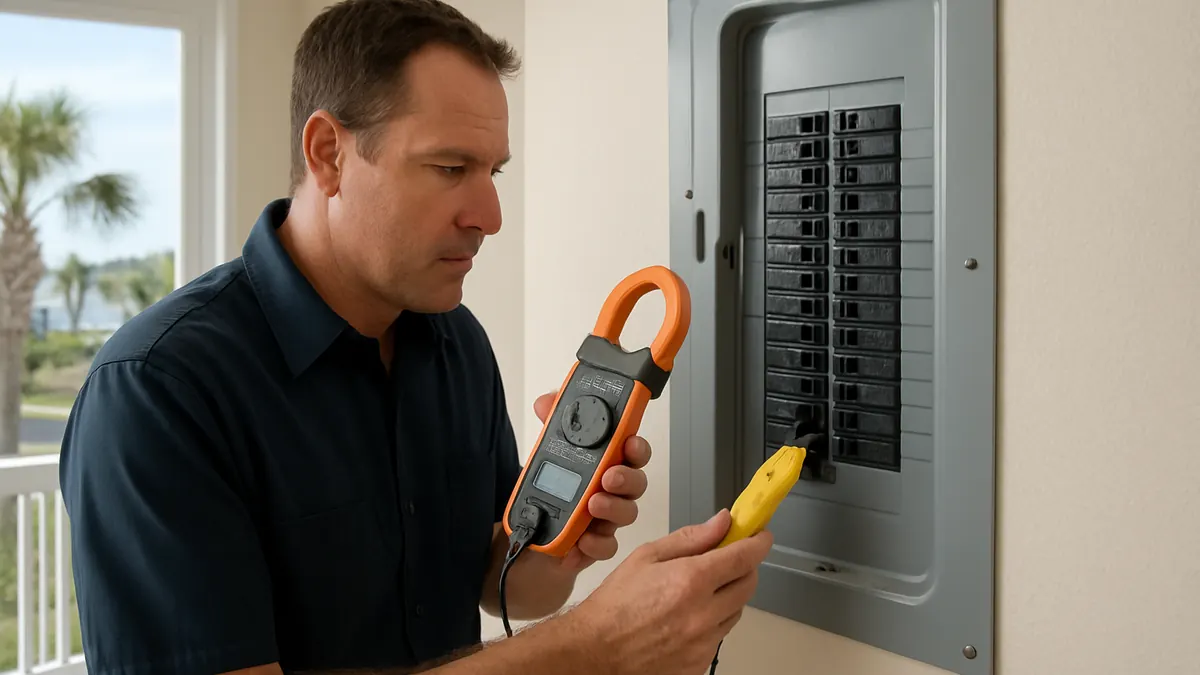
The breaker type and rating are compared with the wire size and connected load. Current measurements can show whether the circuit is overloaded or whether an appliance has abnormal demand.
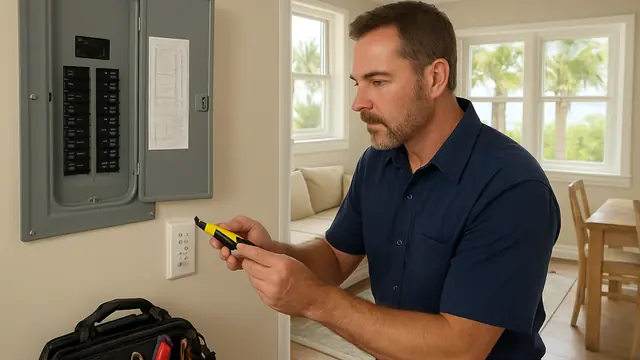
The electrician may isolate sections and test outlets, switches, fixtures, appliances, and junctions. Loose terminals, overheated components, damaged insulation, moisture, and improper splices are checked. AFCI and GFCI protection is also evaluated.
Repair Options Starting With the Smallest Reasonable Solution
If a portable appliance or cord is defective, removing or repairing that equipment may solve the problem. A loose terminal may be corrected, or one damaged outlet, switch, GFCI, fixture, or breaker may be replaced.
For a confirmed overload, the electrician may recommend moving certain loads to another suitable circuit. If a specific appliance requires more capacity, a dedicated circuit may be installed.
Accessible cable damage may allow a localized repair. Concealed damage may require limited wall or ceiling access.
More extensive rewiring is reserved for widespread damage, unsafe alterations, or wiring that cannot support its intended use. Panel work is considered only when condition, compatibility, capacity, or documented defects make it necessary.
What Affects the Cost?
Cost depends on the nature and location of the problem. Replacing a visibly damaged receptacle is different from tracing an intermittent fault through several rooms.
Diagnostic time, breaker type, panel access, connected devices, permits, materials, and the need for new wiring all affect the total. The recommendation should explain what failed and which repair addresses the cause.
Preventing Breaker Trips in the Future
- Learn which large loads share circuits, and avoid operating several high-wattage devices together. Replace worn cords, plugs, and loose receptacles promptly.
- Do not use power strips as a substitute for circuit capacity. When adding tools, appliances, HVAC accessories, or other equipment, have the electrical load reviewed first.
- Keep exterior outlet covers secured and address water intrusion quickly. Periodic inspection can identify heat damage or loose connections before trips recur.
Restore Safety, Not Just Power
When you ask, "Why does my circuit breaker keep tripping in Lynn Haven?" the correct goal is not simply to keep the breaker on. Reduce the load, reset it once, and leave it off if it trips again. An electrician can determine whether the cause is overload, a defective appliance, a loose connection, damaged wiring, or a failing breaker and begin with the least invasive safe repair.
About this guide: This resource provides general homeowner education, not a remote diagnosis. Actual conditions, code requirements, equipment, and safe repair options must be evaluated at the property.