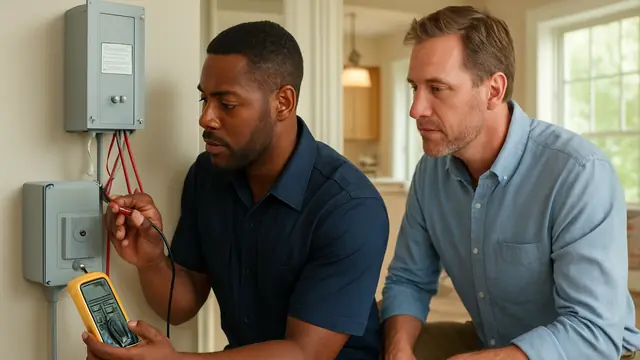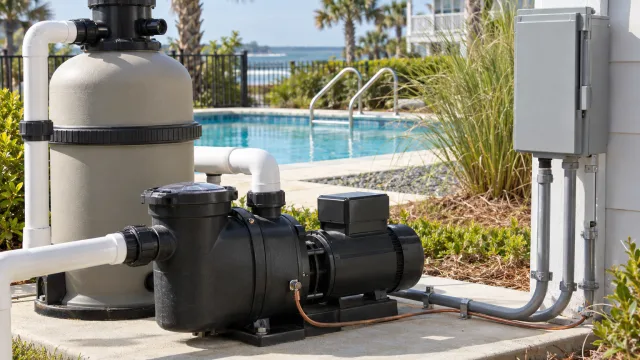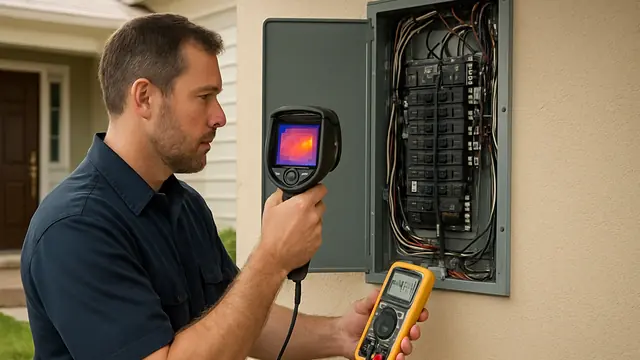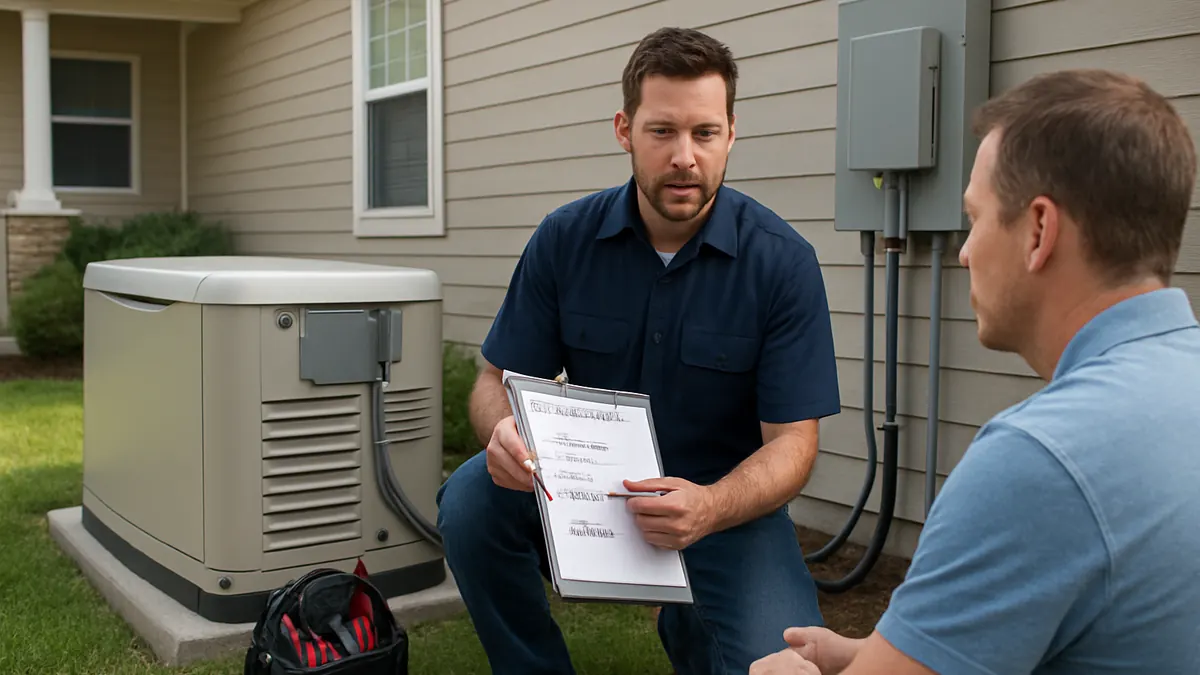
Do not remove an electrical panel cover, touch exposed conductors, bypass protection, or repeatedly reset a fault. Keep clear of smoke, sparks, burning odors, hot equipment, standing water near electricity, and downed lines, then call qualified help.
The utility power fails while your Panama City Beach property is occupied, and the first calls are about heat, a silent refrigerator, and an electronic door lock that may eventually lose backup power. If the property is used as a vacation rental, you may be trying to solve the problem remotely while protecting guests and food. The safe immediate action is to turn off nonessential appliances through their normal controls, keep generator exhaust areas clear, and avoid asking anyone to reset breakers repeatedly or open electrical equipment.
What size standby generator does your home need in Panama City Beach? It depends on whether the generator is intended to protect only critical systems or allow the property to function almost normally. HVAC capacity, water heating, cooking, laundry, pool equipment, motor starting, and the number of loads that can operate together all affect the answer.
Decide What the Property Must Support During an Outage
A primary residence and a short-term rental may have different priorities, even when the buildings are similar.
A homeowner who is present can intentionally delay laundry, cooking, and EV charging. A rental guest may not know that the electric water heater, dryer, and range should not operate while both air conditioners are running. Automatic load management can therefore be especially valuable where different occupants use the property.
Critical loads may include:
- Central air conditioning
- Refrigerators and freezers
- Interior and exterior lighting
- Internet and communications equipment
- Security systems and electronic access equipment
- Selected receptacles
- A garage-door opener
Broader backup may include electric water heating, additional HVAC equipment, cooking appliances, laundry equipment, and pool systems. Each added load affects capacity or load priorities.
Why Generator Size Cannot Be Chosen From Square Footage
Square footage does not reveal how the property uses energy. A smaller all-electric home may require more generator capacity than a larger property with gas water heating and cooking.
The number and size of air-conditioning systems matter. A single large system, two smaller systems, or separate equipment for different areas can create different motor-starting demands.
The Most Common Causes of Overload or Incorrect Sizing
Multiple Compressors Start Too Close Together
Air conditioners, refrigerators, freezers, and pumps contain motors. Each can require a brief surge when starting. Two compressors starting at nearly the same time may overload a generator that can run them normally after startup.
Electric Water Heating Was Overlooked
After several showers, an electric water heater may turn on while the HVAC system and kitchen appliances are already operating. The delayed overload can make the generator appear reliable at first and then trip later.
A "Whole-Home" Label Was Interpreted as Unlimited Power
A whole-home transfer switch may connect most of the electrical system, but the generator still has a fixed output. Lower-priority appliances may need to be shed automatically.
Safe Checks an Owner or Property Manager Can Perform
Create an appliance inventory for the property. Note every HVAC system, water heater, refrigerator, freezer, range, dryer, pool pump, and other fixed load.
Photograph visible equipment nameplates without opening covers. For a remotely managed property, storing these photographs with equipment records can simplify future service.
Write down the generator model, controller message, and the sequence of events during the failure. Did the system shut down immediately, when a second HVAC system started, after several showers, or when laundry equipment was used?
What the Homeowner Should Not Attempt
- Never direct a guest, cleaner, or maintenance person to open a transfer switch or remove an electrical-panel cover.
- Do not repeatedly reset a generator that trips under load. Repeated resetting can expose equipment to unstable voltage and delay diagnosis of a serious fault.
- Never bypass load-management controls, increase breaker sizes, or connect a portable generator through a receptacle.
- Do not alter generator placement, exhaust routing, gas piping, regulator settings, grounding, or internal controls.
Portable generators must remain outdoors and away from windows, doors, vents, and enclosed or partly enclosed areas. Carbon monoxide is odorless, and an alarm requires immediate evacuation and emergency assistance.
Signs That Require Urgent Professional Help
Move away and call emergency services for fire, heavy smoke, visible arcing, a strong fuel odor, or an activated carbon-monoxide alarm.
Headache, dizziness, nausea, weakness, confusion, or unusual sleepiness during generator operation may indicate carbon-monoxide exposure. Everyone should leave the building and move into fresh air.
Arrange prompt electrical service when the generator repeatedly stalls, trips its output breaker, causes severe light flicker, rapidly transfers power back and forth, or makes appliances restart continuously.
How a Licensed Electrician Calculates the Needed Capacity
The electrician inventories the loads requested for backup and identifies which equipment may run simultaneously. A vacation or second-home property may require more automatic control because the occupants may change.
Normal running demand is calculated, and motor-starting demand is evaluated separately. The largest compressor may determine whether the generator can start equipment smoothly while carrying other loads.
The electrician reviews the main service, electrical panels, transfer switch, grounding and bonding, conductors, output protection, and installation location. Solar, battery storage, multiple panels, or elevators and specialty equipment require additional planning where present.
Fuel capacity must be verified by an appropriately qualified professional. Adequate generator output depends on proper fuel pressure, piping, regulators, and available supply.
Testing should include automatic startup, transfer to generator power, the startup of major motors, load-shedding operation, and return to utility power.
Repair and Upgrade Options From Least Invasive to Most Extensive
The first option may be changing load priorities. A pool heater, EV charger, electric dryer, or second water heater may not need generator power during an outage.
Approved load-management modules can temporarily disconnect lower-priority equipment. For example, pool equipment or an electric water heater may pause while an air conditioner starts.
Compatible HVAC soft-start equipment may reduce compressor startup demand. It must be evaluated for the specific HVAC and generator systems.
If the generator once operated correctly, repair may restore performance. Possible solutions include battery replacement, routine engine service, fuel-system correction, damaged-conductor repair, replacement of a failed load-control module, or transfer-switch repair.
A larger generator becomes appropriate when required loads still exceed practical capacity after reasonable management options, or when the existing equipment is unreliable, obsolete, or significantly damaged.
Factors That Affect Installation Cost
Cost depends on generator output, transfer-switch capacity, number of backed-up and managed loads, electrical-panel configuration, fuel source, fuel-line work, generator placement, mounting requirements, trenching, conductor distance, permits, and access.
Maintenance and Prevention for an Occupied or Rental Property
Follow the manufacturer's operating-hour and calendar-based maintenance schedule. Routine service may include oil, filters, battery testing, ignition components, wiring inspection, cooling checks, and transfer-switch testing.
Keep the generator area clear and test carbon-monoxide alarms monthly. After a long outage, arrange service based on operating hours.
Review generator capacity before changing HVAC equipment, adding pool equipment, converting appliances to electricity, or installing an EV charger.
Design the System Around Real Occupancy and Equipment
What size standby generator does your home need in Panama City Beach? It needs enough capacity for the property's actual essential loads, enough starting power for HVAC and other motors, and automatic controls that manage high-demand equipment safely. A licensed assessment can determine whether the best solution is selected-circuit backup, managed whole-home operation, repair, or generator replacement.
About this guide: This resource provides general homeowner education, not a remote diagnosis. Actual conditions, code requirements, equipment, and safe repair options must be evaluated at the property.