Do not remove an electrical panel cover, touch exposed conductors, bypass protection, or repeatedly reset a fault. Keep clear of smoke, sparks, burning odors, hot equipment, standing water near electricity, and downed lines, then call qualified help.
You arrive at a second home or vacation rental and discover that the air conditioner is running but the thermostat has lost its programming. The Wi-Fi equipment is offline, a television will not start, and the garage-door opener needs to be reset. No one saw sparks or heard an explosion, yet several electronic systems changed after a storm or power interruption. For a Panama City Beach property owner, that is a common way surge damage may first appear.
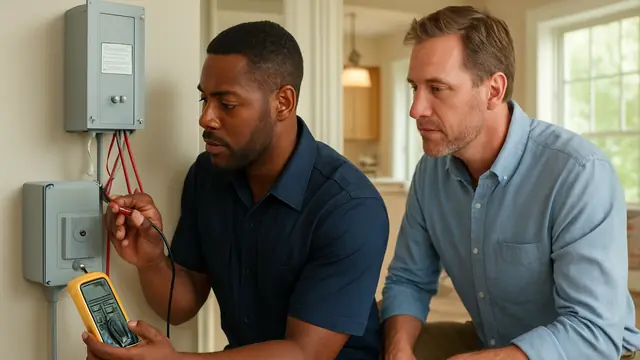
Unplug equipment that smells burned, feels hot, or behaves unpredictably. Stop resetting a breaker if it trips a second time. Do not open the panel or ask a guest, cleaner, or maintenance worker to handle exposed electrical components. When several systems are involved, a licensed electrician should inspect the electrical service before costly equipment is replaced.
Whole-home surge protection helps limit brief spikes in voltage before they spread through the home's circuits. It can protect appliances, comfort equipment, entertainment systems, and many controls that may be operating even when the property is unoccupied.
What Whole-Home Surge Protection Protects in a Coastal Property
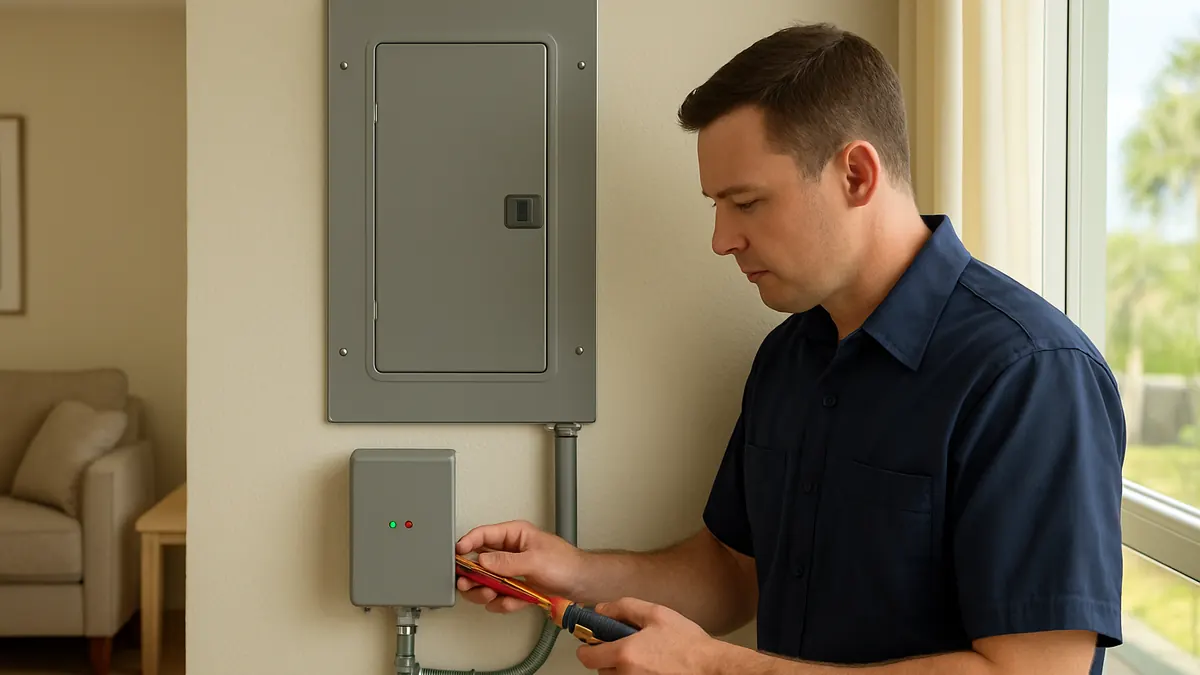
A whole-home surge protective device is connected at the main electrical panel or service equipment. During a surge, it creates a pathway that diverts much of the excess energy toward the grounding system.
It can help protect:
- Air conditioners, heat pumps, thermostats, and dehumidification controls
- Refrigerators, dishwashers, ranges, washers, dryers, and ice makers
- Televisions, streaming devices, gaming systems, routers, and modems
- Security cameras, electronic locks, smart doorbells, and alarm equipment
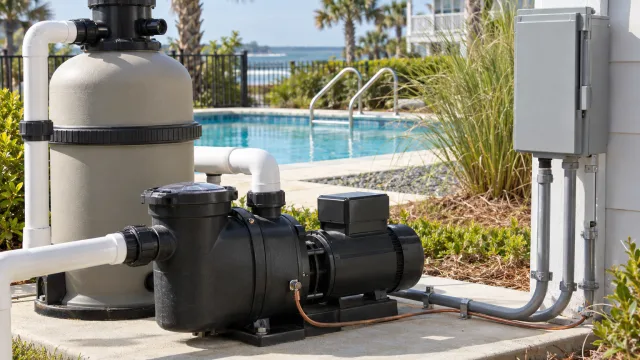
- Pool or spa controls when they are properly connected through protected electrical equipment
- Garage-door openers, lighting controls, ceiling fans, and LED drivers
- Water-heater controls, pumps, and other hardwired electronic systems
Whole-home protection applies to equipment served by the panel. Cable, telephone, satellite, antenna, and data lines may need separate protection.
Why an Unoccupied Property Can Still Be at Risk
Many electronic devices remain connected when no one is present. The refrigerator cycles, the HVAC system maintains temperature and humidity, security equipment stays active, and internet devices continue operating.
A surge can therefore damage important systems without anyone witnessing the event. The first clue may be a remote thermostat alert, a camera that stops communicating, or a guest reporting that several devices do not work.
Common Sources of Surges
- Nearby lightning can induce voltage on utility and communication lines even without a direct strike.
- Utility switching and power restoration can create brief voltage transients.
- Equipment inside the property can also generate smaller surges. HVAC compressors, refrigerators, pumps, and other motors create electrical disturbances as they start and stop.
Not every simultaneous failure is caused by a surge. A loose neutral, failing breaker, damaged service connection, or grounding problem can create voltage instability. Installing a protector without correcting those conditions will not solve the underlying problem.
Safe Checks Owners and Caretakers Can Perform
Ask the person at the property to note exactly what is not working. Determine whether the failures are limited to one room or spread across several circuits.
Visually inspect plugs, receptacle faces, and cords without taking anything apart. Melted plastic, black marks, cracking, a burned odor, or unusual warmth are reasons to stop using the equipment.
If the panel has an externally visible surge-protector indicator, it may be viewed without opening the cover. A green light commonly indicates active protection, while a red light, missing light, or alarm may indicate a fault.
Check point-of-use surge strips for a "protected" indicator.
A breaker may be reset once when there is no smoke, heat, buzzing, water exposure, or visible damage. If it trips again, leave it off and schedule service.
What Should Not Be Attempted
Do not remove the panel cover or attempt to tighten a wire. Service equipment can contain energized parts even when the main breaker is switched off.
Do not use an unqualified person to install a breaker-mounted surge device. Compatibility, conductor length, breaker placement, grounding, and bonding affect performance and safety.
Do not replace a breaker with a larger one to keep a circuit operating. That can expose wiring to more current than it is designed to carry.
Do not reconnect expensive televisions, network equipment, or appliance boards while lights continue to brighten and dim. The new equipment may be damaged if voltage remains unstable.
Signs Requiring Urgent Electrical Service
Call promptly when multiple appliances fail after the same event, an existing whole-home protector shows a fault, or the property repeatedly loses electronic controls.
Urgent signs include smoke, sparks, a persistent burning smell, crackling or buzzing, melted receptacles, a hot panel cover, breakers that trip immediately, or a shock from metal equipment.
Lights becoming bright in one area and dim in another may indicate a loose neutral. That can expose some circuits to excessive voltage and should be evaluated quickly.
When smoke or fire is present, occupants should leave and contact emergency services rather than touching the panel.
How a Licensed Electrician Diagnoses the Cause
The electrician starts with the timeline: what happened, which equipment failed, whether power was interrupted, and whether symptoms continue.
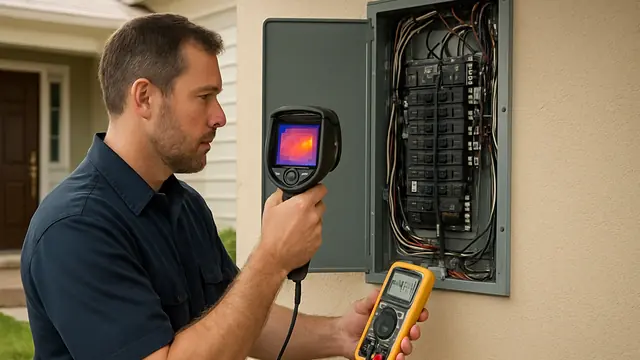
Testing may include service voltage, neutral stability, grounding, bonding, breakers, panel connections, and affected branch circuits.
If a surge protector is present, the electrician verifies its indicator, rating, breaker connection, conductor routing, and compatibility. Short, direct conductor paths help a protector respond more effectively.
Repair Options Beginning With the Least Invasive
If only one point-of-use protector has failed and the electrical system tests normally, replacing that protector may be sufficient.
When an existing whole-home device has exhausted its protective components, replacing only the device may restore coverage.
If no whole-home protector exists, a listed breaker-mounted or externally mounted unit may be installed. Limited breaker space may be addressed through approved arrangements or a separate enclosure.
Loose conductors, grounding defects, damaged breakers, unstable neutrals, or overheated wiring should be repaired. Surge protection cannot compensate for unsafe electrical conditions.
Panel replacement is considered when the equipment is damaged, obsolete, unsafe, heavily corroded, or unable to accept a compliant installation. It should be recommended only after inspection.
Factors That Affect Cost
Cost depends on device capacity, panel brand and condition, breaker availability, installation method, accessibility, grounding and bonding work, permitting, and any repairs discovered during testing.
A simple installation in a sound panel differs from work involving damaged service equipment.
Prevention for Primary Homes, Second Homes, and Rentals
Use layered protection. Combine a whole-home device with listed point-of-use protectors for televisions, computers, routers, and other sensitive electronics.
Check the whole-home device's indicator during routine property visits and after major outages. Include that check in maintenance documentation so a failed unit is not overlooked.
Keep the panel dry, accessible, and free of stored items. Avoid daisy-chaining power strips. Have repeated thermostat errors, flickering lights, breaker trips, or unexplained electronic failures investigated.
Protect the Systems That Keep the Property Operating
What does whole-home surge protection actually protect in Panama City Beach? It helps protect the appliances, HVAC controls, security equipment, entertainment systems, internet hardware, lighting controls, and other electronics that keep a home or rental property functioning.
If several systems failed together, the protection indicator is inactive, or voltage behavior is abnormal, start with an electrical diagnosis. The correct solution may be a device replacement, grounding repair, neutral correction, new whole-home protector, or another targeted repair.
About this guide: This resource provides general homeowner education, not a remote diagnosis. Actual conditions, code requirements, equipment, and safe repair options must be evaluated at the property.