Do not remove an electrical panel cover, touch exposed conductors, bypass protection, or repeatedly reset a fault. Keep clear of smoke, sparks, burning odors, hot equipment, standing water near electricity, and downed lines, then call qualified help.
You are making coffee, the air conditioner is running, and someone turns on a hair dryer. Suddenly, part of the house goes dark. You reset the breaker, but the circuit shuts off again later.
A repeatedly tripping breaker may be responding to overload, a failing appliance, or a wiring fault that is creating heat. Turn off or unplug devices on the affected circuit. Reset the breaker once. If it trips again, leave it off and arrange for a licensed electrician to diagnose the cause.
Why Does My Circuit Breaker Keep Tripping in Panama City?
Common causes include an overloaded circuit, short circuit, ground fault, defective appliance, electrical arcing, loose connection, or worn breaker.
Timing provides clues. A delayed trip often suggests overload. An immediate trip can indicate a short or serious equipment fault. A trip linked to one appliance may point toward that device, its cord, outlet, or supply wiring.
An Overloaded Circuit May Be Carrying Too Much
Every branch circuit has a safe current limit based on its breaker rating and wire size. An overload occurs when connected devices collectively demand more than the circuit can safely provide.
Portable heaters, hair dryers, countertop appliances, vacuums, window air conditioners, and tools can draw substantial current. The breaker may trip only after several devices run together or heat builds for a few minutes. Repeated overloads show that the circuit is not supporting its present use.
A Short Circuit Can Cause an Immediate Trip
A short circuit occurs when electricity finds an unintended low-resistance path between conductors. Current rises quickly, so the breaker may trip instantly.
The fault may be inside a damaged cord, appliance, outlet, switch, fixture, junction box, or concealed cable. Repeated resetting can energize the same damaged area and increase heat.
Ground Faults and Moisture-Related Problems
A ground fault sends electricity away from its intended path toward grounded metal, moisture, or another unintended route. GFCI protection responds quickly because these faults can create a shock hazard.
Exterior outlets, laundry equipment, bathroom devices, kitchen appliances, cords, and electrical boxes can develop ground faults. Equipment affected by water should be inspected even if it appears to work after drying.
A Failing Appliance May Be the Real Cause
Motors, heating elements, internal wires, and power cords can fail while an appliance still appears to operate. The trip may occur only during startup or a particular cycle.
If one refrigerator, microwave, washer, vacuum, or portable appliance repeatedly causes the breaker to open, stop using it. Moving it to another outlet may transfer the hazard to another circuit.
Loose Connections and Arc-Fault Trips
Arcing occurs when electricity jumps across a loose or damaged connection, producing concentrated heat. Possible sources include a worn outlet, loose plug, damaged cord, poor splice, failing switch, or pinched cable.
An AFCI breaker may trip only when a cord moves, equipment vibrates, or a connection warms. That intermittent pattern requires professional testing.
Safe Checks a Homeowner Can Perform
Identify everything that lost power, including rooms, outlets, lights, and appliances. Turn off switches and unplug portable devices.
With dry hands and a dry panel, move the breaker fully to OFF and then ON. If it holds, reconnect devices one at a time and allow motors or heating elements to begin their normal cycles. Stop using any item that triggers another trip.
Inspect accessible cords, plugs, and outlets for cuts, crushed insulation, looseness, melting, discoloration, heat, or odor. Check nearby GFCI outlets because one device may protect several downstream receptacles.
What You Should Not Attempt
Do not keep resetting a breaker that repeatedly trips. Each reset reenergizes the unresolved problem.
Never replace the breaker with one rated for higher amperage. The breaker must match the circuit's wiring and design. A larger breaker can allow conductors to overheat without shutting off soon enough.
Do not remove the panel cover, tighten internal terminals, replace breakers, open electrical boxes, or test energized wiring unless you are qualified and properly equipped.
Do not bypass AFCI or GFCI protection. Do not use extension cords or power strips as permanent substitutes for adequate circuit capacity.
Signs That Make the Problem Urgent
Leave the breaker off and request prompt electrical service if you notice:
- A burning or melting odor
- Smoke, sparks, or visible arcing
- Scorch marks or melted plastic
- Buzzing, sizzling, or crackling
- A hot breaker, panel, switch, outlet, cord, or appliance
- A shock or tingling sensation
- Electrical equipment exposed to water
- An immediate trip with all accessible devices unplugged
If there is active smoke or fire, leave the area and call emergency services. Never use water on energized electrical equipment.
How a Licensed Electrician Diagnoses the Problem
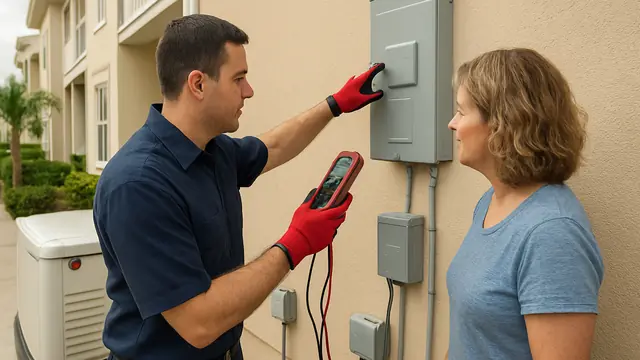
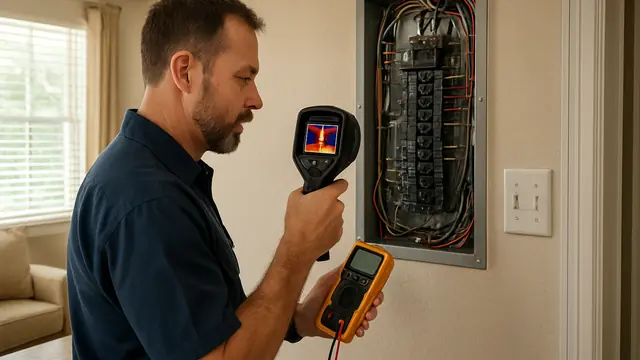
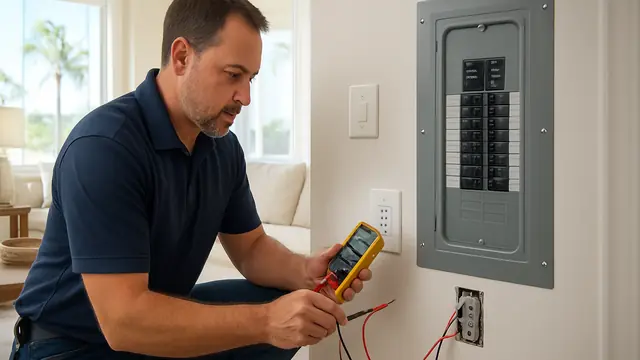
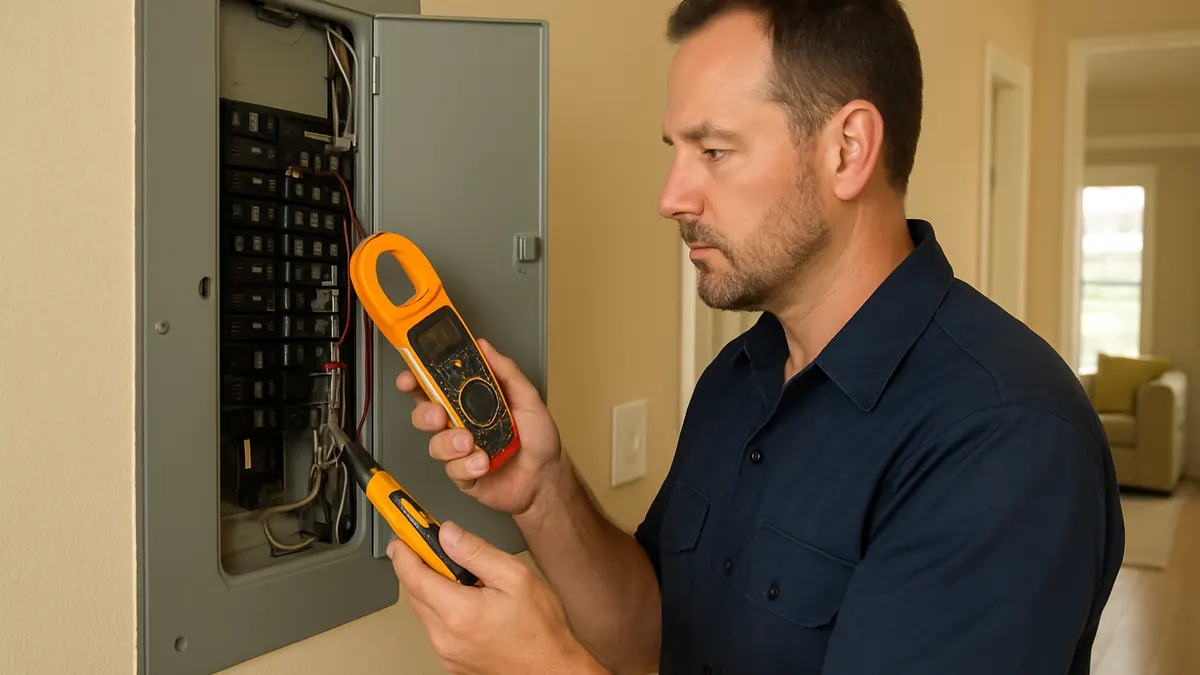
The electrician reviews when the trip occurs and what the circuit serves. Breaker type, rating, panel compatibility, and wire size are verified. Current measurements can reveal overload or abnormal appliance demand.
The circuit may be isolated into sections while outlets, switches, fixtures, appliances, and junctions are tested. Connections are checked for looseness, heat damage, moisture, improper splices, and damaged insulation. AFCI and GFCI devices are also evaluated when applicable.
Repair Options, Beginning With the Least Invasive
The smallest reasonable repair may be removing a failed appliance, replacing a damaged cord, correcting a loose connection, or replacing one defective outlet, switch, GFCI, fixture, or breaker.
A confirmed overload may be corrected by redistributing loads or adding a dedicated circuit. Accessible cable damage may permit a localized repair; concealed or widespread damage can require more access or rewiring.
Panel replacement is considered only when documented damage, compatibility, capacity, or broader defects justify it.
Factors That Affect Repair Cost
Cost depends on how quickly the fault can be reproduced and located. A trip linked to one appliance is generally easier to diagnose than an intermittent fault affecting several rooms.
Breaker type, panel condition, device count, wiring access, permits, materials, and any new cable route also affect the total.
Preventing Future Breaker Trips
Avoid running several high-wattage appliances on the same circuit. Replace damaged cords instead of wrapping them with tape, and stop using outlets that feel loose or do not hold plugs securely.
Keep exterior outlet covers closed and address water intrusion before it reaches electrical equipment. Have new appliances, tools, or HVAC accessories evaluated for proper circuit capacity before installation.
Periodic electrical inspection can identify loose connections, overloaded circuits, worn devices, heat damage, and breaker problems before repeated shutdowns occur.
Take the Warning Seriously
When you ask, "Why does my circuit breaker keep tripping in Panama City?" focus on the reason the protective device is opening, not simply on restoring power. Reduce the connected load, reset the breaker once, and leave it off if it trips again. A licensed electrician can determine whether the cause is an overload, failing appliance, loose connection, moisture-related fault, damaged wiring, or defective breaker and recommend the least invasive safe repair.
About this guide: This resource provides general homeowner education, not a remote diagnosis. Actual conditions, code requirements, equipment, and safe repair options must be evaluated at the property.