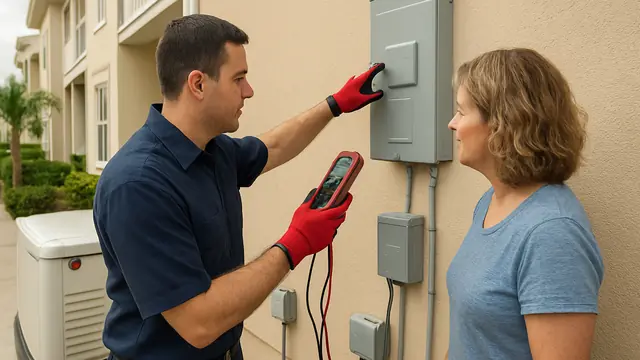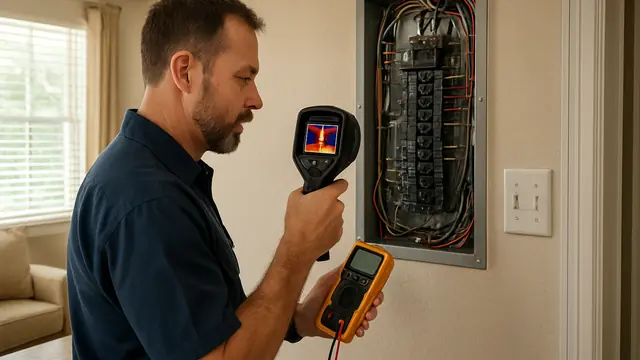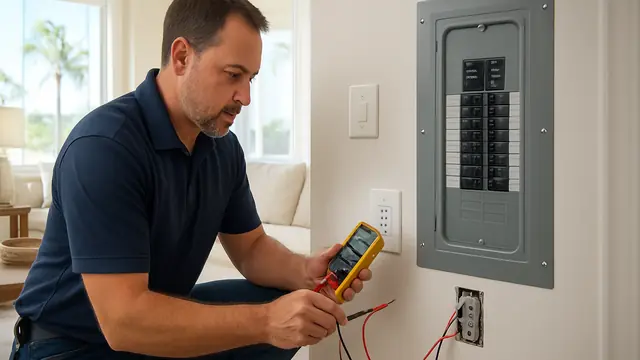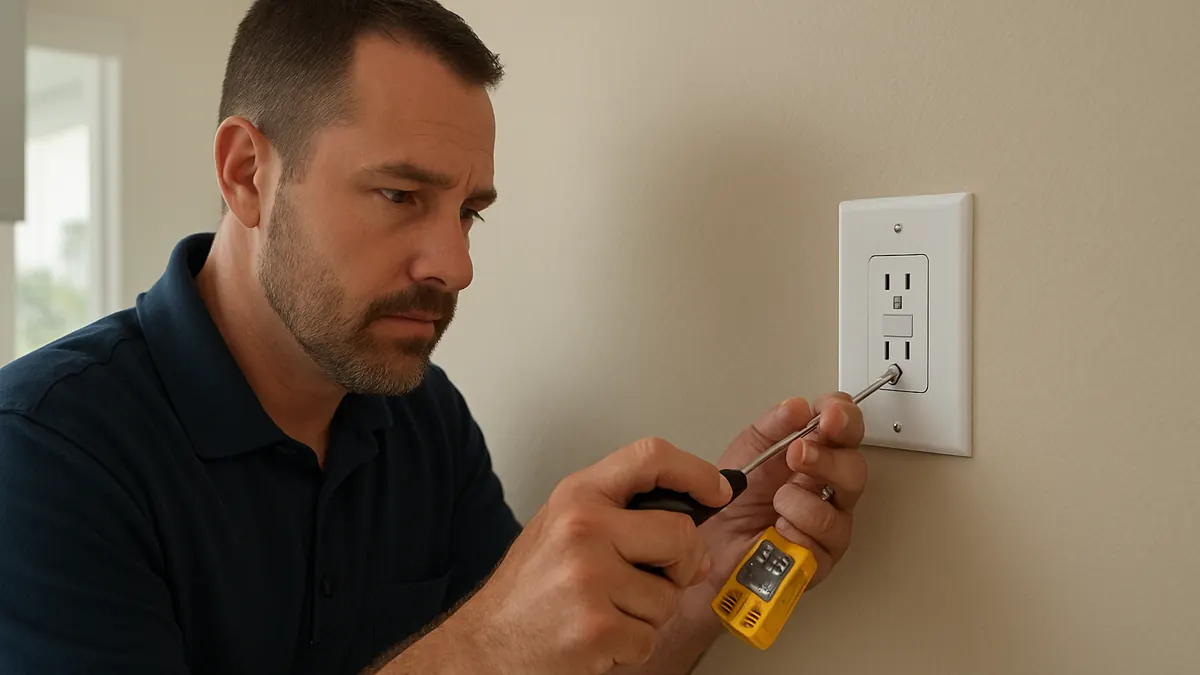
Do not remove an electrical panel cover, touch exposed conductors, bypass protection, or repeatedly reset a fault. Keep clear of smoke, sparks, burning odors, hot equipment, standing water near electricity, and downed lines, then call qualified help.
You press the RESET button on a kitchen, bathroom, garage, or outdoor outlet, but the button will not stay in. Perhaps the outlet stopped working after a small appliance was used, after water was splashed nearby, or for no obvious reason at all. When a GFCI outlet will not reset in a Panama City home, the device is usually missing power, detecting a continuing electrical fault, or failing internally.
The safest first step is to unplug everything from the affected outlet and from any nearby outlets that also lost power. Look for water, damaged cords, dark marks, melting, heat, buzzing, or an electrical odor. You may reset the related circuit breaker one time by moving it fully to OFF and then back to ON. If the GFCI immediately trips again, the breaker will not hold, or the receptacle is wet or hot, leave the circuit off and call a licensed electrician.
A GFCI is designed to interrupt power when it senses that electricity is leaving its normal path. A reset button that refuses to latch may be warning you about a real shock or wiring hazard.
Why Won't My GFCI Outlet Reset?
The Outlet Is Not Receiving Incoming Power
Most GFCI receptacles need power at their LINE terminals before the reset mechanism can operate. LINE refers to the wires bringing electricity from the panel into the device.
A circuit breaker may have tripped without moving all the way to the OFF position. Another GFCI earlier in the circuit may also have tripped and cut power to the one you are testing. One GFCI can protect several ordinary-looking outlets in different parts of the home.
A Connected Appliance or Cord Has a Ground Fault
A ground fault occurs when some electrical current travels somewhere it should not. Damaged insulation, moisture, or a failing internal component can allow current to leak through an appliance frame, cord, or grounded surface.
Coffee makers, refrigerators, hair dryers, pressure washers, extension cords, power tools, and countertop appliances can all cause a GFCI trip. The device may reset after everything is unplugged and then trip again when the faulty item is reconnected.
Moisture Is Present in the Outlet or Circuit
Water does not have to be pouring from the receptacle to cause a problem. Moisture can enter through a cracked exterior cover, failed gasket, loose box, sink leak, appliance leak, or wet cord connection.
The outlet face may appear dry while moisture remains inside the box or at a downstream outlet.
A Downstream Outlet or Wire Is Faulty
The LOAD terminals on a GFCI send protected power to additional outlets. A loose terminal, damaged cable, wet receptacle, overheated splice, or improper neutral connection anywhere downstream can prevent the controlling GFCI from resetting.
The GFCI Device Has Failed
GFCIs contain electronic sensing components and mechanical contacts. Heat, surges, age, repeated trips, corrosion, and physical wear can eventually cause failure.
A failed device may not click, may feel loose, or may refuse to hold the reset button.
Safe Checks a Homeowner Can Perform
- Unplug every device from the affected outlets. Inspect plugs and cords for cuts, crushed insulation, loose blades, water, scorch marks, or melted plastic.
- Check the electrical panel. If the breaker is between ON and OFF, move it fully OFF and then ON once. If it trips again, leave it off.
- Look for other GFCI receptacles and reset only devices that are dry, cool, and undamaged.
- Return to the original GFCI and press TEST once, followed by RESET with firm finger pressure. Do not hold the button in with tape, a tool, or another object.
What You Should Not Attempt
- Do not remove the receptacle from the wall unless you are trained to verify that all conductors in the box are de-energized. Electrical panel labels may be incomplete or incorrect.
- Do not replace the GFCI with a standard outlet simply to restore power. That removes shock protection and leaves the original fault unresolved.
- Do not swap LINE and LOAD wires as an experiment. Incorrect wiring can leave downstream outlets without protection or create confusing symptoms.
Never install a larger breaker, disconnect grounding, spray cleaner into the outlet, or use a hair dryer or heat gun to dry a wet electrical box. Do not continue using an appliance that repeatedly causes the trip.
Signs the Problem Is Urgent
Turn the circuit breaker off and arrange prompt electrical service if the GFCI is hot, melted, discolored, buzzing, crackling, sparking, smoking, or producing a burnt-plastic smell.
Visible water inside the box, repeated shocks or tingling, and a breaker that trips every time it is reset also require immediate attention.
How a Licensed Electrician Diagnoses the Problem
An electrician begins by verifying the breaker and measuring voltage at the GFCI's LINE terminals. The neutral and grounding paths are also tested.
The electrician may then disconnect the LOAD wires. If the GFCI resets with the downstream circuit isolated, the fault lies beyond the device. The circuit can be divided into smaller sections until the problem receptacle, splice, cable, or connected appliance is found.
If correct voltage reaches the LINE terminals and the GFCI still will not reset with the LOAD disconnected, the device itself is likely defective.
The electrician also checks for loose terminals, moisture, corrosion, miswiring, and damaged insulation. Final testing confirms correct operation.
Repair Options From Least Invasive to More Involved
The simplest repair may be removing a defective appliance or replacing a damaged extension cord. An upstream GFCI or breaker can then be reset after the fault is cleared.
A loose connection may be re-terminated. Moisture repairs may include fixing the leak, drying the box, and replacing damaged covers or corroded components.
If the GFCI has failed, a compatible replacement can be installed when the box and wiring are sound. A downstream problem may require repair of one receptacle, splice, or cable section rather than the entire circuit.
Broader rewiring is generally reserved for extensive damage, repeated failures, or wiring that cannot be repaired safely in place.
Factors That Affect Repair Cost
Cost depends on whether the problem is limited to one failed device or requires tracing several protected outlets. Accessibility, mislabeled breakers, intermittent symptoms, moisture damage, burned conductors, damaged boxes, and wall access can affect labor.
Outdoor or damp-location installations may need weather-resistant components and suitable covers.
Preventing Future GFCI Problems
Test every GFCI monthly. Press TEST to confirm power shuts off, then press RESET to restore it. A device that does not respond correctly should be evaluated.
Keep outdoor covers closed and replace cracked covers, loose screws, or missing gaskets. Keep extension-cord connections off the ground and away from standing water.
Repair plumbing and appliance leaks promptly. Replace damaged cords rather than wrapping them with tape. Avoid overloaded adapters and unplug temporary outdoor equipment when it is not being used.
Take the Correct Next Step
When your GFCI outlet will not reset in Panama City, unplug connected equipment, check the breaker and upstream GFCIs once, and stop if the device still will not latch. Heat, moisture, electrical odors, shocks, visible damage, or repeated breaker trips make the situation more urgent.
A licensed electrician can determine whether the cause is a failed GFCI, faulty appliance, wet electrical box, loose connection, or downstream wiring problem. The goal is to restore both power and shock protection.
About this guide: This resource provides general homeowner education, not a remote diagnosis. Actual conditions, code requirements, equipment, and safe repair options must be evaluated at the property.