Stop and call for qualified help when plumbing water is near electrical equipment, sewage is entering occupied space, gas or burning odors are present, or a repair would require opening pressurized piping.
Your cleaning team is preparing a Fort Walton Beach vacation rental for the next arrival when someone finds water beneath a bathroom vanity. The previous guest never mentioned a problem, and check-in is only a few hours away. Another owner may first learn of trouble when a guest reports a shower that will not drain, a toilet that rocks, or hot water that disappears after the first person bathes.
The safe response begins with containment. Stop using the affected fixture, close its local shutoff valve if the valve is accessible and operates without force, and dry visible water so you can see whether more is appearing. Do not touch electrical devices near water. If the leak cannot be isolated, sewage is present, or water is moving into a wall, floor, or lower level, professional help should be arranged promptly.
The most common plumbing problems for vacation rentals in Fort Walton Beach, FL, often begin as ordinary fixture failures. They become rental emergencies because the property may be occupied, access must be coordinated, and a repair must be completed correctly rather than hidden until the next turnover.
Plumbing Problems Often Found During a Turnover
Water Under Sinks and Around Vanities
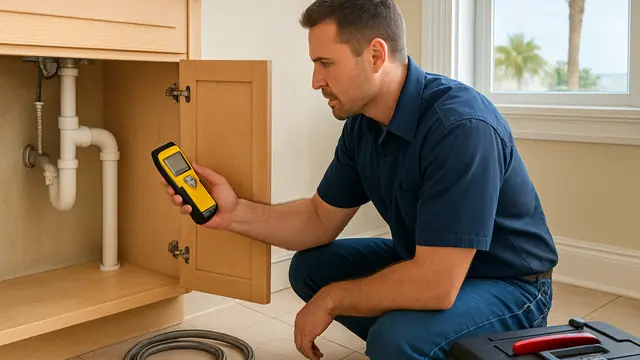
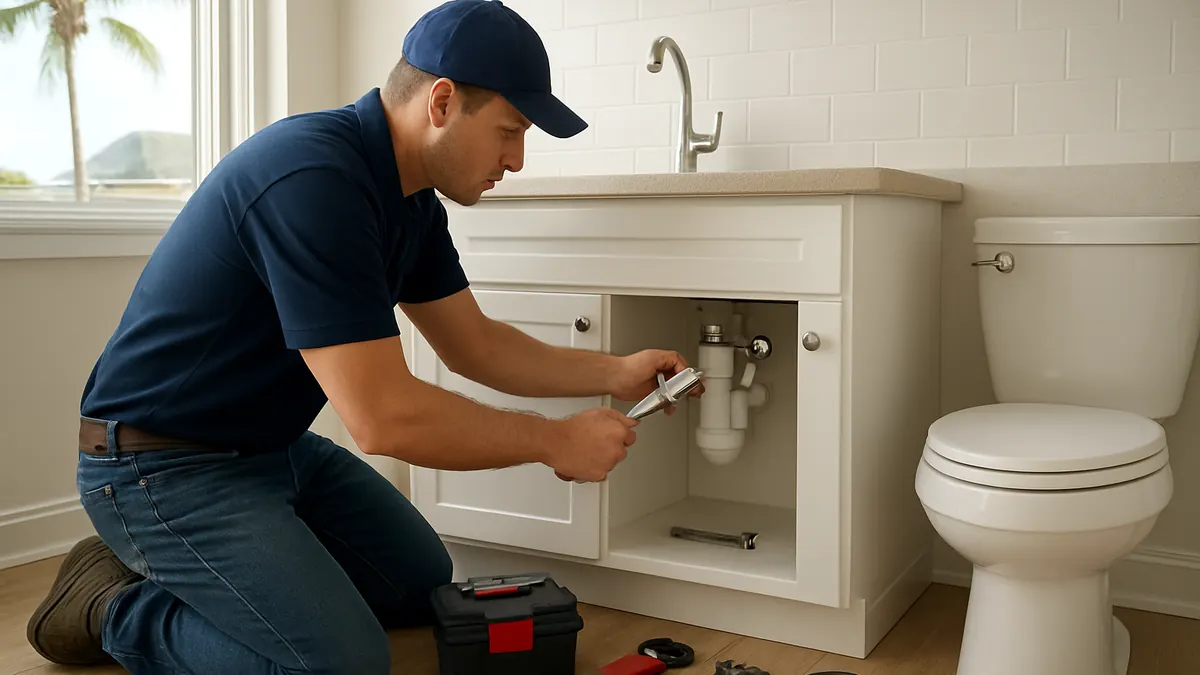
A damp cabinet may be caused by a loose drain connection, leaking faucet supply, worn shutoff valve, cracked trap, failed disposal connection, or water spilling from the countertop. Water that continues while the faucet is off may involve a supply connection; leakage appearing only during drainage may involve the drain assembly.
Toilets That Run, Rock, or Leak
A toilet that refills by itself may be losing water from the tank into the bowl because the flapper no longer seals. A fill valve can also stick and send water continuously into the overflow tube.
Movement at the base is another warning sign. Loose hardware, an uneven installation, or a damaged seal beneath the toilet can allow leakage and odor. Repeated tightening without diagnosis can crack the fixture or damage the mounting connection.
Shower and Tub Drains That Empty Slowly
Hair, soap residue, and other debris can collect near the drain opening or farther inside the line. A slow shower may appear manageable during cleaning but become a guest complaint when several people use it consecutively.
When a toilet bubbles as the tub drains, or water rises in one fixture while another is used, the obstruction may not be limited to the shower. Those connected symptoms should be reported to the plumber.
Kitchen Sink and Disposal Trouble
Rental guests may place grease, coffee grounds, food scraps, shells, or fibrous waste in the kitchen drain. The disposal can hum without turning, run while water remains in the sink, or leak from its mounting or drain connection.
Turn the switch off and keep hands and utensils out of the unit. A reset may restore a disposal that has safely shut itself off, but repeated tripping, humming, leakage, or a jam that cannot be cleared safely requires service.
Insufficient or Inconsistent Hot Water
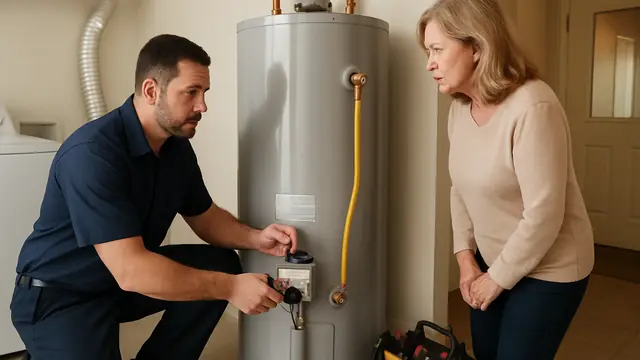
Hot-water complaints may result from heavy use, an incorrect temperature setting, a faulty thermostat, failed heating element, burner problem, damaged dip tube, sediment, or a water heater that is not recovering normally.
First confirm whether every hot-water fixture is affected. If only one shower has poor temperature or flow, the problem may be in that fixture rather than the heater. Water that is dangerously hot, discolored, leaking, or accompanied by unusual odors requires prompt evaluation.
Washing-Machine and Refrigerator Connections
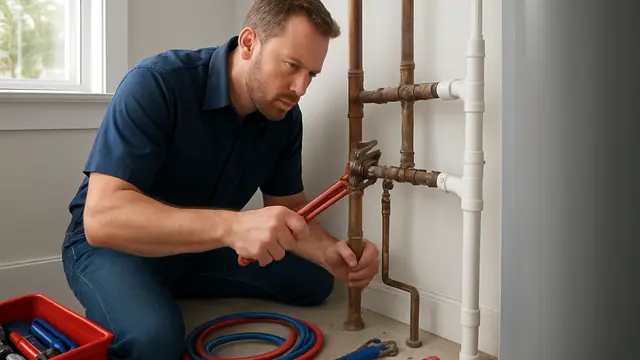
Furnished rentals often rely on flexible supply lines for appliances. These connections can loosen, kink, deteriorate, or leak at the valve. Because the lines are commonly hidden behind equipment, moisture may first appear along a baseboard or beneath nearby cabinetry.
An appliance should not be pulled out by a guest if doing so could damage the floor, strain the hose, or expose an electrical hazard.
Safe Checks Before the Plumber Arrives
- Ask which fixture is affected, whether other fixtures behave differently, and when the leak appears. Request clear photographs.
- An accessible valve may be closed gently, but never force it. For a running toilet, check for a caught chain, raised flapper, or water entering the overflow tube.
- A dry paper towel can help confirm a drip location. Visible hair may be removed from an accessible stopper without dismantling piping.
What an Owner or Guest Should Not Attempt
- Do not ask a guest to disconnect hoses, remove a toilet, loosen a disposal, open walls, or service a water heater.
- Avoid chemical drain cleaners, especially in standing water.
- Do not overtighten fittings or ignore a ceiling stain that appears only when another fixture is used.
When the Problem Requires Urgent Service
- Urgent conditions include uncontrolled water, sewage backup, several failed drains, or moisture entering walls, floors, or ceilings.
- Gas odors, burning smells, repeated breaker trips, or water near electrical equipment also require immediate caution.
- Loss of every usable toilet, shower, or hot-water source may require priority scheduling.
How a Licensed Plumber Finds the Cause
- The plumber inspects the fixture and accessible piping, then tests one source at a time to determine whether the failure is isolated or systemwide.
- Drain diagnosis may include flow testing, cleanout access, professional clearing equipment, or camera inspection for recurring blockages.
- Water-heater testing may cover thermostats, elements, burners, controls, valves, temperature, recovery, corrosion, and tank condition.
Repair Choices Starting With the Least Disruptive
A minor repair may involve a flapper, fill valve, supply line, drain seal, stopper cleaning, or safe disposal service.
Localized clogs may be professionally cleared. Recurring clogs may justify camera inspection or deeper cleaning. A rocking toilet may need mounting, flange, or seal repair.
Water-heater repairs may include a thermostat, element, valve, or ignition component. Replacement is considered when the tank leaks, safety is compromised, or repair is impractical.
What Affects the Cost of the Repair?
Cost depends on the cause, accessibility, diagnostic time, parts, equipment, and whether finished surfaces obstruct the plumbing.
Occupied rooms, access, shutoff availability, and cleanup needs can also affect labor.
Preventive Plumbing Practices for Rental Owners
- During turnovers, run faucets, verify drainage, flush toilets, listen for refilling, and inspect beneath sinks, near appliances, and around the water heater.
- Tell guests to flush only toilet paper, keep grease out of drains, and report leaks through one designated contact.
- Record the fixture, diagnosis, and repair so repeated failures trigger deeper evaluation.
Protect the Property and the Guest Experience
The most common plumbing problems for vacation rentals in Fort Walton Beach, FL, are easier to control with one response process: isolate water, stop fixture use, document symptoms, and avoid risky repairs. A licensed diagnosis helps identify the least disruptive effective solution.
About this guide: This resource provides general homeowner education, not a remote diagnosis. Actual conditions, code requirements, equipment, and safe repair options must be evaluated at the property.