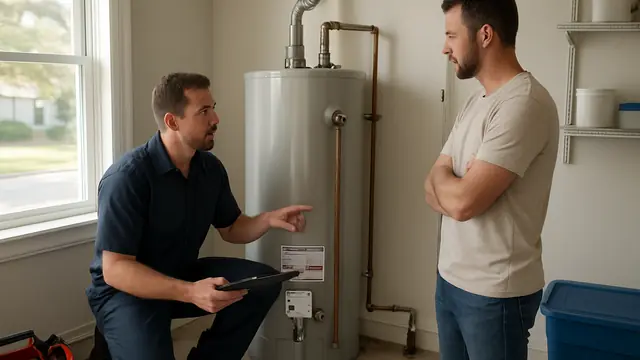
Stop and call for qualified help when plumbing water is near electrical equipment, sewage is entering occupied space, gas or burning odors are present, or a repair would require opening pressurized piping.
A Freeport homeowner may begin looking for water treatment after repeatedly cleaning mineral film from a shower door. Another household member may dislike the tap water's taste, while someone else notices particles in a faucet aerator. Because these symptoms can have separate causes, choosing between a water softener and whole-house filtration should begin with diagnosis.
Your first safe step is to compare hot and cold water at several fixtures. Note any color, odor, particles, spotting, or pressure changes. Do not taste abnormal-looking or unusual-smelling water. If the change is sudden, widespread, or accompanied by a strong chemical, fuel, or sewage-like odor, use another safe source for drinking and cooking until the water is evaluated.
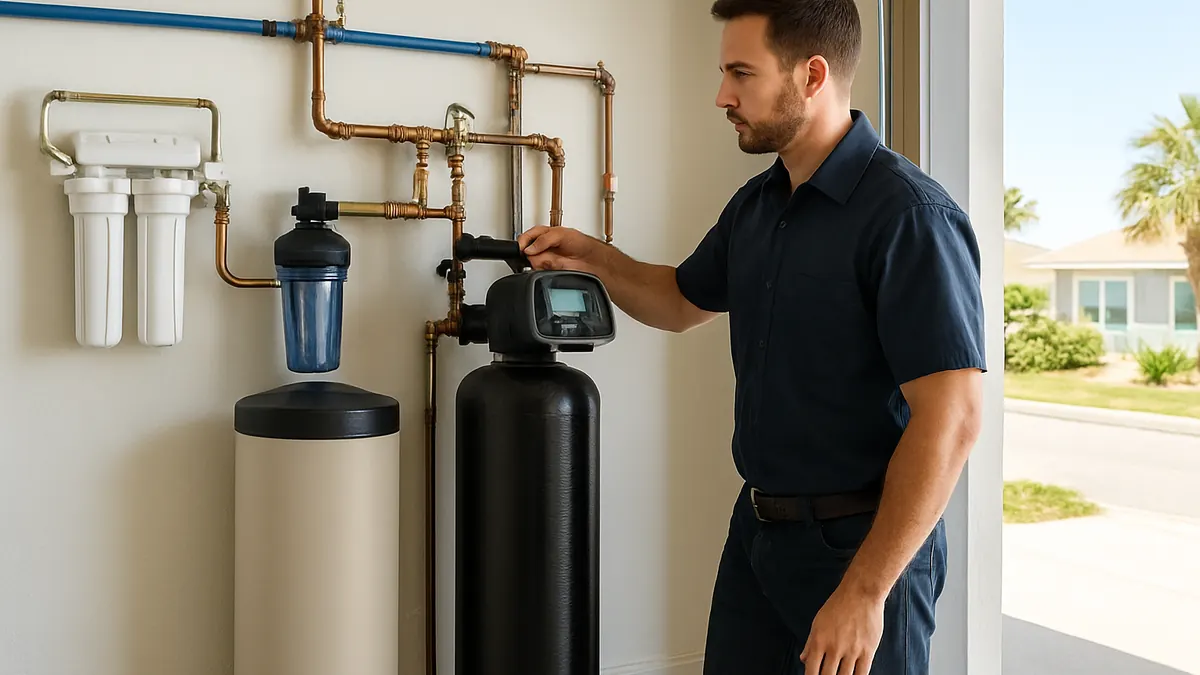
A water softener treats hardness minerals. Whole-house filtration targets specific substances based on the filter media. Some homes need one or both; others need a plumbing repair.
Understanding Water Softener Versus Whole-House Filtration in Freeport
Hardness is caused mainly by dissolved calcium and magnesium. Because the minerals are dissolved, an ordinary particle filter cannot simply screen them out.
A traditional softener uses ion exchange. Resin captures calcium and magnesium in exchange for sodium or potassium ions, then is periodically cleaned during regeneration.
Whole-house filtration works differently. A sediment filter captures particles of a specified size. Activated carbon may reduce chlorine-related taste and odor. Other media can be used for other verified conditions.
"Whole-house filter" does not describe one universal treatment level. The system must match the test results and homeowner's goal.
When a Softener Is Usually the Better Choice
A softener is commonly considered when the main complaint is scale. You may see chalky buildup around faucets, spots on dishes, film on shower glass, and crust inside a kettle or coffee maker.
Soap and shampoo may not lather as expected, and mineral deposits can restrict showerheads and aerators. Hardness can also contribute to buildup inside water heaters and appliances. Testing confirms whether treatment is appropriate.
A softener will not automatically correct sediment, microorganisms, chemical contaminants, or every taste and odor complaint.
When Whole-House Filtration Makes More Sense
- Whole-house filtration may fit when water contains grit, flakes, or discoloration, or when testing confirms a substance suitable media can reduce.
- Sediment filtration depends partly on particle size. A coarse filter may let material pass, while an unnecessarily fine one may clog and reduce flow.
- Activated carbon is often considered for verified chlorine-related taste or odor. It is not a substitute for hardness treatment and does not remove every possible contaminant.
Before recommending whole-house equipment, determine whether the complaint occurs throughout the home. A smelly sink may have a drain issue, while hot-only particles may come from the water heater.
Safe Homeowner Checks Before Service
Fill clear containers with hot and cold water. Let the samples stand for several minutes and compare their appearance and odor. Tiny air bubbles often clear from the bottom upward, while actual particles usually settle or remain visible.
Test kitchen and bathroom faucets. If possible, compare an outdoor connection with indoor water to identify whether treatment or interior plumbing contributes to the symptom.
Inspect faucet aerators and showerheads for scale or debris. Review the replacement date on existing filters. Confirm that a softener contains salt, is powered, and is not in bypass.
Watch the pressure while more than one fixture is operating. A major flow reduction after treatment equipment may point to a clogged filter or an undersized system.
What You Should Not Try
Do not assume a large or expensive system is correct. Unnecessary treatment adds maintenance and may create pressure or drainage problems.
Do not place a very fine cartridge on the main line without calculating flow and expected sediment loading. Do not increase softener settings to address an odor or color problem the unit was not designed to treat.
Avoid opening filter housings or control valves while they are pressurized. Never cap a softener or filter drain line because the equipment may need it for safe cleaning or regeneration.
Do not introduce bleach, acids, or other chemicals into the home's water system without verified need, correct dosing, and professional guidance.
Warning Signs That Require Prompt Attention
White scale generally develops gradually. It should be addressed, but it is not usually an immediate safety emergency.
Seek prompt evaluation when water throughout the property turns brown, red, black, or oily-looking; develops a persistent chemical, fuel, rotten-egg, or sewage-like odor; contains unexplained material; or causes irritation.
A rapid pressure loss, repeated filter-housing failure, leaking treatment tank, or softener that runs continuously also needs attention. These conditions can interrupt water service, waste water, or damage the building.
If treatment equipment is leaking heavily, use the bypass or main shutoff only if you understand its operation and can access it safely.
How a Licensed Plumber Identifies the Cause
The plumber asks when the symptom began, where it occurs, and whether it changes after the water has run. The water source, occupancy, fixture demand, and existing equipment are reviewed.
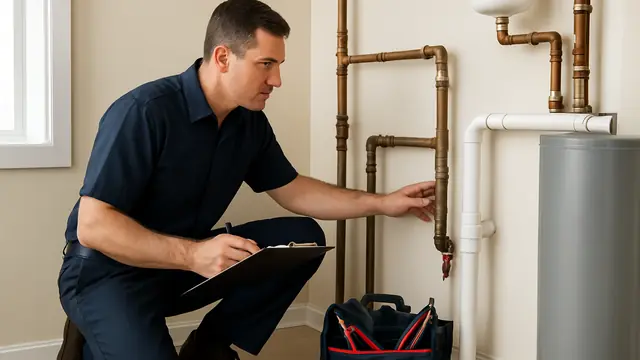
Pressure and flow can be measured before and after treatment. The plumber inspects piping, the water heater, aerators, housings, drain connections, bypass valves, and controls.
Testing may include hardness, pH, chlorine, iron, or total dissolved solids. Laboratory analysis may be recommended for private-well concerns, possible health-related contaminants, or conditions field tests cannot identify reliably.
The findings are compared with the equipment's rated flow, capacity, and treatment claims.
Repair and Treatment Options in Practical Order
Start with the smallest reasonable correction. This may include cleaning an aerator, replacing an overdue filter, repairing a bypass valve, correcting programming, or flushing and inspecting the water heater.
A point-of-use filter may be enough when the issue is limited to one faucet. Confirmed whole-house sediment may justify a main-line prefilter or staged sediment filtration.
A carbon system may be appropriate for a verified taste or odor concern. A properly sized softener may be recommended when hardness is causing scale.
When testing reveals multiple conditions, filtration and softening can be combined in a planned sequence. Existing plumbing may need repair or replacement only when pipe deterioration is the actual source of particles, discoloration, or reduced flow.
What Determines the Cost?
Cost depends on the test results, treatment method, flow capacity, equipment size, installation location, access to the main line, drainage, electricity, and required valves or piping changes.
A home with frequent simultaneous use needs equipment that maintains adequate flow. Intermittently occupied properties also need maintenance planning that accounts for changing demand.
Ongoing costs include salt, filters, media replacement, regeneration water, cleaning, and service. Compare these requirements before selecting equipment.
Maintenance That Protects Performance
Record test results and service dates. Mark cartridges with the installation date and keep correct spares available.
Check the treatment area for moisture, loose tubing, cracked housings, and unusual sounds. Maintain the salt level without overfilling the brine tank, and watch for a hardened salt bridge.
Replace filters according to pressure, water use, water conditions, and manufacturer guidance. Do not wait until flow becomes unacceptable.
After a long vacancy, inspect for leaks and confirm that treatment equipment operates normally.
Selecting Water Softener Versus Whole-House Filtration in Freeport
Choose a softener when testing confirms hardness and the goal is to reduce scale. Choose whole-house filtration when testing identifies sediment, chlorine-related taste and odor, or another condition addressed by specific media. A professional evaluation prevents unnecessary equipment and identifies when a focused repair is more effective.
About this guide: This resource provides general homeowner education, not a remote diagnosis. Actual conditions, code requirements, equipment, and safe repair options must be evaluated at the property.