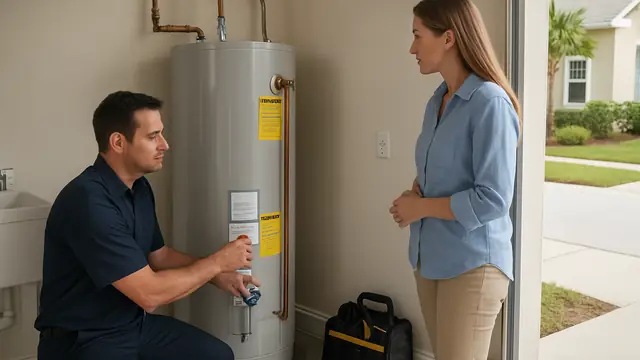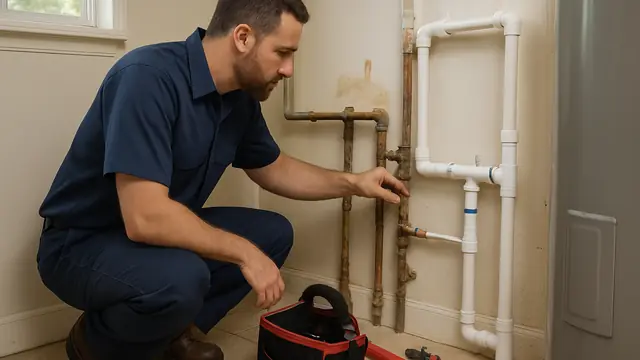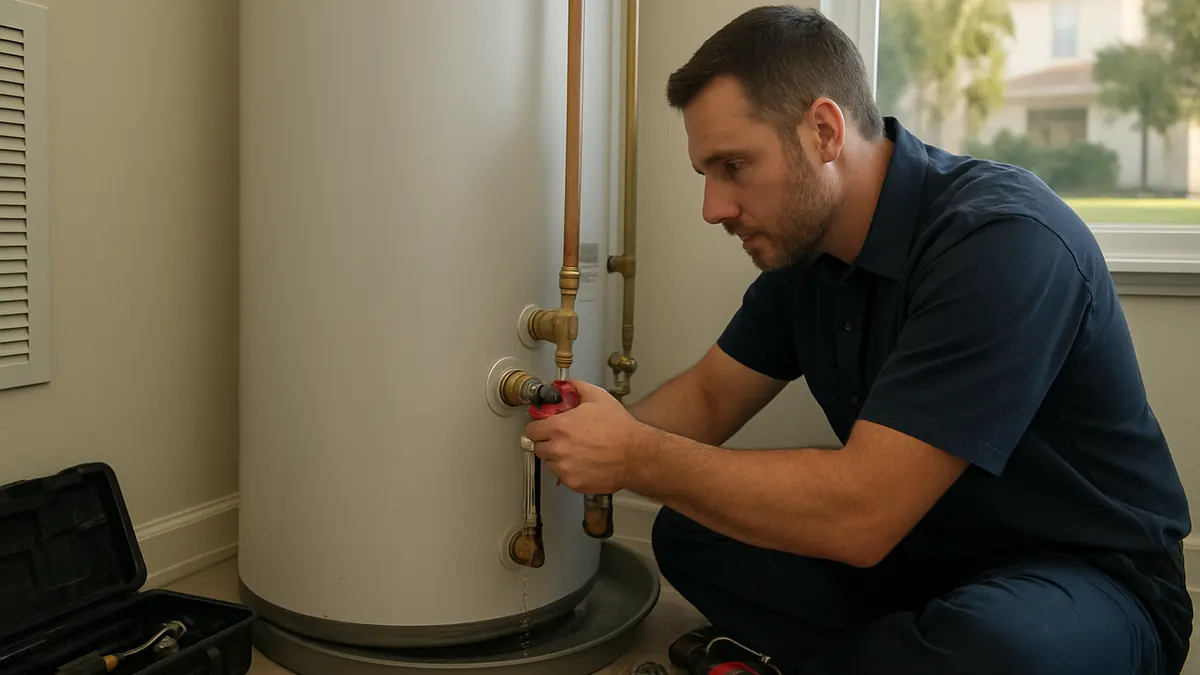
Stop and call for qualified help when plumbing water is near electrical equipment, sewage is entering occupied space, gas or burning odors are present, or a repair would require opening pressurized piping.
You may notice the first sign while walking through the garage, opening a utility closet, or checking why the hot water seems different. There is a damp ring beneath the heater, a rusty trail down the side, or a steady drip from a pipe. When a homeowner asks, "Why is my water heater leaking in Lynn Haven?" the answer begins with one question: Where does the water start?
Your immediate priority is safety. Move belongings away from the water and avoid wet electrical equipment. If the leak is active and the cold-water shutoff valve is easy to reach, close it. Turn off an electric heater at the breaker only if the panel and floor are dry. For a gas unit, do not disassemble controls or piping. If you smell gas, leave the area and contact the gas utility or emergency services.
Common Reasons a Water Heater Leaks
A Loose or Deteriorated Pipe Connection
The cold-water inlet and hot-water outlet are commonly located at the top of a tank heater. These connections may leak because a flexible connector has aged, a threaded joint has loosened, or corrosion has damaged a fitting.
A Faulty Shutoff Valve
The valve supplying cold water to the heater may leak around its stem, handle, or connection. The leak may worsen when the valve is moved.
A Temperature-and-Pressure Relief Problem
The T&P valve is designed to open if temperature or pressure inside the tank becomes unsafe. Water from its discharge pipe may mean the valve has weakened, but it may also be responding to excessive pressure or overheating.
Never cap or block the discharge pipe. The valve is a critical safety device.
A Leaking Drain Valve
The drain valve near the bottom of the tank can leak after flushing or as its internal seal wears. Sediment may prevent the valve from closing completely.
A Failed Heating-Element Seal
Electric heaters use heating elements that extend through the tank wall. A gasket seals each opening. A worn or damaged gasket may allow water to leak behind an access panel.
Corrosion Inside the Tank
Tank-style water heaters rely on a lining and an anode rod to protect the steel vessel. Over time, the lining can deteriorate and the anode rod can be consumed.
Once the inner tank develops a hole, the dependable solution is replacement. Tape, putty, and exterior patches do not restore the strength of the steel.
Why Is My Water Heater Leaking in Lynn Haven After Hot-Water Use?
A leak that appears after showers, laundry, or dishwashing may be related to pressure or heat. The tank is heating a new supply of cold water, and pressure changes during that recovery period.
Safe Checks You Can Perform
Dry the outside of the heater and the floor. Place dry paper towels beneath the top connections, around the drain valve, and near the end of the T&P discharge pipe. Recheck them after the heater has operated.
Look above the heater for moisture. A leaking pipe, air-conditioning drain, or nearby appliance may be responsible.
Note whether the water is hot or cold, whether the leak is constant, and whether hot-water delivery has changed. Keep your inspection visual. Do not remove electrical covers, burner panels, insulation, or valves.
What You Should Not Attempt
- Do not apply sealant to the outside of a leaking tank. A pressure vessel that has corroded through is not safely repaired with a surface patch.
- Do not open the drain valve on a hot, pressurized tank unless you understand the procedure. Hot discharge water can cause severe burns.
- Do not reset a tripped breaker repeatedly. Do not work on gas controls, burners, venting, or electrical components without proper qualifications.
- Never cap the T&P valve or its discharge pipe. Do not install a shutoff valve on the relief line.
Signs the Leak Requires Urgent Service
- Water flowing continuously or spreading into walls, cabinets, or finished rooms requires prompt action. Shut off the incoming water when safe and call for service.
- A bulging tank, steam, scalding water, or strong relief-valve discharge may indicate unsafe pressure or temperature.
- A gas odor, soot, scorch marks, or a loose vent connector requires immediate attention. Leave the building if gas is suspected.
How a Licensed Plumber Diagnoses the Leak
The plumber begins by confirming the source. The unit may be dried and observed while under normal water pressure and during a heating cycle.
The technician checks the top connections, shutoff valve, T&P valve, discharge piping, drain valve, tank jacket, and nearby plumbing. Water pressure may be measured. If the relief valve is involved, the plumber may check thermostat settings, actual water temperature, pressure changes during heating, and any expansion-control equipment.
On an electric heater, the technician can test elements, thermostats, wiring, and gasket areas. On a gas unit, the inspection may include the burner, controls, combustion area, and venting.
Repair Options From Least Invasive to Replacement
A leaking supply line, union, fitting, or shutoff valve may be replaced while keeping the existing heater.
A drain valve or electric-element gasket may be replaced when the tank is sound. A T&P valve may be replaced after the plumber confirms that excessive pressure or overheating is not the real cause.
Pressure-related leakage may require repair or installation of pressure-regulating or expansion-control equipment.
Replacement is appropriate when the inner tank leaks, corrosion is advanced, or the heater has multiple failures that make repair impractical. A replacement should be sized according to household demand and selected based on fuel source, available utilities, recovery needs, and space.
Tankless equipment may be an option, but it is not automatically the correct choice. The home's gas or electrical capacity, desired flow rate, installation changes, and maintenance expectations must be considered.
Typical Factors That Affect Cost
The source of the leak determines the basic repair scope. A visible connector replacement is generally simpler than diagnosing intermittent relief-valve discharge or replacing an internal component.
Access affects labor. Tight closets, elevated platforms, finished surfaces, and limited working space can make service more involved.
For replacement, cost factors include capacity, fuel type, efficiency, venting, electrical or gas modifications, piping changes, drain-pan needs, permits, disposal, and corrections required for a safe installation.
Prevention and Maintenance Guidance
- Inspect the heater area. Look for moisture, rust trails, mineral buildup, or staining beneath valves and fittings.
- Follow the manufacturer's recommendations for flushing, anode-rod inspection, thermostat settings, burner service, venting, and electrical checks.
- Keep stored items away from the tank so early moisture is visible. A water alarm can provide an alert before a small leak becomes major damage.
Address the Cause Before the Damage Grows
When you ask, "Why is my water heater leaking in Lynn Haven?" do not assume the most expensive outcome, but do not ignore the warning. A connection, valve, gasket, or pressure problem may be repairable. A leaking inner tank requires replacement.
Contain the water safely, keep the energy source off when hazards are present, and have the source professionally identified. The sooner the leak is diagnosed, the more control you have over the repair decision and the surrounding damage.
About this guide: This resource provides general homeowner education, not a remote diagnosis. Actual conditions, code requirements, equipment, and safe repair options must be evaluated at the property.