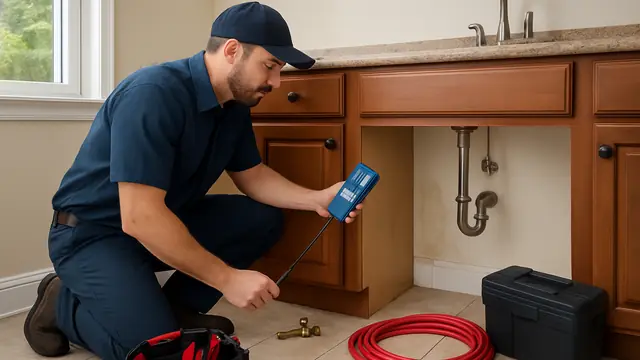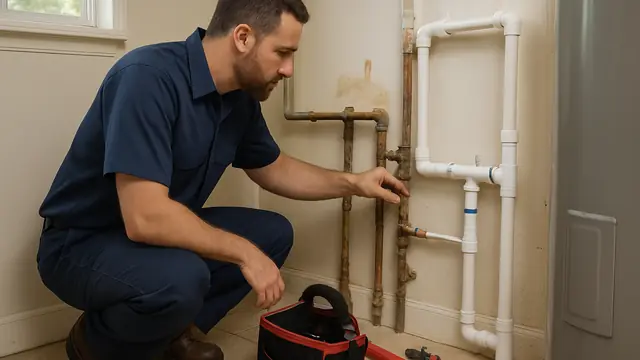
Stop and call for qualified help when plumbing water is near electrical equipment, sewage is entering occupied space, gas or burning odors are present, or a repair would require opening pressurized piping.
A toilet flushes and you hear a gurgle from the bathtub. The bathroom sink drains slowly, and when the washing machine empties, water rises in the shower. These connected symptoms show that more than one fixture shares the same drainage problem. Multiple drains backing up in a Lynn Haven home usually point to a restriction in a shared branch, building drain, or sewer line.
Stop adding water to the system. Pause laundry and dishwashing, avoid showers, and do not flush toilets until the cause is found. If contaminated water has entered a room, keep people and pets away and avoid direct contact.
Start by Reading the Pattern of the Backup
One slow bathroom sink may have hair and soap in its trap. One toilet that will not flush may have an object in the fixture. When a toilet, shower, sink, or appliance affects another fixture, the obstruction is probably downstream of the point where their drains join.
The lowest fixture commonly shows the backup first. Water may rise in a shower while another fixture is used because blocked wastewater follows the easiest available path. Gurgling occurs when trapped air is forced through a toilet bowl or drain opening.
Why Are Multiple Drains Backing Up in Lynn Haven Homes?
Waste and Paper Restricting the Main Line
A main drain can narrow as toilet paper, waste, hair, soap residue, food particles, and other material collect. A partial opening may handle a faucet but not the larger discharge from a washer, tub, or several fixtures.
Wipes and Other Improperly Flushed Items
Wipes, paper towels, feminine products, cotton items, diapers, and household trash do not disperse like toilet paper. They can lodge at a bend, joint, or rough pipe section and create a larger clog.
Grease Accumulation
Cooking grease can cool inside the line and adhere to the wall. Food debris and detergent residue collect on that coating until a high-volume discharge exposes the restriction.
Root Intrusion
Roots can enter through a crack, separated joint, or other opening. They catch paper and waste, then grow into a denser obstruction. Cutting them restores flow but may not prevent their return.
A Damaged or Poorly Aligned Pipe
A cracked, crushed, offset, or sagging line cannot carry solids consistently. A low section holds water and debris, while an offset joint creates an edge where paper collects. These defects often cause recurring backups.
A Septic or Downstream Issue
If the property uses septic service, a full tank, blocked outlet, or another system condition can slow multiple drains. With sewer service, the restriction may be in the private line or beyond it.
Safe Checks a Homeowner Can Make
Identify every affected fixture and note what triggers the symptom. Record whether the problem starts after laundry, a toilet flush, a shower, or simultaneous water use. Do not repeat the test once the pattern is clear.
Look at the lowest tub, shower, or floor drain for standing water. Check around toilet bases for leakage without touching contaminated water.
If the sewer cleanout is already visible, note its location but do not loosen the cap because sewage may be held behind it.
What You Should Not Do
Do not pour chemical cleaner into every slow fixture. Chemicals rarely solve a shared main-line blockage and cannot correct roots, collapse, or improper slope. They may remain trapped and create a hazard during professional cleaning.
Do not repeatedly flush or run faucets to see whether the line has opened. A small passage may let water recede temporarily, but another discharge can cause a larger overflow.
Avoid rental sewer machines without training. Main-line cables can bind, damage fixtures or piping, and injure the operator. Do not remove a toilet, climb onto the roof, or open a cleanout while the system is full.
Warning Signs That Require Prompt Service
Treat the problem as urgent when sewage enters a shower, tub, floor drain, or living area. Prompt attention is also appropriate when all toilets are unusable or wastewater is near flooring, drywall, cabinets, electrical outlets, appliances, or HVAC equipment.
A strong sewer odor, dark water emerging from a drain, or wastewater surfacing outside also requires evaluation. Recurring backups matter even if the water later drains away because repetition can indicate incomplete cleaning or structural damage.
How a Licensed Plumber Diagnoses the Restriction
The plumber maps the affected fixtures, identifies the lowest backup point, and locates accessible cleanouts. The volume of water that triggers the problem helps narrow the obstruction area.
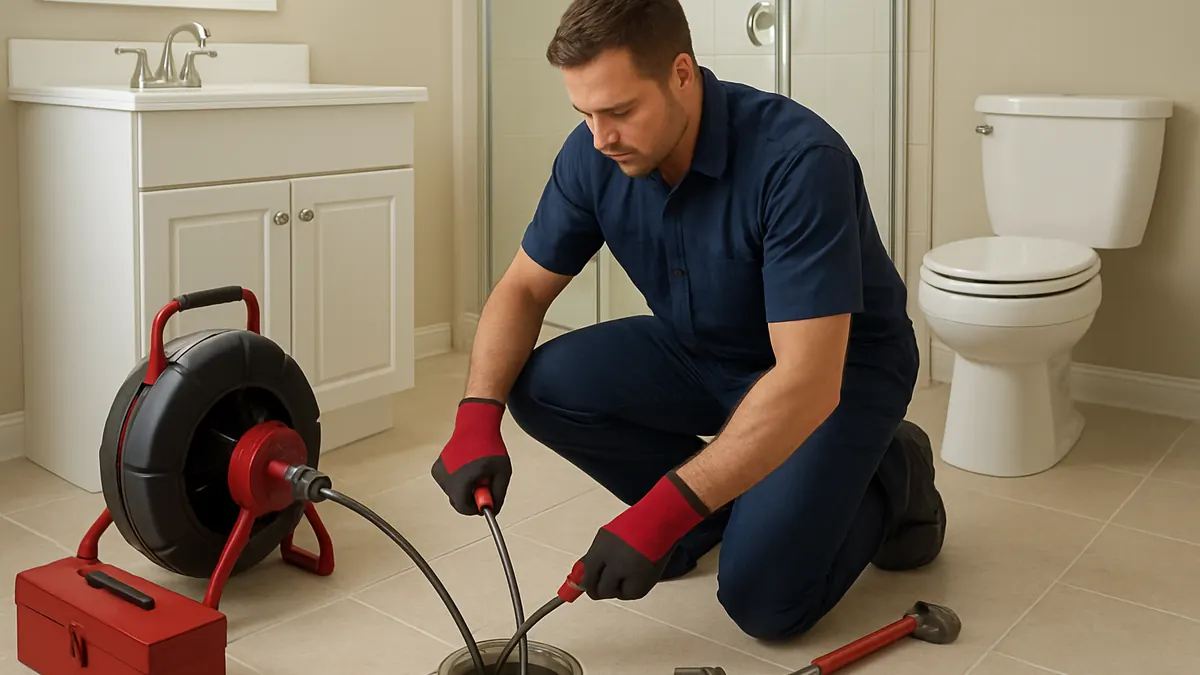
Professional cabling may be used to restore flow. The technician selects equipment for the pipe diameter and suspected material. Hydro jetting may be recommended when buildup coats a longer portion of pipe. Controlled high-pressure water removes grease and sludge, although the line should be evaluated first when damage is suspected.
Once flow is restored, a sewer camera can show cracks, roots, offsets, foreign objects, low sections, and standing water. It is especially helpful when earlier cleaning did not produce lasting results.
Repair Options From Simple Clearing to Replacement
Mechanical clearing is commonly the least invasive option. If an isolated clog is removed and the line functions properly, excavation may not be necessary.
Hydro jetting can provide more complete cleaning when residue extends along the pipe. Root cutting can reopen a root-filled line, although monitoring or repair may still be needed.
If a camera identifies one cracked, separated, or offset section, a targeted spot repair may solve the problem. Full replacement is considered when damage is widespread, the pipe has collapsed, several sections have failed, or recurring repairs no longer provide dependable service. The recommendation should be supported by inspection findings.
Typical Factors That Affect Cost
Cost depends on the blockage location, pipe length and diameter, cleanout access, obstruction severity, and equipment required. Access through a cleanout may be simpler than removing a toilet or reaching piping beneath a slab.
Camera inspection, hydro jetting, root cutting, underground locating, excavation, permits, materials, and restoration can also affect cost. Ask whether the proposal covers clearing the blockage, diagnosing the cause, permanent repair, or a combination.
How to Reduce the Risk of Future Backups
Flush only human waste and toilet paper. Put wipes, paper towels, hygiene products, cotton items, and household trash in a wastebasket. Keep grease and cooking oil out of drains, and use strainers to catch food and hair.
Respond to early warnings. A toilet that bubbles during laundry, a shower that slows when another fixture runs, or a recurring sewer odor may indicate a developing restriction.
When a camera documents roots, buildup, or damaged pipe, follow a maintenance or repair plan based on that condition.
Take the Right Next Step for Multiple Drain Backups
Multiple drains backing up in Lynn Haven mean a shared part of the drainage system is not carrying wastewater properly. Stop using water, avoid unsafe do-it-yourself methods, and have the line opened and evaluated. The solution may be basic clearing, thorough cleaning, root management, or targeted repair. Replacement should be considered only when documented conditions make it necessary.
About this guide: This resource provides general homeowner education, not a remote diagnosis. Actual conditions, code requirements, equipment, and safe repair options must be evaluated at the property.