Stop and call for qualified help when plumbing water is near electrical equipment, sewage is entering occupied space, gas or burning odors are present, or a repair would require opening pressurized piping.
A guest mentions unusual-tasting kitchen water, housekeeping reports film on shower glass, or you return after a vacancy and find dark specks in an aerator. In a Panama City Beach home, condominium, or vacation property, these complaints can affect comfort, cleaning, appliances, and guest confidence.
First, separate each symptom. Check whether it affects every fixture, only hot water, or one sink. Flush cold fixtures briefly after a vacancy and observe whether the problem clears. Do not drink water with a sudden strong odor, unusual color, or oily appearance. Testing and inspection should identify the cause before equipment is purchased.
Water Softener Versus Whole-House Filtration: Different Jobs
A water softener reduces dissolved hardness minerals, mainly calcium and magnesium. These minerals can leave scale on fixtures and shower glass, interfere with soap, and build up inside water-using equipment. Traditional softeners use resin that captures hardness minerals and regenerates with brine.
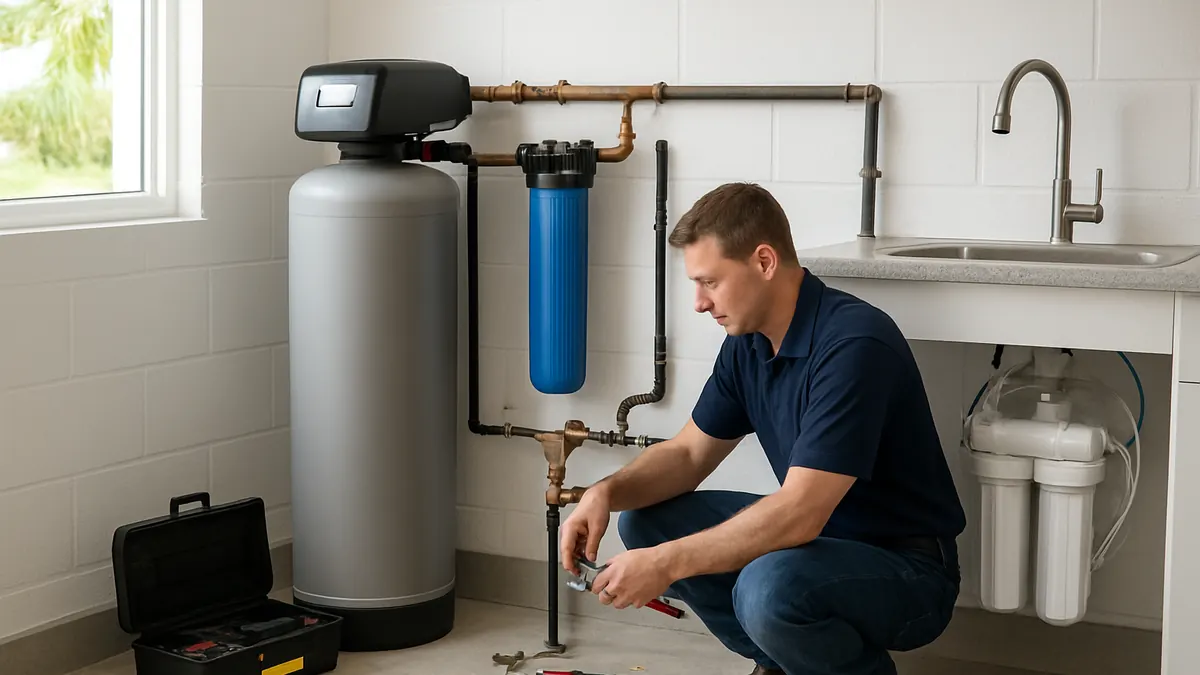
Whole-house filtration addresses other concerns. Sediment filters capture particles, while activated carbon may reduce certain tastes and odors. Specialty media must target a verified condition.
A standard whole-house filter does not automatically soften water. A softener does not remove every particle, taste, odor, or contaminant. The equipment should match the tested need.
Why the Property's Use Pattern Matters
A property that sits vacant may develop stale-tasting water in interior plumbing, while a high-occupancy property may have several showers and appliances operating together. Treatment must be sized for peak flow and maintained even when use is irregular. These patterns affect diagnosis but do not prove that treatment is required.
Symptoms That Point Toward Softening
Recurring white scale, poor soap performance, tub residue, and spotting may justify a hardness test. Sediment cartridges cannot trap dissolved hardness, and carbon may improve taste while scale continues. A softener reduces future buildup but does not remove existing deposits.
Symptoms That Point Toward Filtration
A consistent taste or odor at several cold fixtures may justify carbon filtration. Grains or flakes at multiple fixtures may justify sediment filtration after the source is identified. One-faucet debris may come from the aerator or connector. For drinking water alone, point-of-use filtration may be more practical.
Safe Checks for a Homeowner or Property Manager
- Compare clear cold-water samples from several fixtures, then compare hot and cold water. Hot-side-only flakes, odor, or discoloration may involve the water heater.
- After a vacancy, flush fixtures briefly and note whether a mild stale condition improves. Persistent odors require evaluation.
- Inspect faucet aerators for debris if they can be removed without damage. Record which fixture produced the material.
- Check existing equipment for power, errors, bypass position, salt, cartridge dates, and leaks. Do not open pressurized components.
What You Should Not Attempt
Do not assume an all-in-one product treats every condition; combination equipment must match testing and flow demand.
Do not install a very fine cartridge simply because a lower micron number sounds better. Restrictive filtration can reduce shower pressure and create complaints during periods of high use.
- Do not add chemicals to treatment equipment without an approved procedure.
- Do not leave bypass valves partly open. A partial bypass can create inconsistent water quality and confusing test results.
- Do not route a softener or backwashing-filter drain line to an improvised location. Incorrect drainage can cause flooding, sanitation concerns, or property damage.
- Do not treat a sewage, petroleum, solvent, or chemical odor as a routine carbon-filter issue.
Signs That Make the Situation Urgent
- Stop using the water for drinking and cooking if it develops a strong chemical, sewage, fuel, or solvent-like odor, an oily sheen, or unexplained widespread discoloration.
- Call promptly when a treatment tank leaks, a brine tank overflows, a softener will not stop regenerating, or water runs continuously to a drain.
- Sudden major pressure loss may indicate a blocked filter, failed valve, or plumbing problem.
- If guests or occupants report illness associated with the water, stop normal use and obtain appropriate professional and public-health guidance.
- Follow any official boil-water or do-not-use notice exactly.
How a Licensed Plumber Diagnoses the Problem
The plumber maps the symptom, occupancy pattern, and affected fixtures, including whether it appears after vacancy, during high demand, or only on hot water.
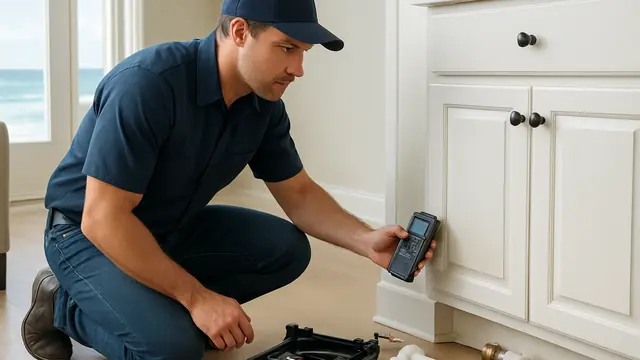
Testing may include hardness, pH, total dissolved solids, chlorine-related measurements, and indicators associated with staining or particles. A certified laboratory may be recommended when a concern cannot be identified reliably in the field.
Pressure and flow are measured before and after existing equipment. Pipe size, peak fixture demand, and available service space are considered.
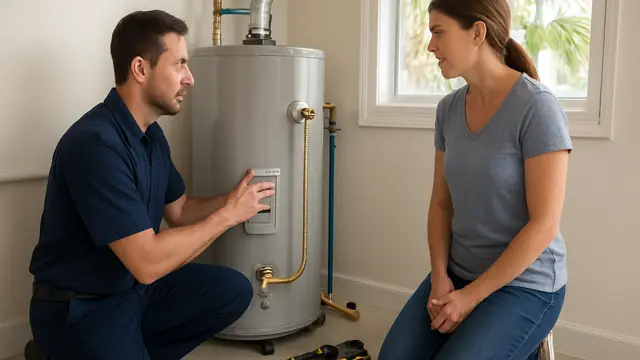
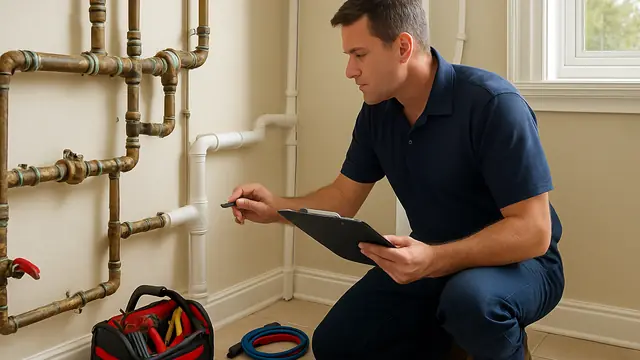
The plumber inspects the water heater, aerators, connectors, bypass valves, cartridges, settings, media, drain flow, and visible piping to rule out downstream defects.
Treatment Options From Least Invasive to More Comprehensive
- For a one-fixture problem, cleaning or replacing an aerator, washer, or connector may solve it.
- For hot-water-only odor or flakes, water-heater inspection and service may be the correct first step.
- For kitchen drinking water, point-of-use carbon or reverse osmosis may satisfy the goal with less maintenance.
- For incoming sediment, the filter design should match particle load, flow, and maintenance needs.
- For whole-property taste or odor, carbon systems may use cartridge or backwashing designs with different maintenance needs.
- For confirmed hardness, a conventional softener can reduce scale. Separate filtration stages may be added when testing supports them.
- Existing treatment equipment may only need reprogramming, cleaning, a valve repair, seals, cartridges, or fresh media.
Typical Factors Affecting Cost
Cost depends on test results, equipment capacity, flow demand, number of treatment stages, pipe size, installation access, drain location, electrical requirements, and whether old plumbing needs correction.
A condominium may require coordination over privately owned and accessible piping. Equipment should not be attached to shared plumbing without authorization.
Long-term costs include cartridges, salt, regeneration water, media, and service. Irregularly occupied properties need a maintenance calendar.
Prevention and Maintenance Guidance
- Maintain a written log of water-test results, filter changes, salt additions, settings, service visits, and periods when equipment was bypassed.
- After a vacancy, flush fixtures safely and inspect treatment equipment and the water heater for leaks before normal use resumes.
- Replace cartridges before severe pressure loss occurs. Check softener salt and watch for salt bridging.
- Inspect tanks, fittings, drain tubing, and bypass valves regularly. Retest the water when taste, odor, scale, staining, or pressure changes.
Choosing Water Softener Versus Whole-House Filtration in Panama City Beach
The right choice depends on evidence, not location or appearance alone. Confirmed hardness points toward a softener. Verified taste, odor, or incoming particles may call for filtration. A localized or hot-water-only complaint may require repair instead of new main-line equipment.
About this guide: This resource provides general homeowner education, not a remote diagnosis. Actual conditions, code requirements, equipment, and safe repair options must be evaluated at the property.