Stop and call for qualified help when plumbing water is near electrical equipment, sewage is entering occupied space, gas or burning odors are present, or a repair would require opening pressurized piping.
A guest, family member, or occupant reports that the shower turned cold halfway through use. When you check the water heater, it is still running, but the recovery time is much longer than before. Unreliable hot water creates an immediate decision: repair the existing heater or replace it before the interruption happens again.
If water is spreading, the tank is steaming, the unit smells burned, or gas is present, stop using it and request prompt help. Do not open panels, relight it repeatedly, or patch a leak. Otherwise, document the symptom and arrange diagnosis before choosing equipment.
Begin With the Type of Failure
A water heater can stop heating correctly, begin leaking, or become unsafe. Each condition leads to a different repair-or-replace discussion.
A heating problem may come from a replaceable component. A leak from an external fitting may also be repairable. A leaking tank, severe corrosion, or an unsafe pressure vessel generally requires replacement.
The key question is what failed and whether repair will restore dependable service.
When Inconsistent Hot Water May Be Repairable
Electric Heating Problems
An electric tank heater normally uses thermostats and heating elements to warm the water. When a lower element fails, the heater may produce one short supply of hot water. When an upper element, thermostat, or control fails, the home may have little or no hot water.
These parts may be replaced when the tank is dry and the electrical system is serviceable.
Gas Ignition and Burner Problems
A gas heater may experience trouble with the igniter, flame sensor, burner, gas control, or venting. A qualified professional should determine whether a serviceable component is responsible and combustion is safe.
Sediment-Related Capacity Loss
Sediment can reduce usable hot-water volume, create popping sounds, and slow heat transfer. Flushing may help a suitable tank but cannot reverse corrosion.
A Fixture Problem That Resembles Heater Failure
If only one shower loses temperature, a worn cartridge, mixing valve, or anti-scald device may be responsible.
Leak Location Changes the Recommendation
Water around the base does not prove tank failure. A fitting, connector, drain valve, relief valve, or nearby pipe may leak and send water downward.
External components may be repaired. Water emerging from beneath the jacket, a seam, or the tank shell usually means the pressure vessel has failed, and exterior patching is unsafe.
Signs That Replacement Deserves Serious Consideration
Replacement usually makes more sense when the tank itself leaks, corrosion is widespread, or the heater has experienced repeated failures.
It may also be better when parts are unavailable, recovery is inadequate, or a major repair would still leave an unreliable system.
Venting, wiring, gas connections, drainage protection, pressure regulation, or thermal expansion may also need correction. Extensive deficiencies can make replacement more practical.
Age provides context, but condition and expected reliability matter more.
Safe Checks Before Scheduling Service
- Check whether all fixtures are affected. Note hot-water duration, recovery time, and simultaneous use.
- From a safe distance, look for moisture around connections, valves, the relief pipe, and the base. Do not touch wet equipment.
- Record sounds, odors, breaker trips, ignition problems, or temperature changes. Photograph the model and serial number.
- If a breaker trips again after one reset, leave it off. A recurring trip can signal a failed element, damaged wiring, moisture, or another electrical fault.
What a Homeowner Should Not Attempt
- Do not remove electric covers, touch wiring, bypass controls, or install a larger breaker. These actions create shock or fire hazards.
- Never cap the temperature-and-pressure relief valve or block its discharge pipe.
- Do not patch a tank with epoxy, tape, screws, clamps, or sealant.
- Do not modify a gas valve, burner, ignition assembly, combustion-air opening, or vent.
Urgent Conditions That Should Not Wait
A rapidly growing leak, water near electrical components, steam, a bulging tank, or dangerously hot water requires prompt action.
Repeated discharge from the relief valve can indicate overheating, excessive water pressure, uncontrolled thermal expansion, or a faulty valve. Thermal expansion occurs when water increases in volume as it heats. In a closed plumbing system, that increase must be controlled.
Gas odor, soot, scorch marks, delayed ignition, or damaged venting are also urgent. If gas is smelled, leave the area and contact the appropriate emergency or gas service from a safe location.
How a Licensed Plumber Reaches the Decision
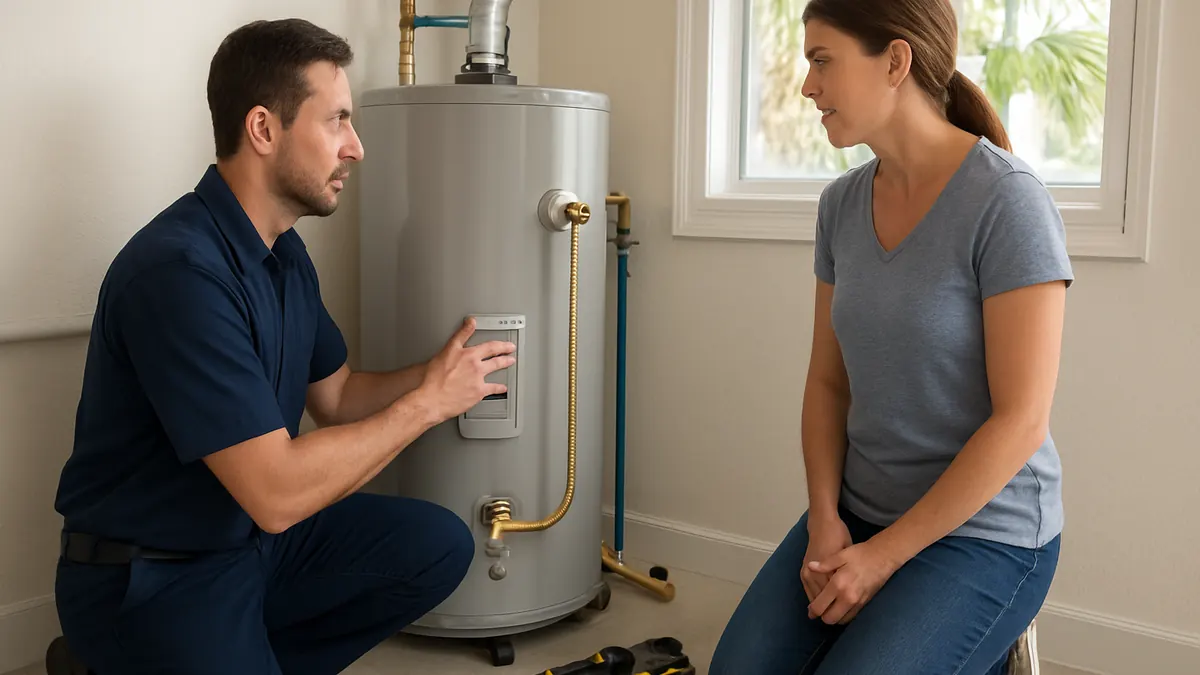
A plumber evaluates the heater type, capacity, age, symptoms, repair history, and installation.
For an electric unit, testing may include voltage, wiring, elements, thermostats, and the high-limit safety control. For a gas unit, inspection may include ignition, burner operation, gas control, combustion air, and venting.
The plumber also traces leaks, checks temperature and pressure, and inspects safety and expansion components.
The recommendation should explain the failed part, tank condition, safety concerns, and expected reliability.
Repair Options in a Practical Order
- The least invasive solution may be correcting a setting, replacing a connector, repairing nearby piping, or addressing one fixture.
- Component repair may include a thermostat, element, igniter, valve, anode rod, or expansion tank. Underlying pressure or temperature problems must also be corrected.
- Flushing may be considered when sediment affects performance and the tank remains suitable.
- More involved work may include pressure regulation, expansion control, vent correction, electrical repair, drainage protection, or connection changes.
Replacement is appropriate when the tank leaks, corrosion is advanced, reliability is poor, or capacity is inadequate. A tank model may be simplest. Tankless can be considered after evaluating demand, utilities, venting, and maintenance.
Factors That Affect Repair or Replacement Cost
Repair cost varies with the failed part, heater type, access, diagnostic time, parts availability, and related plumbing, gas, electrical, or venting work.
Replacement cost depends on capacity, efficiency, fuel source, location, removal, connection changes, drainage protection, expansion control, venting, permits, and required system corrections.
A useful estimate should separate optional improvements from required safety or installation work.
Prevention and Maintenance for Dependable Hot Water
- Inspect periodically for moisture, rust, noise, or reduced recovery. Keep the unit accessible.
- Ask whether flushing and anode-rod inspection are appropriate. The anode rod is designed to corrode before the tank steel.
- Have pressure and thermal expansion checked if valves drip. Keep gas-heater combustion and vent areas clear.
- For an occasionally unoccupied property, arrange periodic visual checks so a leak is not missed.
Repair or Replace a Water Heater in Panama City Beach: Choose Dependable Service
When deciding whether to repair or replace a water heater in Panama City Beach, separate a repairable component failure from tank failure, serious corrosion, inadequate capacity, or recurring breakdowns. Repair can be a sound choice when the tank and installation are in good condition. Replacement is usually more responsible when the pressure vessel leaks or dependable service cannot reasonably be restored.
A professional diagnosis helps protect the property and avoid paying for a temporary fix.
About this guide: This resource provides general homeowner education, not a remote diagnosis. Actual conditions, code requirements, equipment, and safe repair options must be evaluated at the property.