Stop and call for qualified help when plumbing water is near electrical equipment, sewage is entering occupied space, gas or burning odors are present, or a repair would require opening pressurized piping.
You notice flexible gray tubing beneath a bathroom sink while preparing a Panama City Beach property for guests, tenants, or a sale. There may be no leak, but you want to know whether the line is polybutylene and what to do next.
Polybutylene, often abbreviated PB, was installed in residential water-supply systems mainly from the late 1970s through the mid-1990s. It is commonly gray, but PEX, connectors, and other products can look similar.
Do not bend the pipe or loosen a fitting. Photograph what is visible, check for moisture, and locate the main shutoff. If water is spraying or steadily leaking, shut off the supply when safe and call a licensed plumber.
How to Identify Polybutylene Plumbing in Panama City Beach
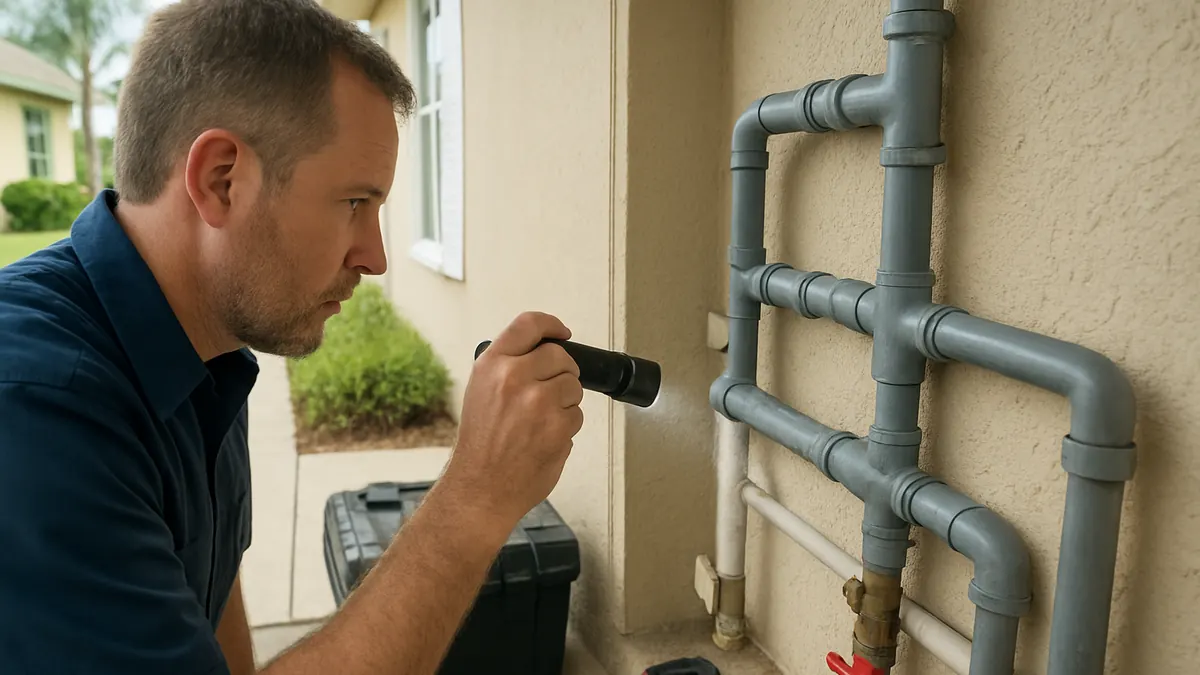
Begin with printed markings. Polybutylene tubing may be marked "PB," "PB2110," or with a manufacturer's name and size. Printing can fade or face the wall, so use a flashlight and mirror instead of rotating the line.
PB is flexible and may be gray, blue-gray, black, or occasionally white. It was used for pressurized supply lines, not the larger drains carrying wastewater away.
Many PB systems use plastic or metal fittings secured by copper-colored or aluminum crimp rings. A plumber considers the marking, fitting, ring, and installation pattern before confirming the material.
Distinguish Permanent Piping From Connectors
The short line between a shutoff valve and faucet may be braided metal, vinyl, or another flexible material. It is a replaceable fixture connector. The permanent supply pipe is the line entering the back of the valve or emerging from the wall or floor.
Toilet connectors, appliance hoses, and water-heater connectors are also separate components. A newer connector does not prove concealed pipe was replaced.
The connector, shutoff valve, faucet, appliance, drain, or permanent pipe can each be a different source.
Check More Than One Room
Look beneath each accessible sink, behind toilets, at the washing-machine box, and near the water heater. Inspect visible plumbing in utility areas, garages, crawlspaces, or safely accessible attic spaces without moving insulation or wiring.
A property can contain mixed piping. A remodeled kitchen may have PEX while bathrooms retain PB. Photograph several locations and note where each material appears.
If walls are already open for renovation, have questionable piping identified before the finishes are restored. Controlled inspection at that stage may avoid reopening the same area later.
Why PB May Look Normal Before a Leak
- PB condition is difficult to judge by exterior appearance. Age, heat, movement, fitting quality, and water exposure can contribute to internal deterioration.
- A pipe may look smooth while changes develop inside. Leaks can begin at fittings, bends, or through the pipe wall, and pressurized water can escape quickly.
- Identification does not mean a particular pipe will fail on a predictable date. It does mean the homeowner should understand how much PB remains and make a reasoned plan.
Safe Checks for Moisture or Hidden Water Use
Run a dry paper towel around an accessible fitting without shifting the tubing. If moisture appears, photograph the area and arrange service.
Look for discoloration, swollen cabinets, peeling paint, soft drywall, musty odors, corrosion, or dried residue. Check ceilings and flooring below plumbing areas.
You can observe the water meter when every fixture and automatic water-using device is off. Toilets, irrigation, ice makers, washing machines, and filtration equipment must not be operating. Continued movement may indicate a leak, although it cannot identify the source or pipe material.
If the property may be vacant, make sure the shutoff is accessible to an authorized person. Do not force a damaged or corroded valve.
What a Homeowner or Property Manager Should Not Attempt
Do not cut, squeeze, heat, scrape, or pull the tubing away from a wall to read hidden lettering.
Avoid tightening crimp rings with pliers or adding a general-purpose clamp. Tape, glue, epoxy, or an incompatible push fitting is not a reliable permanent repair for a pressurized water line.
Do not reopen water service after an uncontrolled leak until the failed area has been evaluated. Repressurizing damaged piping can release more water.
Signs That Require Urgent Attention
- Act promptly for an active spray, a steady leak that cannot be stopped at the fixture valve, rapidly spreading stains, wet flooring, or an unexplained pressure drop.
- Keep people away from a sagging or bulging ceiling. Turn off the water if safe and do not puncture the ceiling while standing underneath it.
- Water near outlets, light fixtures, appliances, or electrical panels creates an added danger. Do not touch wet electrical equipment or enter standing water to operate switches.
- Repeated leaks, even when each one is small, also increase urgency. A pattern may indicate that a broader evaluation is more practical than continuing isolated emergency repairs.
How a Licensed Plumber Diagnoses the Piping
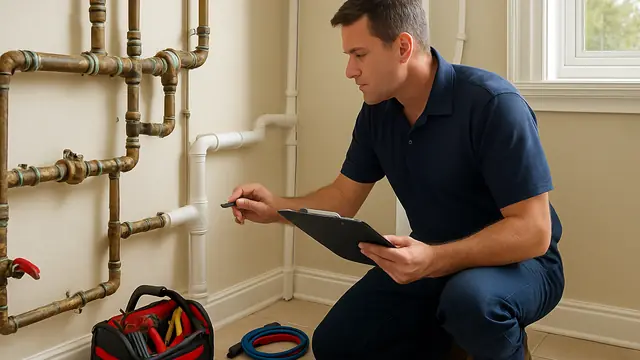
A licensed plumber checks exposed supply lines in several locations, reads markings, and examines fittings and crimp rings. The plumber traces likely branches and identifies transitions between PB, copper, CPVC, PEX, or other materials.
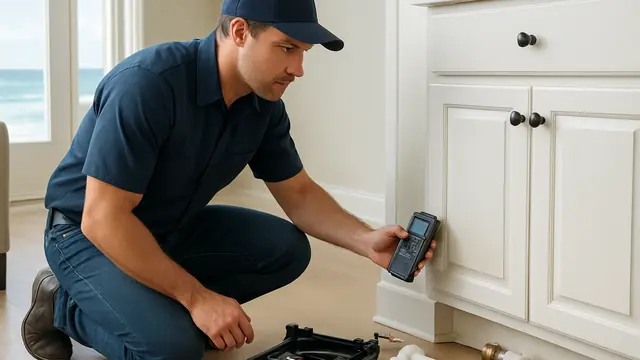
When hidden moisture is suspected, the plumber may use a moisture meter or another appropriate method. The assessment should explain whether PB is confirmed, how much remains, and whether leakage is active.
Repair Options Beginning With the Least Invasive
If the suspicious line is not PB and no defect is present, documentation may be the only action needed.
When a connector, valve, or fixture is leaking, replacing that component may solve the immediate problem without changing the permanent piping.
For one accessible PB failure, a localized repair may remove the damaged section and connect suitable replacement pipe using an approved transition. This restores service but leaves the remaining PB unchanged.
A partial repipe replaces a defined branch or fixture group. A whole-property repipe replaces the remaining PB and may be considered when the material is widespread, failures have repeated, or reducing future uncertainty is a priority.
Typical Factors That Affect Cost
- Cost depends on the amount of PB, fixture count, property layout, pipe access, replacement material, and number of openings required.
- Cabinets, tile, finished ceilings, and mixed piping can affect labor. Permits when required, drying, and finish restoration may be separate.
- Ask for a scope that states what is included, what remains, how transitions will be installed, and who handles wall or ceiling repairs.
Prevention and Maintenance Guidance
Keep shutoff information available to owners, occupants, or authorized property managers. Label the main valve and keep it unobstructed.
Install water alarms beneath sinks, near washing machines, and around water heaters. A professionally selected automatic shutoff may be useful when the property is not continuously occupied.
Inspect visible lines during routine property checks. Investigate stains and odors promptly, and maintain appliance hoses and connectors. If PB is confirmed, keep photographs, repair records, and a planned replacement strategy.
Homeowner FAQs
Is a gray pipe in a Panama City Beach property automatically PB?
No. The pipe must be evaluated using markings, fittings, and installation details rather than color alone.
Can a renovated property still contain polybutylene?
Yes. Renovations often replace only the piping serving the remodeled area. PB may remain in other branches or behind finished surfaces.
Can a clear photograph identify the pipe?
A photograph showing PB2110 markings and fitting details may provide a strong indication. An on-site inspection is better for determining the full extent.
Should the water be turned off whenever the property is vacant?
That decision depends on the plumbing system and water-dependent equipment. A plumber can explain whether a manual or automatic shutoff strategy is appropriate.
Does a localized repair remove future PB concerns?
It corrects the repaired section, but it does not change the condition of PB elsewhere.
Identify the Material and Create a Practical Plan
How to identify polybutylene plumbing in a Panama City Beach property starts with finding PB or PB2110 markings, recognizing characteristic fittings, and checking several permanent supply lines. Do not rely on one gray pipe or disturb tubing. A licensed plumber can confirm the material, determine how much remains, identify active leakage, and explain choices ranging from a simple component repair to partial or complete repiping.
About this guide: This resource provides general homeowner education, not a remote diagnosis. Actual conditions, code requirements, equipment, and safe repair options must be evaluated at the property.