Stop and call for qualified help when plumbing water is near electrical equipment, sewage is entering occupied space, gas or burning odors are present, or a repair would require opening pressurized piping.
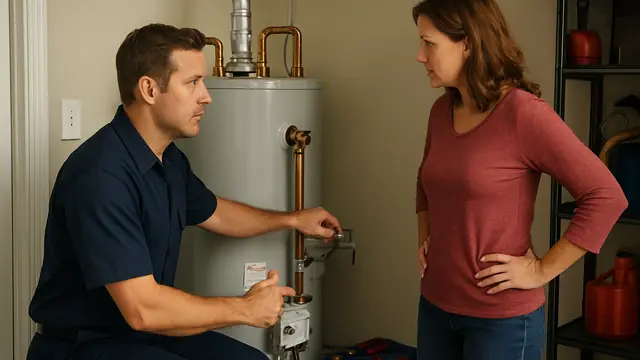
You may notice the problem when you step into the garage, open a utility closet, or find a damp area beside the water heater. Sometimes the first sign is a few drops beneath a pipe. In other cases, water is spreading across the floor while the heater is still running. If you are asking, "Why is my water heater leaking in Panama City?" the answer depends on where the water begins, when it appears, and whether the tank itself is structurally sound.
Move belongings away from the wet area and keep people from touching the heater. If water is actively flowing and the cold-water shutoff valve is reachable without stepping into water near electrical equipment, close it. For an electric heater, turn off the correct breaker only when the panel and your path are dry. Do not take apart gas controls or burners. If you smell gas, leave the building and contact the gas utility or emergency services.
A Puddle Does Not Always Mean the Tank Failed
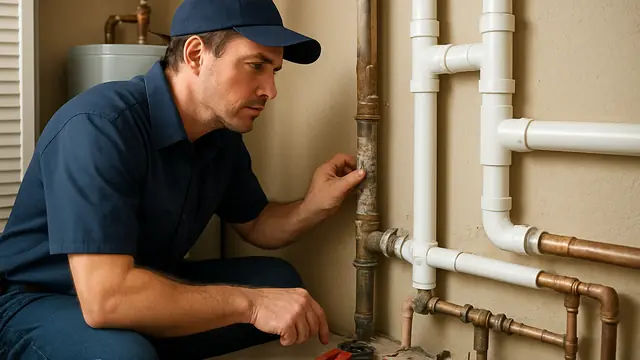
Water can travel down the outside of a heater before collecting at the base. A leak from a top connection may appear to be a bottom leak. Moisture from nearby plumbing, an air-conditioning drain, or another appliance can also move toward the heater. The location of the first drop is more useful than the location of the puddle.
Common Reasons a Water Heater Leaks
A Loose Water Connection
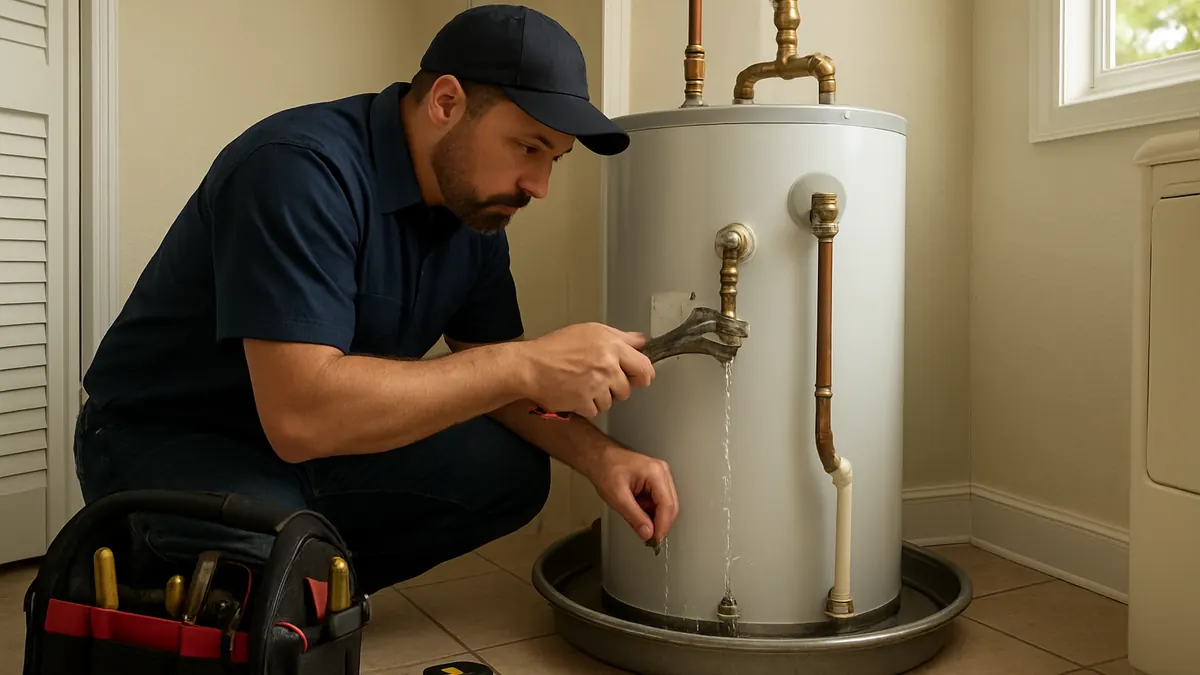
Most tank-style units have a cold-water inlet and hot-water outlet near the top. Flexible connectors, threaded adapters, unions, and shutoff valves can leak because of worn seals, corrosion, movement, or an imperfect connection.
A Leaking Temperature-and-Pressure Relief Valve
The temperature-and-pressure relief valve, or T&P valve, opens when temperature or pressure inside the tank becomes unsafe.
A few drops may indicate a worn valve. Repeated discharge may be caused by high household water pressure, overheating, or thermal expansion. Thermal expansion means water expands as it heats and has limited room to move within the plumbing system.
Never cap, plug, clamp, or block the T&P valve or its discharge pipe.
A Worn Drain Valve
The drain valve near the bottom is used during flushing and service. It may seep because it was not fully closed, sediment is caught in the seal, or the valve has deteriorated.
A Failed Heating-Element Gasket
Electric heaters commonly have one or two heating elements that pass through the side of the tank. Each has a gasket. When a gasket fails, water may appear behind an access cover and run down the unit.
Corrosion Inside the Tank
A tank-style heater contains a steel pressure vessel protected by a lining and an anode rod. The anode rod is designed to corrode before the tank, but it eventually becomes depleted.
Water emerging through the tank shell, beneath the insulation, or along the bottom seam usually means the inner tank has failed. Exterior sealant cannot restore a corroded pressure vessel.
Safe Checks a Homeowner Can Perform
Dry the floor and the outside of the heater. Place clean paper towels beneath visible top connections, around the drain valve, and near the end of the T&P discharge pipe. Recheck them after several minutes.
Observe whether the leak is constant or appears after showers, laundry, or dishwashing. A leak during the heating cycle may point toward pressure, temperature, or a gasket problem.
Keep these checks visual. Do not remove access panels, burner covers, insulation, wiring, or valves.
What the Homeowner Should Not Attempt
- Do not apply epoxy, tape, putty, or stop-leak products to a leaking tank. A surface patch may hide water briefly while corrosion continues.
- Do not repeatedly reset a breaker that trips. Water may have reached wiring or a heating element may have failed.
- Do not open a drain valve on a hot, pressurized tank unless you understand the correct shutdown procedure. The water can cause severe burns.
- Do not adjust gas piping, burners, venting, thermostats, or internal controls unless qualified. Never block a relief-valve discharge line.
When the Leak Becomes Urgent
- Request prompt service when water is flowing continuously, spreading into walls or cabinets, reaching electrical components, or damaging finished flooring.
- A bulging tank, steam, unusually hot water, or forceful T&P discharge may indicate unsafe temperature or pressure.
- A gas odor, soot, or damaged venting requires immediate attention. Leave the building if you smell gas. Keep an electric heater off if it is wet.
How a Licensed Plumber Diagnoses the Problem
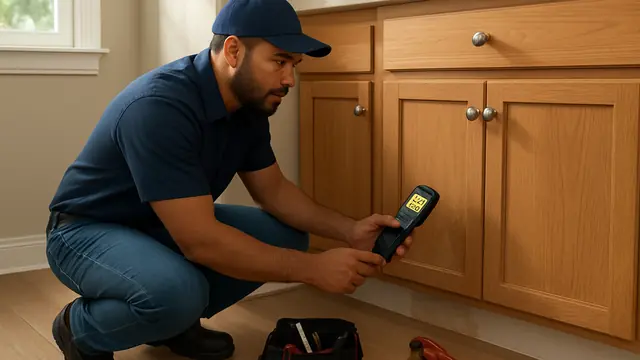
- The plumber first confirms that the heater is the actual source. The technician may dry each component, restore normal water pressure, and watch for the first returning moisture.
- The inspection includes the inlet, outlet, shutoff valve, connectors, T&P valve, discharge piping, drain valve, tank jacket, and nearby plumbing.
- If the T&P valve is leaking, the plumber may measure water pressure, check actual temperature, test thermostat operation, and observe pressure changes during heating.
- On electric units, elements, thermostats, gaskets, and wiring may be tested. On gas units, the burner, controls, combustion area, and venting may be inspected.
Repair Options From Least Invasive to Replacement
- The least invasive repair may be replacing a connector, fitting, union, or shutoff valve. A leaking drain valve may also be replaced when the tank opening is sound.
- A failed electric-element gasket can sometimes be replaced without replacing the heater. A worn T&P valve may be replaced only after excessive pressure or overheating is ruled out.
- If system pressure is too high, the solution may involve pressure regulation or expansion control.
Replacement is appropriate when the inner tank leaks, corrosion is advanced, or several failures make another repair unreliable. The homeowner can then compare a conventional tank heater with a tankless option where practical.
What Affects Repair or Replacement Cost?
The cause is the largest cost factor. A visible connector repair involves different labor and materials than pressure testing, drain-valve replacement, or a new heater.
Access also matters. A unit in an open area is easier to service than one in a tight closet or surrounded by finished surfaces.
Replacement cost may be affected by capacity, fuel type, efficiency, venting, electrical or gas requirements, piping changes, drain-pan needs, permits, disposal, and necessary safety corrections.
Prevention and Maintenance Guidance
Inspect the heater area regularly for moisture, corrosion, rust trails, mineral buildup, or staining beneath valves and fittings.
Follow the manufacturer's maintenance guidance. Depending on the unit, maintenance may include flushing, anode-rod inspection, thermostat checks, burner service, venting inspection, or electrical testing.
Keep the area clear enough to see early moisture. A water alarm can provide an early warning. A properly connected drain pan may reduce damage, but it does not prevent leakage.
Take Action Before the Leak Spreads
When you ask, "Why is my water heater leaking in Panama City?" do not assume every leak means replacement, but do not ignore the warning. A connector, valve, gasket, or pressure problem may be repairable. Water coming through the tank itself usually means replacement is necessary.
Contain the water safely, keep the energy source off when hazards are present, and have the source professionally identified before additional damage occurs.
About this guide: This resource provides general homeowner education, not a remote diagnosis. Actual conditions, code requirements, equipment, and safe repair options must be evaluated at the property.