Stop and call for qualified help when plumbing water is near electrical equipment, sewage is entering occupied space, gas or burning odors are present, or a repair would require opening pressurized piping.
You may first notice that the toilet does not flush with its usual force. Then the bathtub begins to gurgle, the bathroom sink drains slowly, or water appears in the shower when the washing machine empties. When several fixtures react to one another, the problem is usually not a simple clog in one sink or toilet. Multiple drains backing up in a Panama City home commonly indicate a restriction in a shared drain, the building drain, or the main sewer line leading away from the property.
The safest immediate action is to stop using water throughout the home. Do not flush toilets, take showers, run the washing machine or dishwasher, or empty full sinks until the cause has been identified. Every additional gallon can push wastewater toward the lowest drain opening. If sewage has entered a tub, shower, or room, keep children and pets away, avoid direct contact, and arrange professional service promptly.
What Multiple Drain Backups Usually Mean
Each fixture has its own branch drain. Those branch lines eventually join larger pipes that carry all household wastewater toward the sewer or septic system. A clog located close to one sink usually affects only that fixture. A blockage farther downstream can affect several rooms because multiple fixtures depend on the same exit path.
The lowest drain often reveals the problem first. A shower may fill after a toilet flush because blocked wastewater cannot move forward, while a toilet may bubble as trapped air moves backward.
Common Causes of Multiple Drain Backups
A Main Drain or Sewer-Line Obstruction
Paper, waste, hair, soap residue, grease, and food debris can narrow a pipe. The line may handle light use, then fail when a bathtub, washer, or several fixtures discharge together.
Flushed Products That Do Not Break Down
Wipes, paper towels, hygiene products, cotton items, and diapers do not disperse like toilet paper. They can catch at a fitting or damaged joint and collect more waste.
Grease and Food Buildup
Cooking grease can cool inside the line and stick to the walls. Food and detergent residue then collect on the coating, reducing the opening.
Root Intrusion
Roots can enter through a crack or separated joint and catch paper. Cutting them may restore flow, but the backup can return until the opening is repaired.
Cracked, Shifted, or Sagging Pipe
A settled pipe can develop a low area, called a belly, where water and solids remain. Shifted, cracked, or crushed sections can also trap debris and reduce flow.
A Septic or Downstream Problem
For septic properties, a full tank or restricted outlet can affect the whole home. With sewer service, the obstruction may be in the private lateral or farther downstream.
Safe Checks the Homeowner Can Perform
- Identify every affected fixture and whether the problem is limited to one bathroom or affects the whole home. Record whether laundry, showering, or flushing triggers it.
- Look at the lowest shower, tub, or floor drain for standing water. One visual check is enough. Do not keep operating fixtures to test the line.
- If you know where the outdoor sewer cleanout is located, tell the plumber. Do not remove the cap from a backed-up line because wastewater may spill suddenly.
- Review prior plumbing records for roots, recurring clogs, or damaged piping.
What the Homeowner Should Not Attempt
- Do not pour chemical cleaners into the system. They may not reach a main-line obstruction, cannot repair roots or broken piping, and may remain trapped.
- Do not repeatedly flush toilets or run water in hopes of pushing the clog away. Additional water usually increases the risk of an overflow.
- Avoid rental sewer machines without training. Large cables can bind, damage piping, or cause injury. Do not remove a toilet, climb onto the roof, or open a pressurized cleanout.
Signs That Make the Problem Urgent
Treat the situation as urgent when raw sewage rises into a shower, tub, floor drain, or living area. Prompt service is also necessary when every toilet is unusable or contaminated water is approaching flooring, cabinets, drywall, electrical outlets, appliances, or HVAC equipment.
A strong sewer odor, dark water from a drain, or wastewater outside also requires attention. A backup that returns during heavy use may indicate roots, buildup, or damaged piping.
How a Licensed Plumber Diagnoses the Backup
- The plumber reviews which fixtures are affected, which is lowest, and what water use triggers the backup.
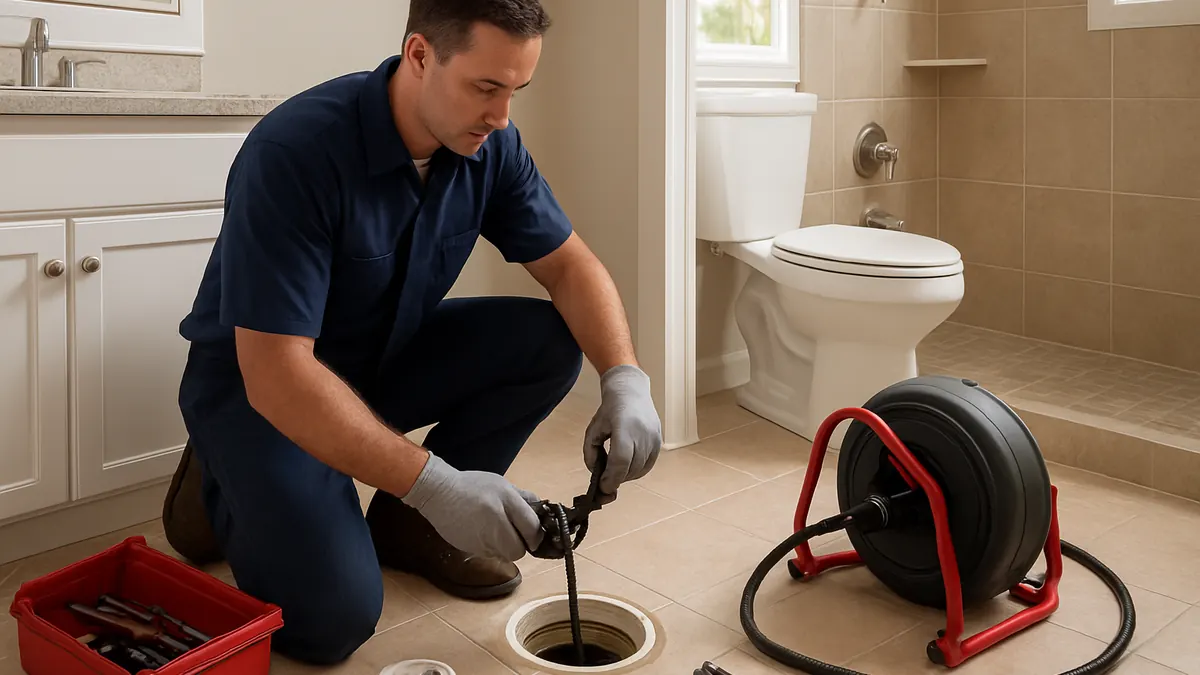
- The technician locates cleanouts and may use a professional cable machine with a head selected for the suspected material.
- Hydro jetting may be recommended when residue coats a long section. Controlled high-pressure water cleans the walls, but suspected damage should be evaluated first.
- After flow is restored, a sewer camera can reveal roots, cracks, separated joints, offsets, low sections, and standing water. This distinguishes a clog from structural trouble.
Repair Options From Least to Most Invasive
- Professional cabling is often the first reasonable option for an ordinary obstruction. If the blockage is removed and the pipe is structurally sound, no excavation may be needed.
- Hydro jetting can remove grease or sludge along the line. Root cutting may reopen a root-filled pipe, although monitoring or repair may still be needed.
- A localized crack, offset, or damaged joint may need only a spot repair. Where suitable, a trenchless method may reduce excavation.
Complete sewer-line replacement is generally considered when damage is extensive, the pipe has collapsed, several sections have failed, or repeated cleaning no longer provides reliable service. The recommendation should match documented conditions rather than assuming replacement is always necessary.
Typical Factors Affecting Cost
Cost depends on blockage location and severity, line length, cleanout access, equipment, and labor. Removing a toilet or reaching a line beneath a slab can add work.
Camera inspection, jetting, root removal, locating, excavation, permits, materials, and restoration also affect cost. Ask whether the estimate covers clearing, diagnosis, repair, or all three.
Prevention and Maintenance Guidance
Flush only human waste and toilet paper. Place wipes, paper towels, hygiene products, cotton items, and household trash in a wastebasket. Keep cooking grease and oil out of kitchen drains, and use strainers to catch food and hair.
Pay attention to early warning signs. A toilet that bubbles during laundry, a shower that slows when another fixture runs, or recurring sewer odors may indicate a developing restriction.
If a camera inspection identifies roots, buildup, or a structural defect, follow a maintenance or repair plan based on that finding rather than waiting for another overflow.
Take the Right Next Step When Multiple Drains Back Up
Multiple drains backing up in Panama City indicate that a shared part of the drainage system is not carrying wastewater properly. Stop using water, avoid unsafe do-it-yourself methods, and have the line opened and evaluated. The appropriate solution may be basic clearing, more complete cleaning, a targeted repair, or replacement only when documented damage makes it necessary.
About this guide: This resource provides general homeowner education, not a remote diagnosis. Actual conditions, code requirements, equipment, and safe repair options must be evaluated at the property.