Stop and call for qualified help when plumbing water is near electrical equipment, sewage is entering occupied space, gas or burning odors are present, or a repair would require opening pressurized piping.
You may hear a drip before you see it. Perhaps the water heater is in a garage, closet, or utility area, and a small wet spot keeps returning after you wipe it dry. Maybe the leak is more obvious, with water running from beneath the tank. If you are asking, "Why is my water heater leaking in Parker?" begin by finding the source rather than assuming every puddle means the heater must be replaced.
Move stored items away from the water. If water is actively escaping and the cold-water shutoff valve is safely accessible, close it. Turn off an electric heater at the breaker only when the panel and floor are dry. If you smell gas, leave the building and contact the gas utility or emergency services.
Start at the Highest Wet Point
Water moves downward. A leak from a top fitting can run along the jacket and collect at the bottom. Dry the heater and observe where moisture first returns. Water reappearing from beneath the jacket or bottom seam makes internal tank failure more likely.
Why Is My Water Heater Leaking in Parker?
A Pipe Connection Has Loosened or Deteriorated
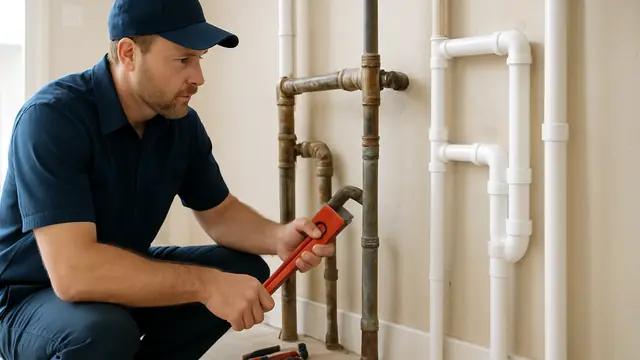
The hot-water outlet and cold-water inlet are usually found at the top of a tank-style heater. Flexible lines, threaded fittings, unions, and shutoff valves can leak because of worn seals, corrosion, or movement. This may be a straightforward repair if the tank connection remains sound.
The Shutoff Valve Is Leaking
The cold-water shutoff valve may leak around its stem, handle, or pipe connection. Sometimes the leak becomes noticeable after the valve is operated.
Forcing a corroded valve can worsen the leak.
The T&P Valve Is Releasing Water
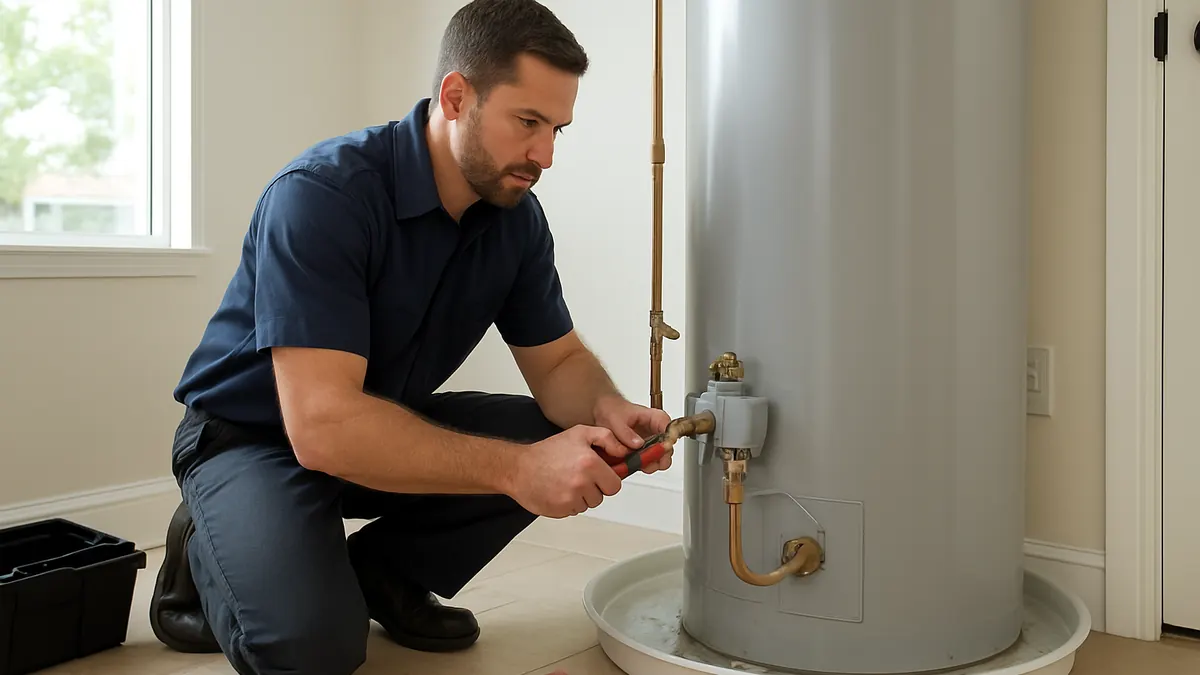
The temperature-and-pressure relief valve, or T&P valve, protects the heater from excessive heat and pressure. Its discharge pipe may drip because the valve is worn, household water pressure is too high, the heater is overheating, or thermal expansion is raising pressure during the heating cycle.
Thermal expansion means heated water increases in volume and raises system pressure when it has nowhere to move.
Do not cap the discharge pipe or prevent the valve from opening.
The Drain Valve Is Seeping
The drain valve near the bottom may leak because it is not fully closed, sediment is trapped in the seal, or the valve has deteriorated.
An Electric-Element Gasket Is Failing
A failed electric-element gasket may allow water to collect behind an access panel and travel down the tank.
The Inner Tank Has Failed
A tank-style heater has a steel vessel protected by a lining and an anode rod, but corrosion can eventually create a hole.
Water appearing through the outer jacket, beneath the insulation, or along the bottom seam often indicates internal tank failure. A corroded pressure vessel cannot be reliably repaired with tape, epoxy, or sealant.
Safe Checks You Can Make Without Disassembly
- After drying the area, place paper towels beneath visible top connections, around the drain valve, and near the T&P discharge pipe. Check them again after the heater operates.
- Note whether the leak is constant or appears after hot-water use.
- Check nearby plumbing and equipment. Water from another pipe, an air-conditioning drain, or a washing-machine connection may travel toward the heater.
- Take photographs, but do not remove burner panels, electrical covers, thermostats, or insulation.
What You Should Not Try
- Do not patch the tank body. Even if a surface product slows the visible drip, it does not repair corrosion inside the pressure vessel.
- Do not repeatedly reset a tripped breaker. A wet electrical component or failed heating element may be present.
- Do not open a hot tank's drain valve without understanding the shutdown procedure. Escaping water can cause burns.
- Do not work on gas lines, burners, controls, or venting unless you are qualified. Never plug the relief-valve pipe or install a valve on it.
Warning Signs That Make the Problem Urgent
Seek professional help if water is flowing continuously, reaching electrical equipment, entering walls, or damaging finished areas.
A tank that appears swollen or distorted should not remain in service. Steam, unusually hot water, or forceful relief-valve discharge can indicate dangerous heat or pressure.
A gas odor, soot, scorch marks, or venting damage requires immediate attention. Leave the building if gas is suspected. Keep an electric heater off when water is reaching its wiring or controls.
How a Licensed Plumber Diagnoses the Cause
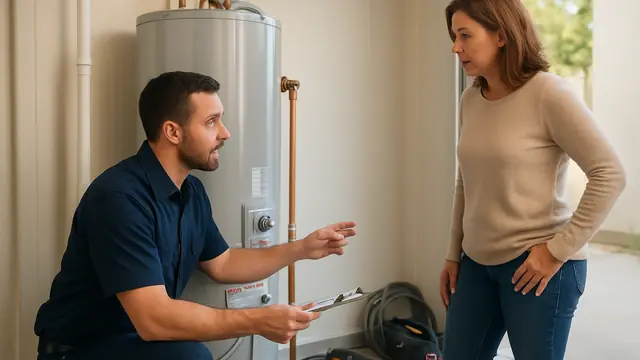
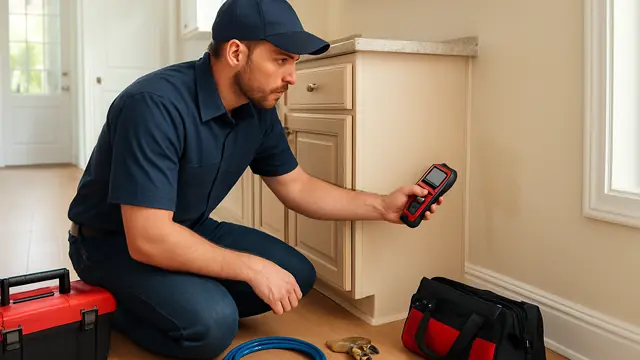
The plumber verifies the source by drying and observing the unit under normal pressure and during a heating cycle.
The technician checks the inlet and outlet connections, shutoff valve, T&P valve, discharge piping, drain valve, tank jacket, and surrounding plumbing.
If the T&P valve is involved, water pressure, actual temperature, thermostat operation, and thermal expansion may be evaluated. This prevents a new valve from being installed without correcting the condition that caused the discharge.
Electric heaters may require testing of elements, thermostats, wiring, and gaskets. Gas units may require burner, control, and venting inspection.
Repair Options, Beginning With the Simplest
A leaking connector, fitting, union, or shutoff valve may be replaced.
A drain valve or electric-element gasket may be replaced when the tank and openings remain sound.
A faulty T&P valve may be replaced after pressure and temperature problems are ruled out. If high pressure or thermal expansion is responsible, pressure-regulating or expansion-control equipment may need repair or installation.
Replacement is necessary when the inner tank leaks. It may also be the more dependable choice when corrosion is extensive or several major components are failing.
A replacement should be selected according to household demand, fuel type, available space, and utility capacity. Tankless equipment may be considered where practical.
Typical Factors Affecting Cost
The source of the leak largely determines the repair scope. Replacing an accessible connector is different from diagnosing intermittent T&P discharge, replacing a drain valve, or servicing an electric element.
Access affects labor. Tight closets, elevated installations, and surrounding finished materials can make the work more involved.
Replacement factors include capacity, fuel type, efficiency, venting, utility modifications, piping changes, drain-pan needs, permits, disposal, and safety corrections.
Prevention and Maintenance Guidance
Inspect the area around the heater several times a year. Look for moisture, rust trails, mineral buildup, or staining beneath valves and fittings.
Follow the manufacturer's maintenance instructions, which may include flushing, anode-rod inspection, thermostat checks, burner service, venting inspection, or electrical testing.
Keep stored items away from the tank so a small leak is visible. Consider a water alarm for early warning. If household pressure is high or the T&P valve has discharged, have the pressure and expansion controls evaluated.
Get a Diagnosis Before Choosing a Repair
When you ask, "Why is my water heater leaking in Parker?" the source should guide the decision. A supply connection, valve, gasket, or pressure condition may have a practical repair. A leaking inner tank requires replacement because the pressure vessel can no longer be trusted.
Limit the incoming water when safe, avoid unsafe temporary fixes, and have the unit evaluated before a small leak becomes larger property damage.
About this guide: This resource provides general homeowner education, not a remote diagnosis. Actual conditions, code requirements, equipment, and safe repair options must be evaluated at the property.