Stop and call for qualified help when plumbing water is near electrical equipment, sewage is entering occupied space, gas or burning odors are present, or a repair would require opening pressurized piping.
A homeowner in Upper Grand Lagoon may first notice a pattern rather than a complete blockage. The kitchen sink drains slowly in the evening, the toilet gurgles when the washing machine empties, and the lowest shower briefly holds dirty water before it disappears. These symptoms suggest that wastewater is moving through a restricted shared drain or main sewer line.
The safest immediate action is to reduce demand on the drainage system. Stop using the washing machine and dishwasher, avoid simultaneous showers, and do not repeatedly flush toilets to test the line. If wastewater is entering the home, stop all plumbing use. More water can increase the backup and spread sewage to additional surfaces.
When a Camera Inspection Provides Useful Answers
A camera inspection is commonly recommended when several fixtures are slow, a main drain has clogged repeatedly, sewage odors remain unexplained, or cleaning has provided only temporary relief.
What Happens During a Sewer Camera Inspection in Upper Grand Lagoon?
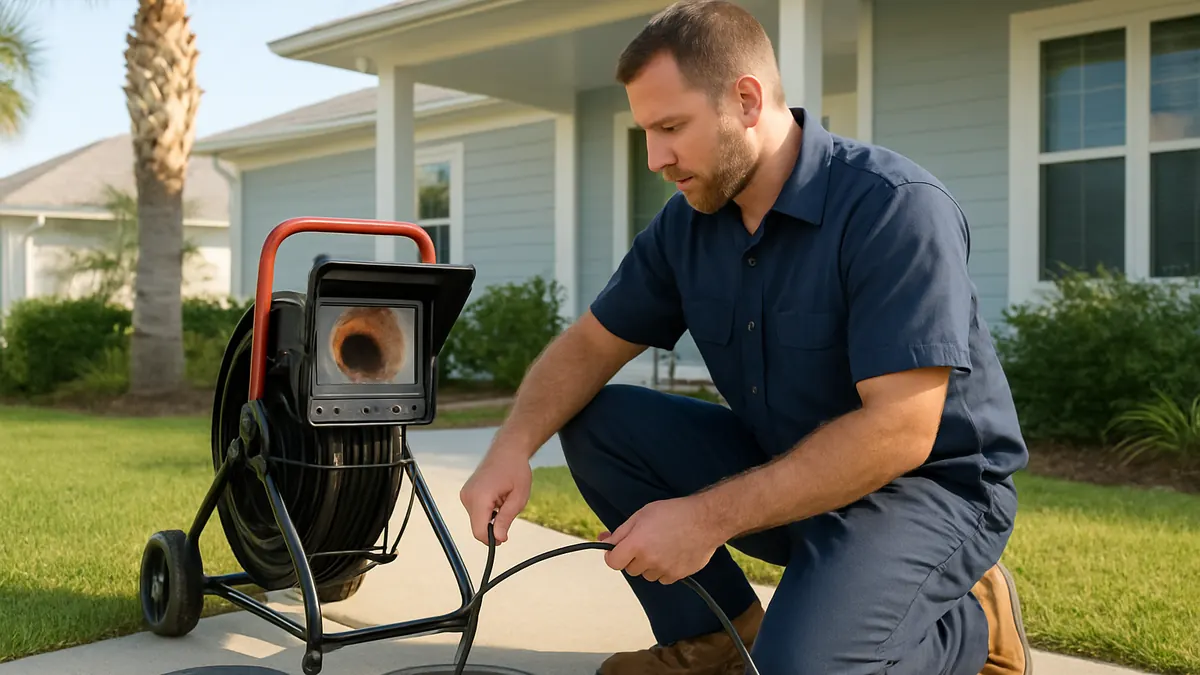
The plumber identifies a proper access point. The preferred entry is often a cleanout, which is a capped fitting installed to provide access for sewer service. If no usable cleanout is available, another approved opening may be selected. A toilet may sometimes need to be removed.
A waterproof camera is mounted on a flexible cable and slowly advanced through the drain. The camera sends live video to a monitor, allowing the plumber to examine the interior surface, joints, fittings, bends, water level, and visible material.
The plumber may see grease coating the pipe, wipes or debris gathered at a fitting, roots entering through an opening, or pipe sections that no longer line up correctly. Cracks, holes, deformation, and collapse may also be visible.
Standing water receives careful attention. A camera passing through water does not automatically prove the pipe is broken. However, a lengthy section that remains partially full may indicate a low point where solids settle and future blockages can form. The plumber considers the depth, length, and location of the water along with the recurring symptoms.
The cable includes distance information so the plumber can estimate how far the camera has traveled. Many camera heads also contain a transmitter. Using a locator above ground, the plumber can estimate the camera's position and depth and mark the area for possible repair.
What Happens if the Pipe Is Too Blocked to Inspect?
The camera cannot see through a solid obstruction. It may also provide little useful information when thick grease, debris, or dirty standing water covers the lens.
The plumber may recommend cleaning the line first. A professional cable machine may be appropriate for some obstructions, while controlled water jetting may be selected for certain deposits and pipe conditions.
After flow is restored, a second camera pass can inspect the cleaned pipe. This helps determine whether the clog was caused only by disposed material or whether a defect contributed to the stoppage.
Safe Checks the Homeowner Can Make
Identify every affected fixture and write down what happened immediately before the symptom appeared. Note whether laundry, dishwashing, several showers, or repeated flushing triggers the problem.
Look for a visible cleanout without removing its cap. Moisture, staining, sewage, or a strong odor around the fitting should be reported to the plumber.
What the Homeowner Should Not Do
Do not keep running water to see whether the line will clear itself. A partial blockage can accept a small amount of water and then overflow when its limited capacity is exceeded.
Do not repeatedly pour chemical drain cleaners into the system. They may not reach the obstruction, may damage some components, and can expose the plumber to hazardous liquid when the line is opened.
Do not operate a rented sewer cable without training. Powered cables can twist, catch clothing, injure hands, damage fittings, or become lodged in the pipe.
Never loosen a cleanout cap during an active backup. Wastewater may be under pressure and can discharge suddenly.
Signs That Make the Situation Urgent
Stop all water use when sewage enters a shower, tub, toilet, floor drain, or living area. A whole-home stoppage, wastewater escaping around a cleanout, or a toilet overflowing when another fixture drains also requires prompt service.
Keep children and pets away from affected areas. Avoid contact with wastewater and do not use electrical equipment near wet floors or contaminated surfaces.
How a Licensed Plumber Interprets the Video
Camera footage is combined with symptom history, water behavior, measured distance, and resistance encountered during cleaning. The plumber should not recommend major work based on one blurry frame or a normal pipe fitting that merely looks unfamiliar.
A meaningful finding is one that explains the symptoms. Examples include dense roots where equipment stops, a separated joint at the location of recurring clogs, or a collapsed section that blocks the flow path.
Repair Options From the Least Invasive Upward
Professional drain cleaning may be the only work needed when the obstruction is removable and the pipe remains serviceable. If roots are cut from the line, the opening that allowed them to enter may still require a long-term repair.
A localized defect may qualify for a spot repair. Only the damaged section is exposed and corrected when the remaining pipe is in usable condition.
Trenchless rehabilitation may be considered when the existing pipe has enough structural integrity and can be properly prepared. This can reduce excavation, but it is not suitable for every major offset, collapse, or severely deformed pipe.
Traditional excavation may be necessary for structural failure or a section that cannot be rehabilitated. Complete replacement is generally reserved for widespread deterioration, repeated failures, or conditions that make smaller repairs unreliable.
Factors That Affect Inspection and Repair Cost
Cost depends on access, line length, blockage severity, cleaning needs, depth, pipe material, and the location and extent of the defect.
A usable cleanout can simplify access. Work beneath concrete, finished flooring, landscaping, a driveway, or another improvement may add excavation and restoration requirements.
Prevention and Maintenance Guidance
Keep cooking grease, wipes, paper towels, hygiene products, food scraps, and foreign objects out of drains. Products described as flushable may remain intact long enough to catch on buildup, roots, or an offset joint.
If the inspection documents recurring roots, deposits, or standing water, ask whether planned cleaning, monitoring, or a later inspection is appropriate. Save the video and repair records for future comparison.
Upper Grand Lagoon Homeowner FAQs
Does a sewer camera inspection include drain cleaning?
They are different services. Cleaning removes an obstruction, while the camera examines the pipe. Both may be needed during the same visit.
Can a camera identify a pipe belly?
A section of persistent standing water can suggest a low area, but the plumber must evaluate its length, depth, location, and relationship to the symptoms.
Can the inspection find the repair location without digging?
A transmitter and locator can often estimate the camera's position and depth from above ground. Conditions at the property may affect precision.
Will every crack require replacement?
No. The size, location, severity, and overall pipe condition determine whether monitoring, a spot repair, trenchless rehabilitation, or replacement is reasonable.
Is the line worth inspecting after the clog has been cleared?
Yes, especially when the blockage has happened before. A post-cleaning inspection can reveal the condition that allowed the clog to develop.
Can I use a small amount of water while waiting for service?
Limit use when several fixtures are slow. Stop all water use if sewage is backing up or the main line appears fully blocked.
Schedule a Sewer Camera Inspection in Upper Grand Lagoon
What happens during a sewer camera inspection in Upper Grand Lagoon is a disciplined process of reconstructing the symptoms, gaining safe access, viewing the pipe, locating meaningful conditions, and selecting the least invasive reasonable repair. The inspection helps prevent repeated guesswork and gives the homeowner evidence for deciding what to do next.
If several fixtures are reacting together or wastewater is entering the property, stop using water and arrange professional diagnosis promptly. Timely inspection can reduce contamination, limit damage, and focus the repair on the area that actually needs attention.
About this guide: This resource provides general homeowner education, not a remote diagnosis. Actual conditions, code requirements, equipment, and safe repair options must be evaluated at the property.