A slow drain may look like a small plumbing annoyance, but the real problem can be several feet away inside a buried sewer line. Guessing often leads to repeated drain cleaning, unnecessary digging, or repairs that fail to address the source. A sewer camera inspection gives homeowners and plumbers a clearer view of what is happening inside accessible drain and sewer pipes.
For Blue Mountain Beach homes, that information can be especially valuable. Coastal moisture, sandy soil, seasonal occupancy, heavy water use, and a mix of older and newer construction can create plumbing problems that are difficult to diagnose from the surface. A professional sewer camera inspection in Blue Mountain Beach can identify obstructions, damaged pipe sections, root intrusion, and other conditions before a repair plan is chosen.
Why a sewer camera is more useful than guesswork
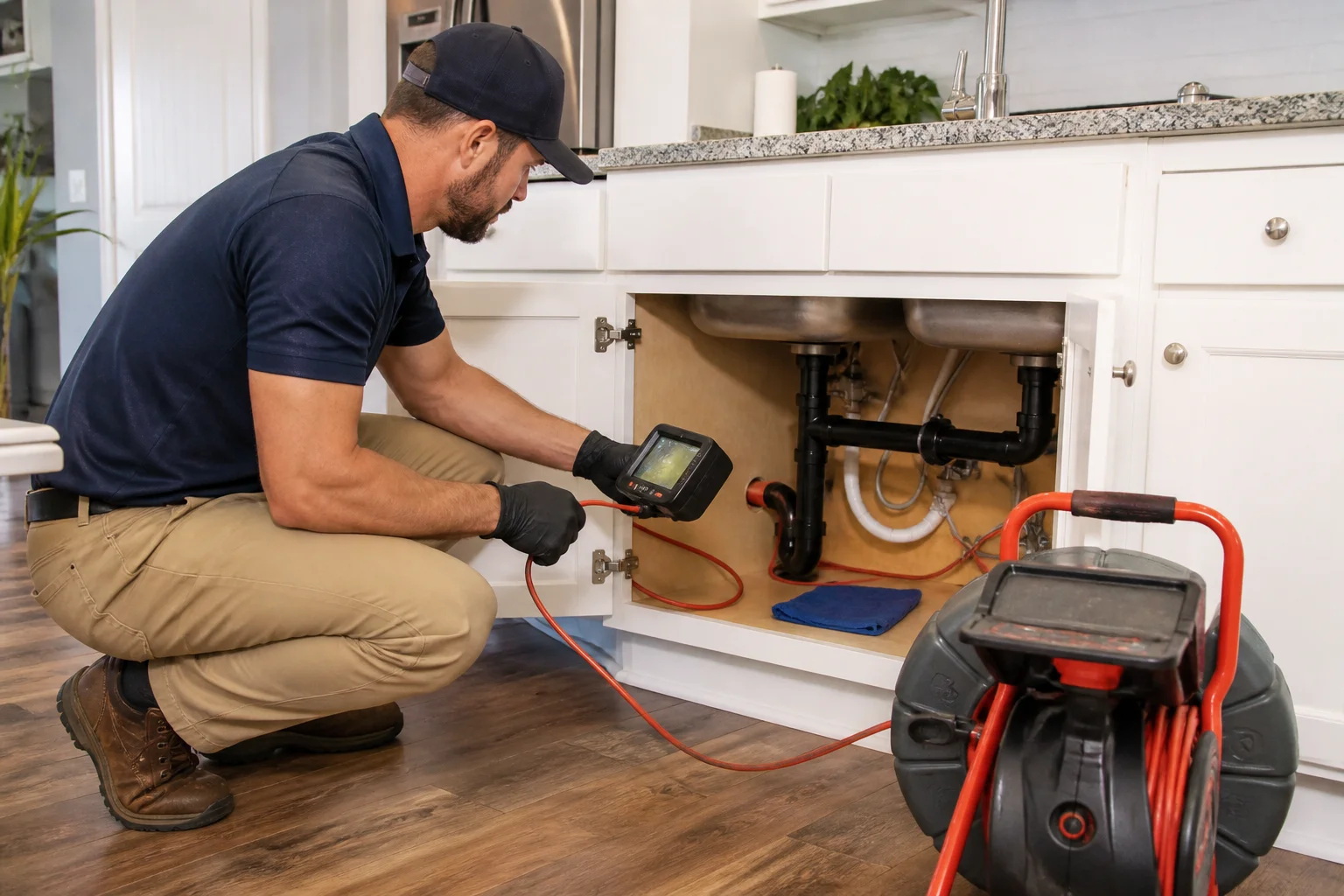
A sewer camera is a small waterproof camera attached to a flexible cable. A plumber feeds it through an appropriate cleanout or drain opening while viewing live footage on a monitor. The camera shows the interior condition of the pipe, including buildup, standing water, separated joints, cracks, foreign objects, and areas where the line has lost its proper shape or slope.
This process helps answer an important question: Is the problem a routine clog, or is the clog a symptom of pipe damage? Drain cleaning may restore flow through grease, soap residue, or a soft blockage. It cannot correct a collapsed pipe, an offset joint, or a low section that repeatedly holds wastewater. Camera footage helps the plumber recommend work based on visible evidence rather than assumptions.
The inspection also helps narrow the repair area. Many camera systems can be paired with locating equipment that estimates where the camera head is underground. If excavation or pipe repair is necessary, knowing the likely location may reduce disruption to flooring, landscaping, driveways, or outdoor living areas.
Clues that the problem may be deeper in the line
One slow sink usually points to a localized fixture drain. Several fixtures draining poorly at the same time can indicate a larger branch drain or main sewer line problem. Homeowners should pay attention to patterns rather than treating every symptom as an isolated clog.
Multiple drains are slow
If a toilet, shower, and nearby sink all drain slowly, the restriction may be downstream from where those fixture lines connect. This is different from hair caught directly below one bathroom sink. Homeowners searching for bathroom drain cleaning near me should mention every affected fixture so the plumber can determine whether camera inspection is appropriate.
Drains gurgle or release sewer odors
Gurgling can occur when wastewater and air struggle to move through a restricted line. Sewer odors may come from a dry trap, a vent issue, a failed seal, or a drain line problem. Because several conditions can create similar symptoms, a plumber should evaluate the complete drainage system instead of relying on odor alone.
A clog returns after cleaning
A recurring blockage is one of the strongest reasons to inspect the line. The previous cleaning may have opened a temporary path without removing heavy buildup, or the pipe may contain a defect that catches paper and waste. A clogged drain repair near me search can quickly turn into a sewer line investigation when the same drain backs up repeatedly.
Water appears around a slab or foundation
Wet flooring, warm spots, unusually high water bills, and the sound of running water can point to a pressurized supply leak under a slab. A sewer camera does not inspect sealed water supply pipes and cannot diagnose every slab leak. It can, however, help determine whether an accessible drain line under the home is cracked or holding water. For suspected supply leaks, professional leak detection and slab leak service uses other diagnostic methods to isolate the source.
Blue Mountain Beach conditions that affect plumbing
Blue Mountain Beach has a warm, humid coastal climate, periods of heavy rain, and sandy ground conditions. Soil can shift or wash away around buried piping, particularly where drainage around a property is poor. Movement may place stress on joints or contribute to low spots in sewer lines. A low section, sometimes called a belly, allows water and solids to collect instead of flowing toward the sewer or septic connection.
Local housing also varies. Some properties are full time residences, while others experience seasonal use or accommodate vacation guests. Long periods without water use can allow traps to dry and buildup to harden. A busy rental week can then place sudden demand on toilets, garbage disposals, showers, washing machines, and water heaters. High occupancy does not automatically damage a plumbing system, but it can expose a line that was already restricted.
Hard water is another consideration across Florida. Dissolved minerals can leave scale on faucets, showerheads, water heater components, and parts of the plumbing system. Mineral scale is not always the cause of a sewer clog, since drain lines carry wastewater rather than pressurized drinking water. Still, scale, soap residue, grease, and sediment can combine to reduce flow in some drain materials. Water pressure also matters on the supply side. Excessive pressure can wear fixture valves, toilet fill components, connectors, and pipe joints, leading to leaks that require separate testing.
Working with a plumber familiar with Blue Mountain Beach plumbing services helps place camera findings in the context of local construction, soil, water use, and access conditions. That local knowledge is useful when deciding whether cleaning, repair, or ongoing monitoring makes sense.
What the camera may reveal inside a sewer line
Camera inspections can uncover several conditions that produce similar symptoms at the fixture level. Each finding calls for a different response.
Grease, soap, and debris buildup
Kitchen grease should never be poured down a drain, even with hot water. It can cool farther along the line and collect other debris. Bathroom lines often accumulate hair, soap residue, and personal care products. If buildup is the main issue, the plumber may recommend an appropriate drain cleaning method and a follow up camera pass to verify that the line is open.
Roots entering pipe joints
Roots seek moisture and can enter through a compromised joint or crack. Small root growth may catch paper and create recurring backups. Heavy intrusion can damage the pipe and require more than routine cleaning. Cutting roots without addressing the opening may provide temporary relief, but regrowth is possible.
Cracks, offsets, and separated connections
Ground movement, age, installation defects, or outside pressure can cause joints to separate or pipe walls to crack. An offset connection creates a ledge that catches waste. The footage helps document the condition so the plumber can discuss targeted plumbing repair or dedicated sewer repair and maintenance.
Standing water and poor slope
A camera lens dipping below water in a line that should be empty may indicate a belly, blockage, or slope problem. Because murky water can obscure the pipe wall, cleaning may be needed before the plumber can evaluate the area accurately. A camera should be treated as one diagnostic tool, not as a substitute for professional interpretation.
Foreign objects
Wipes, hygiene products, paper towels, toys, and construction debris can lodge in a drain. Products labeled flushable may not break down as quickly as toilet paper. Camera footage can reveal an object or show the point where the cable cannot pass, helping determine the safest removal method.
Smart preparation for a useful inspection
Homeowners can make the appointment more productive by recording which fixtures are affected, when symptoms began, and whether the issue changes after laundry, showers, or heavy kitchen use. Note any previous drain cleaning, sewer repair, remodeling, or slab work. If available, provide information about cleanout locations and the route of the building sewer.
A plumber may recommend clearing a dense obstruction before running the camera. A lens cannot see through grease, roots, or dirty standing water. In that situation, drain cleaning is part of creating a viewable line, not evidence that camera inspection was unnecessary. Ask whether the line will be viewed again after cleaning and whether footage or still images can be provided.
It is also important to describe unrelated plumbing symptoms. Low hot water volume, a leaking water heater, a dripping faucet, or a toilet that constantly runs may not be caused by the sewer line. They still affect household water use and can point to additional maintenance needs. Someone searching for hot water heater repair near me, for example, should not assume a nearby floor drain backup comes from the water heater without diagnostic testing.
Matching the solution to the camera findings
If the line is structurally sound and contains removable buildup, professional cleaning may be enough. The cleaning method should match the pipe material, condition, and type of obstruction. Aggressive equipment can damage fragile piping, so an experienced plumber should assess the line before choosing tools or water pressure.
Localized damage may allow for a spot repair. Extensive deterioration, repeated joint failure, or a collapsed section may require a larger sewer repair or replacement plan. Access, depth, landscaping, slab construction, and connection type all affect the scope. Camera footage supports the estimate, but the plumber may also need measurements, locating work, or excavation to confirm conditions.
Unexpected sewer work can strain a household budget. If a documented repair cannot be postponed safely, homeowners can ask about available plumbing financing options before authorizing the project. The written proposal should clearly separate diagnostic work, cleaning, repair, restoration, and any recommended follow up.
Prevention that protects drains and sewer pipes
Good maintenance begins with what enters the plumbing system. Put grease, coffee grounds, wipes, paper towels, and hygiene products in the trash. Use sink strainers to catch food and hair. Run adequate water when using a garbage disposal, and avoid overloading it with fibrous scraps. Toilets should receive only human waste and toilet paper.
Check accessible pipes, fixture shutoffs, faucet bases, toilet connections, and the area around the water heater for moisture. Small leaks waste water and can damage cabinets, drywall, flooring, and framing. Review the water bill for unexplained increases. If water use rises without a clear reason, a water leak repair near me search should lead to proper leak testing rather than a guess based only on the dampest visible area.
Consider a camera inspection before buying an older property, after repeated backups, or before major flooring and landscaping work that could make future access difficult. A general home inspection does not always include the interior of the sewer line. Homeowners looking for a home plumbing inspection near me should ask exactly which supply pipes, drains, fixtures, water heaters, shutoffs, and sewer components are included.
For more practical care ideas, see a smarter plumbing playbook for Blue Mountain Beach homes and this guide to everyday plumbing wear and tear in local drains and sewer lines. Nearby coastal communities face some similar issues, as discussed in articles about plumbing system life in Inlet Beach and sewer camera inspections for Sandestin homes.
Situations that should not wait
Stop using water and seek prompt help if sewage is backing up through a toilet, tub, shower, or floor drain. Continued flushing, showering, laundry, and dishwasher use can send more wastewater into a blocked system. Keep people and pets away from contaminated water, and avoid using chemical drain cleaners. Those products may create splash and exposure hazards for anyone opening the line.
A burst supply pipe, rapidly spreading ceiling leak, overflowing toilet that will not stop, or water near electrical equipment also requires immediate action. If it is safe and accessible, shut off the affected fixture or the main water supply. Sewer camera inspection may be part of later diagnosis, but emergency plumbing work first focuses on stopping active damage and protecting the property.
When a sewer backup repair near me search becomes urgent, tell the plumber how many fixtures are affected, whether sewage is visible, and whether the property uses a municipal sewer or septic system. Accurate details help the company arrive with appropriate equipment. A Superior Mechanical serves Blue Mountain Beach and surrounding Walton County plumbing customers with local diagnostic and repair support.
Getting clear answers from a camera inspection
Ask the plumber to explain what appears on the recording, where the problem is located, and whether the pipe was clean enough for a reliable view. A useful recommendation should connect the visible finding to the proposed solution. If the footage shows a simple obstruction, repair may not be needed. If it shows structural damage, repeated cleaning alone may not provide lasting results.
A Superior Mechanical uses sewer camera inspection to help Blue Mountain Beach homeowners make informed plumbing decisions. Whether the concern is a recurring drain clog, suspected sewer damage, unexplained moisture, or maintenance before a renovation, a clear view inside the line can reduce guesswork and guide the next practical step.
Find Sewer Camera Inspection in Blue Mountain Beach, FL
If you need Sewer Camera Inspection in Blue Mountain Beach, FL, visit our local service page or contact A Superior Mechanical today.
Map of Blue Mountain Beach, FL
Frequently Asked Questions
Can a sewer camera inspection find every plumbing leak?
No. A sewer camera can show cracks, separated joints, standing water, and possible entry points inside accessible drain or sewer pipes. It does not travel through pressurized water supply lines, so slab leaks and hidden supply leaks usually require additional leak detection methods.
Should the drain be cleaned before a camera inspection?
It depends on the condition of the line. Heavy grease, roots, debris, or standing wastewater can block the camera's view. A plumber may perform an initial inspection, clean the line, and then run the camera again to evaluate the pipe walls and confirm that flow has been restored.
Is a sewer camera inspection useful before buying a Blue Mountain Beach home?
Yes, particularly for an older home, a property with mature landscaping, or a house with a history of slow drains and backups. The inspection can document accessible sewer line conditions that may not be included in a standard home inspection.
Related Articles
- A Smarter Plumbing Playbook for Blue Mountain Beach Homes
- How everyday plumbing wear and tear shapes sewer and drain problems in Blue Mountain Beach
- What Shortens a Plumbing System’s Life in Inlet Beach and How Sewer Camera Inspection Helps Catch It Early
- Why Sewer Camera Inspections Matter for Sandestin Homes and the Plumbing Problems That Wear Systems Down
Photo Gallery