A pool, spa, or hot tub can place a substantial new load on a home's electrical system. Safe installation involves much more than finding an open breaker space and running a cable outside. The panel capacity, circuit size, disconnect location, GFCI protection, bonding, grounding, equipment placement, and local inspection requirements all need to work together.
These details are especially important in Wright, where heat, humidity, heavy rain, salt carried inland from the coast, and tropical storms can accelerate wear on outdoor electrical equipment. Homeowners planning a new installation or repairing an existing one can turn to A Superior Mechanical for pool, spa, and hot tub wiring in Wright that accounts for the equipment, the property, and the home's available electrical capacity.
Planning begins with the electrical panel
Pool pumps, electric heaters, heat pumps, blowers, lights, automation systems, and hot tub heating elements can draw significant power. Before installing a circuit, an electrician should review the equipment nameplates and complete an appropriate load calculation. This determines whether the existing service and panel can support the added demand.
An unused breaker position does not necessarily mean the panel has enough capacity. The home may already have central air conditioning, an electric water heater, a range, a clothes dryer, ceiling fans, outdoor lighting, and other large loads. Newer homes may also have an EV charger, generator equipment, battery storage, or expanded kitchen circuits. Adding a spa without considering those loads can contribute to nuisance trips, overheating, voltage drop, or an overloaded service.
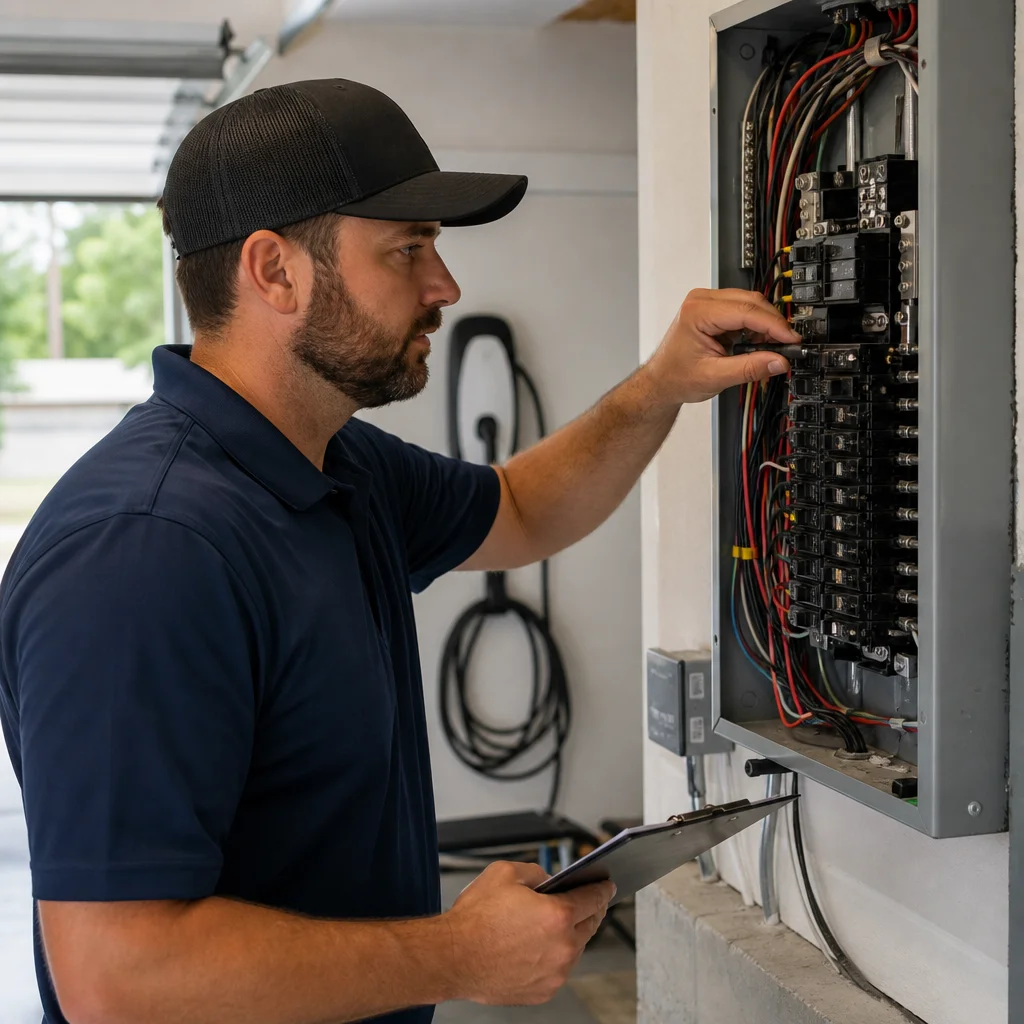
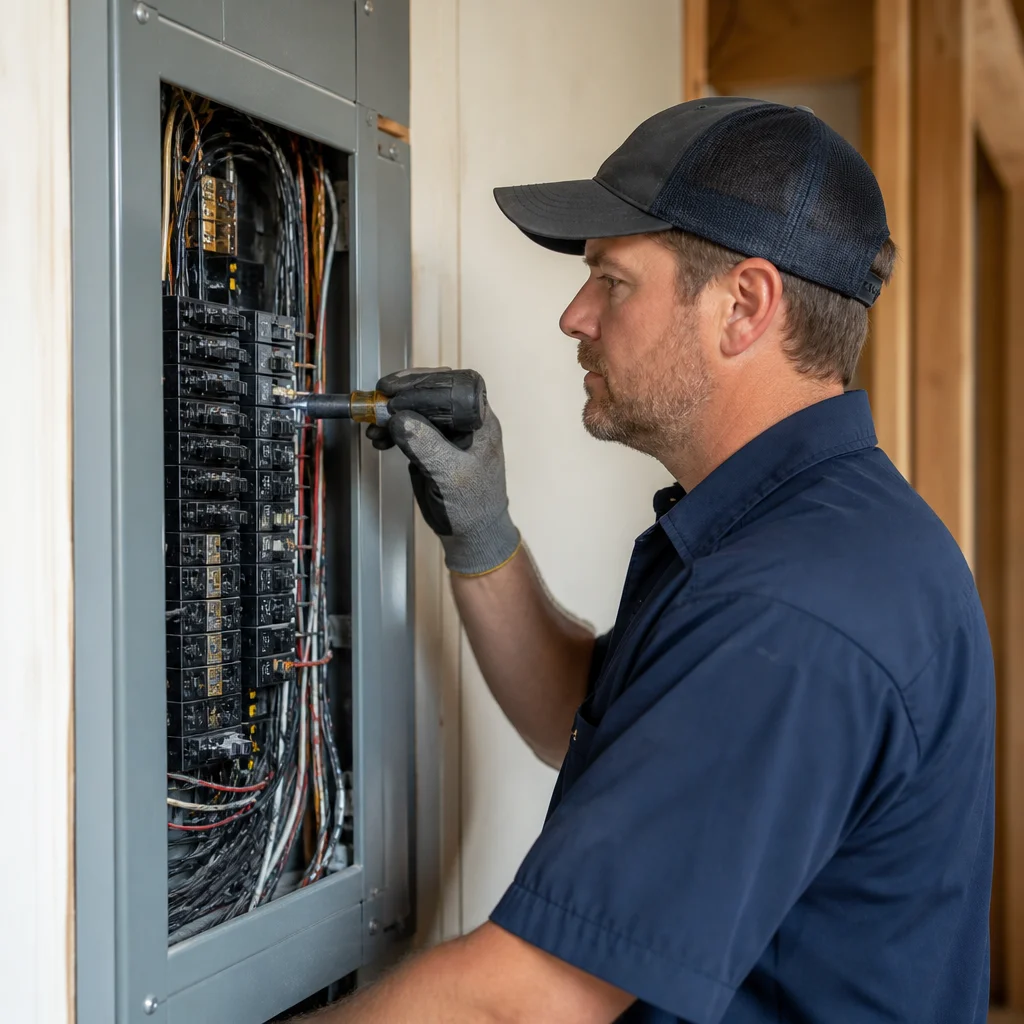
If the panel is undersized, damaged, obsolete, or out of breaker space, the project may require circuit breaker panel work or rewiring. Depending on the property layout, a properly sized subpanel may be a practical solution. Homeowners searching for sub panel installation near me or breaker box replacement near me should expect an electrician to evaluate the entire service rather than recommend equipment based only on available slots.
Dedicated circuits keep pool and spa loads separated
Most major pool and spa components need circuits sized for their specific electrical ratings. A hot tub might require a dedicated 240 volt circuit, while pumps, lights, receptacles, controls, and accessories may have separate requirements. Circuit conductors, breakers, raceways, and disconnects must match the load and the installation environment.
Connecting pool equipment to a convenient garage outlet or an existing outdoor circuit is rarely an acceptable shortcut. Those circuits may already supply tools, freezers, lighting, or general receptacles. Shared demand can lead to repeated breaker trips, and the existing wiring may not be suitable for the equipment or the wet location.
A dedicated circuit also makes service safer. A technician can isolate the affected equipment without turning off unrelated parts of the home. Clearly labeled breakers help homeowners identify the pump, heater, lighting transformer, spa controls, and other components during maintenance or an emergency.
GFCI protection is essential around water
Ground fault circuit interrupter protection is a central part of pool and spa safety. A GFCI monitors current traveling through a circuit and disconnects power when it detects an imbalance that could indicate current taking an unintended path. Around water, that rapid response can reduce the risk of severe electrical shock.
Depending on the equipment and current code requirements, GFCI protection may be provided by a breaker, a receptacle, or approved equipment designed for the application. Protection must be selected and installed correctly. Simply replacing a standard outdoor outlet with a GFCI receptacle does not correct undersized wiring, poor grounding, water inside a box, or improper equipment connections.
Homeowners searching for gfci outlet installation near me should have the full area checked, including receptacle placement, weather resistant covers, box condition, conductor integrity, and protection for connected equipment. GFCIs should be tested using their built in test controls according to manufacturer instructions. A device that will not trip, reset, or remain energized needs professional evaluation.
Bonding and grounding perform different jobs
Bonding and grounding are often discussed together, but they are not interchangeable. Grounding provides a path for fault current and supports the operation of protective devices. Equipotential bonding connects specified conductive components around a pool or spa to reduce voltage differences between those components.
Bonding may involve metal equipment, pump motors, conductive fittings, and other parts identified by the applicable code and installation design. The exact requirements depend on the pool or spa construction, equipment, and surrounding surfaces. A loose, missing, or corroded bonding connection should not be treated as a cosmetic issue.
Pool and spa wiring is generally addressed by Article 680 of the National Electrical Code, along with other applicable electrical rules and locally adopted requirements. Permitting and inspection requirements can vary based on project scope. An electrician familiar with electrical service in Wright can help coordinate code compliance and identify whether previous work needs correction.
Outdoor equipment has to withstand Wright's climate
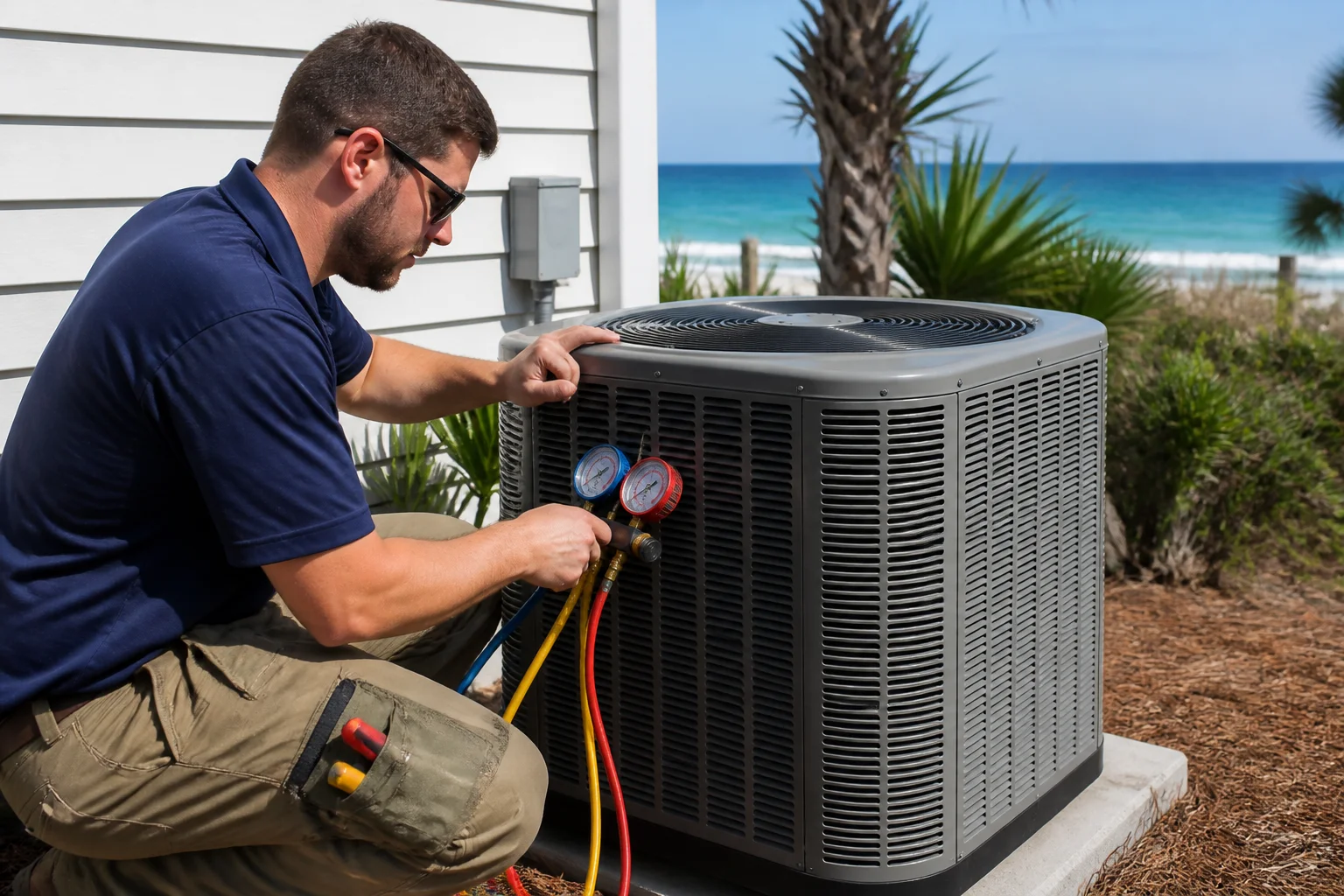
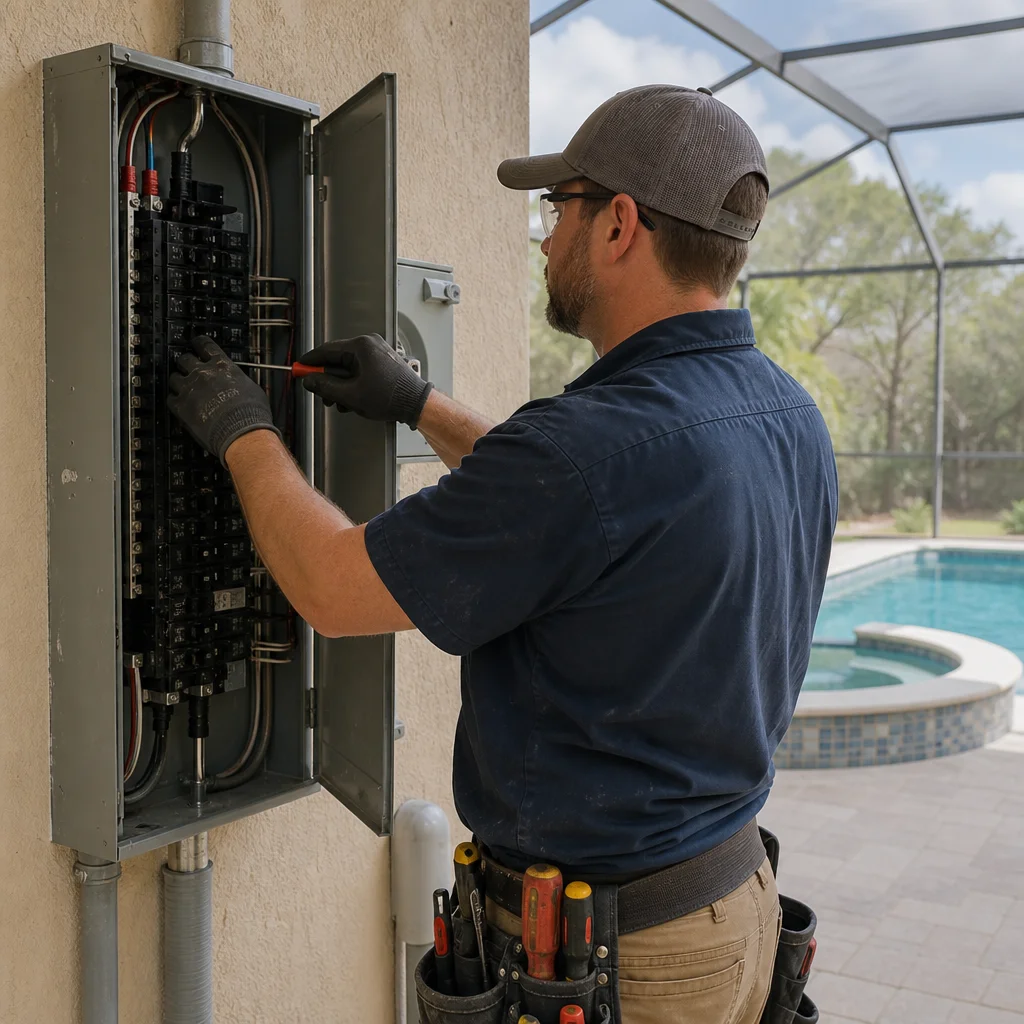
Electrical components outside a Wright home face persistent humidity, intense sunlight, wind driven rain, insects, landscaping moisture, and airborne coastal contaminants. Standard indoor boxes and fittings do not belong in these conditions. Outdoor installations need equipment approved for the location, suitable raceways and conductors, secure fittings, and covers that protect receptacles when required.
Corrosion can develop at disconnects, terminals, panels, and equipment housings. Once moisture reaches a connection, resistance and heat may increase. Rust stains, green or white corrosion, cracked seals, loose conduit, or water inside a box all warrant attention. Painting over corrosion or applying household caulk around electrical equipment is not a dependable repair.
Vegetation should also be kept away from panels and disconnects. Sprinklers should not spray directly at electrical enclosures. After severe weather, inspect the area visually from a safe distance for shifted equipment, damaged conduit, exposed wiring, or standing water. Do not touch electrical equipment while standing in water.
Older homes and remodels need a broader review
Some older Wright homes were built before today's typical electrical demand. A property may have received several additions over the years, including a converted garage, enclosed porch, workshop, larger air conditioner, or remodeled kitchen. Even when each upgrade appears to work, the combined load can strain an older service.
Older panels may have deteriorated bus connections, limited capacity, difficult to source breakers, unclear labeling, or evidence of past modifications. Outdoor circuits may lack modern GFCI protection or may contain splices that are not suitable for damp and wet locations. In these situations, a pool or hot tub project can uncover the need for wiring repair, breaker repair, code corrections, or electrical replacement.
Newer homes are not automatically ready for every load. Builders size electrical systems according to the home's original design, not every future pool heater, EV charger, or addition. Homeowners can review broader capacity planning in this guide to electrical planning for Wright homes. An electrical inspection near me search is most useful when the inspection includes service capacity, breaker compatibility, grounding, surge protection, and the condition of outdoor circuits.
Lighting, outlets, switches, and controls require careful placement
Pool and spa projects often include more than pumps and heaters. Homeowners may want underwater lights, pathway lighting, security lighting, landscape fixtures, convenience receptacles, or automation controls. Each feature must be selected for the location and installed with the required separation from the water.
Good lighting improves visibility on steps, decks, and walkways without creating harsh glare across the yard. Controls should be accessible but positioned according to applicable clearance rules. Receptacles need suitable GFCI protection and weather protection. Extension cords should never become permanent wiring for a pump, spa, television, refrigerator, or decorative lighting near the water.
Outdoor improvements may also overlap with covered patios and additions. If the project includes air movement, ceiling fan services in Wright can address fan rated boxes, damp or wet location fixtures, switches, and safe circuit capacity. Recessed lighting installation, security lighting installation, and outlet repair should be coordinated with the pool plan rather than added randomly after construction.
Warning signs that deserve prompt electrical repair
A breaker that trips repeatedly is warning that needs investigation, not a reason to install a larger breaker. The cause could be a failing motor, wet connection, damaged conductor, ground fault, loose terminal, overloaded circuit, or defective breaker. Increasing breaker size without confirming conductor and equipment ratings can create a fire hazard.
Other warning signs include buzzing at a panel or disconnect, a burning odor, warm covers, flickering pool lights, shocks or tingling sensations, scorched receptacles, intermittent controls, and GFCI devices that will not reset. Lights that dim when a pump or heater starts can point to voltage drop, loose connections, or capacity problems. Flickering lights repair may begin at the fixture but should include the supplying circuit and panel when the symptom affects several areas.
Turn off affected equipment if it can be done safely, keep people away from the water, and avoid opening panels or disconnects. Smoke, sparks, visible arcing, energized water, or a burning smell can require immediate help. A search for an emergency electrician near me should lead to a qualified electrical contractor prepared to isolate the hazard and determine whether power must remain off.
Storm preparation should include pool equipment
Thunderstorms, tropical systems, and utility switching can expose sensitive pump controls, lighting systems, automation boards, and spa electronics to voltage disturbances. Whole home surge protection can add an important layer of defense, although no surge device can guarantee protection from every event or direct lightning strike.
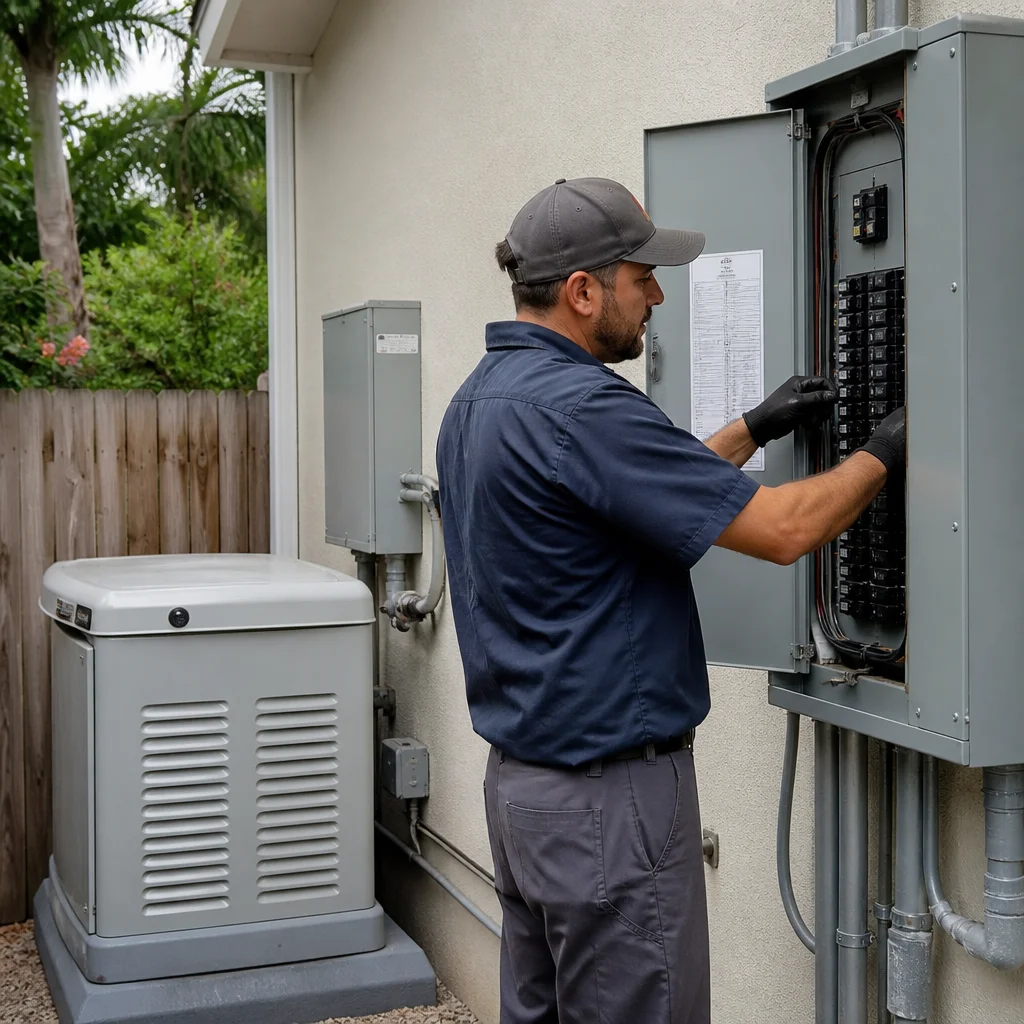
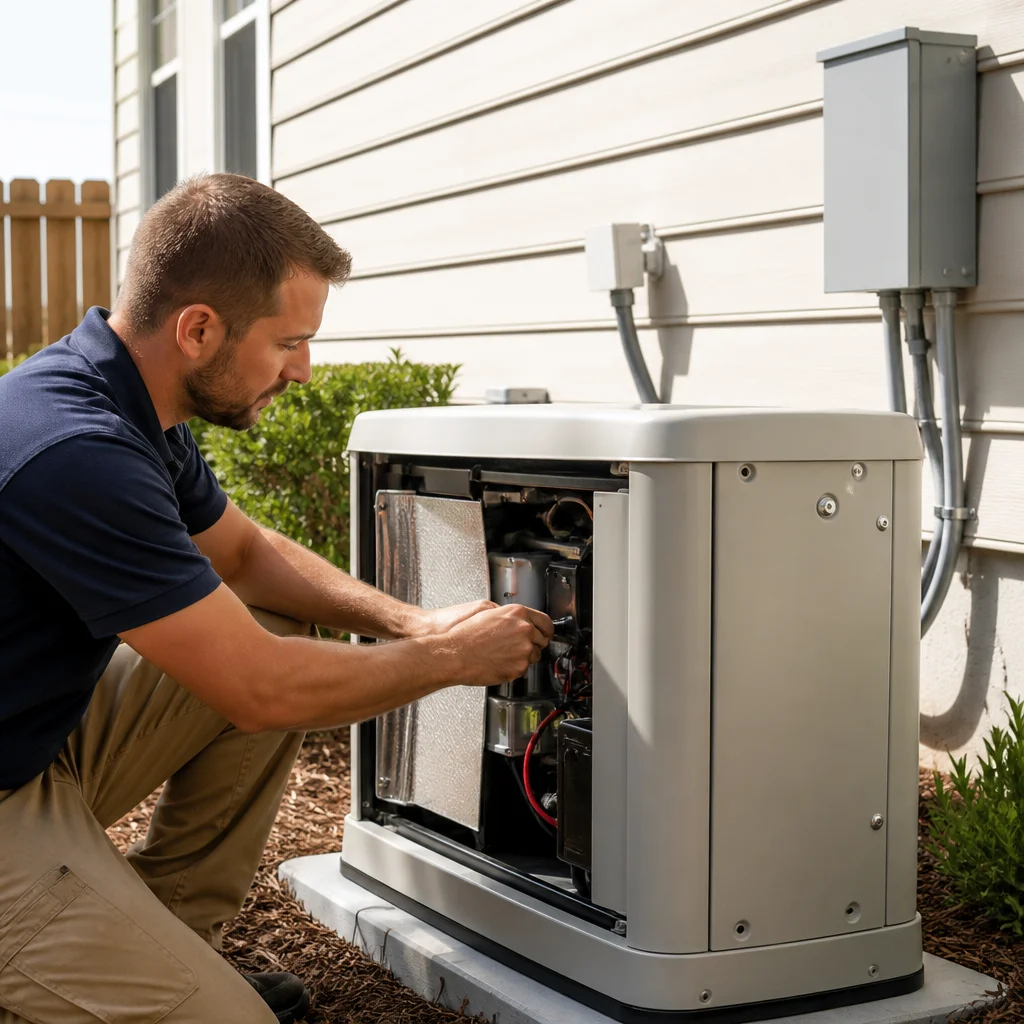
Generators also require careful planning. A portable generator must never be connected through a dryer outlet, range outlet, or improvised cord. Safe backup power requires approved equipment that prevents electricity from feeding back onto utility lines. Homeowners considering generator transfer switch installation near me should discuss which loads are truly necessary. A large pool heater may not be a practical backup load, while selected pumps or freeze protection controls may receive priority in a properly designed system.
Battery storage can support selected household circuits during outages when it is engineered for the expected load. A Superior Mechanical offers information about battery backup systems in Wright. Generator installation, portable generator hookup planning, surge protector installation, and battery systems should all be coordinated with panel capacity and the pool equipment configuration.
Routine maintenance helps prevent larger failures
Homeowners can perform simple visual checks without removing covers. Look for cracked boxes, damaged conduit, faded labels, insect nests, corrosion, loose covers, or landscaping that blocks equipment access. Test accessible GFCI devices as directed by the manufacturer and note breakers that trip more than once.
A professional maintenance visit can include breaker and conductor checks, enclosure inspection, GFCI testing, grounding and bonding review, load measurements, and verification that disconnects remain accessible. Electrical inspections are also useful after a major storm, a home purchase, a pool remodel, or unexplained equipment failure.
The rest of the property should not be ignored. Smoke detector installation, outlet repair, switches, kitchen lighting installation, ceiling fans, EV chargers, and panel additions all affect the home's electrical plan. If a level 2 EV charger is added after the spa, for example, the combined demand may justify load management or a service upgrade.
Local electrical knowledge makes a practical difference
Equipment specifications are only one part of the project. The electrician also needs to understand the home's construction, cable routing, outdoor conditions, local permitting process, and inspection expectations in Okaloosa County. That local perspective is valuable for older properties, newer subdivisions, remodels, additions, and homes with limited panel space.
Homeowners typing residential electrician near me into a search bar should look for help that includes load planning, correct materials, clear estimates, code compliant installation, and testing before the system is placed in service. A Superior Mechanical can evaluate new installations, failed equipment circuits, panel concerns, breaker problems, GFCI protection, and wiring that may have been altered by a previous owner.
Before buying a hot tub or selecting a pool heater, gather the equipment model numbers and electrical specifications. Then schedule an electrical assessment so the circuit route, panel capacity, disconnect, bonding, grounding, and inspection needs can be considered before concrete, decking, or landscaping limits access.
Find Pool, Spa, and Hot Tub Wiring in Wright, FL
If you need Pool, Spa, and Hot Tub Wiring in Wright, FL, visit our local service page or contact A Superior Mechanical today.
Map of Wright, FL
Frequently Asked Questions
Does a hot tub need a dedicated electrical circuit in Wright, FL?
Most permanently installed hot tubs require a dedicated circuit sized according to the manufacturer's electrical specifications. The installation may also require GFCI protection, an approved disconnect, proper grounding, and equipotential bonding. An electrician should verify the unit requirements and the home's available panel capacity.
Why does my pool pump breaker keep tripping?
Repeated trips can be caused by a failing motor, moisture intrusion, damaged wiring, a ground fault, an overloaded circuit, loose connections, or a defective breaker. Do not replace the breaker with a larger one unless the circuit and equipment have been evaluated and are specifically rated for it.
Should pool and spa wiring be inspected after a major storm?
An inspection is sensible if flooding, wind, lightning, falling debris, or a power surge affected the property. Keep people away from the water if you notice exposed wiring, damaged conduit, a burning odor, flickering lights, tripped GFCI protection, or unusual equipment behavior.
Related Articles
- Smart Electrical Planning for Wright Homes: Panels, Wiring, Outlets, and Prevention
- Pool, Spa, and Hot Tub Wiring in Blue Mountain Beach: Keeping Coastal Homes Safe, Code Compliant, and Ready for Heavy Electrical Demand
- A Smarter Comfort Plan for Heating Control Systems in Wright, FL
- How a Failing Water Heater Can Wear Down Plumbing in Wright, FL Homes
Photo Gallery