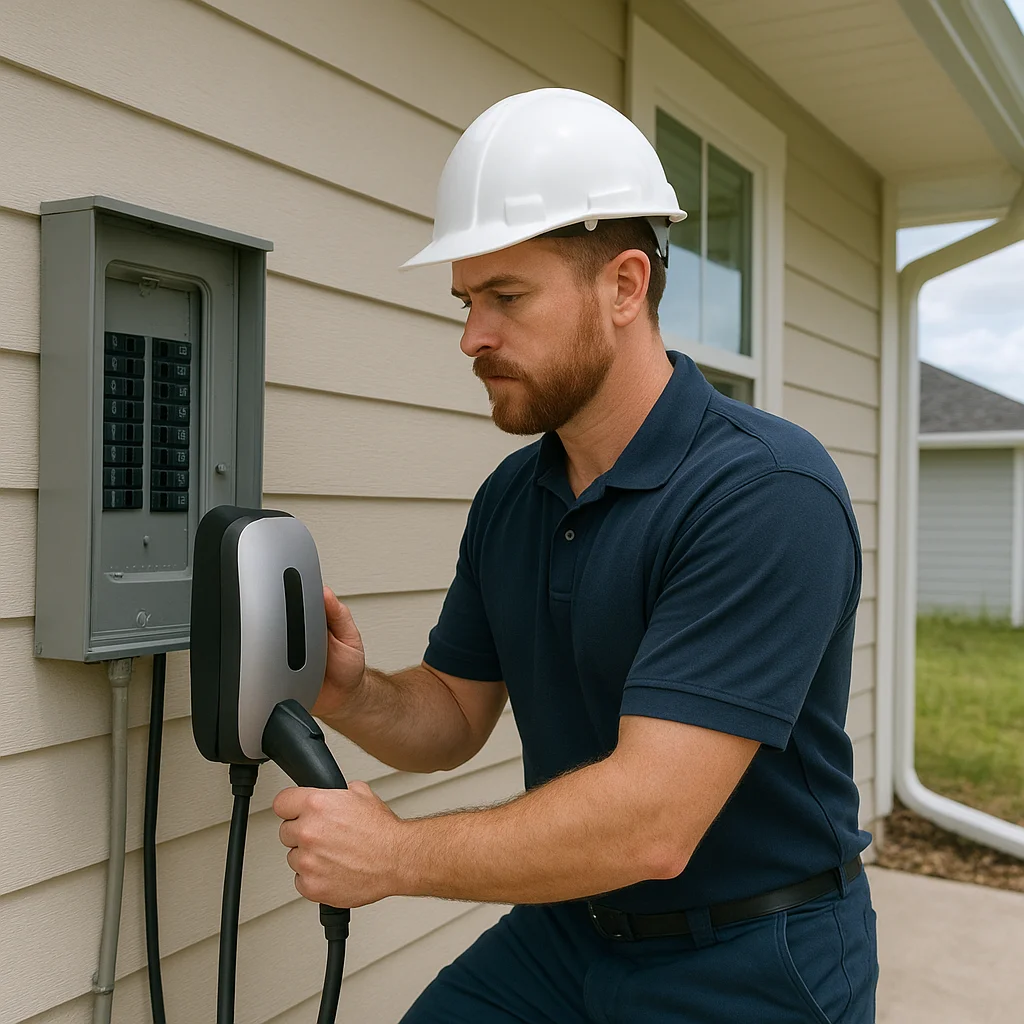
Panama City homeowners are adding electric vehicles at a steady pace, and that means more questions about home charging, panel capacity, and whether an older electrical system can handle the load. EV charger installation is not just about mounting a unit on the wall. It starts with the condition of the home’s wiring, breakers, grounding, and service equipment. In a coastal market like Bay County, wear and tear can show up faster than many homeowners expect.
Salt air, humidity, storm exposure, and years of everyday use all affect how well a home’s electrical system performs. If a panel is already showing age, if breakers trip often, or if outlets and switches feel loose or warm, those issues can affect the safety and performance of a charger. That is why local service matters. A qualified electrician who knows Panama City homes can spot the difference between a simple EV charger install and a project that needs panel upgrades, breaker repair, or code corrections first.
Why electrical wear matters before a charger goes in
An EV charger draws a steady electrical load for hours at a time. That is very different from a lamp, television, or small appliance. A home with aging wiring or an undersized panel may handle normal daily use just fine, then struggle when a charger is added. That strain can show up as nuisance trips, hot breakers, voltage drop, or damaged components.
In Panama City, many homes have seen remodels, additions, or piecemeal electrical updates over the years. A house may have a newer kitchen or a detached garage, but the main panel may still be older and close to capacity. In those cases, homeowners searching for EV charger installation in Panama City, FL often need more than the charger itself. They may need a dedicated circuit, a load calculation, a grounding check, or a local electrical service visit to confirm the system can support the added demand.
What wear and tear looks like in real homes
Electrical wear is not always dramatic. Sometimes it shows up as small problems that homeowners get used to over time. A breaker that trips every few weeks. An outlet that no longer grips plugs tightly. Lights that flicker when the dryer or microwave starts. A switch that feels warm. These can all point to aging connections, overloaded circuits, or deteriorating parts that need attention before a charger is installed.
In coastal Florida, corrosion is another concern. Moisture can affect outdoor equipment, garage outlets, disconnects, and conduit fittings. Storm seasons can also leave behind hidden damage, especially if a home has experienced power surges or repeated outages. If a homeowner has already needed surge protection, emergency electrical repairs, or a generator transfer switch installation near me search led them to service work, it is worth having the system reviewed before adding EV charging demand.
Panels, breakers, and circuits do the heavy lifting
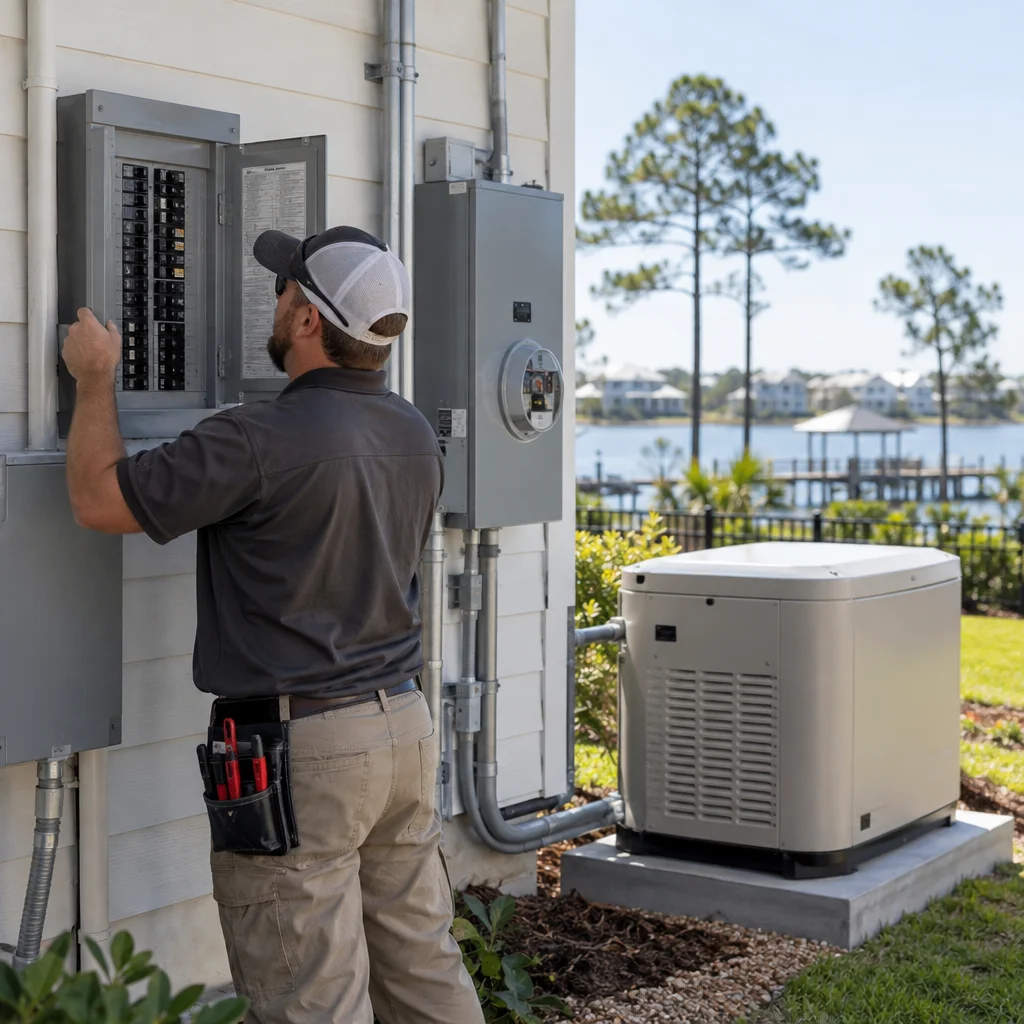
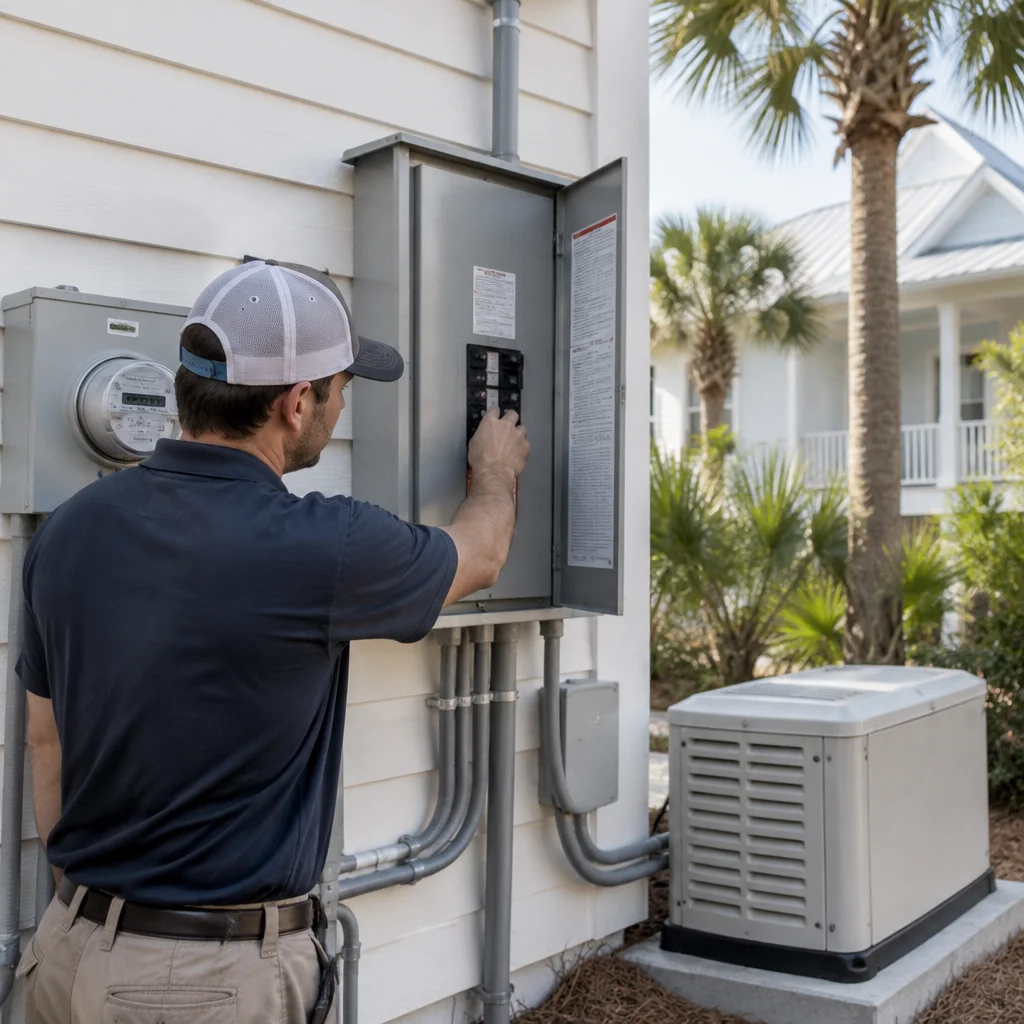
Most EV charger projects begin at the panel. The electrician checks whether the electrical service has enough spare capacity and whether the panel itself is in good condition. If the panel is outdated, corroded, or crowded, a breaker box replacement near me search may be pointing toward a real upgrade need. A charger should not be installed on a system that is already stretched thin.
Breakers also matter. A charger needs the correct breaker size and a dedicated circuit in most residential setups. If the breaker is weak, mismatched, or already serving too many loads, it may trip under the continuous demand of charging. That is why circuit breaker repair near me issues sometimes show up during EV charger planning. The problem may not be the charger at all. It may be the breaker, the wiring, or the panel layout.
Dedicated circuits are especially important for homes with older wiring or shared garage outlets. An EV charger should not compete with a freezer, a garage door opener, tools, or a second refrigerator on the same line. Proper circuit design helps prevent overheating and keeps the charger reliable.
Older Panama City homes often need extra evaluation
Panama City has a mix of older homes, renovated properties, beach-adjacent houses, and newer builds. That variety is part of the appeal, but it also means electrical systems can vary a lot from one block to the next. Older homes may have limited panel space, aging aluminum or cloth wiring in some sections, or outlets that were never designed for modern demand. Newer homes may still need load balancing if they already support electric dryers, tankless equipment, pool equipment, or a home office.
For older properties, an electrical code inspection near me search often makes sense before EV charger installation. The inspection can reveal whether the grounding is adequate, whether GFCI protection is needed in the garage or exterior areas, and whether the existing wiring needs correction. If the home has had additions or a converted garage, the electrician may also need to verify that outlets, switches, and lighting circuits were extended properly.
This is also where related service pages can be helpful. Homeowners who need broader system work may benefit from electrical installation, generator installation, or even pool, spa, and hot tub wiring if the property already has heavier electrical demands.
Coastal weather can shorten the life of electrical parts
Humidity and salt exposure can speed up wear on outdoor receptacles, service equipment, and conduit connections. In Panama City, that matters because many EV chargers are installed in garages, carports, or on exterior walls where weather exposure is part of the job. Even when the charger itself is rated for outdoor use, the surrounding electrical system still has to be protected.
Proper installation includes weather-rated enclosures where needed, secure conduit runs, correct grounding, and GFCI protection where code requires it. It also includes checking for rusted fasteners, brittle insulation, and signs that a previous repair was done poorly. A charger should not be mounted to a wall that already has moisture damage or to a circuit that has not been tested for safe performance.
Storms are another local factor. Power surges from lightning or utility interruptions can damage sensitive electronics and weaken breakers over time. Whole-home surge protection can help protect the panel, the EV charger, and other electronics in the house. Homeowners who have already looked into protecting Panama City homes with better electrical installation often find that surge protection and panel maintenance are part of the same conversation.
How to tell if the system needs work before EV charging
Some homes are ready for a charger with minimal changes. Others need repairs or upgrades first. Common warning signs include frequent breaker trips, flickering lights, buzzing at the panel, discolored outlets, warm wall plates, or a charger location that is far from the main service panel. If the garage already has a receptacle that feels loose or shows heat damage, outlet repair near me concerns should be addressed before a charger is added.
Another clue is age. If the home still has an older panel or a history of electrical patchwork, the charger may require a new dedicated circuit, a subpanel, or a service upgrade. Homeowners searching for electrical panel upgrade near me are often dealing with exactly this kind of load issue. The goal is not just to make the charger work today. It is to make the whole system safe and dependable for years.
That same logic applies to lighting and switches. If garage lights, exterior fixtures, or ceiling fans have been acting up, those symptoms can indicate broader wiring wear. A home that needs recessed lighting installation near me or switch repair near me work may also need a deeper look at the panel and branch circuits before EV charging is added.
Why code compliance matters for EV charger installation
EV chargers pull continuous power, so code compliance is not optional. The installation has to account for conductor sizing, breaker sizing, grounding, disconnect requirements, and placement. In some homes, a charger can be installed on a 240 volt circuit with relatively minor changes. In others, the electrician may need to correct outdated wiring, update the panel, or add GFCI protection to meet current standards.
Code compliance is especially important in homes that have been remodeled or expanded. A garage conversion, bonus room, workshop, or detached structure may have been wired years ago under different assumptions. A careful review helps avoid overloaded circuits and unsafe shortcuts. That review can also uncover other issues a homeowner may want handled at the same time, such as smoke detector installation near me requests, outlet installation near me updates, or home safety inspection electrician near me concerns.
For homeowners in Bay County, working with a local electrician who understands the area’s permitting expectations and inspection process can keep the project moving smoothly. If the job is part of a larger property update, the same team may also coordinate commercial electrician near me needs for rental properties or small businesses that want charging available on site.
Maintenance after the charger is installed
Once the charger is in place, the electrical system still needs occasional attention. Periodic inspections can catch loose connections, worn breakers, corrosion, and signs of heat before they become major problems. This is especially useful in coastal homes where humidity and storms can accelerate deterioration.
Homeowners should also pay attention to changes in performance. If charging slows down, the breaker trips, or the panel starts making new sounds, the issue should be evaluated quickly. Those symptoms can point to a circuit problem, a grounding issue, or a charger that is pulling more than the system should handle. Same day electrician near me searches often come from homeowners who notice a sudden change and want to avoid bigger damage.
Preventive service also helps homes with generators, pool equipment, and other high demand systems. A property that uses a whole home generator installation near me setup or a portable generator hookup near me arrangement should have the charging plan coordinated with the rest of the electrical load. Otherwise, the house may be safe on paper but still run into capacity problems during outages or peak use.
Getting the charger installed the right way in Panama City
EV charger installation works best when it starts with a full electrical review, not just a product selection. A good installer checks the panel, confirms circuit capacity, verifies grounding and GFCI protection, and looks for wear that could interfere with safe charging. That is especially important in Panama City, where coastal weather, older homes, and storm-related power issues can all affect electrical reliability.
If your home has aging breakers, a crowded panel, or signs of wear around outlets and wiring, the charger project may need repairs or upgrades first. That could include breaker repair, panel upgrades, code corrections, or additional electrical maintenance. For homeowners searching for EV charger installation in Panama City, FL, the safest path is a local evaluation from an electrician who understands how Bay County homes are built and how they age.
When the electrical system is sized correctly and installed with care, charging at home becomes simple, efficient, and dependable. For homeowners comparing options or planning other electrical work, the same local team can often help with lighting installation near me projects, outlet repair near me concerns, smoke detector upgrades, and other essential service work that keeps the home ready for daily use.
Find EV Charger Installation in Panama City, FL
If you need EV Charger Installation in Panama City, FL, visit our local service page or contact A Superior Mechanical today.
Map of Panama City, FL
Frequently Asked Questions
Do I need a panel upgrade before installing an EV charger?
Not always, but many homes do need one. The electrician will check available capacity, breaker space, and the condition of the panel before recommending an EV charger installation.
Can an older Panama City home support home EV charging?
Yes, many can, but older homes often need a dedicated circuit, grounding updates, or panel work first. Coastal wear, past remodels, and storm damage can also affect readiness.
Why does my breaker trip when I charge my car?
Frequent trips can mean the circuit is overloaded, the breaker is worn, or the wiring is not sized correctly for continuous charging. A licensed electrician should inspect the system.
Is a GFCI required for EV charger installation in Panama City?
It depends on the charger type, location, and current code requirements. Garages, exterior locations, and certain circuits may need GFCI protection for safety and compliance.
Related Articles
- Protecting Panama City Homes Starts with Better Electrical Installation
- Panama City Beach Homeowners Guide to Electrical Inspections, Code Updates, and Safer Panels
- Lighting, Fixtures, and Safer Electrical Systems for Panama City Beach Homes
- Why Preventive Electrical Service Matters for Panel Upgrades in Panama City
Photo Gallery