Upper Grand Lagoon homes work hard every day. Long hot stretches, heavy humidity, and salt air near the coast all push HVAC systems beyond what owners expect. When wear and tear builds up, it changes what a duct inspection actually reveals. That matters, because ductwork issues can look like “AC problems,” “airflow problems,” or even “comfort problems,” even when the root cause is the duct system itself.
At A Superior Mechanical’s duct inspection service for Upper Grand Lagoon, the goal is to connect the dots between how your HVAC system is operating and how air is moving through your ductwork. Here’s how aging components, Florida conditions, and system strain can affect duct inspection findings for families searching for HVAC service in the area.
Florida conditions speed up duct wear and shift inspection results
In Upper Grand Lagoon, ducts do not experience “average” conditions. The climate swings between intense summer heat and humid air that can stay in the home’s air stream. Salt air can also accelerate corrosion on metal components. Over time, these factors can show up during duct inspection as:
- More frequent leaks at seams, joints, and connections where materials have expanded and contracted.
- Moisture-related deterioration around supply runs, returns, or areas near condensate drainage.
- Insulation breakdown that reduces how well ducts maintain temperature and airflow.
- Airflow imbalance that may look like uneven cooling, hot rooms, or rooms that feel stuffy.
When ducts age, the inspection is not just about whether air is present. It’s about how much air reaches each space, how evenly it arrives, and whether ductwork is contributing to indoor air quality concerns.
Why HVAC wear and tear changes airflow patterns
Duct inspection often starts with airflow. But airflow is not only a duct issue. It can be affected by wear in the rest of the system, including the refrigerant system, blower performance, and how the thermostat is controlling cycles.
1) Older ductwork can exaggerate blower and system strain
As ducts develop leaks or restrictions, the system may need to work harder to maintain comfort. That can increase runtime and energy use. During inspection, technicians may notice signs that the duct system is not helping the HVAC system do its job, such as:
- Longer cooling cycles that do not fully resolve temperature differences.
- Air that feels weak at registers even when the blower is running.
- Uneven pressure across the system, which can worsen leakage.
Families often describe this as “our AC runs all the time.” In many cases, wear and tear in ductwork is part of the story, not the entire story.
2) Condensate drainage problems can create moisture where ducts are vulnerable
In cooling mode, HVAC systems remove moisture from indoor air. That moisture is supposed to drain through condensate drainage components. If condensate drainage is restricted, improperly routed, or overwhelmed, moisture can build up in areas that affect the duct cavity or nearby materials. During duct inspection, moisture concerns can show up as:
- Damp insulation or discoloration on duct surfaces.
- Musty odors that come and go with system operation.
- Conditions that can contribute to indoor air quality issues.
Moisture does not just damage ductwork. It can also worsen allergies and respiratory discomfort for household members. That’s one reason duct inspection matters for families, not just for comfort.
3) Thermostat behavior can mask duct problems
Modern thermostats can be simple, programmable, or smart. But even a well-functioning thermostat can’t compensate for poor air distribution. If ducts are leaking, restricted, or poorly insulated, the thermostat may sense the home’s temperature but not the airflow quality in every room. That can lead to:
- Frequent cycling that does not match actual comfort needs.
- Hot or cold spots that persist despite thermostat adjustments.
- Confusion about whether the issue is “AC repair” or “duct repair.”
A proper duct inspection helps clarify what the HVAC system is delivering versus what the home needs.
Common duct inspection findings caused by wear and tear
When homeowners schedule duct inspection in Upper Grand Lagoon, the most useful inspections look beyond surface appearance. Wear and tear can create patterns that point to specific ductwork conditions. Here are examples technicians commonly evaluate and document:
Leaky seams and disconnected joints
Over time, vibration and temperature swings can loosen duct connections. Leaks can pull in unconditioned air from attics, crawl spaces, or wall cavities. In humid Florida weather, that air can increase moisture and reduce comfort. During inspection, leaks can correlate with:
- Higher humidity sensation indoors.
- Rooms that never feel “right,” even when the AC is running.
- Energy use that seems higher than expected.
Insulation that has degraded or shifted
Insulation protects ducts from heat gain and helps maintain air temperature. When insulation breaks down, ducts can lose cooling effect before air reaches the living space. That can show up as:
- Air that feels colder at the start but warms up quickly.
- Greater load on the refrigerant systems as the HVAC tries to catch up.
- Uneven comfort between floors or between zones.
For families who need consistent comfort for sleep, school routines, and day-to-day activities, these insulation issues can become a major source of frustration.
Restricted returns and poor return airflow
Return ducts are essential for balanced airflow. If return paths are blocked by debris, collapsed sections, or poor design, the system may struggle to move air. That can lead to:
- Weak airflow from supply registers.
- Pressure imbalances that encourage more leakage.
- More frequent calls for air conditioning repair near me because the home feels uncomfortable quickly during peak heat.
Wear and tear can make these issues worse by loosening fittings or changing how duct sections sit over time.
Ducts that contribute to indoor air quality concerns
Ducts can affect indoor air quality by moving dust, allergens, and humidity throughout the home. During duct inspection, technicians may look for conditions that can worsen air quality, such as moisture exposure, poor sealing, or debris in accessible areas. This is especially important for families with sensitivities, pets, or occupants who notice symptoms during humid months.
How refrigerant systems and duct performance interact
It’s tempting to assume that if the AC is running, the problem must be the refrigerant system. But duct performance can change how the system behaves. If airflow is weak or uneven, the HVAC may not transfer heat as intended. That can increase strain on the system and contribute to inconsistent comfort.
A professional duct inspection helps separate duct-related airflow problems from refrigerant system concerns. It also prevents homeowners from guessing. A refrigerant diagnosis should be done in person by a qualified HVAC technician after checking airflow, duct conditions, and system operation.
Why condensate drainage and ductwork should be evaluated together
Condensate drainage issues can create moisture that affects duct insulation and nearby materials. In humid Florida summers, that risk is higher. During duct inspection, technicians often consider whether moisture concerns are isolated or connected to how the system drains.
If moisture is present, it may also connect to emergency cooling concerns. When the system is under strain and moisture management is off, homeowners can experience faster breakdowns during the hottest weeks. That’s one reason preventive HVAC maintenance and thorough inspections matter in Bay County and throughout Upper Grand Lagoon.
Signs your ductwork is affecting comfort and air quality
Wear and tear can show up as symptoms families notice before a breakdown. Consider duct inspection if you see patterns like these:
- Hot or cold rooms that persist even when the thermostat is set correctly.
- Airflow that feels uneven, with some registers strong and others weak.
- Increased humidity that makes the home feel sticky, especially during peak summer.
- Musty odors that appear when the system runs.
- More frequent AC repair calls because the same comfort issues keep returning.
These signs can also overlap with other HVAC issues, including blower wear, thermostat settings, or heat pump service needs. The point is that duct inspection helps identify whether ductwork is contributing to the problem.
Preventive maintenance that reduces duct wear and inspection surprises
Preventive HVAC maintenance is not only about the outdoor unit or the air handler. It’s also about keeping airflow pathways healthy so ducts do not get forced into bad conditions. Homeowners can support better duct performance by:
- Changing filters on schedule so airflow is not restricted.
- Keeping registers and returns clear so supply and return airflow stays balanced.
- Monitoring humidity during Florida’s humid months and addressing moisture early.
- Scheduling inspections if the home has new comfort complaints or after major system changes.
If you are searching for HVAC maintenance near me, choosing a local HVAC company that understands Upper Grand Lagoon’s humidity and duct exposure can prevent small issues from becoming major comfort and indoor air quality problems.
Whole-home dehumidification can complement duct improvements
Many families focus on cooling output, but humidity control is part of comfort. If duct leaks or moisture exposure are present, humidity may remain even with the AC running. Pairing duct inspection and duct repairs with humidity-focused solutions can help. For related options, you can review Whole Home Dehumidifiers.
What duct inspection may include for Upper Grand Lagoon homes
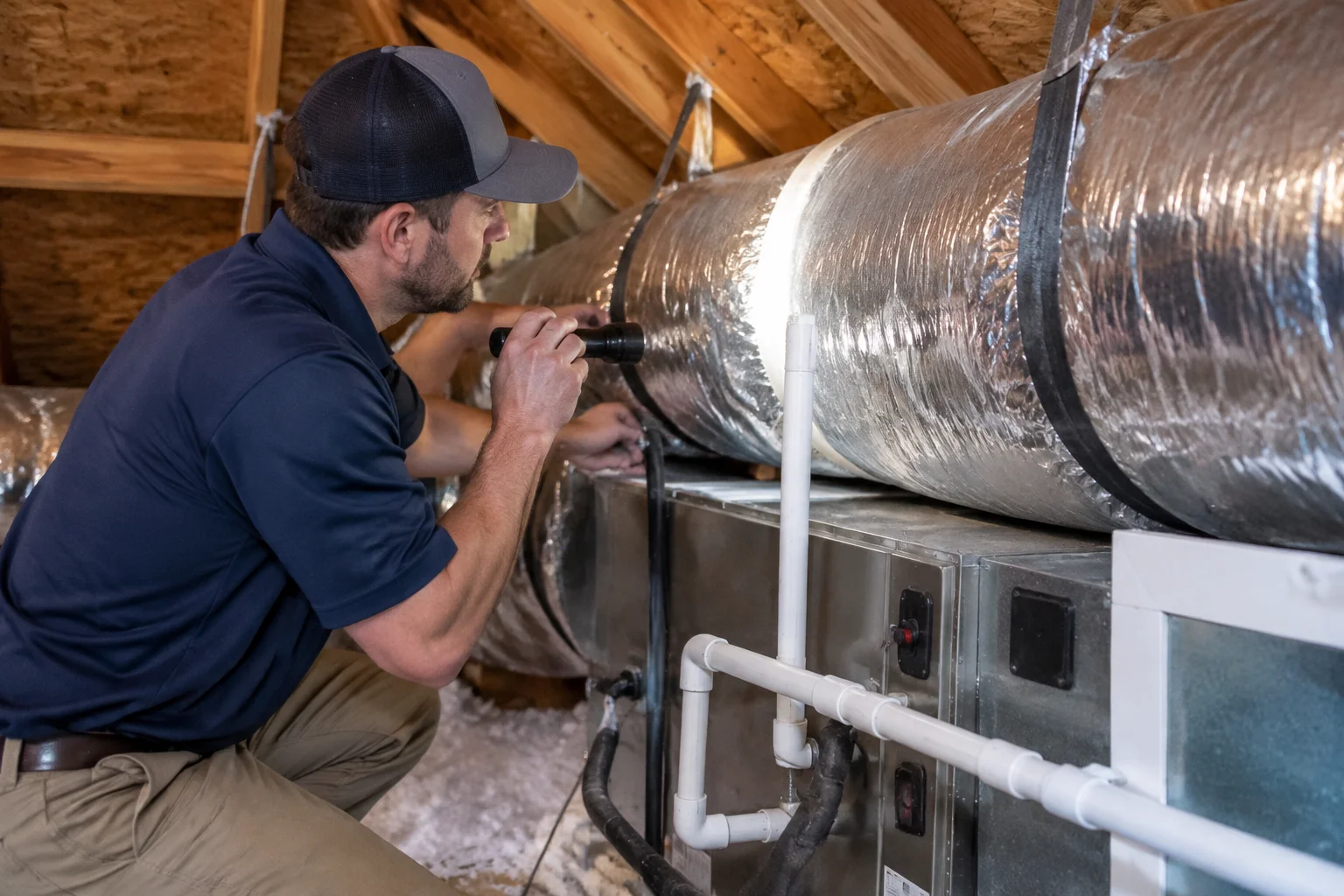
Every home is different, but a thorough duct inspection typically evaluates the duct system’s condition and how air moves through it. That can include documenting visible duct issues, checking for signs of leakage and poor insulation, and reviewing airflow performance as it relates to HVAC operation.
This is also where professional experience matters. A trained technician can explain how wear and tear changed the system’s behavior and what that means for comfort, energy use, and indoor air quality. If you are considering duct cleaning, it’s also helpful to understand whether ductwork condition is the bigger issue first. See Duct Cleaning for guidance on aligning duct care with your home’s needs.
Why professional duct inspection matters for families, not just equipment
Upper Grand Lagoon families often have schedules that depend on steady indoor comfort: school mornings, work-from-home calls, summer evenings, and nighttime sleep. When ductwork is worn down by humidity, heat, and salt air exposure, the HVAC system can struggle to deliver consistent airflow. That can lead to more energy use, higher stress on refrigerant systems, and recurring comfort complaints.
A professional duct inspection helps prevent guesswork. It also supports safer decision-making. For example, duct replacement near me searches often show up when homeowners feel they have no other options. But duct replacement is not always the first step. A technician should evaluate duct condition and airflow impacts in person before recommending repairs or replacement.
Links to related local HVAC topics
If you are also dealing with broader system performance, these resources can help you connect duct findings to the bigger HVAC picture:
- A Practical Look at Duct Inspection in Upper Grand Lagoon, FL
- Keeping Commercial HVAC Trouble Small in Upper Grand Lagoon, FL (useful if you manage a rental or small business)
- Why Commercial HVAC Maintenance Matters More Than Most Upper Grand Lagoon Homeowners Realize
And if you are considering options beyond traditional cooling, you may want to explore Geothermal Energy Systems or financing options through HVAC Financing.
When wear and tear turns into emergency cooling concerns
During peak summer, families can face emergency cooling concerns when the AC or heat pump system stops delivering reliable comfort. Duct issues can contribute to this scenario by increasing system strain and making it harder for the unit to meet cooling demand. Even if the immediate failure is not a duct failure, duct problems can make the system more likely to reach its limits.
If your home is losing cooling quickly, airflow is dramatically reduced, or humidity is spiking along with comfort loss, it’s worth contacting a local HVAC company promptly. For broader service area context, you can also browse Upper Grand Lagoon HVAC services and Bay County HVAC services.
How to choose the right HVAC company for duct inspection in Upper Grand Lagoon
When you’re searching for HVAC company near me or air conditioning inspection near me, look for a contractor that treats duct inspection as part of whole-system comfort. A good inspection should connect:
- How your thermostat calls for cooling or heating
- How airflow is delivered through ductwork
- Whether moisture and indoor air quality concerns are present
- How the system is coping with Florida heat and humidity
That approach helps you avoid repeat problems and supports better long-term indoor comfort. If you want a focused starting point, schedule duct inspection through A Superior Mechanical so a technician can evaluate your ductwork condition and airflow performance in person.
Find Duct Inspection in Upper Grand Lagoon, FL
If you need Duct Inspection in Upper Grand Lagoon, FL, visit our local service page or contact A Superior Mechanical today.
Map of Upper Grand Lagoon, FL
Frequently Asked Questions
How does duct wear and tear show up during duct inspection in Upper Grand Lagoon?
Duct wear and tear often shows up as air leaks at joints or seams, insulation that has degraded, uneven airflow from supply registers, and sometimes moisture-related concerns. In a humid Florida climate, these issues can also affect indoor air quality.
Can duct problems make my AC seem like it needs frequent HVAC repair?
Yes. If ductwork leaks or restricts airflow, the HVAC system may run longer to try to reach the thermostat setting. That added strain can lead to repeat comfort issues that feel like AC repair near me situations, even when the duct system is contributing.
What’s the connection between condensate drainage and duct inspection?
During cooling, the system removes moisture and drains it through condensate drainage. If drainage is restricted or overwhelmed, moisture can affect nearby materials and duct insulation. A duct inspection can help identify moisture-related conditions that impact comfort and indoor air quality.
Should I get duct cleaning before duct inspection?
Duct cleaning can help in the right circumstances, but it should not replace an inspection when you suspect airflow, leaks, or moisture problems. A professional duct inspection clarifies whether the main issue is duct condition and airflow performance.
Will duct inspection help if I’m considering a heat pump installation near me?
It can. Heat pumps rely on correct airflow to deliver comfort efficiently. If ductwork is leaking, poorly insulated, or restricted, the new system may not perform as expected. An in-person inspection can help identify duct-related barriers before you make equipment decisions.
Related Articles
Photo Gallery