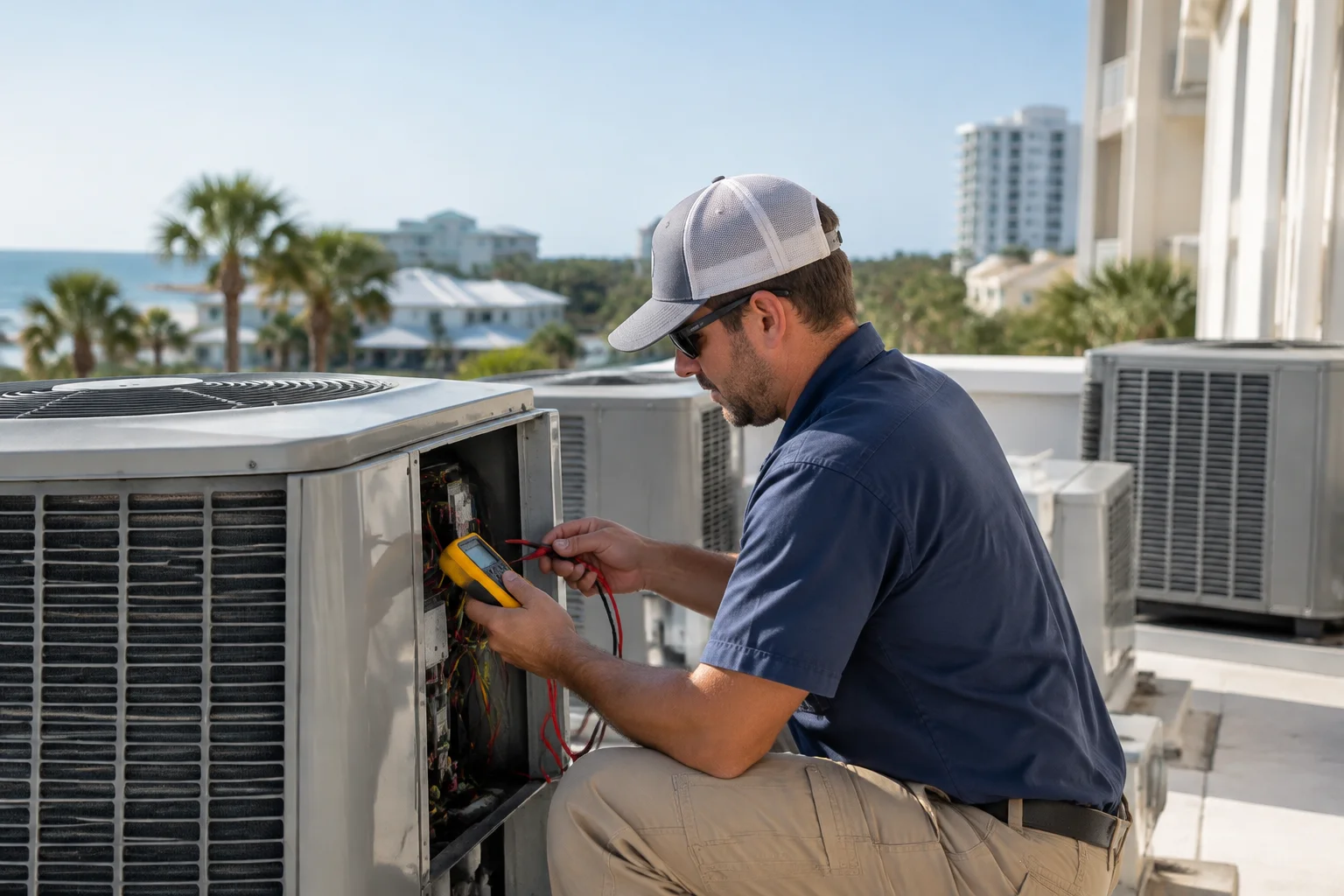
If your air feels stuffy, smells off, or your family’s allergies flare up, the issue may not be “just” comfort. In Shalimar, FL, Florida heat, humidity, and salt air can stress HVAC systems and make indoor air quality problems show up faster. When HVAC warning signs and indoor air quality symptoms overlap, timing matters. Repairs done early can prevent mild discomfort from turning into a bigger indoor air quality headache.
This guide connects common HVAC warning signs to indoor air quality, explains why Shalimar conditions make the timing more critical, and outlines practical steps homeowners can take with professional HVAC service from A Superior Mechanical.
Why Shalimar indoor air quality reacts fast to HVAC problems
Shalimar sits in Florida’s humid, coastal region. That means your HVAC system is often fighting two battles at once: temperature control and moisture control. When either battle gets out of balance, it can impact indoor air quality quickly.
Here are the local factors that make airflow and humidity issues show up sooner:
- Heat and humidity load: Air conditioning and heat pump systems run longer to remove moisture. If airflow is restricted, condensate drainage becomes less reliable, and indoor humidity can climb.
- Salt air and outdoor exposure: Coastal air can increase corrosion and stress components over time, especially in systems that are already aging.
- Leaky or aging ductwork: Many homes have ductwork that was installed years ago. Over time, ducts can lose airflow, which affects filtration performance and can create uneven temperatures.
- Energy use and comfort cycles: When the thermostat settings or system performance are off, short-cycling and longer runtimes can change how well the system filters and dehumidifies.
That’s why homeowners searching for HVAC service near me often find the “real” problem is not only temperature. It is the air your HVAC system is delivering.
HVAC warning signs that often point to indoor air quality issues
Some indoor air quality symptoms are subtle at first. Others are obvious. Either way, the connection to your HVAC system is worth investigating, especially during peak summer conditions when emergency cooling concerns can become more serious.
1) Musty odors or “stale” smells when the AC runs
A musty smell often suggests moisture where it should not be. In an air conditioning system, condensate drainage plays a role. If condensate drainage is slow, backed up, or poorly routed, moisture can remain in places that encourage microbial growth. That can show up as odors and can also worsen allergy and respiratory symptoms.
Odors can also be caused by dirty filtration and dust buildup in ductwork. If you notice the smell is stronger after the system has been running for a while, it may be tied to how the system is moving air and managing humidity.
2) Higher indoor humidity even when the thermostat says “cool”
In humid climates like Shalimar, the thermostat temperature alone is not enough. A system can lower the temperature while still leaving humidity elevated. That can happen when airflow is restricted, the system is short-cycling, or the system is not dehumidifying effectively.
When indoor humidity stays high, indoor air quality can decline because moisture supports mold growth and increases the “stickiness” that makes air feel heavier. It can also reduce how comfortable people feel, especially in bedrooms and living areas.
3) Uneven airflow: some rooms feel cold, others feel muggy
Uneven comfort is a common clue that airflow through ductwork is not balanced. If supply registers are blocked by furniture, if ductwork has leaks, or if dampers and returns are not distributing air properly, the system may not filter and dehumidify the whole home evenly.
Homeowners often notice this as:
- Hot spots near exterior walls
- Cold spots near vents with weak airflow
- Rooms that seem “stale” even when temperature is set correctly
For indoor air quality, uneven airflow matters because filtration performance and ventilation patterns depend on consistent air movement.
4) More dust settling on surfaces or frequent cleaning needs
Dust is not always a sign of a dirty home. It can also be a sign that the HVAC system is not capturing particles the way it should. If filtration is undersized, installed incorrectly, or clogged, airborne particles can recirculate more than you expect.
Dust can also be stirred up by airflow leaks or by ductwork that is shedding debris. If you are searching for duct cleaning near me, it is smart to pair that question with indoor air quality goals and an airflow and filtration check.
5) Allergy or asthma symptoms that worsen when the system runs
If symptoms spike during AC cycles, it can be linked to filtration, airflow, and humidity. Dirty filters can allow more particles to pass. High humidity can increase irritants and support microbial growth. Even if your system is cooling, indoor air quality may still be compromised.
Because refrigerant systems and airflow are tightly connected, it is important not to guess. A licensed HVAC contractor near me should evaluate performance rather than assume the cause.
6) Condensate drainage problems: water near the indoor unit or a “gurgling” sound
When condensate drainage is blocked or the system is not draining properly, it can create moisture issues that directly affect indoor air quality. Homeowners might notice:
- Water around the air handler or furnace closet
- Clogged drain lines
- Signs of overflow or damp insulation
Moisture problems can become urgent because they can lead to microbial growth and can also affect system reliability during peak AC demand.
7) Thermostat behavior that seems “off,” like constant cycling or poor response
Thermostats control comfort and how the system runs. If the thermostat is misreading conditions, is configured incorrectly, or is not communicating with the system properly, it can contribute to comfort issues that overlap with indoor air quality problems.
For example, short-cycling can reduce the time the system spends filtering and dehumidifying effectively. Longer runtimes with restricted airflow can also change moisture control. A professional can verify thermostat settings and system operation in context.
Why repair timing matters more in summer and during humid stretches
When indoor air quality symptoms start, it is tempting to wait for a convenient time. In Shalimar, that delay can have consequences because HVAC systems operate in a harsh indoor-outdoor moisture cycle. The longer a problem persists, the more likely it is that:
- Moisture accumulates: Condensate drainage issues and elevated humidity can increase the risk of microbial growth.
- Airflow and filtration performance worsen: A system that is struggling may not move air the way it should, and filters can clog faster under high humidity and dust loads.
- Indoor comfort becomes harder to recover: Even if temperature eventually returns to normal, humidity and particle levels may remain elevated.
- System reliability drops: HVAC performance problems can add stress to refrigerant systems and other components. That can raise the chance of breakdown during the periods when you need reliable cooling most.
Timing can also affect energy use. A system that is not operating efficiently may run longer or cycle more often, which can increase your utility bills while still delivering air that feels unhealthy or uncomfortable.
Common causes behind indoor air quality warning signs
Indoor air quality problems rarely come from a single cause. In Shalimar homes, several HVAC-related issues often overlap.
Airflow restrictions in ductwork and registers
Restricted airflow can lead to uneven temperatures, higher humidity, and reduced filtration effectiveness. Over time, ductwork can develop leaks or obstructions. That is why homeowners may ask for ductwork evaluations or duct sealing when comfort and indoor air quality both feel off.
A duct inspection can help determine whether airflow is being delivered where it should be and whether return paths are adequate.
Filtration gaps and airflow through filters that is not matched to the system
Even the best filter cannot perform well if air is not flowing through it correctly. Filters may be the wrong size for the system, installed improperly, or bypassed due to gaps in the filter rack. When airflow is weak, particles can circulate more than expected.
For whole home air purifier goals, homeowners should confirm that the HVAC system is supporting that strategy. Many people look for “whole home air purifier near me” and assume the purifier alone will solve everything. A balanced approach usually includes proper filtration and airflow.
Humidity control failures and condensate drainage issues
When humidity rises, indoor air quality often follows. Condensate drainage problems can create moisture where it should not be. Proper drainage, safe routing, and routine checks are key in humid coastal regions.
Refrigerant system performance concerns
Refrigerant systems are designed to move heat in a specific way. If a system is not performing as intended, it can affect cooling capacity, moisture removal, and airflow patterns. Because refrigerant-related issues require careful testing, it is not appropriate to diagnose from symptoms alone.
A Superior Mechanical can evaluate the system based on in-person observations and measurements. If you are noticing multiple indoor air quality symptoms at once, refrigerant system performance should be part of the professional assessment.
Dirty or failing components that affect airflow and comfort cycles
Dirty coils, clogged drain lines, worn blower components, and other issues can change how your HVAC system operates. Those changes can show up as odors, humidity swings, and inconsistent comfort.
How professionals connect HVAC repairs to indoor air quality
When you call an HVAC contractor near me for indoor air quality concerns, you want more than a quick fix. In-person evaluation helps connect the dots between symptoms and system operation.
Professional HVAC service for indoor air quality often includes:
- Airflow and ductwork checks to understand whether air is moving through the system and ducts as intended
- Filtration and system setup review to confirm filters and airflow paths are correct
- Humidity and condensate drainage assessment so moisture control is addressed, not ignored
- Thermostat and system operation review to confirm cycles support comfort and air cleaning
- Evaluation of refrigerant system performance when symptoms suggest cooling or moisture removal problems
If you suspect your system is struggling, air conditioning repair and indoor air quality-focused service can be planned together so your home’s air improves along with comfort.
What you can do now between service visits
You can support indoor air quality while you arrange repairs or preventive HVAC maintenance. These steps are safe and practical for most homeowners.
Check airflow and filter condition
Look at your filter and confirm it is installed correctly. If it looks clogged or dirty, replace it with the correct type and size recommended for your system. Avoid using filters that do not match the HVAC equipment guidance.
Watch for humidity patterns
If you have a hygrometer, track indoor humidity over a day. If humidity stays high while the system runs, that is a strong indoor air quality clue tied to HVAC operation, not just outdoor weather.
Keep returns and registers clear
Do not block supply vents or return grilles with furniture, curtains, or storage. Reduced airflow can increase humidity and cause the system to cycle in ways that affect air cleaning.
Address visible moisture promptly
If you see water near the indoor unit or notice damp areas, schedule service quickly. Moisture can affect indoor air quality and can also contribute to system reliability issues.
Preventive maintenance that protects indoor air quality
In Shalimar, preventive HVAC maintenance near me can prevent mid-summer breakdowns and reduce the chances that indoor air quality problems build up behind the scenes. Maintenance is also where professionals can catch ductwork airflow issues, filtration setup problems, and moisture control concerns before they become urgent.
Homeowners often benefit from a seasonal plan that includes:
- Filter and airflow path checks
- Inspection of condensate drainage and indoor unit cleanliness
- Verification of thermostat operation and comfort settings
- Assessment of ductwork performance where indoor air quality is affected by airflow
If you are comparing HVAC replacement near me options, it can be helpful to start with an indoor air quality evaluation. Sometimes the best path is improving airflow and filtration first. Other times, a system replacement decision depends on the full in-person assessment of performance and condition.
When indoor air quality symptoms become urgent
Most indoor air quality issues can be addressed with planned service. Still, certain situations should not wait, especially in Florida heat when cooling is essential.
Contact an HVAC service near me promptly if you notice:
- Water pooling or signs of overflow from condensate drainage
- Strong musty odors that increase after the system runs
- Rapid humidity rise in multiple rooms during cooling season
- Airflow that is drastically reduced compared to normal operation
- System behavior that suggests it cannot maintain cooling reliably
These conditions can create emergency cooling concerns, and they can also increase indoor air quality risk.
Local homeowner resources that connect the dots
If you are trying to connect comfort, airflow, and indoor air quality, these reads can help you narrow down what matters most in your home:
- Keeping Shalimar Properties Comfortable Without Surprise HVAC Problems
- Indoor Air Quality Testing That Helps Inlet Beach Homes Stay Comfortable Longer
- Why Seaside Homes Benefit From Indoor Air Quality Testing Before Comfort Issues Spread
- Indoor Air Quality in Callaway: A Homeowner’s Guide to Cleaner, More Comfortable Living
For specific Shalimar indoor air quality support, explore indoor air quality services in Shalimar, FL and review how A Superior Mechanical approaches filtration, humidity control, and comfort improvements across Okaloosa County.
For broader service coverage across the area, visit Okaloosa County HVAC service areas.
How to talk to an HVAC technician about indoor air quality timing
When you schedule HVAC repair or HVAC maintenance, you can help the technician understand the urgency by sharing a few details. Consider mentioning:
- When the symptoms started and whether they worsen after the system runs for a while
- Any musty odors, visible moisture, or changes in condensate drainage
- Room-by-room comfort differences and any airflow complaints
- Humidity observations if you have a hygrometer
- Thermostat behavior, including short-cycling or unusual run times
This kind of information helps connect indoor air quality symptoms to airflow, humidity, and refrigerant system performance, which is the foundation for effective HVAC repair planning.
Choosing the right HVAC service for healthier air
Indoor air quality is not only about adding a filter or buying a purifier. In Shalimar, it is about how your HVAC system moves air, controls moisture, and keeps your ductwork and filtration paths working together. That is why homeowners often look for a licensed HVAC contractor near me who can evaluate the system as a whole.
Whether you need AC repair, ductwork support, or a coordinated indoor air quality plan, A Superior Mechanical focuses on improving the air your home actually breathes. If you are weighing next steps for your system, you can also review HVAC financing options so you can plan repairs or replacement with less stress.
For duct-related concerns that affect both comfort and air quality, consider pairing your indoor air quality goals with a professional ductwork assessment.
Find Indoor Air Quality in Shalimar, FL
If you need Indoor Air Quality in Shalimar, FL, visit our local service page or contact A Superior Mechanical today.
Map of Shalimar, FL
Frequently Asked Questions
Can indoor air quality get worse even if my AC is blowing cold air?
Yes. Cold air does not guarantee proper humidity control or clean airflow. If airflow is restricted, filtration is not working correctly, or condensate drainage is failing, your home can feel cool while indoor air quality still declines.
What HVAC problems are most likely to cause musty odors in a Shalimar home?
Musty odors are often linked to moisture issues such as condensate drainage problems, elevated indoor humidity, or dust and debris buildup in the system and ductwork. A professional evaluation helps confirm the cause rather than guessing.
How do duct issues affect indoor air quality?
Ductwork can impact airflow balance, the delivery of filtered air, and the movement of dust and particles. If you have uneven temperatures, weak airflow, or frequent dust, a duct inspection can help connect those comfort problems to indoor air quality.
Is it safe to try to “fix” a refrigerant-related issue based on symptoms?
No. Refrigerant system concerns require careful in-person testing. Symptoms can overlap with other problems like airflow or humidity control, so a qualified HVAC technician should evaluate the system before any repair decisions are made.
When should I schedule HVAC service for indoor air quality concerns during Florida summer?
Schedule promptly if you notice worsening humidity, musty odors, signs of condensate drainage problems, or major airflow changes. In Shalimar’s heat, delaying repairs can increase moisture and indoor air quality risk while also raising emergency cooling concerns.
Related Articles
- Keeping Shalimar Properties Comfortable Without Surprise HVAC Problems
- Indoor Air Quality Testing That Helps Inlet Beach Homes Stay Comfortable Longer
- Why Seaside Homes Benefit From Indoor Air Quality Testing Before Comfort Issues Spread
- Indoor Air Quality in Callaway: A Homeowner’s Guide to Cleaner, More Comfortable Living
Photo Gallery