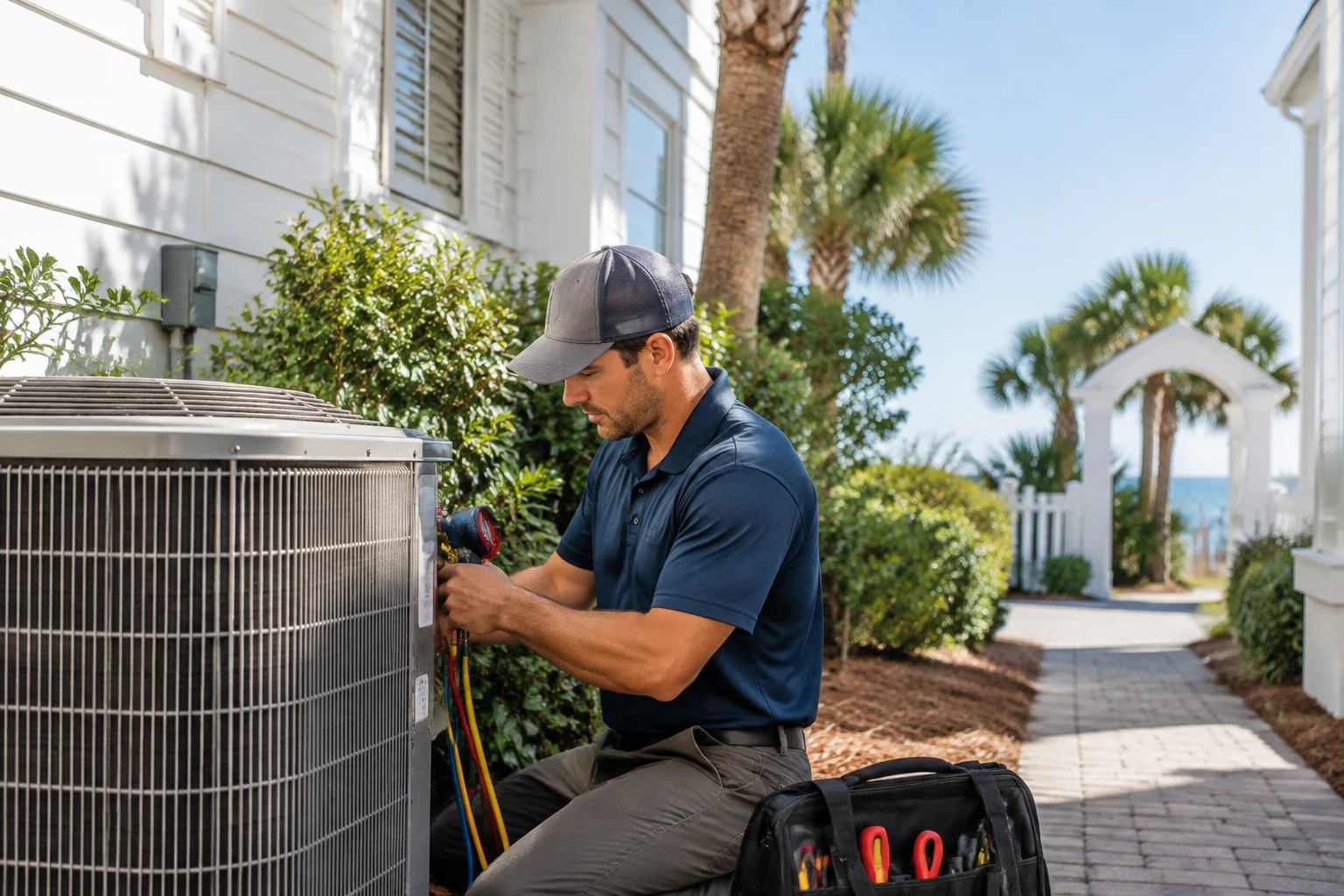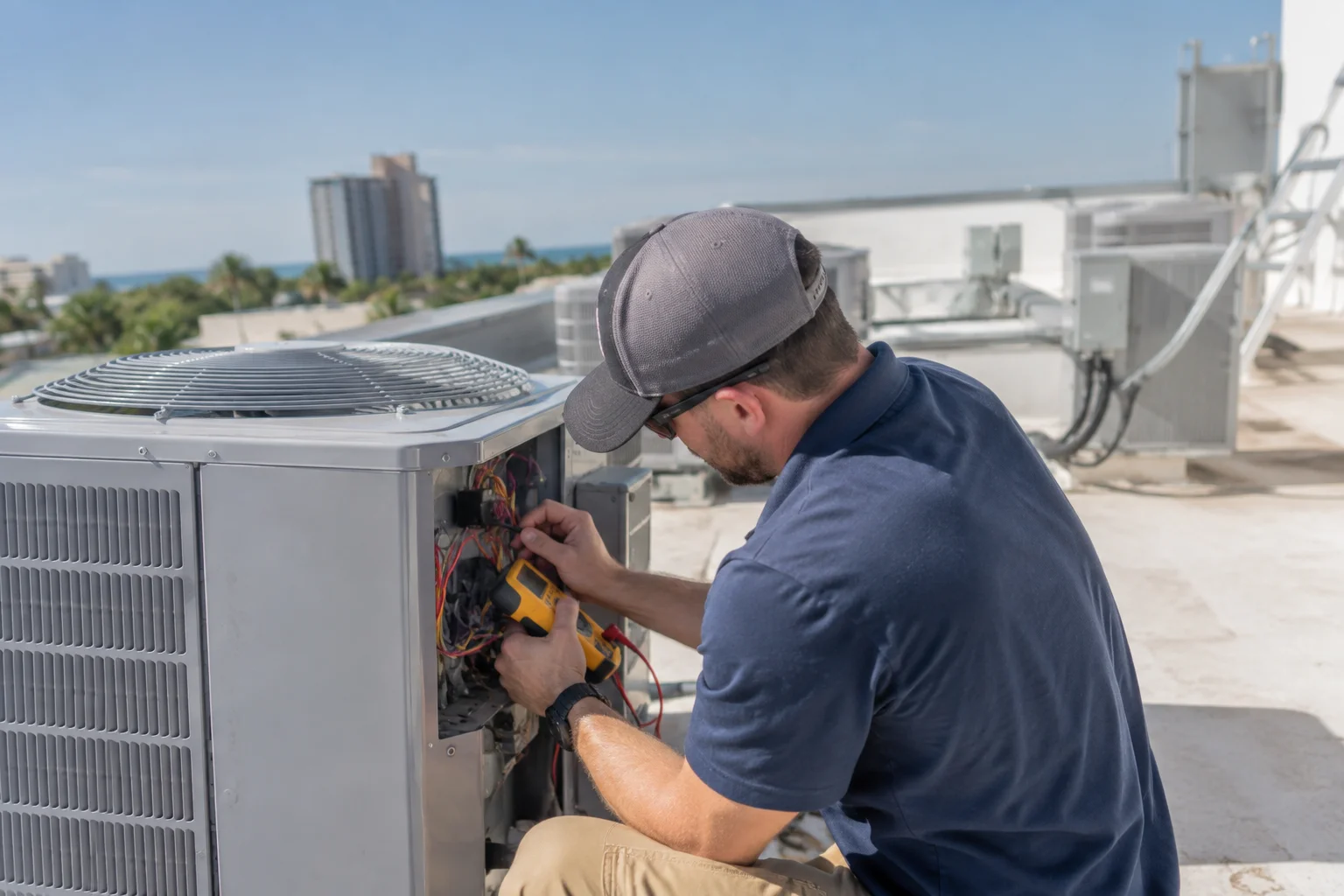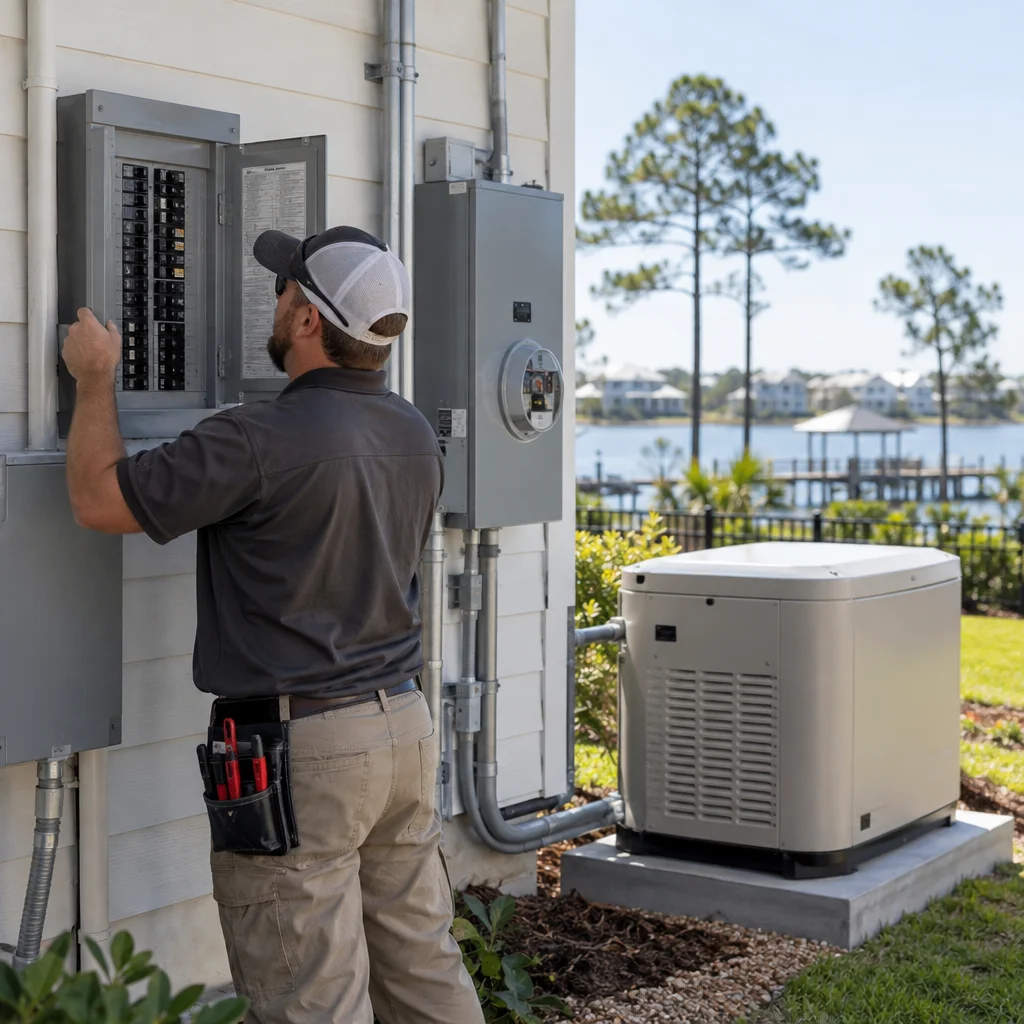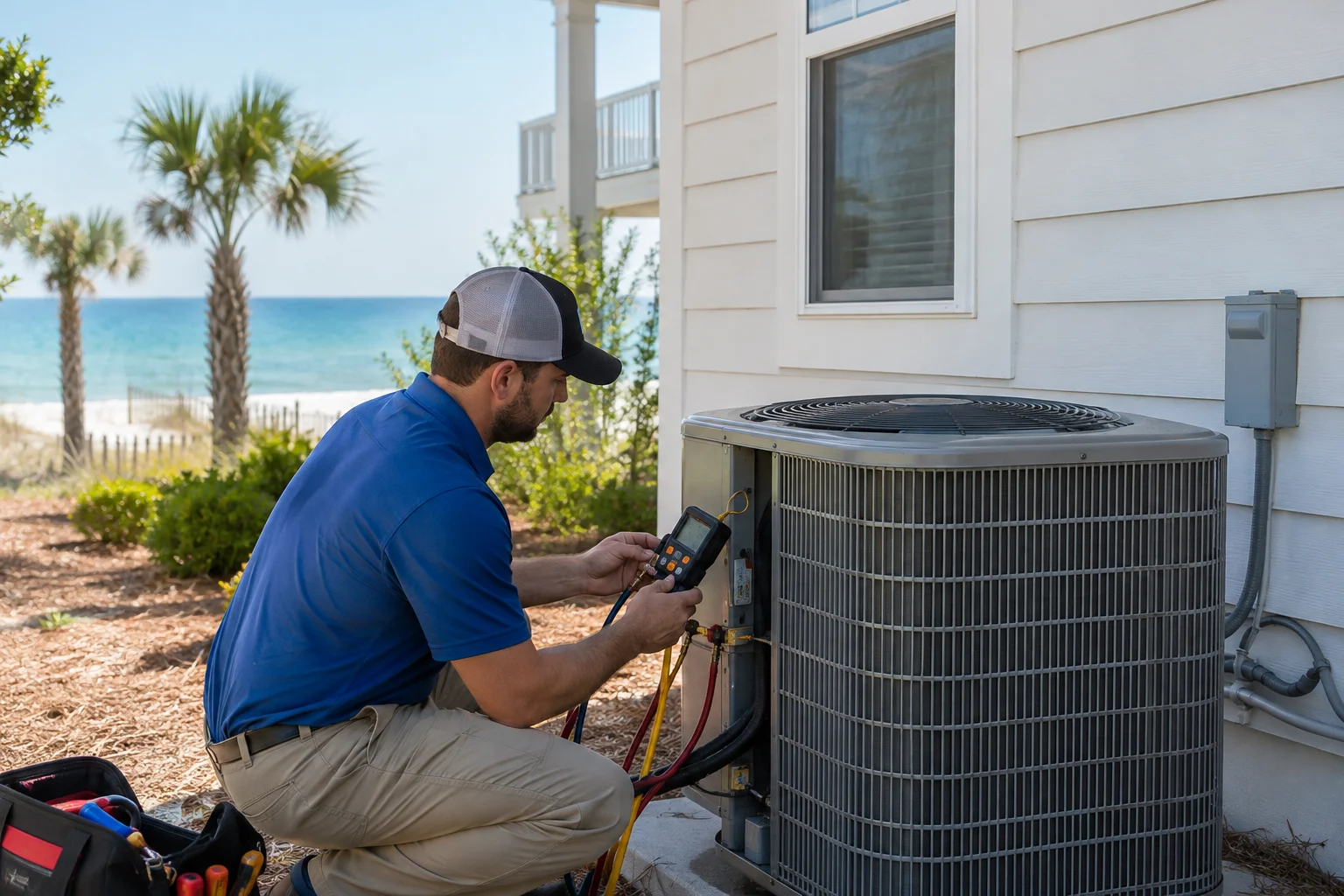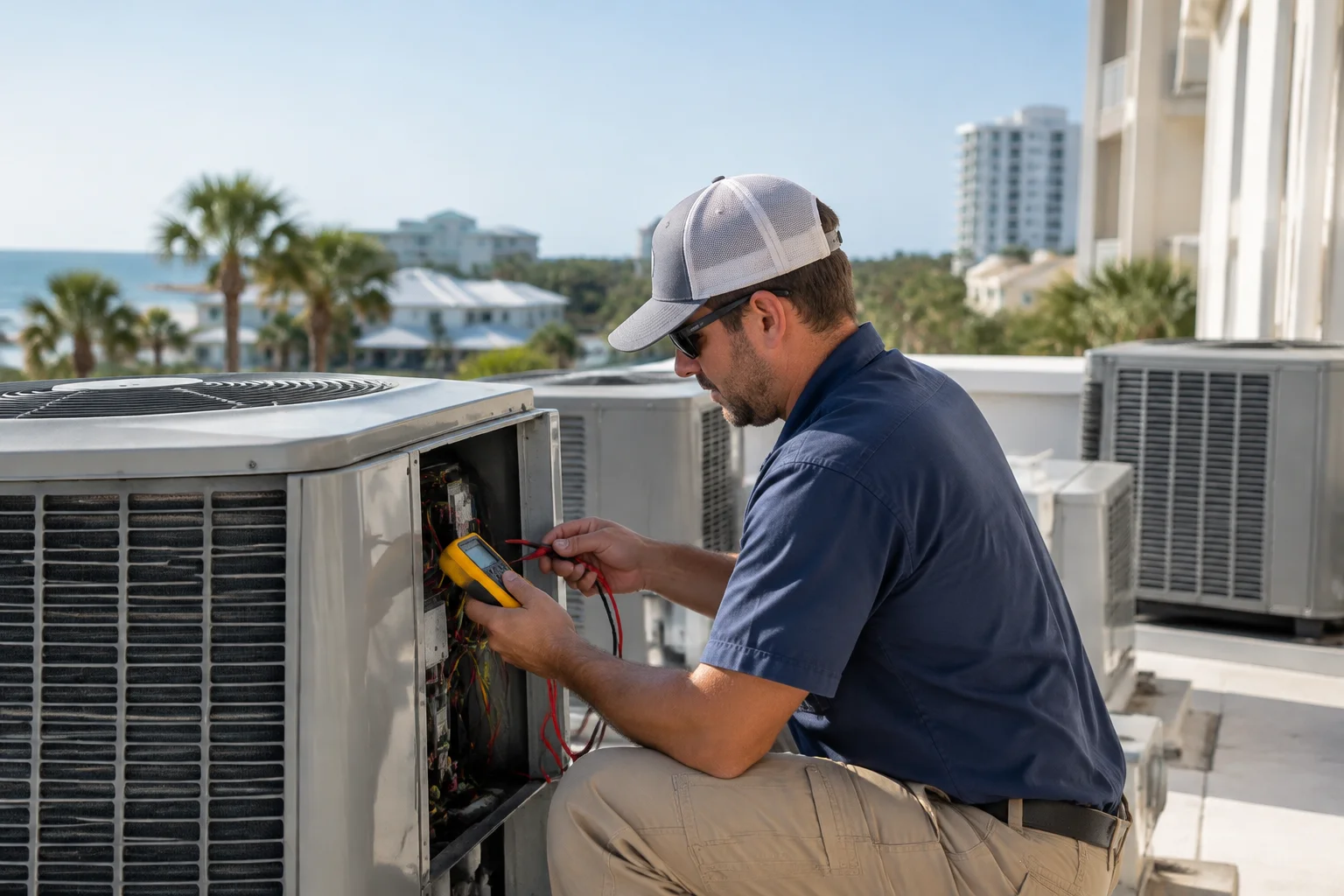
When Hammock Bay, FL heats up, commercial buildings feel it fast. Humidity rises, coastal air brings salt exposure, and cooling systems work harder to keep offices, retail spaces, and restaurants comfortable. A Superior Mechanical helps local businesses reduce emergency cooling concerns by handling commercial HVAC maintenance with the details that matter for performance and reliability.
Emergency HVAC calls are expensive, disruptive, and hard to schedule. The good news is that many emergency situations are preventable with consistent inspections, airflow checks, and maintenance that fits Walton County’s climate.
Why Hammock Bay’s climate pushes commercial HVAC systems toward emergencies
Hammock Bay sits in a coastal region where warm temperatures and high humidity are routine. That combination affects cooling load, indoor comfort, and system wear.
Heat and humidity increase cooling demand
Air conditioners and heat pumps must remove moisture as well as sensible heat. When humidity is high, comfort issues can show up quickly even if the thermostat seems “set correctly.” If airflow is restricted or the system is under-maintained, the equipment can struggle to dehumidify, leading to longer run times and higher stress on refrigerant systems.
Salt air can accelerate corrosion and dirty coil problems
Coastal salt exposure can contribute to corrosion on outdoor components and can worsen the impact of airborne dust. Over time, condenser coils can accumulate debris, restricting heat transfer. Restricted heat transfer can cause the system to work harder and can contribute to refrigerant system strain.
Airflow issues are one of the fastest paths to breakdowns
Commercial HVAC systems depend on steady airflow through both indoor and outdoor sections. Dirty filters, clogged return grilles, blocked supply registers, and ductwork that has developed leaks or poor distribution can all reduce airflow. When airflow drops, the system may not cool effectively, may cycle more often, and can develop more serious problems.
Common commercial HVAC problems that lead to emergency cooling calls
Many emergencies start as small performance complaints. If you track issues early, you can address them during scheduled maintenance instead of during a peak cooling day.
1) Weak airflow and hot spots
Symptoms include uneven room temperatures, complaints from customers or employees, and supply air that feels warmer than expected. Often the cause is ductwork issues, blocked vents, dirty coils, or fan problems. Restricted airflow can also increase energy use because the system runs longer to achieve the same comfort.
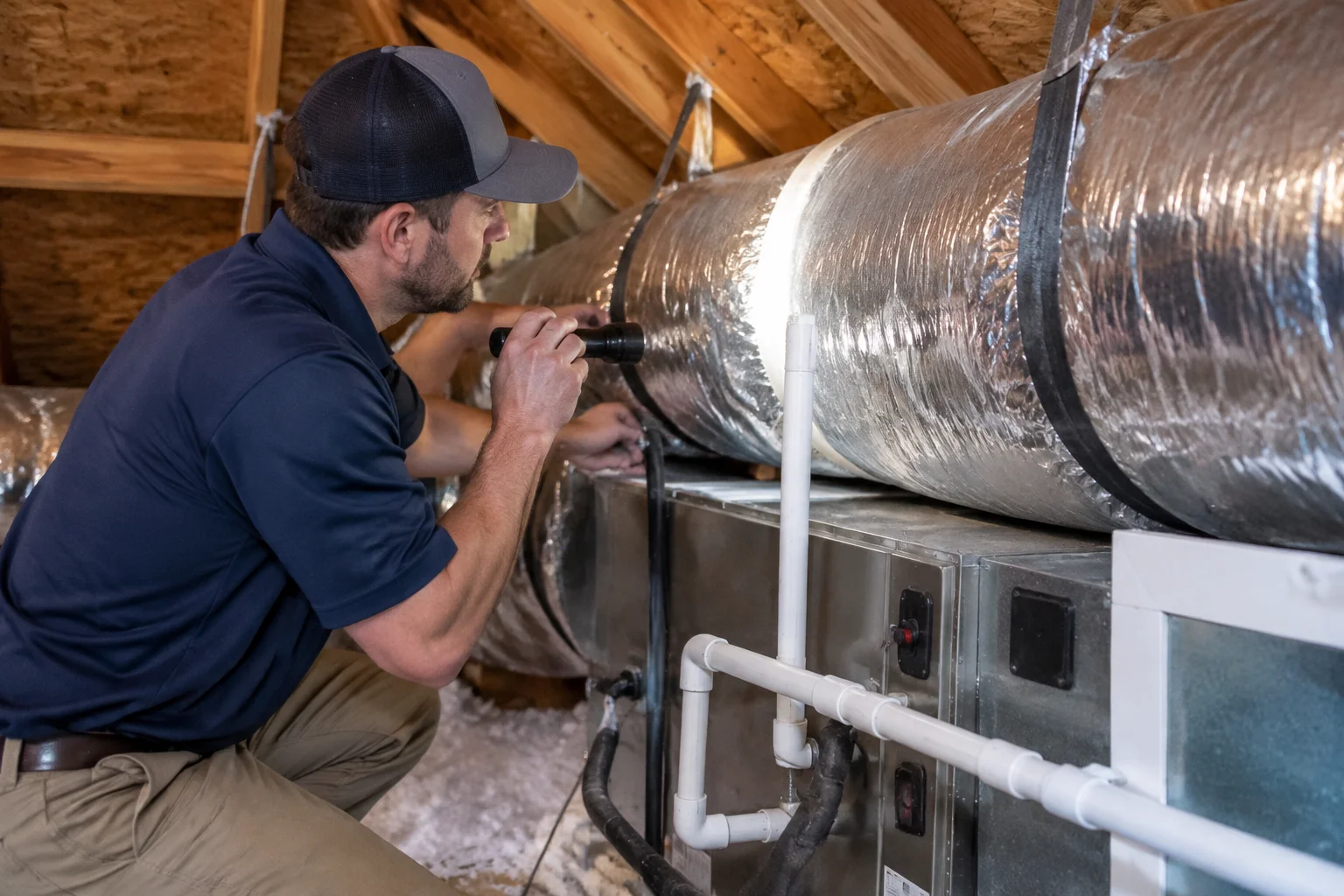
If you suspect airflow problems, consider Duct Inspection to identify where air distribution is breaking down.
2) Condensate drainage problems
Cooling in humid weather produces condensate. If condensate drainage becomes slow or blocked, water can back up and create operational issues. That can lead to shutdowns, moisture-related comfort problems, and indoor air quality concerns. Routine checks of drain lines and related components are a key part of preventive care.
3) Thermostat behavior that masks bigger system issues
Sometimes the system is cooling, but the thermostat or control setup is not reading conditions correctly or is configured in a way that does not match the building’s use patterns. Poor thermostat settings can cause frequent cycling or long run times, which adds wear and can increase energy use.
For facilities with multiple zones or complex schedules, Heating Control Systems can help align comfort with actual occupancy and operating needs.
4) Dirty indoor and outdoor coils
Coils can collect dust and debris that reduce heat transfer. That makes the system less efficient and more likely to struggle during hot, humid weeks. Coil maintenance is not just about cleanliness. It is about maintaining the cooling pathway so the refrigerant system can operate as intended.
5) Refrigerant system strain from restricted performance
Refrigerant systems rely on correct airflow and proper heat exchange. While homeowners should not attempt refrigerant diagnosis themselves, scheduled professional maintenance can help identify conditions that put strain on the system, such as airflow restrictions, coil buildup, and airflow imbalance.
Maintenance that prevents emergencies: a practical checklist for commercial owners
Every building is different, but a strong preventive plan usually covers the same core items. If you manage a multi-unit property, a restaurant, a retail store, or an office in Walton County, these are the areas that most often prevent mid-summer breakdowns.
Start with airflow and ductwork verification
Airflow problems are common and they can escalate fast in humid coastal weather. A maintenance visit should include checking airflow across indoor sections, reviewing filter condition, and looking for signs of restricted returns or failing distribution.
If your building has recurring hot or cold spots, or if tenants consistently report comfort issues, ductwork evaluation is worth prioritizing. Many homeowners searching for duct inspection near me are actually looking for answers to airflow complaints that never seem to fully resolve with simple thermostat changes.
Depending on findings, you may also want to plan Duct Cleaning when buildup contributes to indoor air quality issues or airflow inefficiency.
Inspect condensate drainage during high-humidity seasons
Condensate drainage should be inspected as part of routine commercial HVAC maintenance, especially before the hottest, wettest stretches. Slow drains and blocked lines can create moisture and comfort problems, and can contribute to equipment interruptions.
In a coastal climate, moisture management is not optional. It is part of protecting the building and keeping the system operating reliably.
Clean and inspect coils and check heat transfer pathways
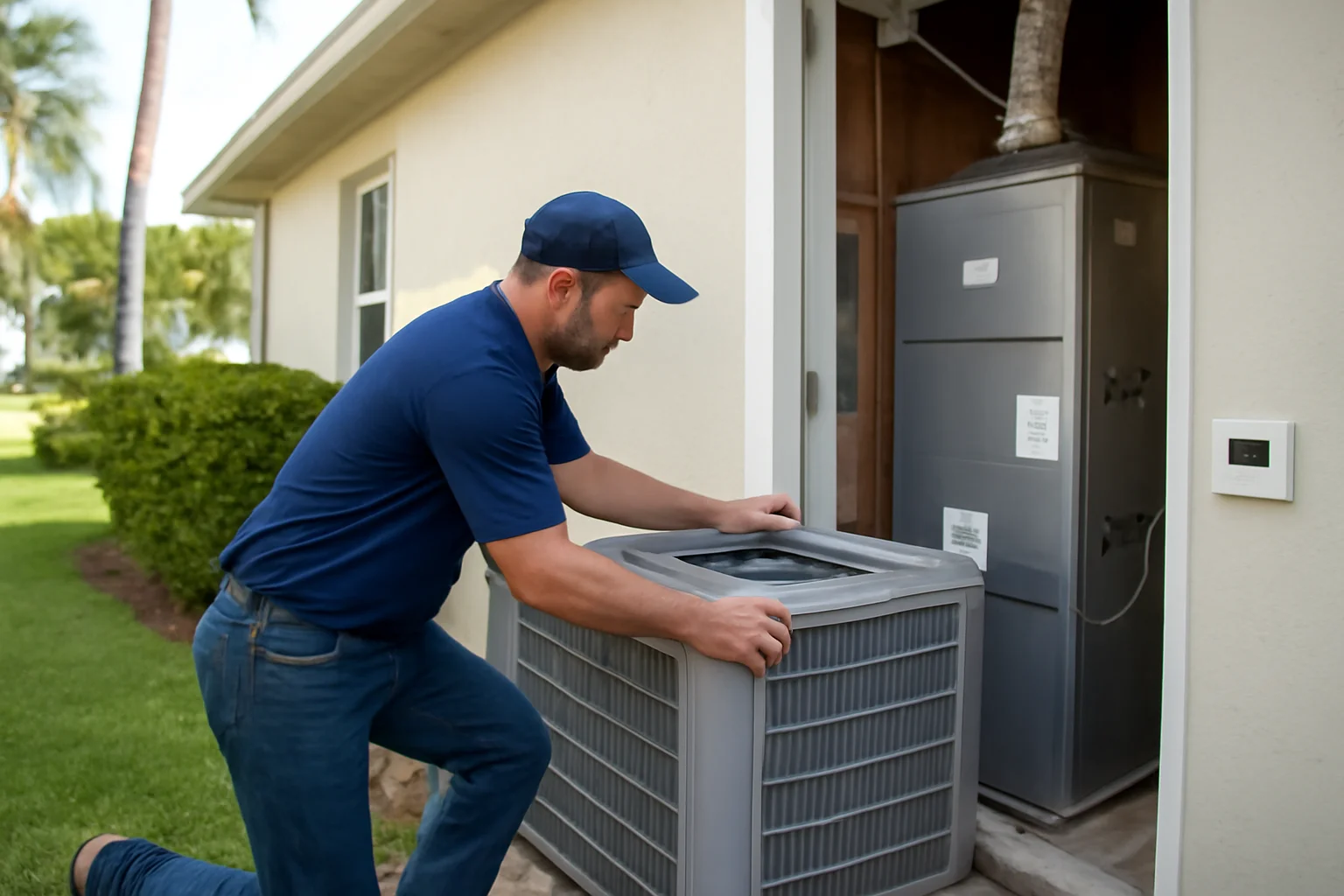
Coil condition affects cooling performance and energy use. During maintenance, coils should be inspected and cleaned as needed based on local exposure, dust levels, and salt air conditions. Outdoor units also tend to collect debris more quickly in coastal environments.
Verify thermostat operation and control settings
Thermostats and building controls influence how often equipment runs and how well it maintains comfort. Maintenance should include checking that thermostat schedules, set points, and control modes match how the building is actually used. For example, after-hours temperatures and humidity control needs differ between a restaurant, an office, and a vacation rental facility.
If you are searching for thermostat installation near me or control upgrades, it can be helpful to pair that with an HVAC maintenance review so the control system and the cooling equipment are aligned.
Review filters and maintenance practices your staff can control
Commercial filters are not “set and forget.” Filter condition affects airflow, comfort, and energy use. A professional can recommend appropriate filter handling and help you set a schedule that matches occupancy, dust levels, and local conditions.
For building managers, this is often where prevention starts. Staff can replace filters on time, keep return grilles clear, and avoid blocking supply registers with storage or signage.
Check indoor air quality factors tied to comfort complaints
In humid environments, indoor air quality can become a major issue even when cooling temperatures look acceptable. Maintenance should consider how airflow, filtration, and humidity removal are working together.
When indoor air quality is poor, occupants may complain about stuffiness, odors, or symptoms that feel like “the AC is broken,” even if the thermostat shows cooling is running.
How preventive maintenance improves cooling performance and reduces emergency calls
Preventive HVAC maintenance is not only about avoiding failures. It also supports better cooling performance, comfort, and energy management.
More consistent temperatures with less cycling
When airflow and coil performance are maintained, the system can cool more steadily. That usually means fewer short cycles and fewer “it worked yesterday, not today” situations.
Better humidity control for coastal comfort
Humidity is a major comfort factor in Hammock Bay. A well-maintained system removes moisture more effectively, which helps spaces feel cooler even at moderate temperature set points. That can reduce comfort complaints that otherwise trigger urgent service requests.
Lower energy waste from airflow and heat transfer problems
When coils are dirty or airflow is restricted, systems run longer and use more energy to achieve the same comfort. Regular maintenance helps keep the cooling pathway efficient, which supports more predictable operating costs.
Earlier detection of issues before they become shutdowns
Professional maintenance can catch early warning signs such as recurring airflow complaints, drainage concerns, and performance drift. Addressing those items during scheduled commercial HVAC service helps avoid the kind of emergency cooling situations that disrupt business operations.
Building habits that reduce risk between maintenance visits
Maintenance is essential, but daily operations also matter. These steps are practical for commercial owners and property managers.
Keep vents clear and avoid blocking returns
Supply and return openings need airflow to function properly. Storage, marketing displays, and even temporary partitions can restrict air movement and create hot spots.
Use thermostats and schedules that match occupancy
Running equipment at full power when spaces are empty can increase energy use and wear. Proper scheduling supports stable operation, especially during humid weather when the cooling system has to manage both temperature and moisture.
Watch for “soft failures” that signal hard problems later
Soft failures include lingering musty odors, visible moisture near indoor units, repeated circuit trips, and recurring comfort complaints. These can be early signals of airflow, condensate drainage, or indoor air quality issues.
Document comfort complaints and temperatures
If multiple tenants or departments report the same issue, keep notes. When you call for commercial HVAC service near me, this information helps the technician focus on the most likely causes and reduces time spent on guesswork.
When emergency AC repair still happens, what to do right away
Even with strong maintenance, emergencies can occur. If your system stops cooling during peak heat and humidity, safety and speed matter.
Protect occupants and limit heat buildup
Close blinds or curtains where appropriate, reduce door openings, and encourage indoor activities away from direct sun. If the building has sensitive equipment, coordinate with staff to prevent overheating.
Check obvious items without attempting technical diagnosis
Look for tripped breakers at the building level, confirm thermostats are set to cooling mode, and check for any obvious blocked vents. Avoid attempting refrigerant or electrical diagnosis yourself.
Call for professional help with clear details
When homeowners search for AC repair near me during an emergency, response matters, but so does accuracy. Share what the building is experiencing: temperature readings, whether airflow is present, any unusual noises, and whether condensate drainage appears normal.
A Superior Mechanical can help troubleshoot and address the issue through on-site evaluation. If a problem is tied to airflow, drainage, or control behavior, that is often where scheduled maintenance would have reduced the risk.
Choosing the right commercial HVAC maintenance partner in Walton County
Local experience matters in Hammock Bay. A maintenance provider should understand how coastal conditions, humidity, and building usage patterns affect cooling performance.
Look for a plan that matches your building type
Offices, retail stores, restaurants, multi-unit properties, and vacation rental facilities all have different schedules and comfort needs. Your maintenance plan should reflect that reality.
Prefer service that focuses on performance, not just quick fixes
Maintenance should address airflow, coil performance, condensate drainage, and control operation. It should also consider indoor air quality and how humidity removal is functioning.
Ask about preventive HVAC maintenance scheduling
Instead of reacting after cooling fails, schedule maintenance ahead of peak season. This is especially important in Florida’s humid summers when equipment has the least margin for error.
For businesses in Hammock Bay, you can review the service coverage and maintenance details here: /service-areas/walton-county/hammock-bay/commercial-hvac-maintenance-hbfl. You can also explore local service options across the area at /service-areas/walton-county/hammock-bay and /service-areas/walton-county when planning for multi-location properties.
Related reading for commercial comfort planning
If you are building a stronger maintenance routine, these articles can help you connect day-to-day comfort issues with preventive HVAC maintenance strategy:
- Keeping Valparaiso Comfortable Starts With Smarter Commercial HVAC Maintenance
- What Fort Walton Beach Homes Can Learn From Commercial HVAC Maintenance
- Why Efficient Heating and Cooling Starts With Commercial HVAC Maintenance in Freeport, FL
- Why Commercial HVAC Maintenance Matters More in DeFuniak Springs Than Most Businesses Realize
When maintenance is not enough and replacement planning becomes part of prevention
Preventive maintenance reduces emergency risks, but it cannot reverse every system issue. If a commercial HVAC system is aging, repeatedly underperforming, or experiencing frequent operational interruptions, replacement planning may become part of preventing future emergencies.
If you are considering HVAC replacement near me, it should be based on a professional in-person evaluation of performance, airflow, control behavior, and system condition. A Superior Mechanical also offers Commercial HVAC Installation for businesses that need a long-term approach to comfort and reliability.
For heat pump needs, some businesses also search for heat pump installation near me as they plan for more efficient comfort strategies. Regardless of the equipment type, the maintenance culture still matters. New systems still rely on correct airflow, proper humidity control, and clean components to perform well in Hammock Bay’s coastal climate.
Schedule commercial HVAC maintenance before the hottest weeks
In Hammock Bay, emergencies often show up during the exact weeks when humidity and heat make cooling performance critical. By prioritizing preventive HVAC maintenance, you can keep airflow steady, support condensate drainage, maintain coil performance, and align thermostat controls with real occupancy patterns. That is how you avoid the most common emergency cooling concerns and protect comfort for employees, customers, and guests.
If you want your building’s cooling system reviewed with the local climate in mind, start with the commercial HVAC maintenance page for this area: /service-areas/walton-county/hammock-bay/commercial-hvac-maintenance-hbfl.
Find Commercial HVAC Maintenance in Hammock Bay, FL
If you need Commercial HVAC Maintenance in Hammock Bay, FL, visit our local service page or contact A Superior Mechanical today.
Map of Hammock Bay, FL
Frequently Asked Questions
What are the most common reasons commercial AC systems fail during Florida summer?
In humid, coastal areas like Hammock Bay, failures often follow airflow restrictions, dirty indoor or outdoor coils, condensate drainage problems, and control or thermostat behavior that causes inefficient operation. Scheduled maintenance helps catch these issues before they turn into a no-cooling emergency.
How does ductwork affect cooling performance and emergency breakdown risk?
When ductwork has leaks, poor distribution, or blocked airflow paths, the system may not deliver enough conditioned air to the building. That can increase run time, worsen humidity removal, and stress the cooling process. A professional
duct inspection near me
evaluation can identify distribution problems early.Can I prevent emergency HVAC calls by changing the thermostat settings?
Thermostat settings can influence comfort and cycling, but they usually do not fix root causes like airflow restrictions, condensate drainage issues, or coil buildup. If comfort problems persist, a licensed HVAC contractor should inspect the system on site.
Should we worry about indoor air quality during routine AC maintenance?
Yes. In high humidity, indoor air quality can worsen if airflow and filtration are not working well. Preventive maintenance helps support better humidity control, cleaner airflow pathways, and more comfortable indoor conditions.
Is it safe for me to check refrigerant or diagnose cooling issues myself?
No. Refrigerant systems require trained, on-site evaluation. Homeowners should avoid refrigerant diagnosis. A professional can assess the system condition and determine what maintenance or repairs are needed safely.
Related Articles
- Keeping Valparaiso Comfortable Starts With Smarter Commercial HVAC Maintenance
- What Fort Walton Beach Homes Can Learn From Commercial HVAC Maintenance
- Why Efficient Heating and Cooling Starts With Commercial HVAC Maintenance in Freeport, FL
- Why Commercial HVAC Maintenance Matters More in DeFuniak Springs Than Most Businesses Realize
Photo Gallery