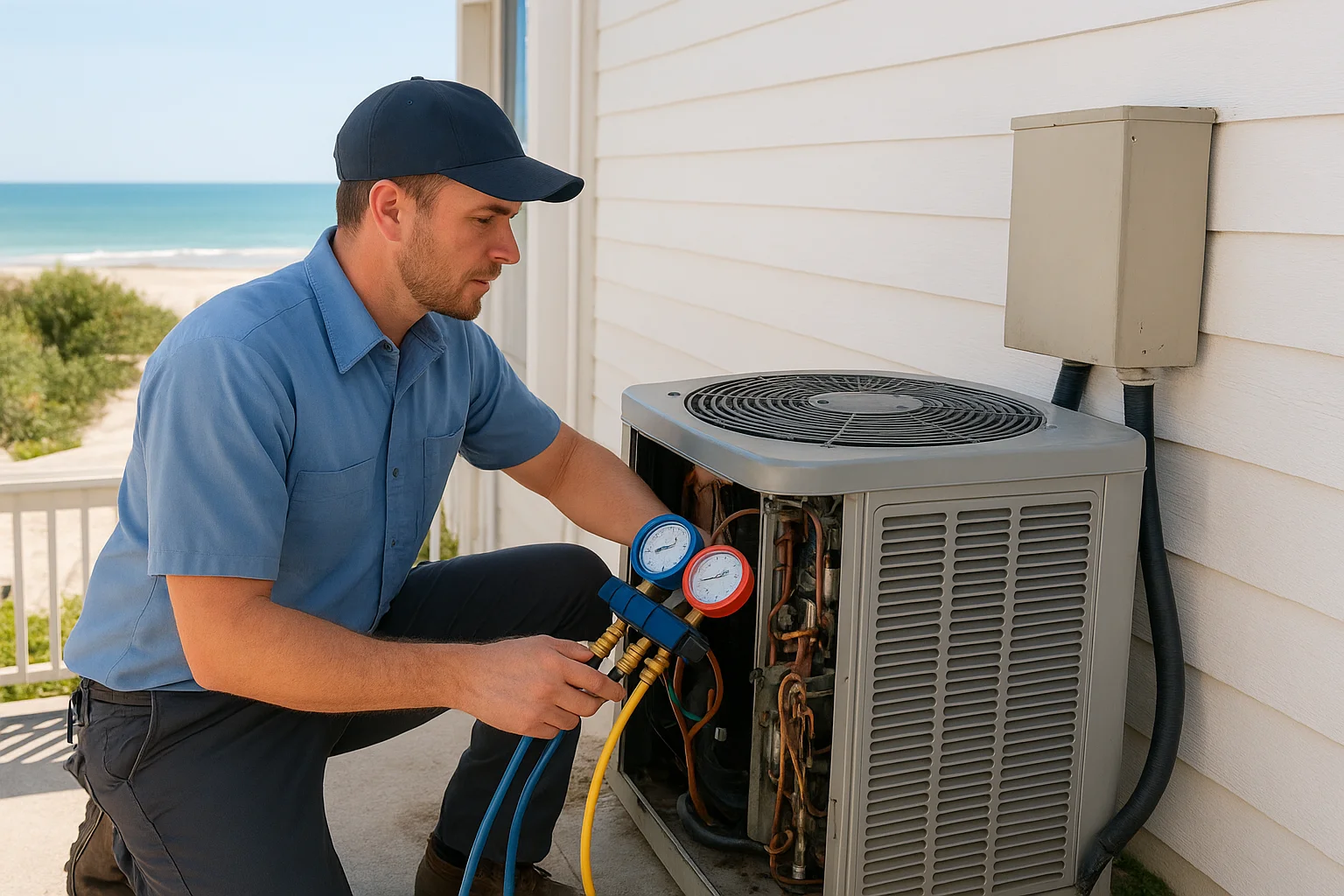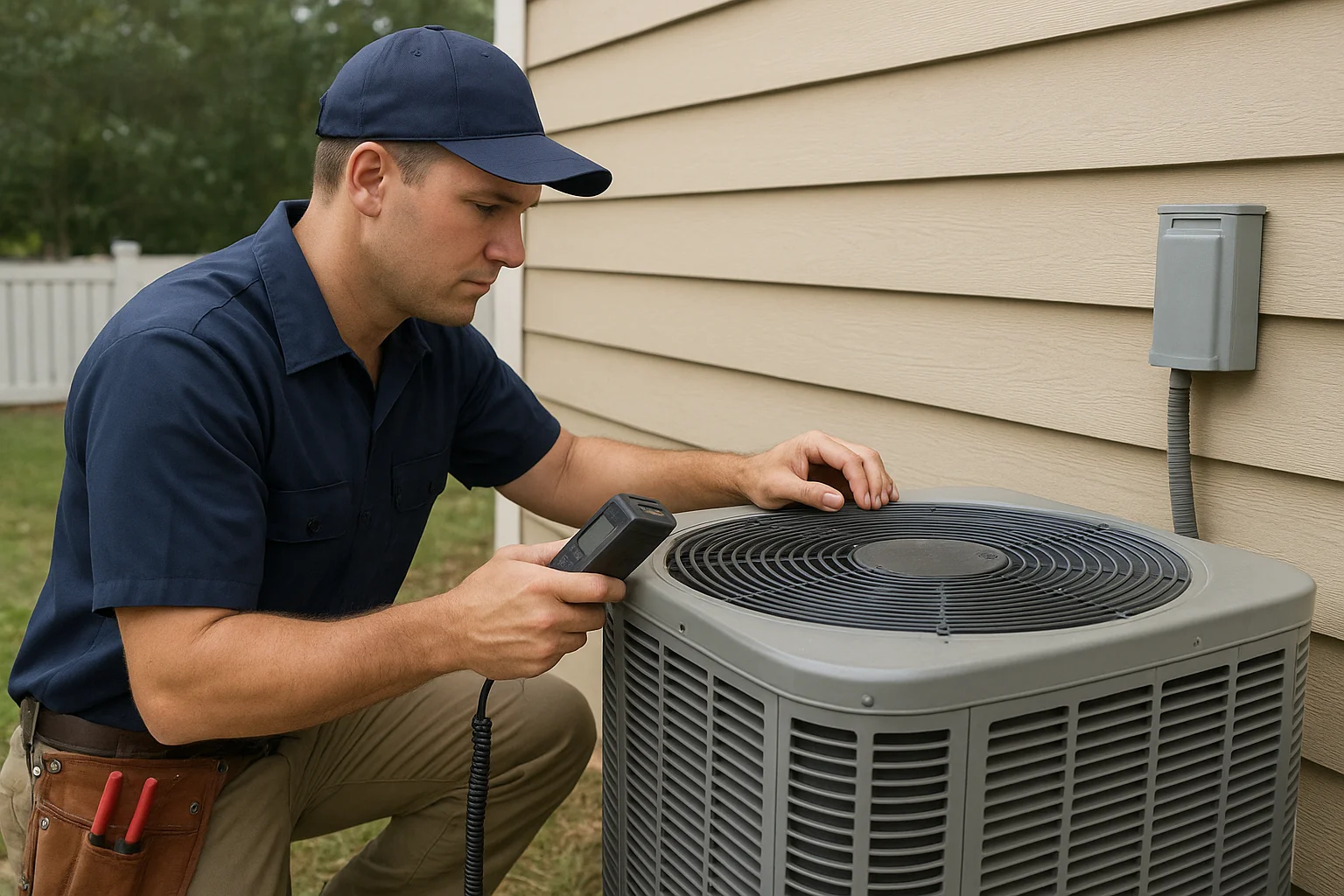
Crestview homes have a lot going for them, from established neighborhoods to newer construction. But when Florida heat, humidity, and salt air move through your HVAC system day after day, ductwork can quietly fall out of balance. A duct inspection should help you understand what is happening with airflow, comfort, and indoor air quality. The catch is that duct inspection can also become confusing if the home is not ready for it.
This guide walks you through how local homeowners can prevent common duct inspection problems in both older homes and newer builds in Crestview, FL. You will also see where duct repairs, preventive HVAC maintenance, and AC repair decisions connect to inspection results.
Why duct inspection matters more in Crestview’s climate
In Crestview, the HVAC system has to perform through long stretches of heat and humidity. That environment affects ductwork and the equipment that pushes air through it. When airflow is restricted, the system often runs longer to reach thermostat targets, which increases energy use and can lead to comfort problems like hot rooms, cold spots, and uneven airflow.
Duct inspection is also important because humidity can contribute to moisture concerns. Even when the air conditioning is working correctly, condensation and condensate drainage issues can create conditions that affect air quality. In addition, older ductwork may have leaks or poor connections that allow air to escape before it reaches living spaces.
If you are searching for duct inspection in Crestview, FL, the goal is to make the inspection as clear and actionable as possible. That starts before the technician arrives.
How duct inspection goes off track in older homes
Older Crestview homes can have ductwork that is partially hidden in attics, crawl spaces, or walls. Over time, duct joints loosen, insulation degrades, and airflow paths can change as renovations happen. The inspection itself is not the problem. The problem is that the duct system might be more complex than what the homeowner expects.
Common older-home issues that complicate inspections
- Unknown additions or remodels: Ducts might have been rerouted, extended, or partially disconnected during past renovations.
- Leaky joints and aging connections: Seams and transitions can leak air, which reduces airflow and can make some rooms feel stuffy or warmer.
- Insulation gaps in hot, humid spaces: When ducts sweat or insulation is missing, you can see moisture-related concerns that affect indoor air quality.
- Restricted supply or return paths: A return vent may be blocked by furniture, flooring changes, or debris buildup.
- Thermostat and control mismatches: A thermostat may be set up in a way that does not reflect how the home actually distributes air, which can make comfort complaints seem like an equipment problem.
What to do before the technician arrives
To prevent duct inspection from becoming a guessing game, gather a few basics:
- Share your comfort history: Which rooms are hottest or most humid? When do symptoms show up most often, like afternoons during peak heat?
- Point out recent changes: Any attic access, ceiling work, duct sealing near me projects, or remodels are important context.
- Document airflow complaints: Note which vents feel weak and which returns seem to pull air more strongly.
- Make access easier: Clear the attic walkway and keep storage away from supply and return areas when possible.
This helps your HVAC contractor near me focus on the actual duct pathways instead of spending time sorting out unknown layout changes.
Newer homes can still have duct inspection problems
It is easy to assume that newer construction automatically means better ductwork. That is often true for the basics, but Crestview new builds still face Florida heat and humidity stresses. Also, even with modern refrigerant systems and updated thermostats, airflow problems can still originate in ductwork.
Newer-build factors that can affect inspection results
- Improper duct sizing or layout: If supply and return paths are not matched to the home’s needs, airflow can be uneven.
- Insulation and sealing details: Small gaps at connections can reduce system efficiency and contribute to humidity transfer.
- Filter and return issues: A return that is too small or obstructed can strain the system and affect indoor air quality.
- Thermostat settings and zoning behavior: Newer thermostats may be configured in ways that do not align with how the ductwork distributes air.
If you are considering new AC installation near me or a heat pump installation near me, duct inspection is still useful. The system may be new, but the ductwork has to deliver the air where it belongs.
How to prepare your home for a duct inspection in Crestview
Preparation is one of the simplest ways to prevent inspection delays and reduce confusion. You do not need to be an HVAC expert. You just need to make the system easier to evaluate.
1) Confirm airflow paths are not blocked
Before inspection day, check that supply registers and returns are not blocked by furniture, rugs, or storage. If you have a return vent in a hallway or bedroom, make sure the path is open. Blocked returns can mimic duct leakage or equipment problems during testing.
2) Keep thermostat information handy
Write down current thermostat settings and any recent changes. If the system seems to run too long, cycle too frequently, or never reaches temperature goals, include those details. While a duct inspection focuses on airflow and ductwork, thermostat behavior helps explain what you are feeling in the home.
3) Replace or verify filters before the visit
Dirty filters can reduce airflow and make duct inspection results harder to interpret. Use the filter type and size recommended for your system. If you are unsure, ask your technician. This is especially relevant when homeowners are searching for AC repair near me and the issue might be airflow related rather than a direct equipment failure.
4) Provide access to the ductwork and air handler
Attics and crawl spaces can be hot and humid. If you can safely clear access points, it helps the inspection stay on schedule. If access is difficult, let the technician know ahead of time.
What technicians look for during duct inspection
A professional duct inspection should focus on the things that actually affect airflow and comfort. Depending on your home, the technician may review duct layout, check connections, and evaluate how air moves through the system. The intent is to identify problems that cause symptoms like uneven temperatures, poor circulation, or indoor air quality concerns.
Airflow balance and duct sealing
Ducts can leak at joints, transitions, and flex sections. Leaks can pull conditioned air out of the duct system and allow unconditioned air to enter. That can increase energy use and reduce comfort. Duct inspection can also reveal whether some rooms receive less air than others due to restrictions or imbalances.
Insulation condition and moisture risk
In humid Florida conditions, ducts can be exposed to moisture. Duct insulation that is damaged, missing, or poorly installed can increase the chance of condensation-related concerns. This is one reason indoor air quality services near me may come up during discussions, because ductwork affects how clean and dry the air feels indoors.
Return airflow and pressure behavior
Return paths matter. If returns are restricted, the system can struggle to move air properly. That can affect both cooling performance and the way the home feels during peak heat.
System integration with refrigerant systems and condensate drainage
Even though duct inspection is not a refrigerant diagnosis, the inspection should still consider how your refrigerant system and condensate drainage behavior connect to airflow and comfort. For example, when cooling runs, condensate drainage must work correctly. If moisture is present where it should not be, that can point to issues that affect air quality and may require a separate in-person evaluation.
How preventive HVAC maintenance keeps duct inspection more useful
Duct inspection is most valuable when the rest of the HVAC system is maintained. Preventive HVAC maintenance helps ensure the equipment and airflow components are working as expected, so the ductwork evaluation is not distorted by unrelated problems.
In Crestview, where seasonal HVAC stress can be intense, preventive maintenance can reduce the chance that a duct inspection becomes a workaround for neglected equipment. If you want additional context, read Why Preventive HVAC Service Matters for Duct Inspection in Miramar Beach Homes and compare how coastal humidity can influence duct performance.
Maintenance items that support better inspection outcomes
- Regular filter changes: Helps stabilize airflow for accurate evaluation.
- Clean air handler operation: Keeps airflow consistent across seasons.
- Careful thermostat checks: Confirms settings align with how the system delivers air.
- Drain line attention: Condensate drainage problems can create moisture concerns that overlap with duct issues.
If you are comparing notes across different areas of Okaloosa County, you may also find Why Better HVAC Maintenance Makes Duct Inspection More Useful for Lynn Haven Homes helpful.
Energy use and comfort: what duct problems usually feel like
Homeowners often describe duct-related issues as comfort problems, not as ductwork failures. Here is how duct issues typically show up in Crestview homes.
Uneven temperatures and hot rooms
If some rooms stay warmer while others cool faster, the duct system may be imbalanced. Leaks or restrictions can prevent air from reaching the intended locations. When this happens, the system often compensates by running longer.
Weak airflow from certain vents
Weak airflow can come from duct restrictions, poor transitions, or return problems. It can also overlap with equipment issues, which is why an in-person inspection matters.
Humidity that feels “stuck”
Florida humidity can make indoor air feel heavy even when the thermostat is set correctly. Duct insulation condition, airflow balance, and moisture concerns can all play a role. If you notice persistent humidity, it is worth asking about ductwork and overall system airflow during your inspection.
Indoor air quality concerns
When airflow is uneven, some areas can feel stale. Dust accumulation around vents and return areas can also point to airflow and filtration issues. If you are looking for indoor air quality services near me, duct inspection can be a practical starting point because ductwork influences how air travels through the home.
Don’t mix up duct inspection with other evaluations
Duct inspection is about airflow and ductwork conditions. It is not the same as diagnosing refrigerant problems, electrical issues, or deciding on equipment replacement. A careful technician should explain what they are evaluating and what they need to see in person.
For example, if you suspect refrigerant-related cooling performance issues, your HVAC contractor may need to perform additional checks during a separate visit. Similarly, if condensate drainage concerns are visible, the technician should address moisture risks and drainage behavior without guessing.
If you are dealing with a situation where cooling is failing during the hottest part of the day, consider Emergency HVAC Services for urgent comfort needs. Duct inspection is still important, but emergency cooling concerns should be handled first.
How to decide whether duct sealing or duct repair is the right next step
After inspection, homeowners often hear about duct sealing near me or duct repair near me. The right next step depends on what the inspection finds. Some problems are minor leaks at connections. Others involve larger sections of ductwork that have shifted, separated, or become restricted.
A good duct inspection should help you understand:
- Where airflow is being lost or restricted
- Whether the issue is localized or widespread
- How the duct issue affects comfort and energy use
- Whether additional maintenance is needed to support improved airflow
When ductwork problems are severe, it can influence future decisions like HVAC replacement near me. That said, any system replacement decision should be based on an in-person evaluation that considers both equipment condition and duct performance.
Scheduling duct inspection around Crestview’s seasonal demands
Timing can matter. When the heat and humidity peak, systems run harder and symptoms become more obvious. That can help technicians observe airflow behavior under real-world load. At the same time, peak season can be busy.
If you are planning for the next cooling season, scheduling duct inspection as part of preventive HVAC maintenance can reduce the chance that you discover duct problems right when the system is under the most stress. If you are preparing after a recent AC repair near me visit, a duct inspection can also help confirm that airflow is restored and stable.
When your duct inspection should lead to broader HVAC help
Ductwork does not operate alone. If inspection reveals airflow problems, it may also highlight the need for additional HVAC service. Here are situations where homeowners often need more than ductwork attention.
Repeated comfort complaints after repairs
If you have already had AC repair and the home still feels uneven, the issue may be airflow distribution rather than a single equipment component.
Heat pump or AC performance that never feels “right”
With heat pump service, airflow and duct delivery still matter. Even if a refrigerant system is operating properly, the home may not feel comfortable if ductwork is leaking or restricted.
Condensate drainage or moisture concerns
If moisture shows up around ducts, ceilings, or near air handler areas, do not assume it is only a duct insulation problem. Condensate drainage and airflow interactions can contribute to indoor air quality concerns. A professional evaluation helps ensure the right issue is addressed.
Choose a local HVAC team that understands Crestview duct realities
Local HVAC companies that regularly service Okaloosa County homes tend to have a better grasp of common ductwork layouts, attic conditions, and the way Florida humidity affects both older and newer systems. If you are looking for an HVAC contractor near me, consider choosing a team that can explain duct inspection findings clearly and connect them to comfort, airflow, and system efficiency.
A Superior Mechanical offers duct inspection services in Crestview. You can review the local service page here: duct inspection for Crestview, FL. If you want to explore the broader service footprint, visit the Crestview service area page and Okaloosa County HVAC services.
Related reading that connects duct inspection to real homeowner experience
Duct inspections can reveal issues that are hard to spot from the outside. These reads can help you understand why problems show up and how preventive steps reduce surprises:
- Why Duct Inspections Get Complicated in Crestview Homes
- Why Duct Inspection Matters More in Callaway Homes Facing Seasonal HVAC Stress
- Why Better HVAC Maintenance Makes Duct Inspection More Useful for Lynn Haven Homes
If you manage a business property in Crestview
Some duct problems are more visible in commercial spaces where airflow demands are higher or where schedules change room usage. If you manage a commercial building, consider Commercial HVAC Services so duct inspection and HVAC service planning match the property’s needs.
Financing options can help when ductwork updates are part of a larger plan
If your inspection leads to duct sealing, duct repair, or broader HVAC service, you may want to plan the work in a way that fits your budget. For homeowners exploring payment options, you can review HVAC Financing.
Questions to ask during your Crestview duct inspection
To keep the process productive, come prepared with a few smart questions. These help you connect inspection findings to practical next steps:
- Which rooms show the biggest airflow imbalance, and what duct sections contribute to it?
- Are there visible or suspected leaks at duct joints, transitions, or flex connections?
- Is duct insulation in good shape, especially in attic or crawl space areas?
- Does return airflow appear restricted, and could that be affecting comfort and indoor air quality?
- How should thermostat settings be adjusted if airflow is improved?
- What preventive HVAC maintenance steps will help keep the system performing after duct updates?
When you ask these questions, you are more likely to leave with a clear plan that supports comfort, airflow, and HVAC efficiency across Crestview’s heat and humidity seasons.
Find Duct Inspection in Crestview, FL
If you need Duct Inspection in Crestview, FL, visit our local service page or contact A Superior Mechanical today.
Map of Crestview, FL
Frequently Asked Questions
How often should Crestview homeowners schedule duct inspection?
Many homeowners benefit from periodic duct inspection as part of preventive HVAC maintenance, especially if you notice uneven airflow, persistent humidity, or indoor air quality concerns. If your home is older, or if you have had recent renovations, an inspection can also help confirm that ductwork still matches how the home is used today.
Can duct inspection help with AC repair issues like hot rooms or weak airflow?
Yes. Duct inspection can identify airflow restrictions or leaks that cause symptoms homeowners often describe as AC problems. While duct inspection is not a substitute for diagnosing refrigerant or electrical issues, it can clarify whether comfort issues are caused by ductwork performance or by other parts of the HVAC system.
What should I do to prepare my home for an air conditioning inspection that includes ductwork?
Clear access to the air handler and any attic or crawl space areas where ducts are reachable, ensure supply registers and returns are not blocked, and have your thermostat settings and recent comfort complaints ready. Also check that your HVAC filter is clean or ready to be replaced according to the system’s requirements.
Does duct sealing or duct repair always solve humidity and indoor air quality problems?
It can, depending on what the inspection finds. Leaks, insulation issues, and return airflow problems can all contribute to humidity and comfort. However, moisture concerns can also involve condensate drainage and other system factors, so any next steps should follow a professional in-person evaluation.
When should I use emergency HVAC services instead of waiting for a duct inspection?
If the home is not cooling during extreme heat, or the system stops running when you need it most, emergency HVAC services are the right priority. Once cooling is stabilized, duct inspection can still help prevent the same airflow and comfort problems from returning.
Related Articles
Photo Gallery