Seaside, FL is beautiful, but the coastal environment is hard on commercial HVAC systems. Salt air, high humidity, and frequent weather swings can push equipment beyond what “set it and forget it” maintenance can handle. When repairs happen late or work is scheduled at the wrong time, businesses often face higher energy use, uneven temperatures, and emergency cooling concerns when demand is highest.
This guide shares practical, HVAC-focused maintenance tips for local property owners. You will learn how timing affects HVAC repairs, what to watch for in airflow and humidity control, and how preventive HVAC maintenance near you can reduce downtime. If you are searching for “HVAC service near me” or “AC tune up near me,” these steps help you plan smarter before problems escalate.
Why timing matters more in Seaside than in other parts of Florida
Commercial HVAC maintenance is not just about what you do. It is also about when you do it. In Seaside, the climate and building conditions create a cycle that can quickly turn a minor issue into a major repair.
Humidity and heat load change fast
Summer in Walton County brings frequent humidity and long cooling seasons. When moisture levels stay high, cooling coils can collect condensate more heavily. If condensate drainage is restricted or airflow is reduced, equipment may struggle to pull humidity out of the air. That can lead to comfort complaints, higher fan runtime, and increased wear on refrigerant systems.
Salt air adds stress to outdoor components
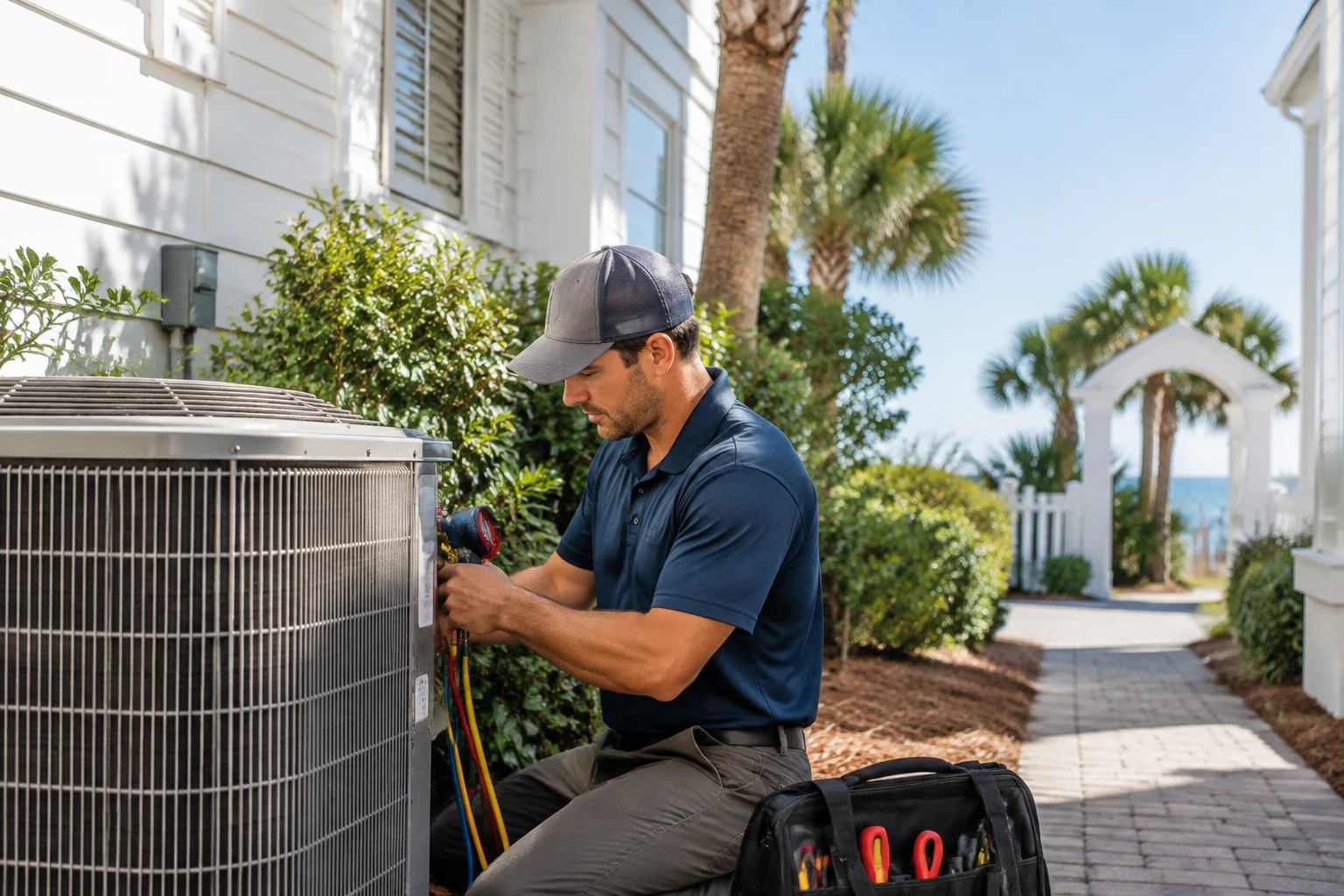
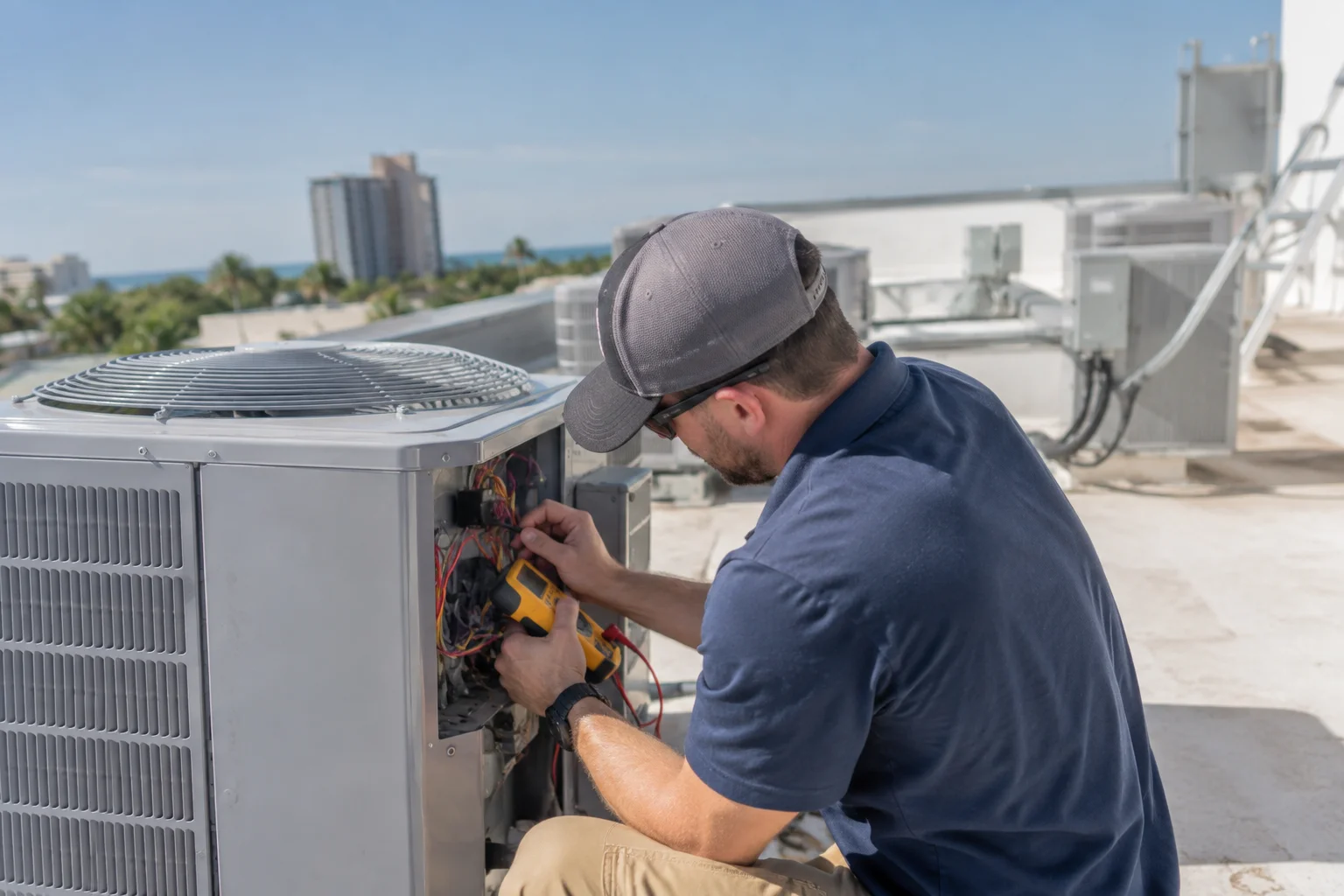
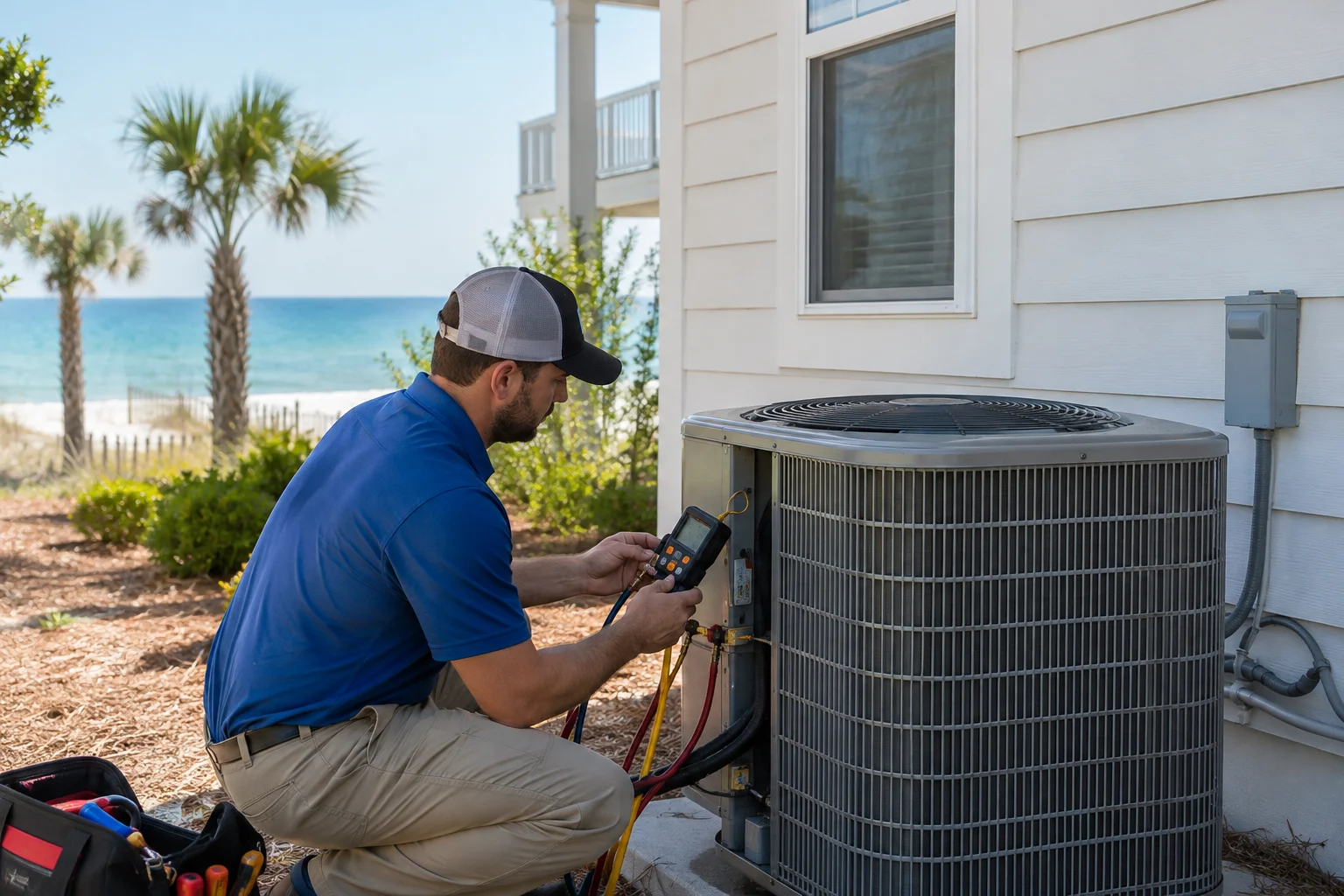
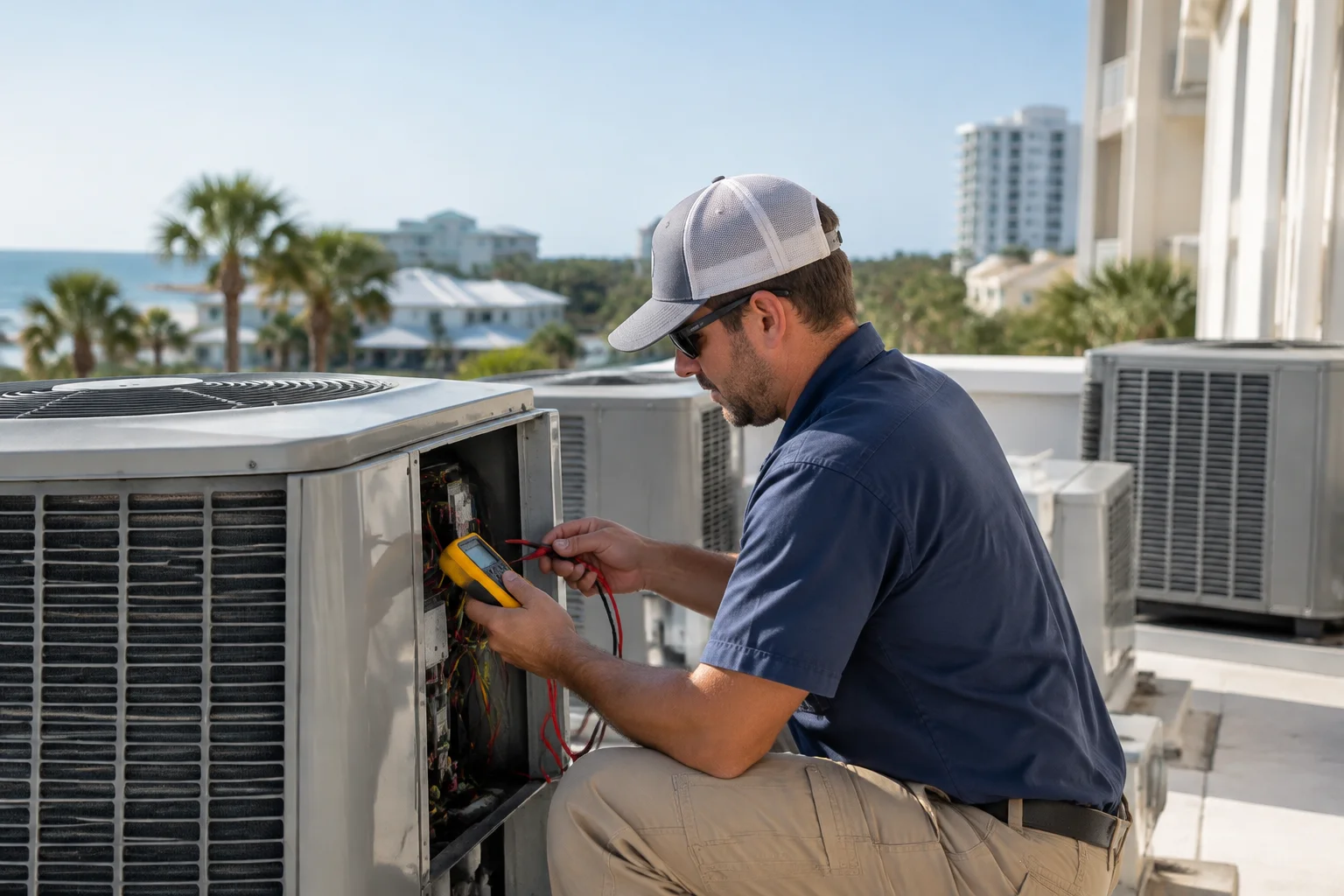
Coastal salt air accelerates corrosion risk on outdoor units and rooftop equipment. Even when corrosion is not visible, it can affect airflow paths, fan performance, and the integrity of metal surfaces that support normal heat transfer. Timing repairs earlier, before performance drops noticeably, can prevent cascading issues that affect system operation.
Weather swings can hide problems until peak demand
In spring and fall, temperatures can shift quickly. A system might appear “fine” during mild days, then struggle during the first extended hot stretch. That is why preventive HVAC maintenance near me should not be limited to one season. It should match your usage patterns and the way your building responds to humidity and heat load.
Build a repair timeline around real operating conditions
Instead of waiting for a failure, create a maintenance and repair schedule based on how the system actually performs in your property. For many commercial sites, the best approach is to plan inspections and tune ups ahead of the highest load months.
Start cooling season readiness before the hottest weeks
For Seaside businesses, it is smart to schedule commercial HVAC maintenance before the peak humidity and temperature stretch. This helps ensure that airflow is strong, filters and coils are in good condition, and condensate drainage pathways are clear. It also gives time to address refrigerant system concerns if technicians observe abnormal performance during an in-person evaluation.
Plan for shoulder season checks
During spring and fall, thermostats may cycle more often, and equipment may run in shorter bursts. Those cycles can expose issues like airflow imbalance, ductwork restrictions, or failing components that do not show up when the system runs continuously. A proactive check can prevent the “works until it does not” pattern that leads to emergency AC repair near me searches.
Use your BAS and runtime data if you have it
Many commercial buildings use building automation or advanced thermostats. Runtime logs, supply air temperatures, and humidity trends can help identify when the system starts to work harder than it should. If you notice increasing runtime or worsening humidity control, that is a strong reason to schedule HVAC maintenance near me earlier rather than later.
What to monitor: airflow, humidity, and comfort signals
Local property owners do not need to be HVAC technicians to spot meaningful patterns. The key is to watch for system behavior that suggests airflow restriction, moisture problems, or inefficiency in cooling and heating.
Airflow complaints that show up room to room
If some areas feel stuffy while others cool quickly, the issue might involve ductwork, dampers, or supply and return airflow balance. Poor airflow can also cause the cooling process to underperform, which increases humidity levels inside the building and can contribute to indoor air quality concerns.
When you hear phrases like “the lobby is always hot” or “the back office never feels right,” it is a good time to schedule a professional evaluation. Searching “duct repair near me” can help if technicians confirm airflow problems tied to ductwork.
Humidity that stays high even when temperatures look acceptable
In coastal Florida humidity, a system can sometimes maintain temperature while still failing to remove moisture. That can happen when coils are not clean, airflow is weak, or condensate drainage is not functioning normally. If you see condensation around equipment, musty odors, or persistent clamminess, indoor air quality services may also be needed, especially if humidity is contributing to comfort complaints.
Condensate drainage red flags
Condensate drainage issues can show up as water pooling near equipment, recurring shutdowns, or visible moisture where it should not be. Drainage problems can also affect system reliability by preventing normal coil drainage and heat transfer. A professional inspection can confirm what is causing the drainage problem during an on-site service visit.
Thermostat behavior that does not match expected comfort
Thermostats control more than temperature. They influence how often the system cycles and how consistently it maintains setpoints. If your thermostat schedules do not align with occupancy, or if the thermostat is not reading conditions accurately, the system may run longer than necessary. That can increase energy use and wear on components. Correct thermostat settings and system calibration should be handled by a qualified HVAC contractor near me.
Common commercial HVAC repair triggers in Seaside
Commercial equipment runs longer hours than many residential systems. That makes wear and tear more predictable, and it also means small problems can escalate quickly.
Cooling performance drop
When cooling capacity seems weaker, it is often related to airflow issues, coil cleanliness, or refrigerant system performance. Because refrigerant systems require careful handling and evaluation, a technician should inspect the system in person before concluding what needs repair.
Strange cycling patterns
Short cycling can indicate airflow restriction, sensor issues, or operational control problems. It can also increase stress on compressors and other components. If you notice the system turning on and off rapidly, schedule maintenance sooner rather than later.
Noise changes from fans or airflow pathways
Rattling, grinding, or new whistling sounds can come from fan operation, airflow obstructions, or component wear. In a salt air environment, corrosion and debris can contribute. Timing repairs early can prevent damage that affects system efficiency and reliability.
Air distribution complaints and ductwork strain
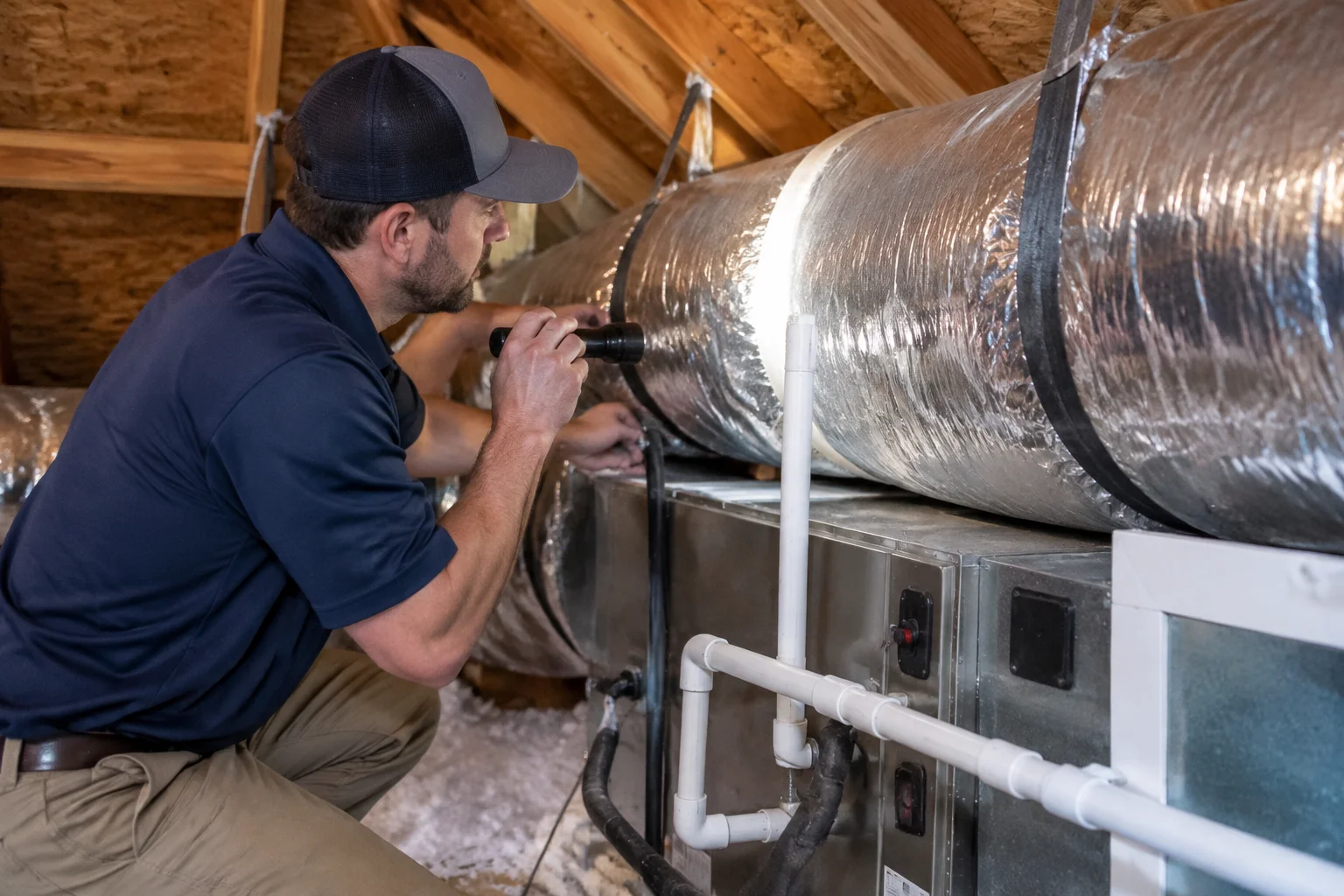
Commercial buildings often have complex ductwork routes. Over time, ducts can develop leaks, restrictions, or improper balancing. That can increase energy use because the system must work harder to achieve comfort. If you suspect ductwork issues, consider duct replacement or duct repair options and have professionals evaluate the system.
Preventive maintenance steps that reduce emergency cooling concerns
Preventive HVAC maintenance near me is one of the most practical ways to prevent emergency cooling concerns. The goal is to catch problems while they are still manageable and to verify that the system components are working together.
Filter and coil care for better airflow
Filters and coils strongly affect airflow and heat transfer. In humid conditions, dirty coils can reduce cooling effectiveness and increase moisture-related issues. Coil cleaning and filter management should be part of a scheduled commercial HVAC maintenance plan.
Verify condensate drainage and moisture control
Check condensate drainage pathways to ensure water can flow away properly. This matters in Seaside because humidity is persistent. Keeping condensate drainage clear can help prevent water-related problems and support more consistent humidity control.
Inspect ductwork condition and airflow balance
Even when rooftop units or indoor air handlers are operating correctly, poor ductwork performance can undermine comfort. A professional can look for signs of duct leaks, restrictions, and imbalances that cause uneven temperatures and humidity.
If you are dealing with chronic hot spots or persistent airflow complaints, you may also want to review duct replacement options. For many businesses, addressing ductwork problems improves comfort and can reduce the workload on the HVAC system.
Review thermostat schedules and control settings
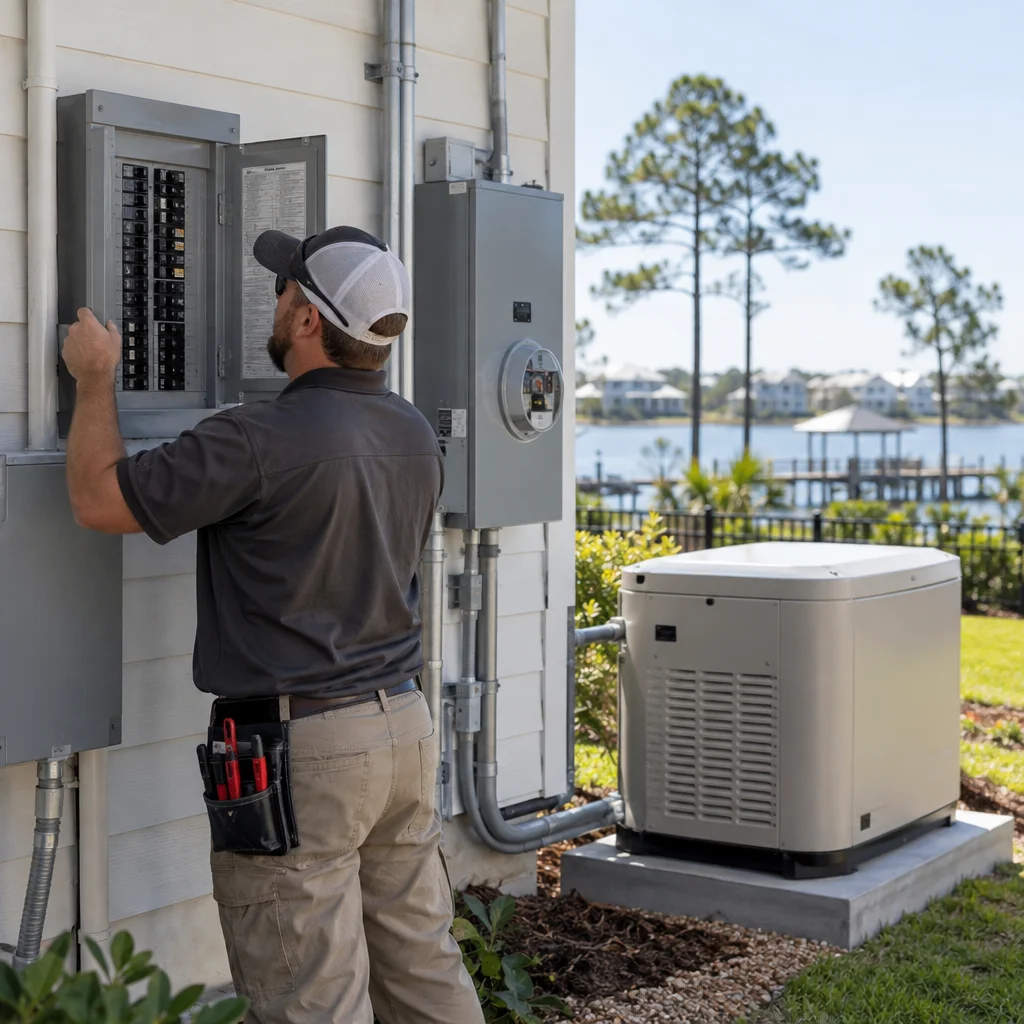
Thermostats and controls should match occupancy patterns. A mismatch can lead to unnecessary runtime or comfort swings that increase energy use. Technicians can help verify that control settings support stable operation and consistent indoor conditions.
Address indoor air quality with humidity-aware strategies
In coastal climates, indoor air quality is closely tied to moisture. When humidity is too high, it can worsen comfort and contribute to issues like odors and potential growth concerns. Indoor air quality services can complement preventive HVAC maintenance by focusing on filtration, ventilation, and humidity management goals.
If you are also considering upgrades, explore options like energy-conscious air conditioning service or air conditioning services for your specific comfort needs.
How to decide between repair and replacement without guessing
Some owners worry that any repair means an eventual replacement. Others delay repairs because they fear unnecessary costs. The most reliable path is an in-person professional evaluation that looks at system condition, performance history, and how the building uses the equipment.
Technicians should not simply guess based on symptoms. Refrigerant system concerns and equipment condition require careful inspection. Likewise, ductwork and airflow issues should be assessed on-site. If system replacement is being considered, it should be based on verified performance and practical building needs, not on a single problem or a guess.
If your business is planning for long-term upgrades, it can also help to review options like HVAC Financing so budgeting aligns with maintenance and repair needs.
Timing strategy by season: a simple Seaside schedule
You do not need a complicated calendar, but you do need a rhythm that matches Florida weather and commercial occupancy. Here is a practical seasonal approach many Seaside property owners use.
Late winter to early spring: readiness and inspection
Use this window for inspections, coil and airflow verification, and condensate drainage checks. It is also a good time to review ductwork condition and confirm that controls are set correctly for seasonal operation.
Pre-summer: cooling performance focus
Schedule a cooling-season tune up before the hottest stretch. This is when you want to confirm airflow, humidity control, and overall equipment health so that air conditioning repair near me emergencies are less likely during peak demand.
Mid-summer: watch performance and address issues early
If you notice comfort complaints or unusual cycling, schedule service promptly. Waiting until the end of the season can allow small problems to compound, especially with salt air exposure and persistent humidity.
Early fall: stabilize before the next surge
As conditions shift, run performance checks to confirm the system stays stable. This can include verifying airflow distribution and indoor air quality support, especially in spaces that house customers, staff, or sensitive processes.
Choosing the right commercial HVAC maintenance partner in Walton County
Commercial HVAC maintenance is not a one-size-fits-all task. A good HVAC contractor near me will understand how coastal Florida impacts equipment, how your building uses space, and how airflow and humidity control affect comfort.
When you contact A Superior Mechanical, you are working with professionals who can support a planned maintenance approach for commercial systems in Seaside. For property owners who want dependable scheduling and clear communication, start here: Commercial HVAC Maintenance in Seaside, FL. You can also explore local service coverage on Seaside and the broader service area at Walton County.
It also helps to read how other local owners handle seasonal risk. These related posts can add context for your maintenance planning: Keeping Seaside Homes Ready for HVAC Emergencies, Keeping Valparaiso Comfortable Starts With Smarter Commercial HVAC Maintenance, and What Fort Walton Beach Homes Can Learn From Commercial HVAC Maintenance.
If your property is in a similar coastal region, you may also find useful guidance in Why Efficient Heating and Cooling Starts With Commercial HVAC Maintenance in Freeport, FL.
Frequently overlooked details that affect repair timing
Many delays are caused by small gaps in maintenance routines or communication. These details can influence how quickly repairs can be scheduled and how effectively they resolve the problem.
Not tracking comfort complaints by location
If complaints are not recorded by zone or area, it is harder to identify airflow and ductwork issues. A simple log of where comfort problems occur helps technicians connect symptoms to the system components that likely need attention.
Ignoring drain and moisture issues until they become visible
Condensate drainage problems can start quietly. Water damage and equipment shutdowns usually appear later. Scheduling inspections before visible issues develop can reduce downtime.
Letting filters and airflow restrictions build up
Dirty filters can reduce airflow, which increases runtime and can contribute to coil performance issues. That can lead to more frequent repairs during peak months. A regular filter plan supports both indoor air quality and equipment reliability.
Delaying service because “it is still cooling”
Cooling that is technically working may still be inefficient. Energy use can rise, humidity control may degrade, and the system can wear faster. Addressing problems early is often the difference between a routine service call and an emergency cooling situation.
When to call for service right away
Even with smart timing, some issues require prompt attention. Call a commercial HVAC contractor for an in-person evaluation if you notice:
- Rapid temperature swings or repeated comfort failures across multiple zones
- Persistent high humidity or musty odors that do not improve with normal operation
- Water pooling, unusual condensation near equipment, or signs of condensate drainage problems
- Frequent cycling, unusual noises, or sudden drops in cooling capacity
- Thermostat behavior that seems inconsistent with setpoints and occupancy schedules
For homeowners and property managers searching for Air Conditioning Services or considering duct upgrades, getting an on-site assessment helps avoid guesswork. Refrigerant systems, airflow performance, and moisture control all interact, and only a professional can evaluate what is actually happening in your building.
If your business needs additional support for airflow distribution, you may also want to review Duct Replacement and Indoor Air Quality Services as part of a broader maintenance strategy.
Find Commercial HVAC Maintenance in Seaside, FL
If you need Commercial HVAC Maintenance in Seaside, FL, visit our local service page or contact A Superior Mechanical today.
Map of Seaside, FL
Frequently Asked Questions
How often should Seaside commercial HVAC maintenance be scheduled?
Most commercial buildings benefit from preventive HVAC maintenance at planned intervals that align with cooling and heating seasons and your occupancy patterns. A Superior Mechanical can help you set a schedule based on how your system runs, local humidity conditions, and the way your building manages airflow.
Why do HVAC repairs feel more urgent during summer in Walton County?
High humidity and heavy cooling demand increase the workload on refrigerant systems, fans, and coils. If airflow is restricted or condensate drainage is impaired, the system can struggle faster, turning a small issue into a downtime problem. Scheduling repairs ahead of peak conditions helps reduce emergency cooling concerns.
What are the most common causes of uneven temperatures in commercial spaces?
Uneven temperatures often relate to airflow and ductwork performance, such as restrictions, leaks, or poor balancing. Thermostat control and zone setup can also contribute. An in-person evaluation is important so technicians can confirm the cause rather than guessing.
Can indoor air quality issues be caused by HVAC problems?
Yes. In Seaside, humidity and airflow problems can affect indoor air quality. When coils are not performing well or condensate drainage is not working properly, moisture can remain in the air. Indoor air quality services can help address filtration, ventilation, and humidity control goals based on your building needs.
Is it safe for me to adjust refrigerant or try to diagnose cooling problems myself?
No. Refrigerant systems require proper handling and careful in-person evaluation. If cooling performance drops or you suspect refrigerant-related issues, contact a qualified HVAC contractor near you for an inspection instead of attempting DIY diagnosis.
Related Articles
Photo Gallery