Hidden plumbing leaks rarely start with a dramatic flood. More often, they begin quietly under a slab, behind a wall, or near a fixture that has been stressed by years of coastal humidity, shifting soil, and everyday use. In Fort Walton Beach, that slow damage can build faster than many homeowners expect. Salt air, heavy summer rain, and older plumbing in established neighborhoods all add pressure to a system that may already be working hard.
That is why leak detection and slab leak repair deserve more attention than they usually get. A small leak can affect water bills, flooring, foundation materials, and even indoor air quality if moisture lingers long enough. For homeowners looking for Leak Detection & Slab Leak Repair in Fort Walton Beach, FL, the biggest mistake is often waiting until the damage is obvious. By then, the repair may be more involved than it needed to be.
Why leaks in Fort Walton Beach homes can be easy to miss
Many homes in Fort Walton Beach and across Okaloosa County have plumbing systems that were installed decades ago or have gone through partial updates over time. That mix of old and new materials can create weak points that do not show themselves right away. Add in the local climate, where humidity stays high for much of the year and storms can saturate the ground, and it becomes easier for small plumbing problems to hide.
Slab leaks are especially tricky because the pipe is beneath the concrete foundation. You may not see standing water. You may not hear a steady drip. Instead, the signs can look unrelated, like a warm spot on the floor, a musty smell, or a water bill that climbs without explanation. Homeowners sometimes assume the issue is a toilet, a water heater, or an appliance, when the real problem is under the slab.
Subtle warning signs that are easy to overlook
Some of the earliest clues are easy to dismiss. A faint sound of running water when no fixture is on. A section of flooring that feels slightly damp or warmer than the rest. A crack in tile that seems minor at first. A musty odor near baseboards. These details do not always point clearly to a leak, but they are worth taking seriously, especially in homes near the coast where moisture problems can spread quickly.
Another sign homeowners miss is a drop in water pressure that affects only one part of the house. That can suggest a hidden leak or a pipe issue behind a wall or beneath the slab. If the problem appears alongside higher water usage, the case for professional inspection gets stronger.
What slab leaks can do before anyone notices
A slab leak is not only a plumbing issue. It can become a structural and indoor comfort issue too. Water moving under concrete can erode soil, weaken support, and create uneven pressure under flooring. Over time, that can lead to cracked tile, shifting floors, damaged trim, and stubborn moisture that makes a home feel damp even when the weather is dry.
In Fort Walton Beach, where many homeowners already manage humidity with air conditioning and dehumidifiers, hidden water can make the system work harder. That can affect comfort and energy use. If the leak is near a water heater, fixture line, or supply branch, it may also create a chain of other plumbing problems that are harder to separate without proper diagnostics. For related issues, some homeowners also need Water Heater Repair, Plumbing Fixture Replacement, or even Sewer Repair and Maintenance when the symptoms overlap.
Why the source is not always where the damage shows up
One of the most overlooked parts of leak detection is that water can travel. A stain on the ceiling may not be directly below the leak. A damp spot near a wall may be caused by a pipe run several feet away. On slab foundations, moisture can move through concrete joints and flooring layers before it becomes visible.
That is why guessing usually costs more in the long run. Homeowners may patch the wrong area, replace flooring before confirming the source, or assume a fixture is leaking when the problem is actually in a supply line under the home. Professional leak detection uses diagnostic tools to narrow down the source without tearing into the house unnecessarily. That matters in Fort Walton Beach homes where preserving finished surfaces can save time and reduce repair costs.
Why local experience matters
Leak detection is not one size fits all. Local homes, soil conditions, water pressure patterns, and construction styles all affect how a leak behaves. A plumber who works regularly in Fort Walton Beach understands how coastal moisture, older slab foundations, and regional building patterns change the search process. That local knowledge can make the difference between a fast diagnosis and a long, disruptive repair attempt.
Homeowners can learn more about the service area itself on the Fort Walton Beach page, which reflects the kinds of plumbing needs common in this part of the county.
How professional leak detection helps prevent unnecessary damage
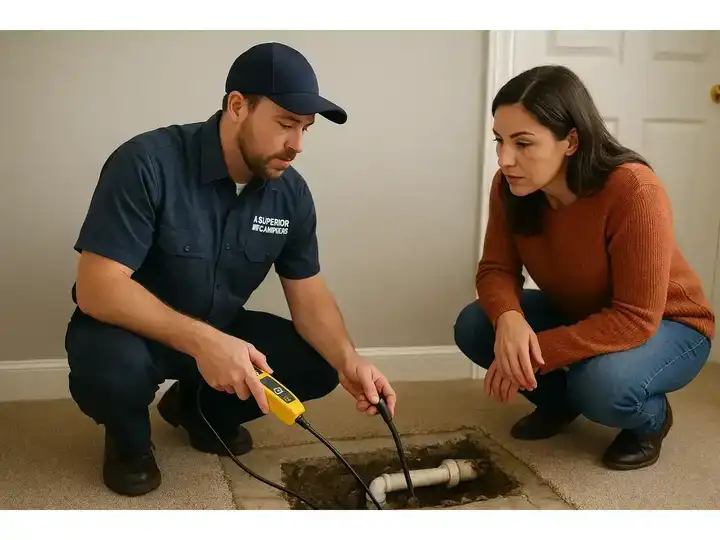
Professional leak detection is about precision. Instead of opening walls or breaking concrete at random, trained plumbers use methods that help locate the leak more accurately. Depending on the situation, that may include pressure testing, acoustic listening equipment, moisture detection, or thermal tools that help identify temperature changes caused by hidden water.
That approach matters because the wrong repair can create new damage. Cutting into flooring too early, removing drywall in the wrong location, or chasing a leak that is not there can add cost without solving the problem. Accurate diagnostics help focus the repair where it belongs. For homeowners comparing options or planning ahead, this is also where a conversation about repair scope and budget can be helpful. Some families find it useful to read about Plumbing Financing in Fort Walton Beach, FL: Answers to Common Questions if the repair may be larger than expected.
Repair choices depend on the pipe, the damage, and the home
Not every slab leak repair looks the same. In some homes, the damaged section can be isolated and repaired directly. In others, rerouting a line may be the better long-term choice, especially if the pipe is old or there are signs of repeated failure. The right solution depends on the location of the leak, the condition of the pipe, and how much surrounding material is already affected.
That is another reason homeowners should avoid assuming the cheapest fix is the best fix. A temporary patch may stop the immediate leak, but it may not address the underlying cause. In homes where plumbing has aged out, a more durable repair plan can protect the structure and reduce repeat calls. For a broader look at how local plumbing systems change over time, see How Fort Walton Beach Homes Age Out of Their Plumbing Fixtures.
Common causes of hidden leaks in local homes
Several issues show up again and again in this area. Corrosion is a major one, especially in homes with older copper or galvanized lines. Shifting soil can stress pipes under the slab. High water pressure can wear down fittings and joints. Vibrations from normal use may eventually loosen weak connections. Even a small manufacturing flaw or prior repair can become a leak years later.
Hard water and mineral buildup can also play a role. Over time, scale can narrow pipe interiors and put extra pressure on weak spots. If a home also has aging fixtures or outdated supply lines, the risk of leaks increases. That is why leak detection often pairs well with a broader plumbing inspection, especially in homes that have had recurring issues or previous repairs.
Maintenance habits that help homeowners stay ahead of leaks
There is no perfect way to prevent every plumbing leak, but a few habits go a long way. Watch the water bill for unexplained increases. Check under sinks and around exposed pipes regularly. Notice damp odors, flooring changes, or pressure changes early. During the humid season, pay attention to areas that stay cooler or smell musty, since those can hide moisture problems.
It also helps to know which fixtures and lines are aging. If a faucet drips, a shutoff valve sticks, or a toilet runs intermittently, those small issues can reveal broader wear in the system. In some cases, replacing old fixtures before they fail can reduce the chance of hidden damage. Homeowners who are updating bathrooms or kitchens may want to review Planning Plumbing Installation the Right Way in Fort Walton Beach Homes before starting a project.
Simple steps that make a difference
Keep an eye on water pressure, especially if it changes suddenly. Listen for unusual sounds after appliances shut off. Know where the main water shutoff valve is located. If a leak is suspected, shut off water quickly to limit damage while waiting for help. These small steps can reduce the impact of a hidden leak and make professional diagnosis easier.
When a professional visit is the right move
Some issues are worth watching. Hidden leaks are usually not one of them. If you suspect water under a slab, behind a wall, or near a fixture and the cause is not obvious, professional leak detection is the safer path. The same is true if your water bill keeps rising, your floors feel off, or you notice recurring moisture in the same spot.
In Fort Walton Beach, fast response matters because moisture can spread quickly in humid conditions. A delayed repair can lead to mold growth, damaged flooring, and more invasive work later. A Superior Mechanical provides Leak Detection & Slab Leak Repair in Fort Walton Beach, FL with the kind of diagnostic approach homeowners need when the problem is hidden and the stakes are high.
For homeowners dealing with visible water damage or uncertain plumbing symptoms, it can also help to read Why Homeowners Need Water Leak Repairs in Fort Walton Beach, FL. The more quickly a leak is identified, the more likely the repair will stay focused and manageable.
Why local service makes the repair easier to live with
Homeowners often think of leak repair as just another plumbing job. In reality, local service can shape the entire experience. A plumber who knows Fort Walton Beach neighborhoods, common slab construction, and the effects of coastal weather can diagnose problems more efficiently and recommend repairs that fit the home, not just the pipe.
That local perspective matters across Okaloosa County, where homes range from older ranch styles to newer builds with different plumbing layouts. A repair plan that works in one house may not be ideal in another. Local service keeps the process practical, responsive, and tailored to the kind of home you actually live in.
For homeowners who want a clear, durable solution for hidden plumbing problems, A Superior Mechanical offers advanced diagnostics and long-term plumbing solutions designed for homes and businesses throughout the area.
Find Leak Detection & Slab Leak Repair in Fort Walton Beach, FL
If you need Leak Detection & Slab Leak Repair in Fort Walton Beach, FL, visit our local service page or contact A Superior Mechanical today.
Map of Fort Walton Beach, FL
Frequently Asked Questions
How do I know if I have a slab leak in my Fort Walton Beach home?
Common clues include unexplained water bill increases, warm or damp flooring, low water pressure, musty odors, and the sound of running water when fixtures are off. Because slab leaks are hidden under concrete, professional testing is usually needed to confirm the source.
Can a slab leak damage my foundation?
Yes. Water under a slab can erode soil, create settlement issues, and damage flooring or base materials over time. The longer the leak continues, the more likely it is to affect structure and finishes.
Why is leak detection important before opening walls or breaking concrete?
Accurate leak detection helps locate the problem with less guesswork. That reduces unnecessary demolition, lowers repair costs, and keeps the work focused on the actual source of the leak.
What makes leak detection in Fort Walton Beach different from other areas?
Coastal humidity, older homes, shifting soil, and weather related moisture can all affect how leaks show up and spread. Local experience helps plumbers diagnose problems more efficiently and recommend repairs that fit the home and environment.
Related Articles
Photo Gallery