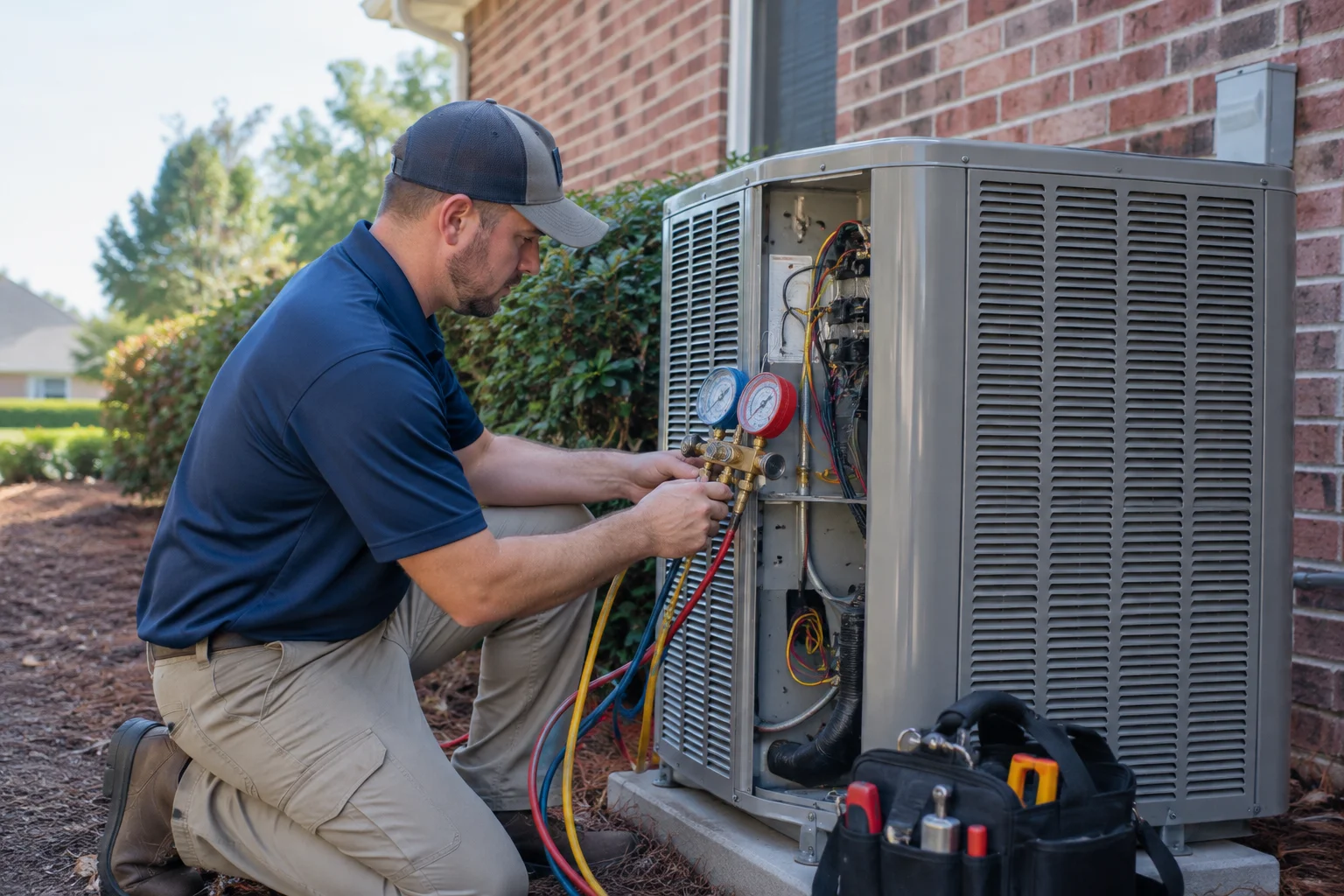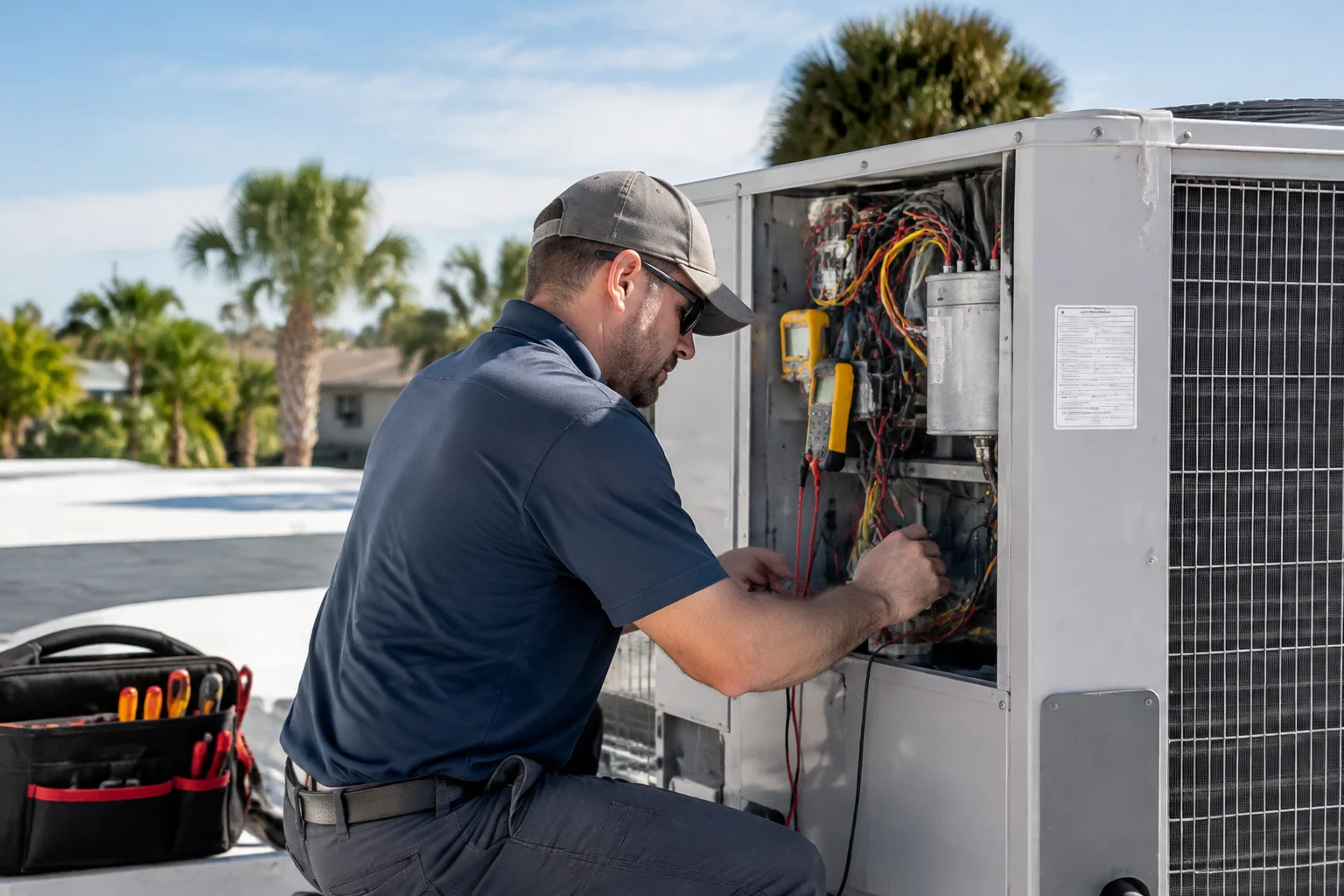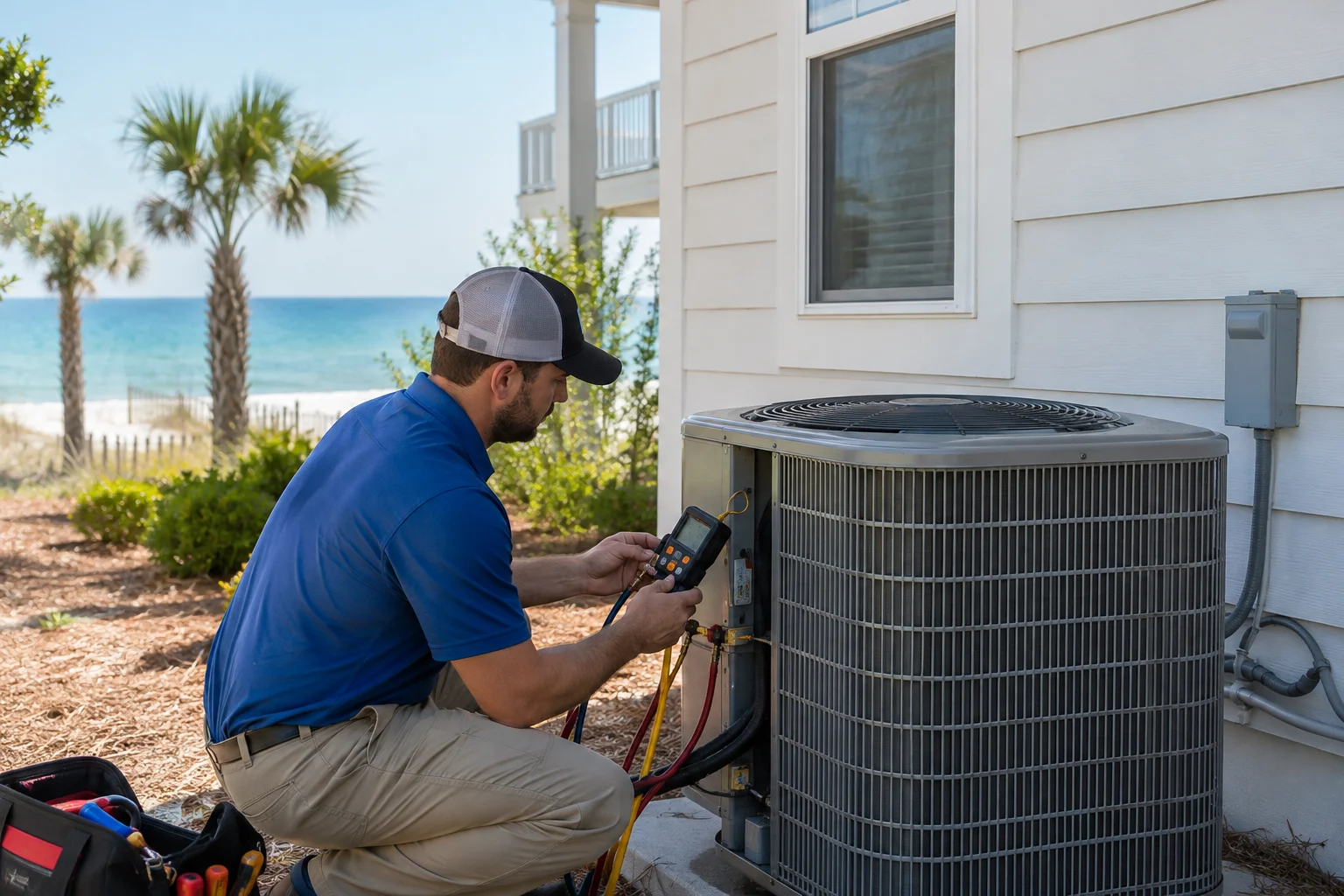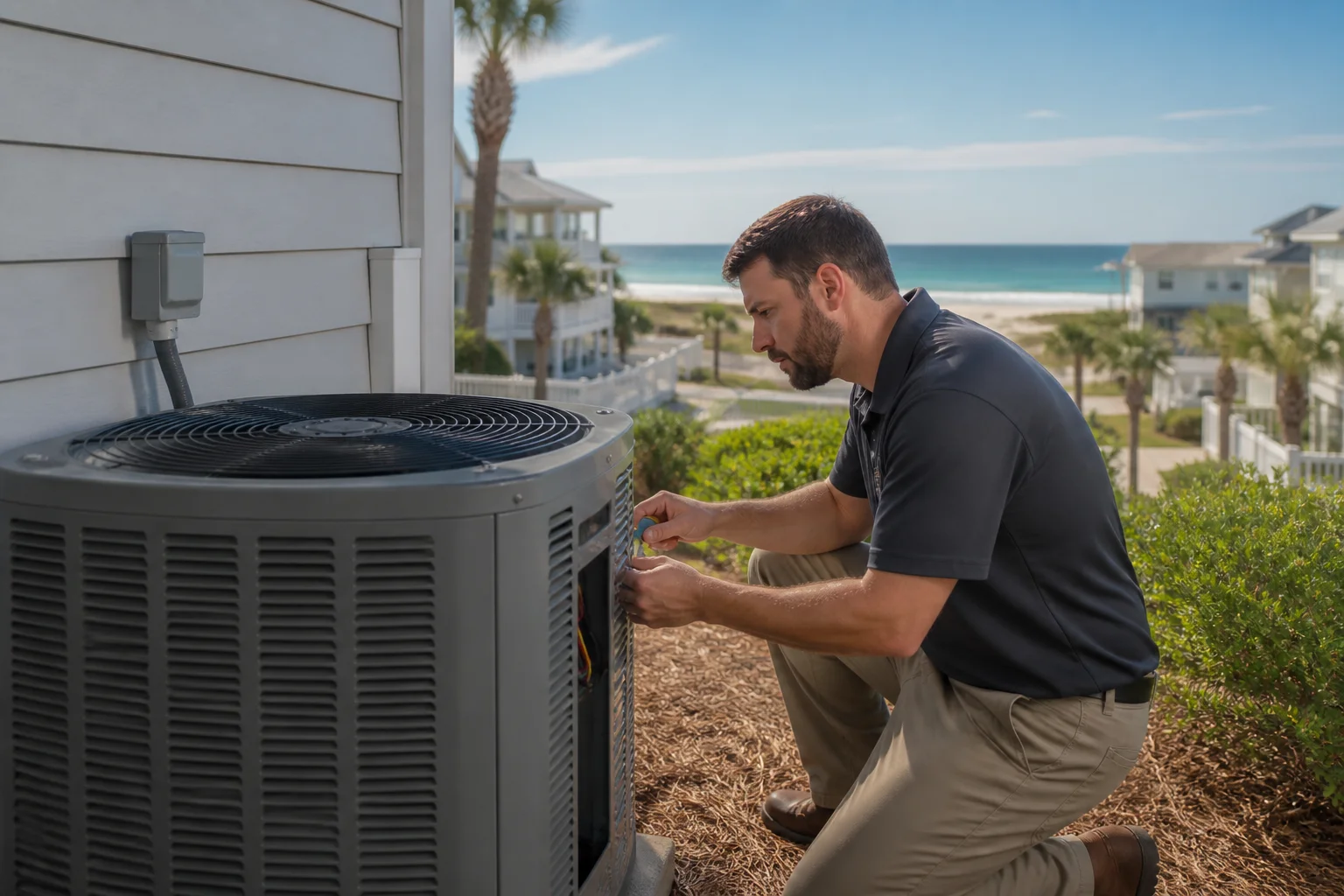
Replacing an air conditioner in Blue Mountain Beach is not simply a matter of choosing a newer version of the old unit. Coastal weather, persistent humidity, salt air, storms, home construction, and duct conditions all influence how well the next system will perform. Smart planning can improve comfort, reduce moisture problems, and help protect the investment.
A Superior Mechanical provides air conditioning replacement in Blue Mountain Beach, FL for primary homes, vacation rentals, businesses, and remodeled properties. The goal is to install equipment that fits the building, supports healthy airflow, and handles the long cooling season along the Walton County coast.
Deciding Between Another Repair and Replacement
An AC problem does not automatically mean the entire system needs to be replaced. A failed capacitor, clogged drain line, dirty filter, thermostat issue, or minor wiring fault may be repairable. Even a frozen evaporator coil can sometimes be traced to restricted airflow rather than a failed system. A professional diagnosis should identify the actual cause before replacement is recommended.
Replacement becomes more practical when breakdowns are frequent, comfort is uneven, parts are difficult to obtain, or the system has lost substantial efficiency. Recurring refrigerant leaks also deserve close attention. Adding refrigerant without locating and addressing the leak is not a lasting solution. Homeowners searching for AC repair near me should ask whether the estimate addresses the source of the problem and how the cost compares with a properly planned replacement.
Other warning signs include an outdoor condenser that runs for long periods without reaching the thermostat setting, an air handler that is noisy or rusted, water around the indoor unit, musty odors from vents, and rising power use without a clear change in household habits. If several of these conditions occur together on aging equipment, replacement may offer better value than repeated home AC repair.
Start With the Cooling Load, Not the Old Model Number
Using the old air conditioner's capacity as the only sizing guide can repeat an earlier mistake. Homes change over time. New windows, insulation, roofing, enclosed porches, additions, and kitchen remodels can alter the amount of cooling the building needs. Occupancy patterns also matter, especially in vacation rentals that may shift quickly from empty to fully occupied.
A load calculation considers square footage, ceiling height, insulation, window area, orientation, air leakage, local design temperatures, and other building details. This helps determine the appropriate capacity instead of relying on a rough rule based only on floor area. A system that is too small may run continuously during peak summer weather. A system that is too large can cool the air quickly but shut off before removing enough moisture.
Short cycling caused by oversizing can leave rooms cool yet clammy. It may also increase equipment wear and produce larger temperature swings. For homeowners searching for HVAC system replacement near me, asking how the contractor will verify equipment size is one of the most useful questions to raise before accepting a proposal.
Airflow Is Part of the New System
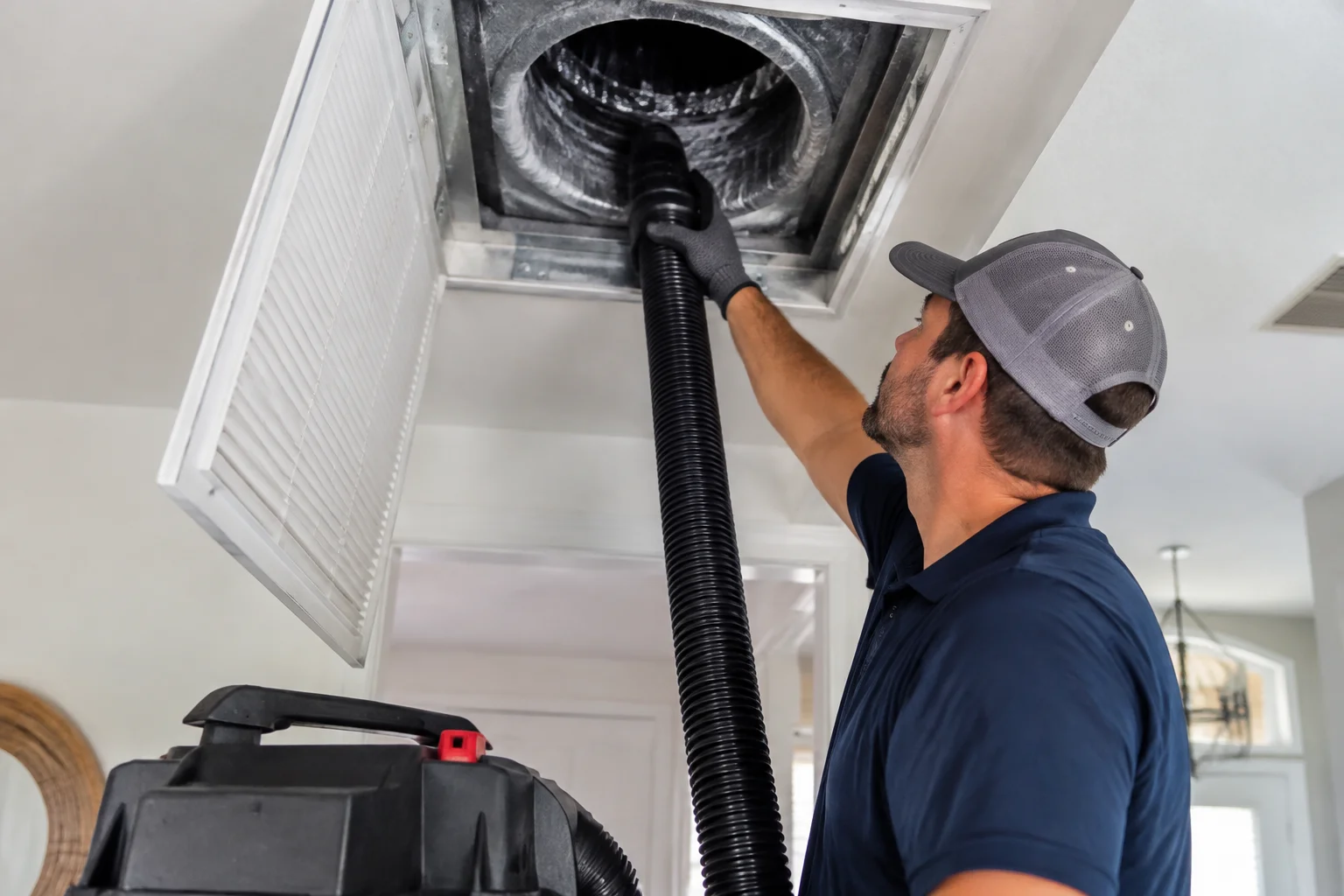
A high efficiency condenser cannot correct undersized, damaged, or poorly arranged ductwork. Before replacement, the supply ducts, return ducts, vents, filters, and air handler should be evaluated as one connected system. Flexible ducts may be crushed, torn, disconnected, or sharply bent. Older metal ducts can have loose joints or failed insulation. Remodels and additions may have rooms that were connected without enough return airflow.
Low airflow across the evaporator coil can reduce capacity and contribute to coil freezing. Excessive airflow may limit dehumidification and create noisy vents. Closed bedroom doors can also affect pressure balance if the home lacks adequate return paths. These conditions are particularly noticeable in multistory homes, compact beach cottages, and properties with converted garages or enclosed sunrooms.
Ductwork repair or duct sealing may be recommended with the replacement when leakage or poor distribution is identified. Sealing conditioned air inside the duct system helps more of the cooling reach occupied rooms instead of escaping into an attic or mechanical space. Homeowners who begin with an HVAC inspection near me search should expect the inspection to include airflow measurements and duct observations, not just a quick look at the outdoor unit.
Humidity Control Requires More Than a Lower Thermostat Setting
Blue Mountain Beach has a humid coastal climate, and moisture management is essential for comfort and indoor air quality. An oversized AC, dirty evaporator coil, incorrect fan setting, duct leakage, or air infiltration can allow indoor humidity to remain high. Musty odors, condensation on vents, damp fabrics, and rooms that feel sticky at normal temperatures may indicate a moisture problem.
Proper equipment sizing is the first step. The selected air handler and condenser should be matched, and the blower should be configured for the manufacturer's required airflow. Variable capacity and multi stage systems can often operate at lower output for longer periods, which may improve moisture removal during mild but humid weather. A compatible thermostat can manage staging, fan operation, and humidity settings more accurately than a basic replacement thermostat.
Drain lines also need attention. The evaporator coil removes water from indoor air, and that moisture must flow through a clean, correctly pitched condensate drain. A clogged line or damaged drain pan can cause water around the air handler and may shut down a system with a safety switch. Condensate drainage is separate from household plumbing, though owners dealing with other drainage issues may also find this guide to keeping Blue Mountain Beach drains clear useful.
Coastal Conditions Change Equipment Priorities
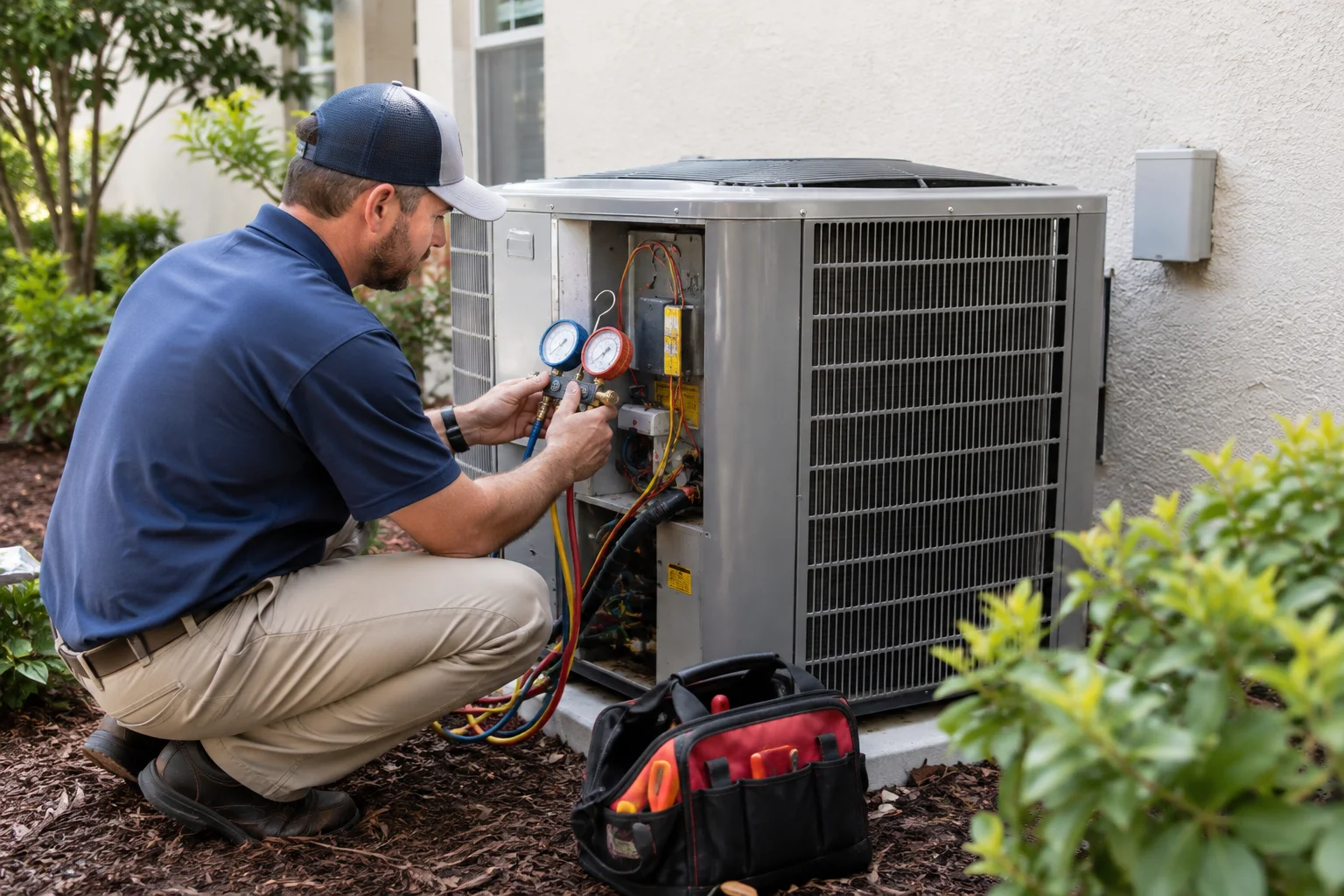
Salt carried by coastal air can collect on outdoor coils, cabinets, fasteners, and electrical connections. Over time, corrosion may weaken components and restrict heat transfer through the condenser coil. Replacement planning should consider equipment location, service access, drainage, exposure to irrigation, and available corrosion protection.
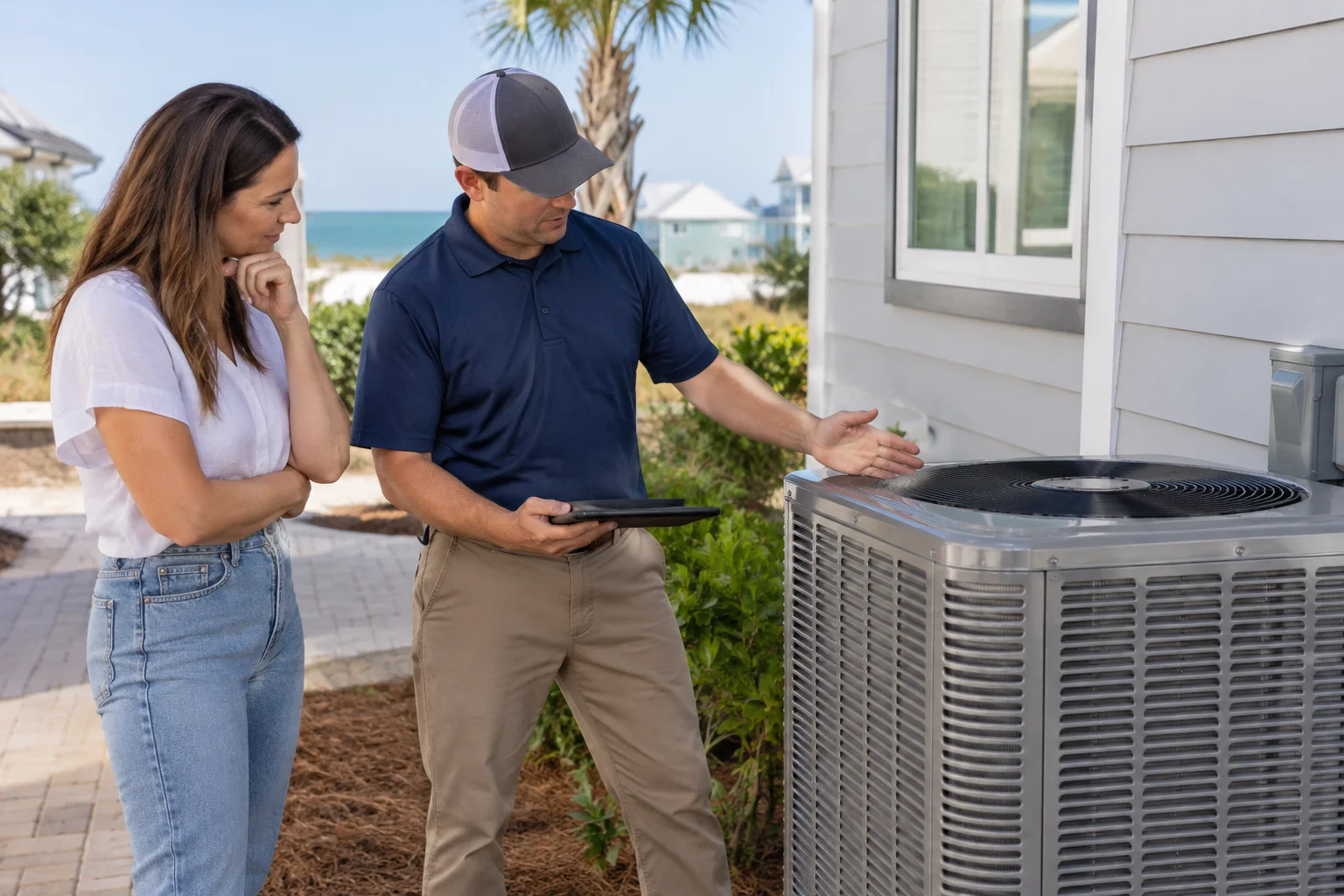
The outdoor unit needs clear space for airflow. Dense landscaping, storage items, fences, and windblown debris can restrict the coil. It should also sit on a stable, level base that is appropriate for the property. After storms, the area should be checked for branches, sand, standing water, and visible damage. Owners should not open electrical panels or attempt to straighten damaged components while the unit is energized.
Regular cleaning can help, but harsh chemicals and high pressure washing may damage delicate coil fins or finishes. A local HVAC contractor familiar with Blue Mountain Beach can recommend maintenance suited to salt exposure. A Superior Mechanical serves the broader Walton County area and understands how coastal conditions affect condensers, heat pumps, air handlers, and duct systems.
Choosing Among Heat Pumps, Central AC, and Mini Splits
Many local homes use heat pumps because they provide cooling and efficient electric heating from the same system. During winter, a heat pump reverses operation to move heat indoors. Correct sizing still matters, as does the condition of any supplemental electric heat. Homeowners can learn more about local heat pump services when comparing repair and replacement options.
Traditional central AC may be paired with a furnace in some properties. Although furnaces are less common here than heat pumps, furnace service, heating maintenance, and heating repair remain important where fuel burning equipment is installed. Combustion appliances require appropriate venting and professional safety checks.
Ductless mini splits can work well for garages, sunrooms, additions, guest suites, and spaces that are difficult to connect to existing ductwork. Someone searching for sunroom mini split installation near me should still request a room load calculation. Mounting location, condensate drainage, line set routing, and outdoor unit placement affect both appearance and performance. Larger homes and businesses may also benefit from VRF multi zone systems when independent area control is a priority.
Efficiency Ratings Need Real World Support
Efficiency ratings are useful for comparing equipment, but installation quality and building conditions determine how closely a system performs to its rating. Leaking ducts, incorrect refrigerant charge, poor airflow, unsealed line penetrations, and mismatched indoor and outdoor components can reduce efficiency.
Ask for an explanation of available system tiers, expected operating characteristics, thermostat compatibility, filter requirements, and maintenance needs. A more advanced system may offer variable capacity, quieter operation, improved humidity control, and better temperature stability. The best choice depends on the home, budget, occupancy, and how long the owner expects to keep the property.
Indoor air quality upgrades should be selected for a specific need rather than added automatically. Better filtration may help capture airborne particles, but a restrictive filter can reduce airflow if the duct system and blower are not designed for it. Fresh air ventilation, dehumidification, air cleaning, and ultraviolet equipment each serve different purposes. An HVAC professional should explain what a product can and cannot do.
A Careful Installation Protects Comfort and Reliability
Replacement work should include removal of old equipment, preparation of the equipment areas, installation of matched components, refrigerant line evaluation, condensate drainage checks, electrical connection verification, and thermostat setup. The system should then be started, measured, and adjusted according to manufacturer requirements.
Commissioning is the step that confirms the equipment is operating properly. Technicians may verify temperature change, static pressure, airflow, refrigerant performance, drain operation, thermostat communication, and safety controls. Homeowners should receive operating guidance, filter information, warranty details, and a clear explanation of any duct or comfort limitations that remain.
Rental homes need additional planning because guests may change thermostat settings, block vents, or overlook early symptoms. Owners and managers can use property management HVAC services to coordinate inspections, maintenance, repairs, and access during seasonal demand.
Preventing Problems After Replacement
Routine HVAC maintenance helps protect a new system from preventable failures. Filters should be checked regularly and replaced according to the filter type, household conditions, and manufacturer guidance. Homes with pets, renovation dust, or heavy guest turnover may need more frequent attention.
Keep supply and return vents open and unobstructed. Watch for water around the air handler, ice on refrigerant lines, unusual sounds, weak airflow, and unexplained changes in power use. The outdoor condenser should remain free of leaves, dune grass, and stored items. Professional tune ups can include coil inspection, drain cleaning, electrical testing, airflow checks, thermostat verification, and evaluation for refrigerant leaks.
Seasonal service is easier to schedule before the first stretch of extreme heat. Waiting until peak summer can make any equipment failure more disruptive. Residents looking for AC service near me should choose a company that understands local construction, salt exposure, humidity, and the demands placed on cooling systems in full time homes and vacation properties.
Problems That Should Not Wait
Turn the system off and request prompt service if there is a burning odor, smoke, sparking, loud mechanical noise, significant water leakage near electrical components, or repeated breaker tripping. A system that stops cooling during dangerous heat can also become an emergency for older adults, children, pets, or anyone with health concerns.
For urgent breakdowns, A Superior Mechanical offers emergency HVAC services in Blue Mountain Beach. Homeowners searching for 24 hour AC repair near me should describe any odors, sounds, leaks, thermostat messages, and recent storm activity when calling. Those details can help the technician prepare for the visit.
Thoughtful replacement begins with an accurate diagnosis and continues through sizing, airflow planning, humidity control, equipment selection, and commissioning. Explore A Superior Mechanical's full Blue Mountain Beach HVAC services to arrange local help for air conditioning, heat pumps, ductwork, thermostats, indoor air quality, and ongoing maintenance.
Find Air Conditioning Replacement in Blue Mountain Beach, FL
If you need Air Conditioning Replacement in Blue Mountain Beach, FL, visit our local service page or contact A Superior Mechanical today.
Map of Blue Mountain Beach, FL
Frequently Asked Questions
How do I know if my Blue Mountain Beach air conditioner should be replaced?
Replacement may be practical when the system needs frequent repairs, has recurring refrigerant leaks, cools unevenly, struggles with humidity, or uses noticeably more electricity. A technician should inspect the condenser, air handler, evaporator coil, ductwork, thermostat, and drain system before recommending replacement.
Why is AC sizing especially important in a humid coastal climate?
An oversized system may cool the home quickly but shut off before the evaporator coil removes enough moisture. Proper sizing supports longer, steadier cooling cycles, better humidity control, improved comfort, and less equipment cycling.
Can ductwork problems be corrected during air conditioning replacement?
Yes. Replacement is a good time to inspect ducts for leaks, crushed sections, damaged insulation, poor return airflow, and vents that do not serve rooms properly. Duct sealing or targeted ductwork repair can improve airflow and help the new equipment perform as intended.
Related Articles
Photo Gallery