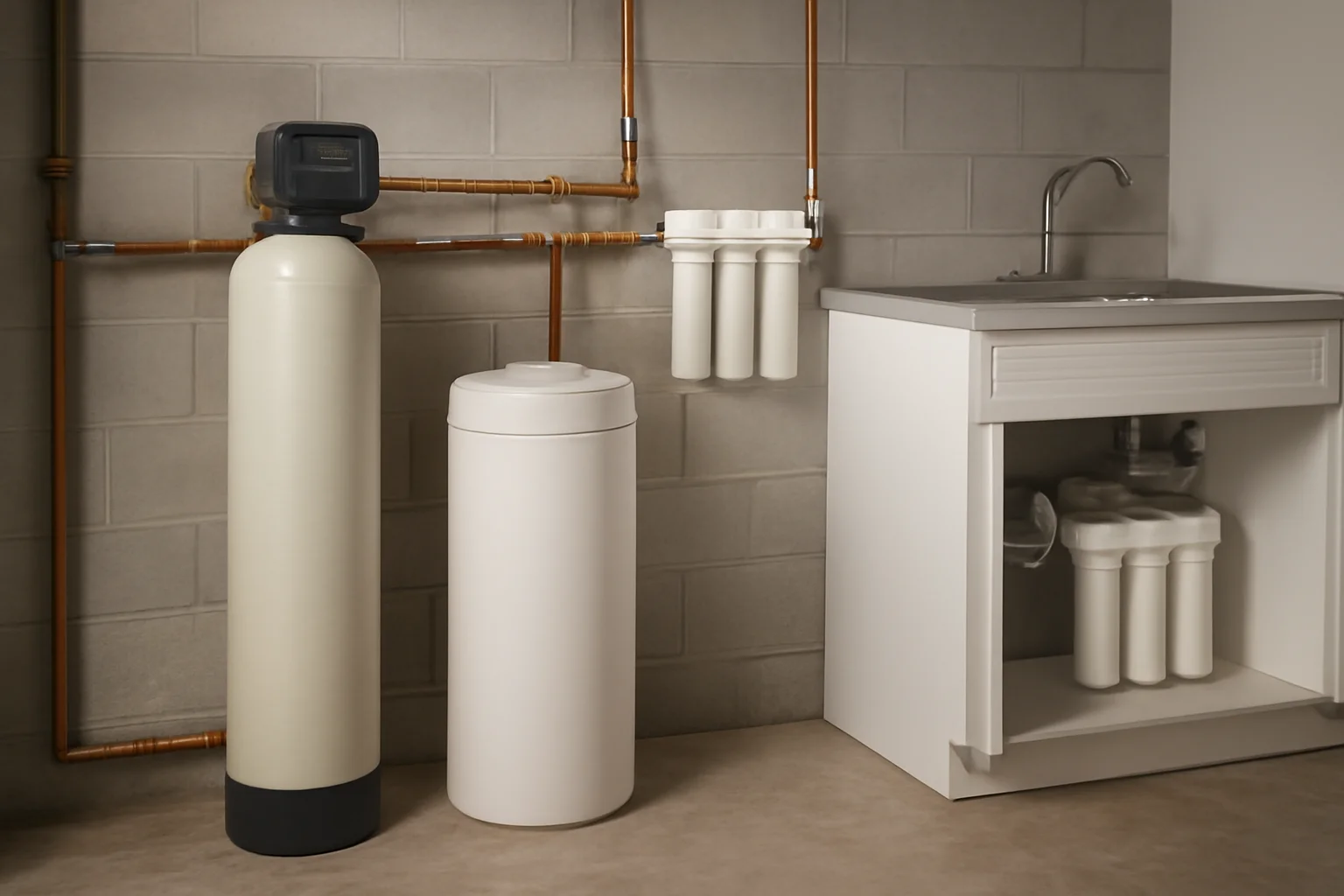
Walk into a Lynn Haven kitchen after a few days of heavy use and you might notice small changes that feel easy to ignore. Glasses look a little hazier. Soap seems to disappear without rinsing. Laundry feels stiff. Appliances may not last as long. When these water quality warning signs show up together, they often point to a water softening or filtration problem, not just “a little hard water.”
In this guide, we will connect the dots between what homeowners see and the water treatment steps that can help. If you are searching for water filtration near me or water softener service near me, the details below can help you describe what is happening and decide what to test first.
Why Lynn Haven homes notice water quality issues sooner
Bay County homes can experience water conditions that make scale and mineral buildup more likely. When water has high hardness, calcium and magnesium dissolve into the water supply. That does not make the water unsafe by default, but it does make it harder for plumbing, fixtures, and appliances to operate the way they were designed to.
Florida homes also tend to use water heavily for showers, laundry, and outdoor routines. If your softener or filtration setup is not keeping up, the effects show up quickly where you see and smell water most: bathrooms, kitchens, and the hot water side of the home.
Hard water spots on glass, dishes, and fixtures: the classic clue
One of the most common signs homeowners notice is hard water spots on glass. You may see a foggy film on drinking glasses, a cloudy look on cookware, or water marks that do not wipe clean. Dishes may come out with a dull film even after dishwashing detergent.
Scale buildup can also appear as rough deposits on faucets and showerheads. If you have ever scraped a white or chalky layer from an aerator or noticed it around handles and spouts, that is mineral scale doing what it does when hardness is not being controlled.
When these spots show up consistently, it is often tied to one of these softening issues:
- The water softener is not regenerating often enough
- The softener is undersized for household demand
- Salt levels are low or the brine system is not working correctly
- There is bypassing or plumbing misconfiguration
- Iron or sediment is interfering with performance
Scale buildup around faucets and showerheads can mean your softening is slipping
Look closely at high-use fixtures. Scale buildup around faucets and showerheads often forms first because water evaporates there and leaves minerals behind. Over time, scale can reduce water flow and clog parts like shower restrictors and faucet aerators.
Homeowners sometimes describe this as “the pressure is worse” even when the supply line is fine. If the aerator or showerhead is partially restricted by scale, you may feel weaker flow and uneven spray patterns.
In addition to visible deposits, scale can contribute to mineral accumulation in pipes and on the surfaces that transfer heat. That can make hot water recovery slower and increase wear on water heaters.
Dry skin or dull hair after bathing: what the water is doing to your routine
Water quality is not only about what you can see. Many Lynn Haven homeowners notice a change in how their skin and hair feel after showering. Dry skin or dull hair after bathing can happen when soap and shampoo interact with hard water minerals.
Hard water can cause soap to react in a way that leaves residue on skin and hair. The result is that your routine feels less effective, even if you are using the same products you always have.
You might also notice that soap does not lather or rinse well. That is a common sign that hardness is interfering with cleaning performance. When you switch to a different soap and the problem returns quickly, it is another hint that the water chemistry is the driver.
Metallic, chlorinated, or unpleasant taste and odor concerns
Not all water quality problems are purely mineral related. Some homeowners report that water has a metallic tasting water profile, a strong chlorine taste, or an odor that makes them hesitate to drink straight from the tap.
If you are experiencing a chlorine taste in water that is stronger than usual, it may be tied to how disinfectants and treatment processes are running locally. If you also see discoloration or sediment, it could be related to particulates in the system or plumbing conditions inside the home.
These taste and odor issues are exactly where homeowners begin comparing whole home water filtration options versus point-of-use filters. A properly designed system can address more than one concern, but it starts with testing so you do not treat the wrong problem.
Cloudy ice cubes and sediment: when “looking” becomes part of the test
If your ice cubes come out cloudy or your freezer tray develops a film, pay attention. Cloudy ice cubes can happen when water contains fine particles, air bubbles, or elevated minerals that become more visible as water freezes.
Homeowners also report visible sediment, discoloration, and odor concerns. That combination can show up in drinking water, cooking water, or even the water used for coffee. If you notice it, do not just rely on bottled water long term. Testing helps identify whether the issue is hardness, sediment, chlorine byproducts, or something else.
Poor tasting coffee and cooking water: the kitchen is often the first “real-world” detector
It is hard to miss when the family kitchen is involved. Maybe coffee tastes flat or harsh, or recipes do not turn out the way they should. Many people describe poor tasting coffee and cooking water when the water has an off flavor, an odor, or a mineral profile that changes how ingredients dissolve.
Hard water minerals can affect how tea, coffee, and some foods extract flavor. Chlorine taste in water can also show up immediately in beverages and cooking.
When homeowners call for water filtration near me, they are often trying to protect the everyday moments: morning coffee, weeknight meals, and water for the kids. The goal is better water for drinking and cooking without guesswork.
Appliances wearing out faster: the hidden cost of untreated hardness
Scale does not only live on surfaces you can see. It can accumulate inside appliances and water lines. Over time, that buildup can reduce efficiency and increase the chance of service calls.
Homeowners often notice that:
- Coffee makers and kettles scale up quickly
- Dishwashers and washing machines do not seem to clean as well
- Water heater performance feels less consistent
- Hot water takes longer to heat
If you are seeing appliance wear out faster than expected, it can be a sign that water softening is not working as intended or that you need a different approach, such as whole home water filtration plus softening.
Soap residue and laundry that feels “off”
Hard water can affect laundry in ways that are easy to misread as detergent issues. Clothes may feel stiff. Towels may not soften even after washing. You may notice a film that seems to build up over time.
When soap does not lather or rinse well, residue can remain in fabrics and on skin. That is why many Lynn Haven families notice a difference when water treatment improves. Better water often means laundry that rinses cleaner, feels softer, and looks brighter.
Where water softening ends and filtration begins
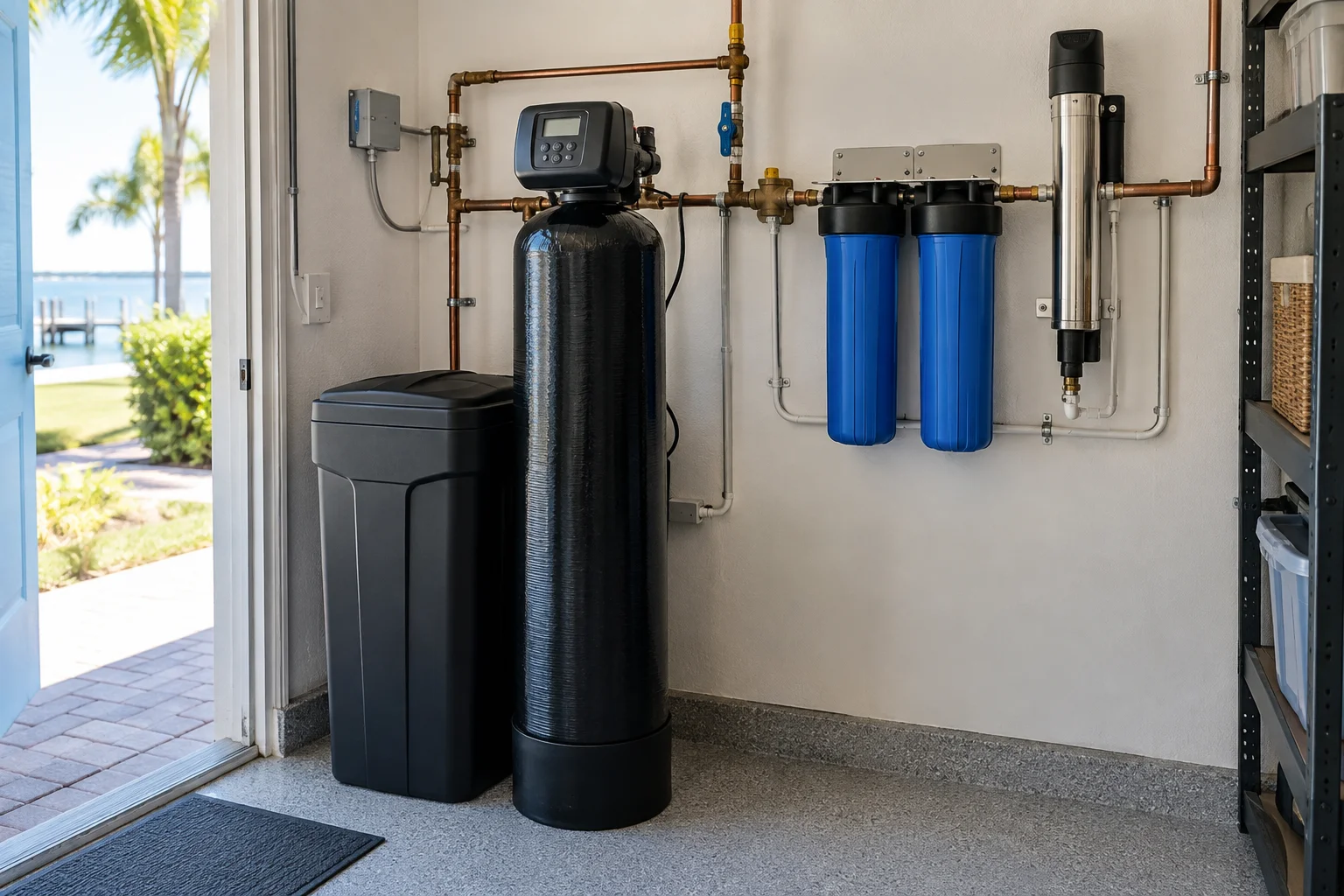
Water softening is designed to reduce hardness minerals that cause scale buildup, spots, and soap performance issues. Whole home water filtration can help address additional concerns like sediment, taste and odor, and other water quality factors depending on the system design.
Some homeowners have both problems at once: hardness that leaves scale, plus taste and odor concerns that make drinking water less appealing. That is why many households benefit from a coordinated clean water system approach.
Homeowners comparing options often ask about AO Smith water filtration. AO Smith systems can be part of a layered strategy, especially when you need reliable performance and consistent maintenance. Your best setup depends on what the water test shows.
Reverse osmosis can help drinking water, especially when taste matters
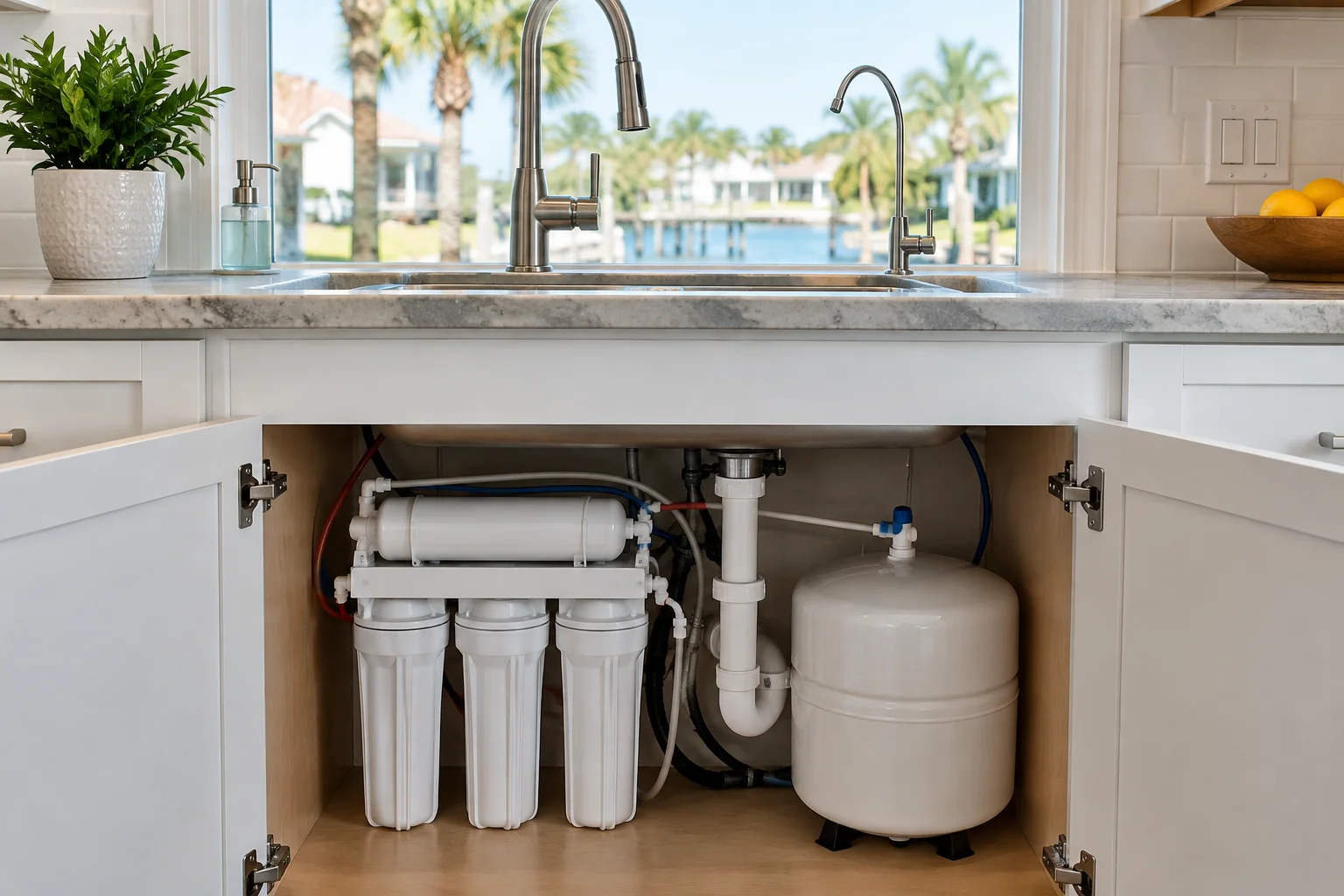
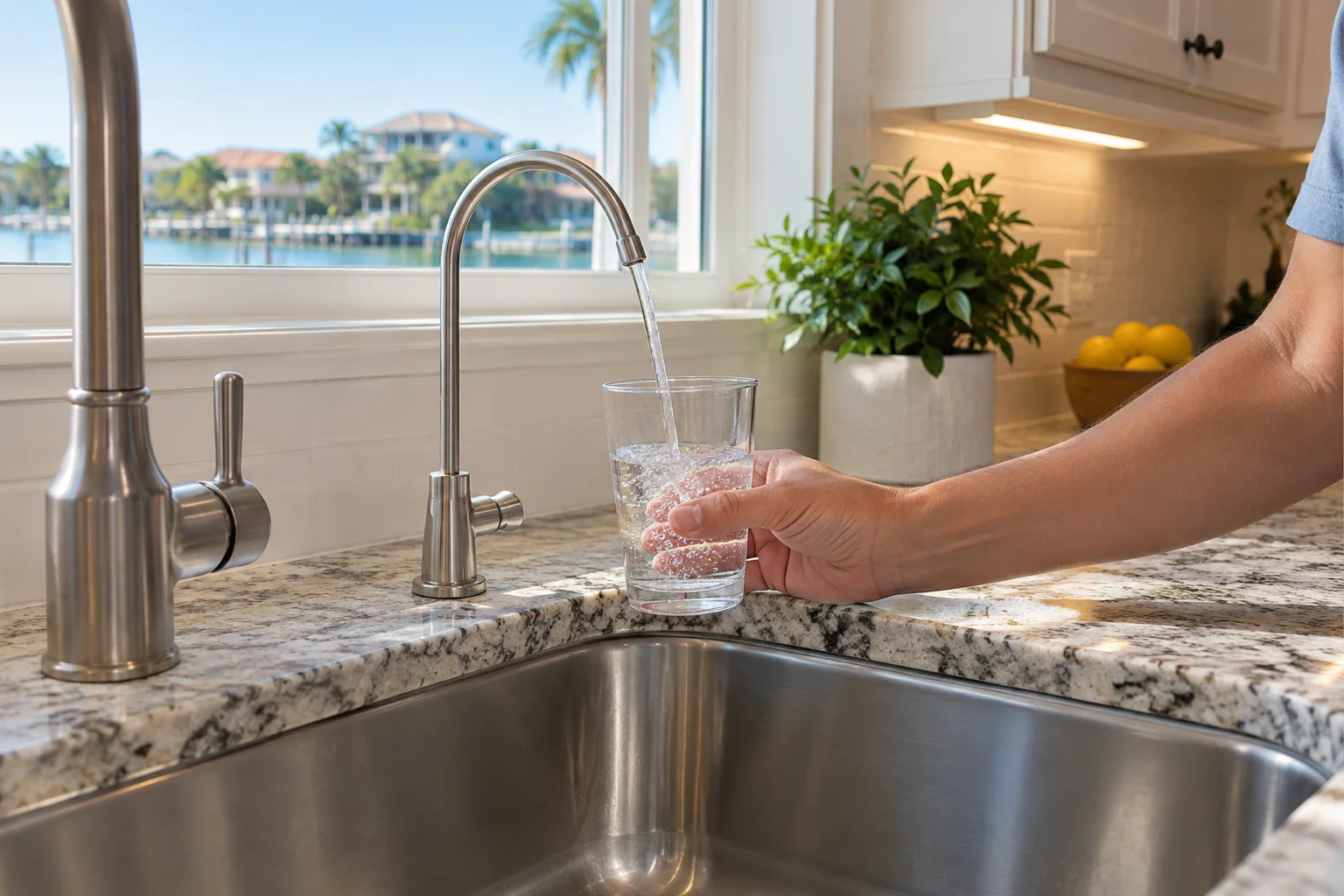
If the main complaint is drinking water quality, reverse osmosis installation near me is often considered. Reverse osmosis (RO) systems can reduce many dissolved contaminants and improve taste for drinking and cooking water.
Many Lynn Haven homeowners choose RO for the kitchen while using water softening for scale control throughout the home. That combination can protect fixtures and appliances while also supporting better drinking water for the family.
If you are shopping for a reverse osmosis system near me, it helps to ask how the RO system will be paired with your existing softener or filtration. A well-planned configuration helps avoid treating the same issue twice and ensures the equipment lasts.
Whole house water filtration can be a practical upgrade for everyday life
When homeowners search for water filtration near me and want clean water across bathrooms, laundry, and kitchen, a whole house water filter can be the right direction. A whole home approach is especially useful when you notice water quality issues beyond one tap.
Whole home water filtration can help support cleaner rinsing, better soap performance, and a more consistent water experience throughout the day. It is also a helpful step for protecting the plumbing system when sediment or other water quality factors are part of the picture.
If you are also dealing with hardness, pairing filtration with water softening can be a strong foundation for clean water systems near me needs.
Quick checklist: which warning signs mean you should not wait
Some water issues are mild and improve with simple adjustments. Others can create ongoing damage. Consider scheduling a water treatment evaluation if you notice several of the items below:
- Persistent hard water spots on glass even after cleaning
- Scale buildup around faucets, showerheads, or aerators
- Soap does not lather or rinses poorly
- Dry skin or dull hair after bathing
- Metallic tasting water, chlorine taste in water, or unpleasant odors
- Cloudy ice cubes or visible discoloration
- Visible sediment or odor concerns in drinking water
- Appliances scaling faster and wearing out sooner
- Poor tasting coffee and cooking water
If you already have a softener, these signs can also indicate the system is not regenerating properly, salt is not being used correctly, or the unit is not sized for current household needs. If you recently added occupants, increased laundry, or changed water usage, your setup may need an update.
How maintenance and sizing affect water softener performance
Water softeners are not set-and-forget equipment. Over time, performance can drift if maintenance is missed or if the household’s water demand changes. Common reasons softening performance declines include:
- Low salt or incorrect salt type
- Brine tank issues or regeneration problems
- Clogged components from sediment
- Incorrect settings for hardness and household size
- A system that is undersized for current use
That is why water testing matters. A technician can measure hardness, check for related minerals, and recommend the right softener settings or service. For homeowners looking for water softener installation near me or water softener service near me, the most helpful first step is a test plus a plan tailored to your home.
What to do next: a practical path for Lynn Haven homeowners
If you are seeing water quality warning signs, start by documenting what you notice. Take a photo of the scale buildup around faucets and showerheads. Note whether the issue is worse on hot water, cold water, or both. Think about what changed recently, such as an increase in laundry, a new dishwasher, or a family schedule shift that increased water use.
Then schedule a professional evaluation. A Superior Mechanical can help you identify whether the problem is primarily hardness, taste and odor, sediment, or a combination. From there, you can choose the right solution, whether it is water softening, whole home water filtration, or reverse osmosis for drinking and cooking.
If you are specifically looking for water softening services in your area, you can review our service page here: /service-areas/bay-county/lynn-haven/water-softening-lhfl. For broader options and system types, visit /water-filtration-ro-water-softeners. You can also browse our Lynn Haven service area details at /service-areas/bay-county/lynn-haven or learn more about coverage across the region at /service-areas/bay-county.
Prevention pays off: protecting plumbing and reducing future headaches
Better water treatment is not only about taste and comfort. It is also about reducing the long-term burden on plumbing. When hardness is controlled, scale buildup is reduced, and pipes and fixtures tend to stay cleaner for longer.
If you want to connect water treatment with overall home protection, these related reads can help:
FAQ: common water quality warning signs and what they usually mean
Homeowners often ask whether each symptom is “normal” or whether it points to a softener problem. The answers below focus on how these issues commonly connect to water softening and water filtration in Lynn Haven.
If you are already dealing with hard water spots, soap residue, and taste complaints, it is usually smarter to test rather than keep guessing. The right system pairing can help your kitchen water taste better, your showers feel better, and your fixtures stay cleaner.
Find Water Softening in Lynn Haven, FL
If you need Water Softening in Lynn Haven, FL, visit our local service page or contact A Superior Mechanical today.
For a broader look at whole-home water filtration, reverse osmosis, and water softener options, visit our water filtration, RO, and water softener page.
Map of Lynn Haven, FL
Frequently Asked Questions
Why do I have hard water spots on glass even though I have a water softener?
Hard water spots can mean the softener is not regenerating correctly, is undersized for household demand, has low salt or a brine issue, or needs service. Sediment or iron can also interfere with performance. A water test and system check can pinpoint the cause.
Can chlorine taste in water happen even if my water is softened?
Yes. Water softening targets hardness minerals that cause scale and soap residue. Chlorine taste is typically related to disinfection or other water quality factors, which a whole home water filter or point-of-use filtration, such as reverse osmosis for drinking water, may address.
Do cloudy ice cubes always mean my water is unsafe?
Cloudy ice cubes often come from air, minerals, or fine particles. While it does not automatically mean the water is unsafe, it is a sign to investigate. Testing helps determine whether the issue is hardness, sediment, or odor and taste concerns.
Is reverse osmosis mainly for drinking water, or can it help the whole home?
Reverse osmosis is most commonly installed for drinking and cooking water at the kitchen tap. Whole home water filtration and water softening are usually used to improve water throughout the house and reduce scale buildup on fixtures and appliances.
What should I look for to decide between a whole house water filter and RO?
If you notice problems across multiple taps like scale, soap residue, or recurring taste and odor, a whole house water filter plus water softening may be the best fit. If the main complaint is drinking water taste and quality, RO is often a strong option for the kitchen. Testing is the deciding factor.
Related Articles
- Planning Water Softening Ahead in Lynn Haven for Healthier Drains and Longer-Lasting Pipes
- How Everyday Plumbing Wear and Tear Shortens Water Heater Life in Lynn Haven Homes
- Why Lynn Haven Families Rely on Preventive Plumbing Care for Hidden Leaks and Slab Repairs
- Cleaner Water, Smarter Plumbing: A Lynn Haven Homeowner's Guide to Preventing Problems
Photo Gallery