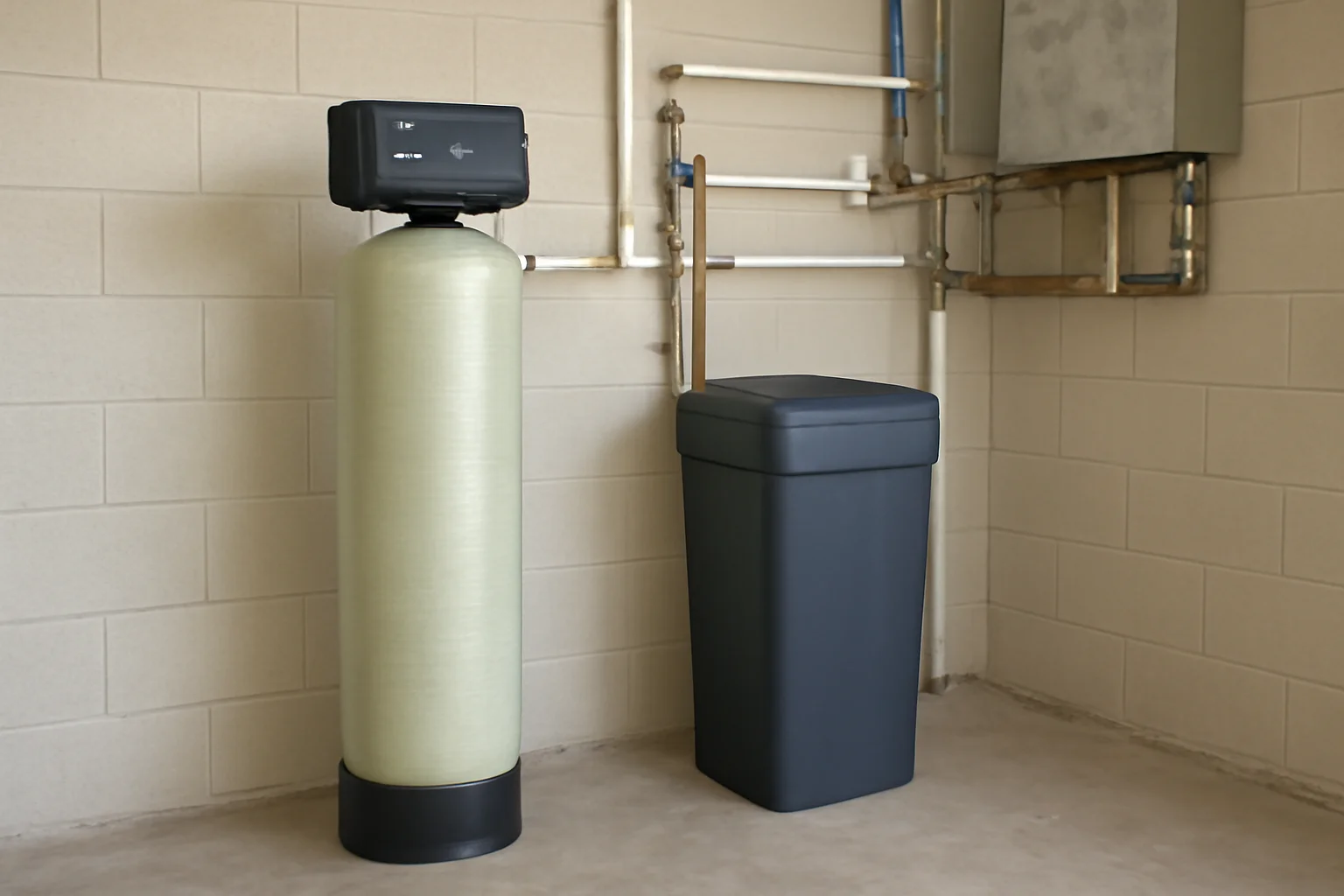
Blue Mountain Beach homes see a lot of everyday water use. Morning showers, coffee and cooking in the kitchen, laundry in the afternoon, and outdoor rinses that add up fast. When the water is hard, that routine can start to feel like it is fighting your home instead of supporting it. Homeowners often notice it first on glass shower doors and kitchen faucets, then on skin, laundry, and appliances.
Water softening helps, but it is not set-and-forget forever. Older homes, newer construction, and even newly installed systems can run into problems when the water chemistry, household demand, installation details, and maintenance schedule do not line up. Below is a practical look at what can cause water softening problems in Blue Mountain Beach, FL, why better maintenance matters, and how water filtration upgrades like AO Smith water filtration and reverse osmosis can protect your entire clean water system.
Blue Mountain Beach water habits that expose softener weaknesses
Blue Mountain Beach is a coastal area in Walton County, FL. Homes may be close to the water table, and water quality can vary over time. Even when your water supply is consistent enough to pass basic standards, hard water minerals can still cause scale buildup on faucets, showerheads, and plumbing. That scale is not just cosmetic. It can reduce flow, shorten appliance life, and make it harder for a water softener to do its job efficiently.
Hard water shows up in familiar household scenes:
Hard water spots on glass, dishes, and fixtures that look like a film even after wiping.
Soap does not lather or rinse well, leaving a slippery feel and residue.
Scale buildup around faucets and showerheads that keeps returning.
Dry skin or dull hair after bathing, especially after long showers.
Metallic, chlorinated, or unpleasant taste in drinking water and cooking water.
Cloudy ice cubes that suggest mineral content or filtration issues.
Poor tasting coffee and food that tastes “off,” even when you use good ingredients.
When these issues appear, many homeowners assume the only fix is “buy a softener.” In reality, water softening problems often start earlier, with how water moves through your home and how your system is maintained.
What causes problems with water softening in older homes
Older homes can have plumbing layouts and water demands that stress softeners in ways newer builds do not. Even if your water softener was installed correctly years ago, a few common factors can gradually push it out of balance.
1) Scale has already built up inside plumbing
Over time, hard water minerals can create deposits inside pipes, water heater tanks, and supply lines. Once scale buildup on faucets and showerheads becomes established, it can also exist deeper in the system. That buildup can reduce flow and make it harder for soft water to circulate effectively. When the system is forced to work against restricted flow, softening performance can drop.
2) Old plumbing materials and worn parts
Some older homes have plumbing components that are more prone to leaks or mineral accumulation. A water softener relies on valves, seals, and control components to regenerate and deliver softened water on schedule. If parts have aged, small issues can become noticeable: inconsistent soft water, more frequent regenerations, or salt use that does not match expectations.
3) Household demand changes
Family life changes, and water use changes with it. A growing household, a new dishwasher, extra laundry, or frequent guest stays can increase demand. A softener sized for an earlier routine may not keep up. That can lead to a gradual return of hard water effects, including soap that does not lather, spotting on dishes, and dry skin from hard water.
4) Neglected salt and brine tank maintenance
Many homeowners know to keep salt in the brine tank, but maintenance is more than refilling. Salt bridging, a low or high water level in the brine tank, and clogged components can all affect the regeneration process. If the brine is not created and drawn correctly, the resin may not regenerate fully. The result is water that starts softening well, then slowly stops performing as expected.
What causes problems with water softening in newer homes
Newer construction is not immune. In fact, some issues show up quickly because the plumbing and water treatment equipment are new, but the setup is not tuned to real household use.
1) Installation details that do not match the home’s water reality
Even a high-quality system can underperform if installation details are off. Examples include incorrect bypass valve positions, improper drain line setups, or a regeneration cycle that does not align with your water hardness and usage patterns. Homeowners may notice problems like metallic tasting water or sediment in household water, then assume it is “just how the water is.” In many cases, a tuned maintenance plan and correct setup fix the root cause.
2) New fixtures and appliances still show hard water effects
New homes often come with modern fixtures, water-saving showerheads, and efficient appliances. Those can actually make hard water problems more obvious because reduced flow can highlight scale buildup around faucets and showerheads. If the softener is not functioning properly, even a short time can create visible spotting on glass and dishes.
3) Whole home water filtration is missing or incomplete
Water softening mainly targets hardness minerals. It may not address taste and odor concerns, fine sediment, or certain water contaminants. In coastal regions and variable conditions, those issues can show up as cloudy ice cubes, unpleasant drinking water taste, and discoloration. If the clean water system relies only on softening, homeowners may still feel like something is “off” in the kitchen and bathroom.
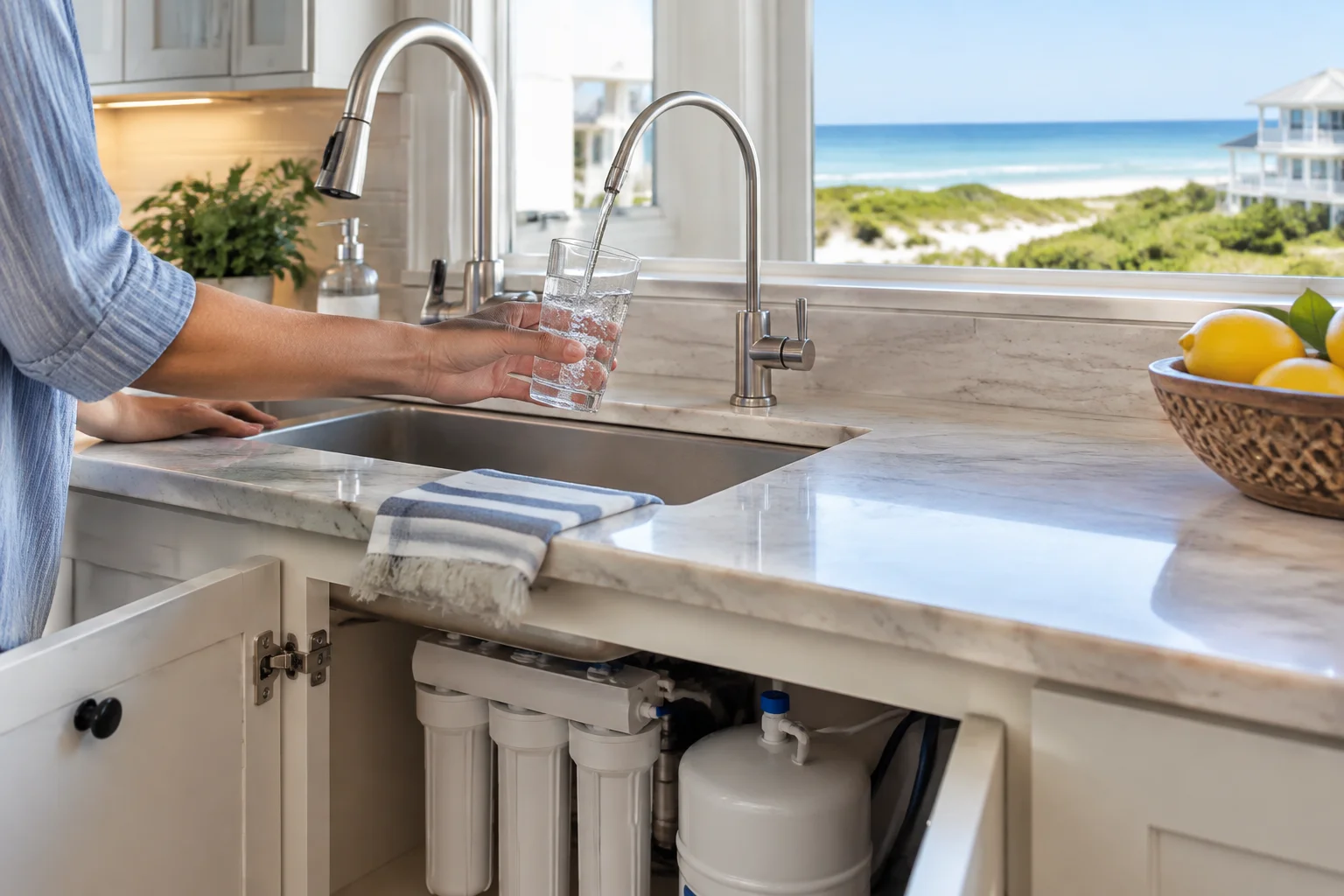
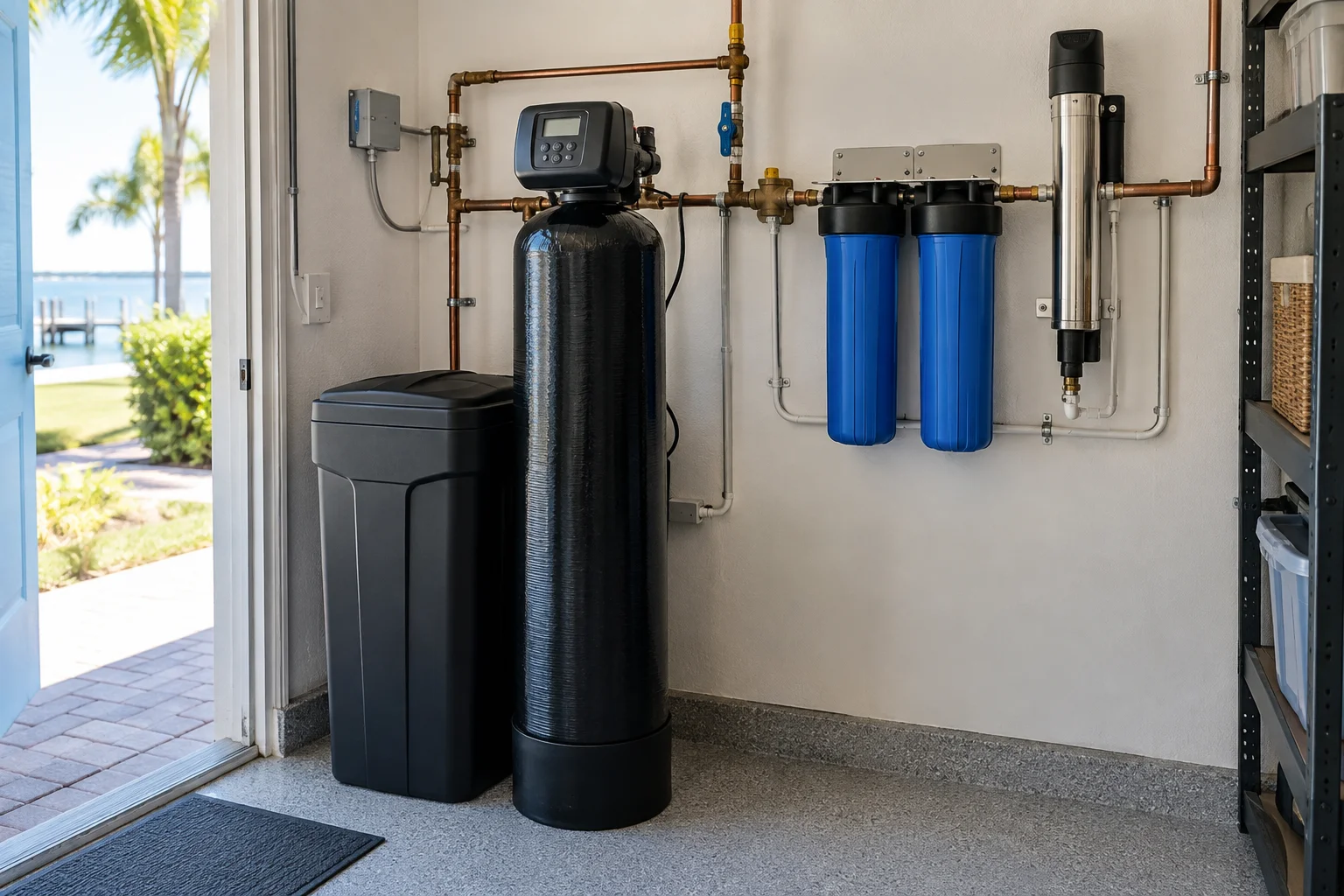
This is where whole home water filtration and point-of-use options can help. For example, AO Smith water filtration systems can reduce sediment and support better overall water quality, while reverse osmosis can target drinking water quality for cooking and drinking.
How poor maintenance disrupts softener performance
Water softeners are designed around a regeneration cycle. Maintenance helps keep that cycle consistent. When it slips, performance can change without warning.
Salt and brine issues that quietly reduce softening
Salt bridges, empty or low salt levels, and incorrect salt type can all reduce the effectiveness of regeneration. Some homeowners use different salt products than the system expects. Others do not notice that the brine tank is not drawing correctly. Over time, resin can become less effective, and you may start seeing:
Scale buildup on faucets and showerheads returning sooner than expected
Soap does not lather or rinse well
Dry skin from hard water after bathing
Appliances wearing out faster
Clogged components and restricted flow
If the system has debris or if components are not kept clean, flow can become restricted. That can impact how softened water travels to fixtures and appliances. It can also contribute to sediment in household water, especially when combined with other filtration gaps.
Control settings drift from real water conditions
Hardness can shift seasonally, and household usage can change year-round. If the softener settings are not adjusted, the system may regenerate too late or too early. Too late can mean hard water slips through. Too early can waste salt and water. Better maintenance includes checking water hardness, verifying settings, and confirming that the regeneration schedule reflects your actual home.
Symptoms to watch in Blue Mountain Beach kitchens and bathrooms
When water softening is not working right, the signs often show up where families notice water quality the most.
Drinking water and coffee that tastes “metallic”
Some homeowners describe metallic tasting water, chlorinated or unpleasant taste, or odor concerns in the kitchen. Softening alone does not always address taste and odor. If you are seeing cloudy ice cubes, it can point to mineral content, sediment, or incomplete filtration. A reverse osmosis system can improve drinking water for daily use, especially for cooking water and coffee.
Cooking water that changes the flavor
It is common to hear, “Our pasta tastes different,” or “Tea tastes flat,” after water quality shifts. Poor tasting coffee and cooking water can be tied to mineral levels and contaminants that are not removed by softening. Many homeowners solve this by pairing water softening with whole home water filtration and using reverse osmosis for drinking and cooking.
Bathing comfort and laundry results
Hard water can leave a film on skin and hair, which is why dry skin from hard water and dull hair after bathing are common complaints. In laundry, hard water can make towels feel stiff and detergent performance inconsistent. If soap does not lather, you may use more soap and still get less cleaning power.
When the home has good clean water systems, laundry tends to rinse cleaner, bathing feels less “residue heavy,” and fixtures look better longer.
Fixtures and appliances that age faster
Scale buildup is tough on water heaters, dishwashers, and other water-using appliances. When minerals deposit repeatedly, appliances can wear out faster. You may also see reduced efficiency, more repairs, and higher energy costs because systems work harder to move water through mineral buildup.
How better maintenance protects your home, not just your fixtures
Think of water treatment as a long-term protection plan for your plumbing and your daily comfort. Better maintenance helps avoid the “cycle” of noticing spotting, cleaning more often, and hoping it goes away.
A strong maintenance approach typically includes:
Water hardness testing to confirm your softener is matched to local conditions.
Verification of resin performance and regeneration timing.
Inspection of brine tank operation including salt level, bridging risks, and draw.
Checking for sediment and flow issues that can reduce softening effectiveness.
Coordination with whole home water filtration when taste, odor, or sediment concerns persist.
For homeowners searching for water softener service near me or water filtration near me, the goal is the same: consistent performance that reduces scale buildup on faucets, improves bathing comfort, and supports appliance longevity.
Where water filtration upgrades fit: whole home filtration and reverse osmosis
Softening and filtration work best when they complement each other. Hard water treatment reduces hardness minerals. Whole home water filtration can help address sediment and improve overall water clarity. Reverse osmosis can target drinking water quality for the kitchen.
Whole home water filtration for cleaner everyday water
Whole home water filtration can help protect fixtures and appliances from particles that contribute to dull appearance, discoloration, and odor concerns. If you are dealing with visible sediment, discoloration, and odor concerns, adding whole home filtration can make water feel more consistent across showers, laundry, and dishwashing.
Many homeowners look for whole home water filtration near me because they want a consistent upgrade, not just a single faucet filter. That is especially true when the family notices problems across multiple rooms, not just one sink.
AO Smith water filtration for a dependable clean water system
AO Smith water filtration is often chosen for its focus on reliable filtration performance. When paired with water softening, it can support a more complete clean water system. Homeowners in Blue Mountain Beach who want better drinking water and better everyday comfort often choose a combination approach: soften hardness and filter the rest.
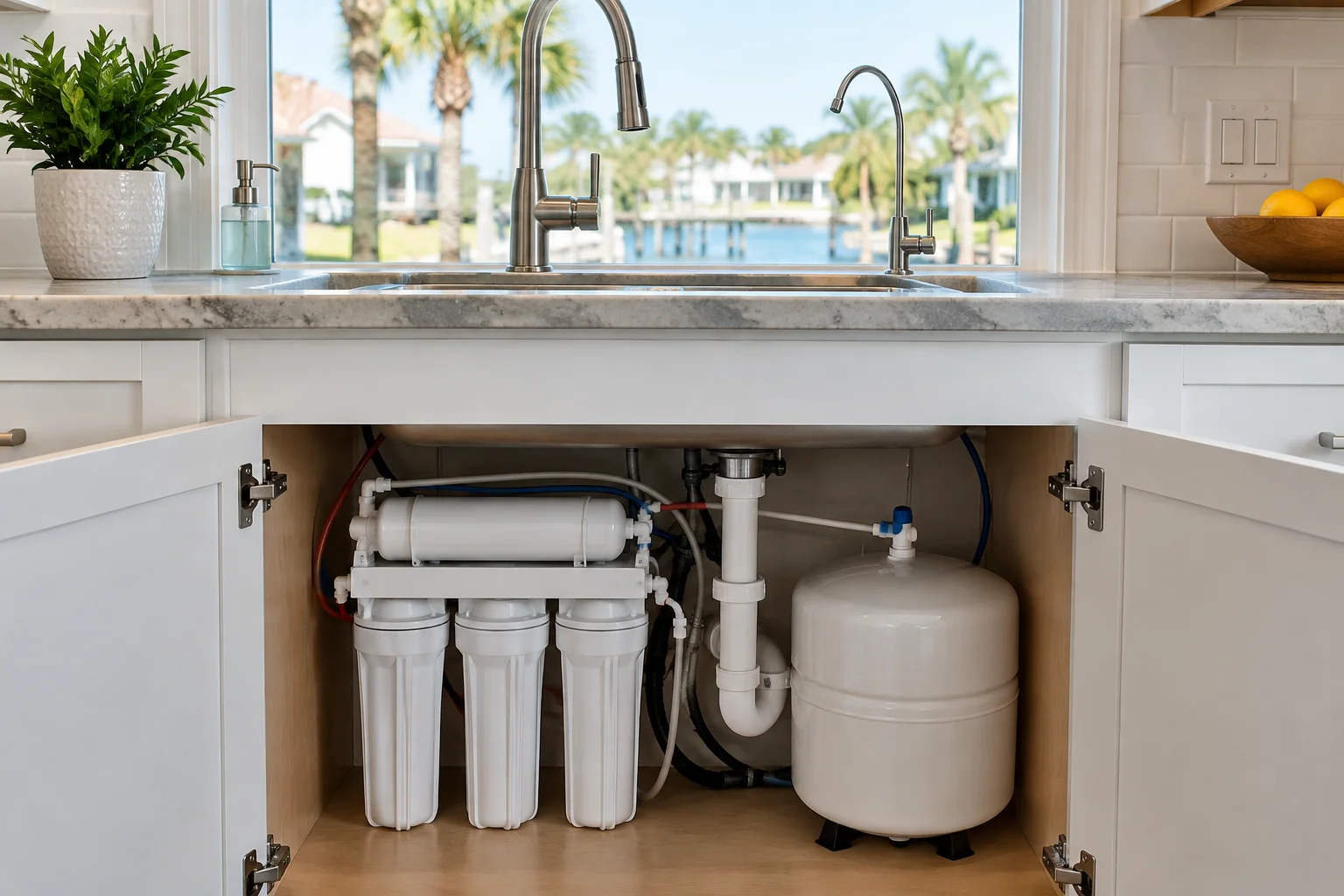
Reverse osmosis for drinking and cooking
Reverse osmosis is a strong option for improving taste, reducing certain contaminants, and producing water that is easier to trust for drinking and cooking water. If you have metallic tasting water, unpleasant taste, cloudy ice cubes, or poor tasting coffee water, reverse osmosis can be the “kitchen upgrade” that makes a noticeable difference.
For many families, the best setup includes:
Water softening to reduce scale buildup and protect plumbing and appliances
Whole home water filtration to support cleaner water across the home
Reverse osmosis for drinking water and cooking water
If you are exploring reverse osmosis installation or want to understand how it fits with water softener service, it helps to talk with a local water treatment professional familiar with Walton County conditions.
Maintenance that fits real schedules in Walton County
Blue Mountain Beach homeowners are busy. The best plan is one that reduces the chances of “surprise” hard water returns. A maintenance schedule can also help catch issues before they become expensive repairs.
Some practical homeowner habits also help between professional visits:
Check salt level and keep an eye out for clumps or crusting that suggest bridging.
Watch for early spotting on glass and fixtures, since scale buildup on faucets is often the first clue.
Pay attention to bathing feel like dryness or dull hair after bathing.
Monitor drinking water taste and ice clarity. Cloudy ice cubes and unpleasant taste can signal filtration needs.
Track appliance performance like water heater recovery and dishwasher results, especially when scale buildup is involved.
When those signs show up, it is not always a replacement situation. Often, better maintenance and correct system tuning restore performance quickly.
Getting help from A Superior Mechanical for water softening and clean water systems
For homeowners dealing with hard water treatment issues in Blue Mountain Beach, a local approach matters. Water chemistry, household demand, and how your home is plumbed can all influence how well a softener and filtration system work together.
A Superior Mechanical provides water softening services designed for Blue Mountain Beach households, including system installation and service. If you want to review options, you can explore the specific service area page here: /service-areas/walton-county/blue-mountain-beach/water-softening-bmbfl.
If your goals include better drinking water and whole home improvements, start with the water filtration landing page: /water-filtration-ro-water-softeners. You can also browse the broader Blue Mountain Beach service area here: /service-areas/walton-county/blue-mountain-beach or the Walton County coverage overview: /service-areas/walton-county.
Homeowners who are already dealing with water-related wear often benefit from understanding how everyday conditions affect the rest of the home. If you are curious about how household systems and maintenance connect to other issues, these reads may help: How everyday plumbing wear and tear shapes sewer and drain problems in Blue Mountain Beach and How Water Softening Protects Rosemary Beach Plumbing from Costly Water Damage.
For families planning updates, it can also help to stay ahead of home systems that get affected by moisture and residue. If you are building or upgrading other parts of the home, you might like Keeping Blue Mountain Beach Homes Ahead of Electrical Trouble and A Practical Guide to Commercial Electric New Construction in Blue Mountain Beach, FL. Those are not water treatment topics, but they reinforce the same idea: proactive maintenance prevents expensive surprises.
A practical checklist: what to do when soft water fades
If you are noticing scale buildup around faucets, soap that does not lather, dry skin after bathing, or changes in taste, use this quick checklist to guide your next steps.
Step 1: Confirm the symptoms match hard water
Hard water effects are usually consistent across multiple fixtures and routines. Look for hard water spots on glass, dishes, and fixtures, plus scale buildup on showerheads and faucet aerators.
Step 2: Check the brine tank and salt setup
Make sure there is enough salt, and watch for bridging or crusting. If the system has been running but performance is slipping, brine draw and regeneration may be the issue.
Step 3: Consider whether filtration is also needed
If you also have metallic tasting water, cloudy ice cubes, or sediment in household water, softening alone might not cover your needs. Whole home water filtration and reverse osmosis can help address taste, odor, and clarity concerns.
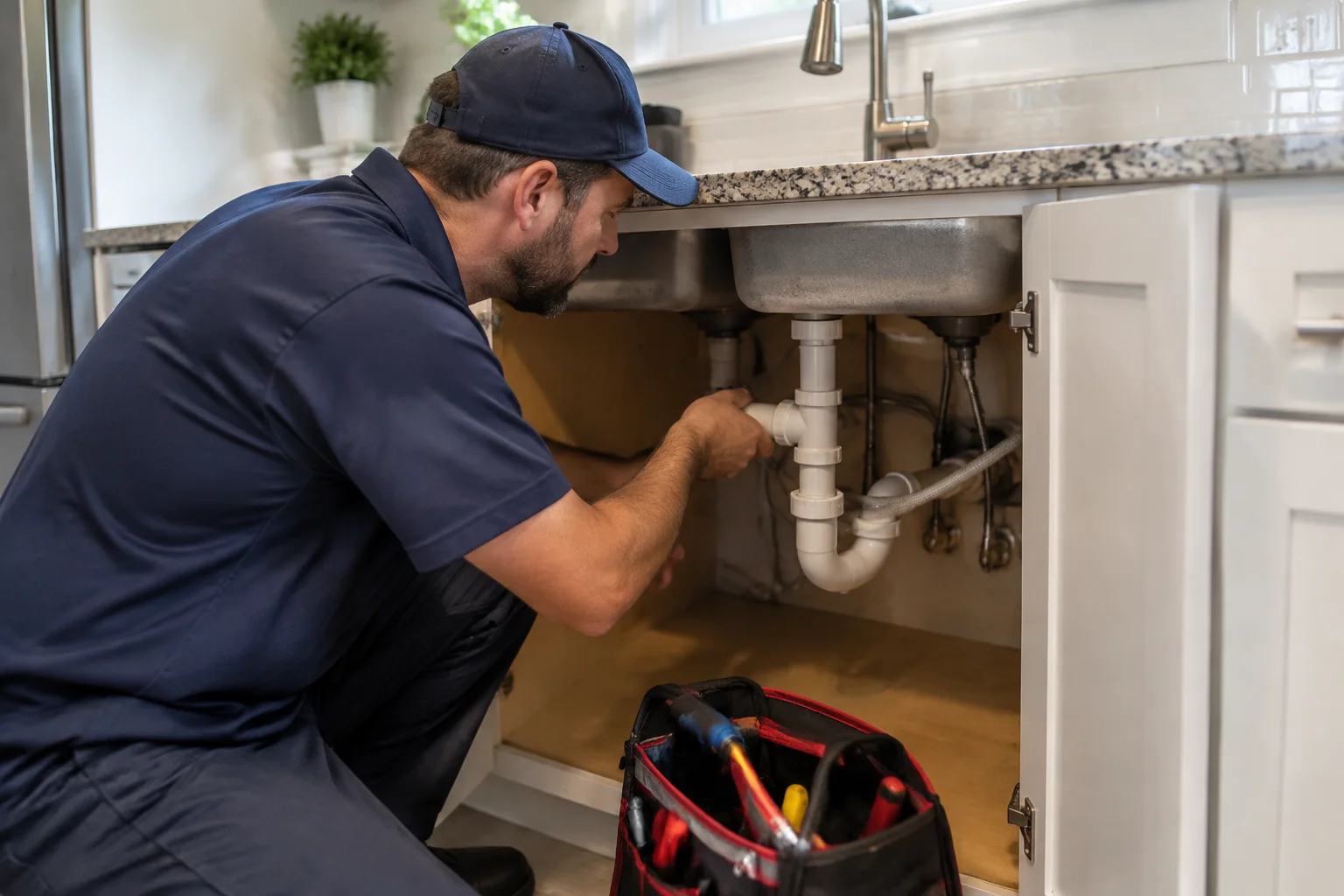
Step 4: Schedule professional water treatment service
Professional testing and service can identify whether the softener settings need adjustment, whether components need cleaning or replacement, and whether your clean water system needs additional filtration. That is often the fastest path back to better drinking water and lower scale buildup.
Blue Mountain Beach homeowners protect their homes best by treating water treatment as part of routine maintenance. When water softening and filtration are kept in balance, daily life feels easier: better showers, better laundry, cleaner dishes, and appliances that do not fight mineral buildup every day.
Find Water Softening in Blue Mountain Beach, FL
If you need Water Softening in Blue Mountain Beach, FL, visit our local service page or contact A Superior Mechanical today.
For a broader look at whole-home water filtration, reverse osmosis, and water softener options, visit our water filtration, RO, and water softener page.
Map of Blue Mountain Beach, FL
Frequently Asked Questions
Why does my water softener work sometimes but not all the time in Blue Mountain Beach?
Intermittent performance is often tied to regeneration timing, brine tank operation, or a mismatch between your softener settings and current hardness. Salt bridging, clogged components, or changes in household water use can also cause hard water effects like scale buildup on faucets and soap that does not lather.
Does water softening fix bad taste, cloudy ice cubes, and unpleasant odors?
Water softening mainly targets hardness minerals. If you have metallic tasting water, cloudy ice cubes, or odor concerns, you may also need whole home water filtration and, for drinking water, reverse osmosis. This combination supports better drinking water for cooking and coffee.
How often should I schedule water softener service and maintenance?
Most homes benefit from periodic service that includes hardness testing, checking brine tank function, and verifying regeneration settings. If your family notices new hard water spots on glass, dry skin from hard water, or faster appliance wear, schedule service sooner.
Can reverse osmosis and whole home filtration be added to an existing softener?
Yes. Many homeowners pair water softening with whole home water filtration for cleaner everyday water and use reverse osmosis for drinking and cooking water. A water treatment specialist can recommend a setup that fits your plumbing and your priorities.
Related Articles
- How everyday plumbing wear and tear shapes sewer and drain problems in Blue Mountain Beach
- How Water Softening Protects Rosemary Beach Plumbing from Costly Water Damage
- Keeping Blue Mountain Beach Homes Ahead of Electrical Trouble
- A Practical Guide to Commercial Electric New Construction in Blue Mountain Beach, FL: Panels, Wiring, Outlets, and Prevention
Photo Gallery