Do not remove an electrical panel cover, touch exposed conductors, bypass protection, or repeatedly reset a fault. Keep clear of smoke, sparks, burning odors, hot equipment, standing water near electricity, and downed lines, then call qualified help.
During a showing in DeFuniak Springs, you flip on a bedroom light and hear a faint buzz. In the hallway, one switch controls nothing. The panel contains crossed-out labels, and an outlet in an added room feels loose when a plug is inserted. Each item might have a simple explanation, but together they suggest that the home's wiring history needs to be understood before closing.
Stop using any outlet, switch, or fixture that is hot, scorched, sparking, or producing a burning odor. Do not remove the panel cover or pull devices from the wall. Record what you noticed and schedule a licensed electrician during the inspection period. An electrical inspection checklist before buying a Northwest Florida home in DeFuniak Springs can reveal whether past changes were completed safely and whether the system can support the way you intend to use the property.
Begin With the Home's Electrical History
Ask when the electrical service, panel, major appliances, and HVAC equipment were installed or replaced. If rooms, porches, garages, workshops, or other spaces were added, ask whether the electrical work was permitted and inspected.
Missing paperwork does not prove the work is unsafe. It means the electrician should rely on visible conditions, testing, and circuit tracing. Receipts, permits, equipment manuals, and panel schedules can help connect present wiring to previous improvements.
Changes in receptacle style, switch color, wiring method, or circuit labeling may simply reflect repairs at different times, but they can also identify additions that need review.
Look at the Service and Main Panel Area
The service carries utility power to the home. Observe the meter area, service entrance, and panel from a safe distance. Do not touch utility connections or open an enclosure.
The panel should be accessible, secure, and dry. Look for rust, missing covers, open breaker spaces, scorch marks, buzzing, or unusual odor. Storage should not block access.
The main-breaker rating is not a complete measure of suitability. An electrician may perform a load calculation to compare service capacity with heating, cooling, cooking, water heating, laundry equipment, pumps, workshops, or planned additions.
Verify That Breakers Match Their Circuits
A circuit breaker interrupts power when current exceeds a safe level or when certain faults occur. It must be compatible with the panel and correctly sized for the connected wiring.
A licensed electrician can check for oversized breakers, improper breaker types, double-tapped connections, overheating, and loose conductors. A double tap generally means two wires are connected at a terminal that may be designed for one.
Do not assume a breaker is defective because it trips. It may be responding to an overload, short circuit, ground fault, damaged appliance, or deteriorated connection.
Check Accessible Receptacles and Switches
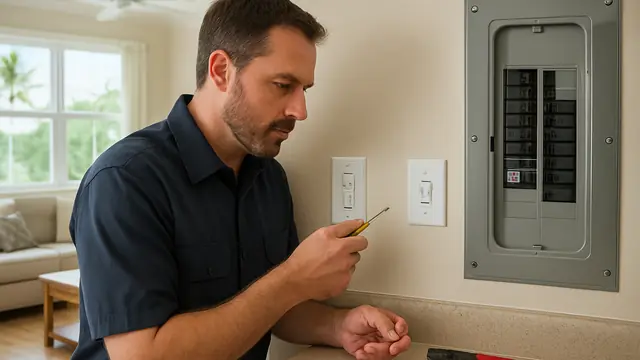
Walk through the home systematically. Note outlets that are loose, cracked, discolored, warm, buzzing, or unable to hold a plug. Identify switches that do not operate anything or behave inconsistently.
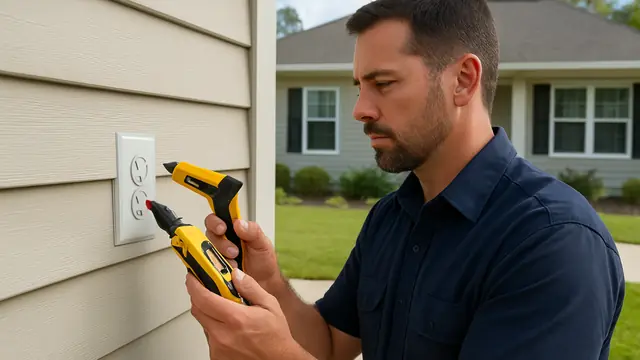
Three-prong receptacles do not automatically confirm grounding. Testing is needed to verify polarity, voltage, and a continuous grounding path. Reversed polarity means the hot and neutral conductors are connected incorrectly.
In kitchens, bathrooms, garages, exterior areas, and other locations near water, check for GFCI protection. A GFCI device shuts off power when it detects electricity leaving its normal path.
Investigate Added Rooms and Detached Structures
If the property includes an enclosed porch, finished garage, workshop, storage building, pump, or detached structure, ask how power reaches it. Look for permanent wiring methods, proper enclosures, visible disconnects where needed, and protection from physical damage.
Extension cords should not pass through walls, ceilings, doors, or windows as permanent wiring. Open junction boxes, unsupported cable, taped splices, and loose conductors are warning signs.
An added space may need only proper boxes, secured cable, additional protection, or replacement of an improvised feed with one correctly installed circuit.
Evaluate Lighting, Fans, and Appliances
Operate fixtures and included appliances normally. A light that flickers only when its bulb is moved may have a fixture problem. Several lights that dim together may indicate voltage drop, a loose connection, an overloaded circuit, or a service issue.
Ceiling fans should not wobble severely, scrape, or make electrical buzzing sounds. Switches and dimmers should not be excessively hot or discolored.
Ask whether the range, dryer, water heater, HVAC equipment, and other major loads have dedicated circuits. The electrician can confirm whether conductor size, breaker size, and equipment requirements are compatible.
Safe Checks a Home Buyer Can Perform
Turn normal switches, lights, fans, and appliances on and off. Test visible GFCI receptacles using their built-in buttons if permitted. Confirm that panels and major disconnects are accessible.
Write down when a symptom appears. Note whether lights dim when a pump, air conditioner, microwave, or dryer starts. Specific observations help the electrician reproduce the condition.
Ask whether any circuit has been intentionally left off and why. A breaker taped, marked "do not use," or left off should be explained before closing.
What the Buyer Should Not Do
Never remove the panel cover, meter cover, receptacle, switch, fixture canopy, or junction-box cover. Do not tighten connections or replace breakers during a buying inspection.
Do not repeatedly reset a breaker that trips. Do not defeat grounding, bypass GFCI protection, or install a larger breaker to stop nuisance trips.
Electrical Warning Signs That Require Prompt Action
Burning odor, smoke, arcing, melted plastic, hot devices, repeated breaker trips, loud buzzing, exposed conductors, water inside equipment, or shocks and tingling require prompt evaluation.
If active smoke or sparking is present, leave the area and notify the seller, property representative, utility, or emergency services as appropriate.
How a Licensed Electrician Diagnoses the System
The electrician evaluates service equipment, panels, grounding and bonding, visible wiring methods, receptacles, switches, fixtures, dedicated circuits, and added structures.
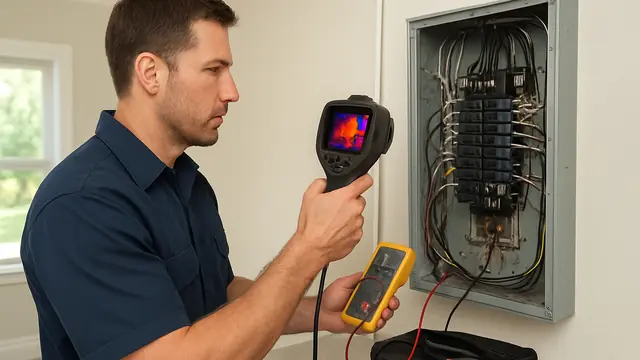
Testing may include voltage measurements, polarity checks, grounding verification, GFCI operation, circuit tracing, load calculations, and thermal imaging. Findings should distinguish immediate hazards, required repairs, and reasonable future upgrades.
Repair Options From Limited Corrections to Larger Work
The first repair option should be the least invasive one that resolves the condition safely. Examples include replacing a loose receptacle, correcting a connection, installing a cover, securing cable, relabeling circuits, or repairing a damaged section.
More involved options may include adding dedicated circuits, replacing improper feeds to added spaces, correcting grounding and bonding, replacing panel components, upgrading service capacity, or rewiring areas that cannot be safely repaired.
Cost depends on access, circuit length, panel condition, defect count, wall or attic access, permit requirements, detached-building distance, and hidden damage. A diagnostic report should define the scope before estimates are compared.
Prevention and Maintenance After the Purchase
Keep panels and disconnects accessible. Maintain an accurate circuit directory and save permits, invoices, and equipment records. Test GFCI devices according to manufacturer instructions.
Replace loose receptacles and broken covers promptly. Before adding workshop tools, an EV charger, a generator, a hot tub, or other major equipment, have an electrician evaluate capacity.
Homeowner FAQs
Does an older-looking panel automatically require replacement?
No. Condition, compatibility, capacity, available components, installation quality, and test results should guide the recommendation.
Why would a switch control nothing?
It may control a switched receptacle, abandoned fixture, attic equipment, or disconnected wiring. Circuit tracing can identify its function.
Is an ungrounded outlet always a whole-home rewiring problem?
No. The electrician should identify the affected circuit and evaluate safe correction options before recommending broader work.
Can a general home inspector diagnose repeated breaker trips?
A general inspector can document the symptom, but a licensed electrician is better equipped to test the circuit and identify the cause.
Should detached-building wiring be included?
Yes, when it is part of the property. The feed, disconnects, grounding, wiring method, devices, and visible condition should be evaluated.
Understand the Wiring Before Accepting the Home
An electrical inspection checklist before buying a Northwest Florida home in DeFuniak Springs turns unexplained switches, loose outlets, altered spaces, and panel questions into documented findings. Some concerns need a small repair. Others may require circuit work or capacity planning. The important step is learning which condition you have before the transaction is complete.
About this guide: This resource provides general homeowner education, not a remote diagnosis. Actual conditions, code requirements, equipment, and safe repair options must be evaluated at the property.