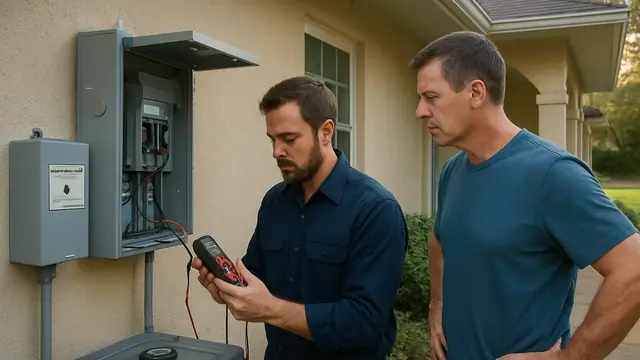
Do not remove an electrical panel cover, touch exposed conductors, bypass protection, or repeatedly reset a fault. Keep clear of smoke, sparks, burning odors, hot equipment, standing water near electricity, and downed lines, then call qualified help.
You start a power tool in the garage, switch on a portable heater, or run several kitchen appliances at once, and the breaker shuts off. After a reset, everything appears normal until the same equipment is used again. The pattern may seem random, but the breaker is usually responding to a specific condition.
The breaker interrupts current before wiring or equipment overheats. Repeated trips can indicate overload, appliance failure, a loose connection, damaged wiring, moisture, or a worn breaker.
Turn off and unplug devices on the affected circuit. Reset the breaker once only when there is no heat, smoke, burning smell, buzzing, sparking, moisture, or visible damage. If it opens again, leave it off and have an electrician inspect the circuit.
Why Does My Circuit Breaker Keep Tripping in Freeport?
The answer depends heavily on the pattern. A breaker that trips only when several devices are used together often points to overload. One that trips the moment it is reset may indicate a short circuit or major fault. A breaker that opens when one appliance reaches a certain stage may be reacting to a failing motor, compressor, pump, or heating element.
Trips during damp conditions or outdoor equipment use can indicate a ground fault. Warmth, buzzing, or looseness may signal a connection or panel problem.
Common Reasons a Breaker Trips
The Circuit Is Overloaded
An overload occurs when several devices make the circuit carry more current than it was designed to handle.
A heater, microwave, hair dryer, or power tool may work alone but trip the breaker when another device is already running. Repeated overloads show the circuit is being pushed beyond capacity.
An Appliance Has an Internal Fault
A motor may bind, a heating element may deteriorate, insulation may fail, or an internal wire may loosen.
An appliance may work during part of its cycle and trip later, such as when a dishwasher heats or a refrigerator compressor starts. Stop using any appliance that repeatedly causes the trip.
There Is a Short Circuit
A short circuit occurs when current takes an unintended path with very little resistance. Current rises quickly, and the breaker often trips immediately.
A damaged cord, crushed cable, failed receptacle, loose wire, or internal equipment problem may create a short. The fault may be concealed, so repeated resetting is unsafe.
A Ground Fault Is Present
A ground fault occurs when electricity leaves its intended path and moves toward grounded metal, water, or another conductive material. GFCI devices are designed to interrupt power when they detect this type of leakage.
Wet equipment, damaged cords, failed pumps, or moisture inside a connection can cause ground faults. Treat water-related trips seriously.
A Loose Connection Is Producing Heat
Loose electrical connections increase resistance and can generate heat or arcing. The circuit may operate for a while before the breaker trips.
Clues include flickering, buzzing, discoloration, or warmth at a receptacle, switch, breaker, or appliance connection.
The Breaker Is Worn or Improperly Connected
Breakers can fail because of wear, a damaged panel connection, or incorrect compatibility, but testing should confirm this.
Replacing the breaker without checking the circuit can leave an overload or wiring fault unresolved.
Safe Checks You Can Make
- Identify what lost power and note whether the trip happened immediately or after several minutes.
- Unplug portable devices and turn off accessible equipment. Move the breaker fully to the OFF position before moving it back to ON.
- Reconnect devices one at a time. If one item triggers the trip, disconnect it and stop testing it.
- Check nearby GFCI receptacles. Reset one only when the area is dry and the device is not cracked, loose, discolored, or warm.
What Homeowners Should Not Attempt
Do not replace a tripping breaker with a larger one. The breaker rating is selected to protect the circuit wiring. A larger breaker can allow the conductors to carry unsafe current without opening quickly enough.
Do not remove the panel cover, touch internal connections, bypass AFCI or GFCI protection, or open hardwired equipment unless you are qualified.
Never tape a breaker on, hold it in position, or reset it repeatedly. Do not create permanent workarounds with extension cords or adapters.
Signs That Require Prompt Electrical Service
- Leave the circuit off if you smell burning insulation, see smoke or sparks, hear crackling, find melted plastic, or notice dark marks around an outlet, switch, appliance, or panel.
- Urgent signs include heat, shocks, tingling, water near equipment, failure to reset, or tripping with almost nothing connected.
- If there is active fire or smoke, leave the home and call emergency services. Do not touch the panel or use water on an electrical fire.
How a Licensed Electrician Diagnoses the Problem
The electrician reviews whether the issue occurs with one appliance, after a delay, during rain, or under heavy use.
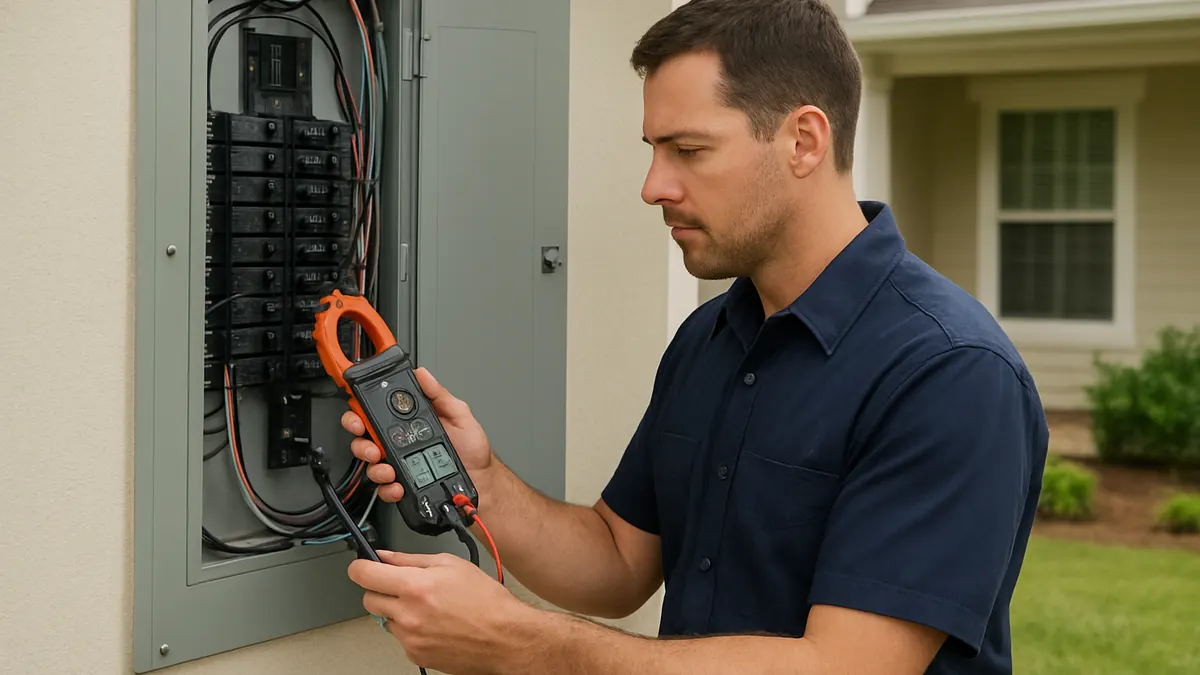
The circuit may be mapped to identify everything it serves. The electrician can verify the breaker rating and compatibility, measure current, inspect accessible receptacles and connections, and isolate connected equipment.
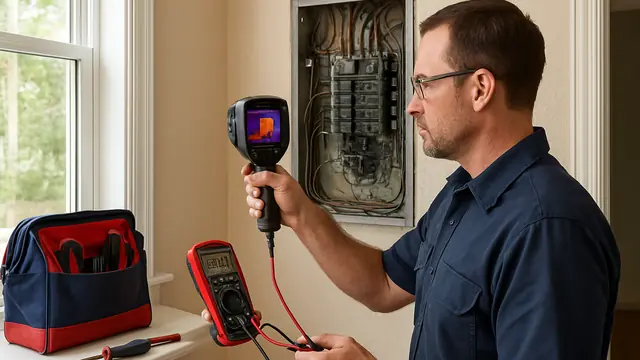
Electrical and thermal testing may reveal grounding, insulation, leakage-current, or heat problems. Intermittent faults may require observation during normal operation.
Repair Options From the Least Invasive Upward
The simplest solution may be removing a damaged power strip, replacing a cord, repairing one appliance, or changing how portable equipment is used.
A failed receptacle, switch, GFCI, AFCI device, disconnect, or breaker may be replaced individually once diagnosis confirms the problem. Loose accessible connections may be repaired if the conductors and equipment remain in serviceable condition.
If normal use repeatedly overloads the circuit, installing a dedicated circuit may provide the correct long-term solution. A damaged section of cable may be repaired or rerouted without replacing all the wiring.
Panel repair, broader rewiring, or a service upgrade may be needed when inspection reveals extensive deterioration, unsafe alterations, damaged panel components, or insufficient capacity. Complete replacement should not be the first recommendation unless the findings support it.
Factors That Affect the Cost
Cost depends on whether the fault is in a portable appliance, receptacle, switch, concealed wire, breaker, or panel. It also depends on how easy the problem is to reproduce.
Access through finished walls or ceilings, circuit length, outdoor equipment, replacement-part availability, permit requirements, inspections, and finish restoration can affect the scope. Visible damage is generally easier to correct than an intermittent hidden fault.
Preventing Future Trips
- Avoid operating several high-demand devices on one general-purpose circuit. Use dedicated circuits where equipment instructions require them.
- Test GFCI and AFCI devices according to manufacturer directions. Replace damaged cords, loose plugs, cracked covers, and worn receptacles promptly.
- Keep exterior enclosures closed, address moisture, maintain an accurate panel directory, and review capacity before adding major equipment.
- Treat buzzing, flickering, warmth, or unexplained trips as early warnings.
Stop Resetting and Find the Cause
When a circuit breaker keeps tripping in Freeport, the breaker is giving you information that should not be ignored. Disconnect suspect equipment, record when the trip happens, and leave the circuit off after one failed reset. A licensed electrician can identify whether the cause is overload, appliance failure, moisture, damaged wiring, a loose connection, or a defective breaker and recommend the smallest safe repair that resolves it.
About this guide: This resource provides general homeowner education, not a remote diagnosis. Actual conditions, code requirements, equipment, and safe repair options must be evaluated at the property.