Do not remove an electrical panel cover, touch exposed conductors, bypass protection, or repeatedly reset a fault. Keep clear of smoke, sparks, burning odors, hot equipment, standing water near electricity, and downed lines, then call qualified help.
A guest messages that the living-room television suddenly shut off, the patio receptacle is dead, and the laundry breaker has tripped twice. The property manager resets the breaker, but it trips again as soon as the dryer starts. At that point, the problem is no longer a simple inconvenience.
The likely causes include an overloaded circuit, a defective appliance, a loose electrical connection, a failed GFCI, or damage at an outlet, switch, breaker, or exterior device. The safest immediate action is to unplug portable equipment, stop using the affected appliance, and leave the breaker off after a second trip. Do not keep resetting protection, remove covers, or ask guests to test damaged equipment.
Vacation rentals may work during a quick turnover and fail only under full occupancy. Recognizing the most common electrical problems for vacation rentals in Freeport helps owners protect guests and decide when professional diagnosis is necessary.
Common Electrical Problems in Freeport Vacation Rentals
Appliances That Trip a Breaker
When a breaker trips after one appliance starts, the appliance may have an internal fault or the circuit may already be overloaded. Unplug the suspected device. Do not test it elsewhere if it smells burned, sparks, feels hot, or has a damaged cord.
Circuits That Are Overloaded During Full Occupancy
An overload occurs when equipment demands more current than the circuit can safely carry. It may appear only under full occupancy. The solution is not a larger breaker; an electrician must determine whether loads should be redistributed, a dedicated circuit is needed, or another fault exists.
GFCI Outlets That Trip Repeatedly
A GFCI shuts power off when current takes an unintended path. Repeated trips may come from moisture, a damaged appliance, exterior equipment, wiring, or a worn device. One GFCI can protect several outlets.
Loose Outlets, Switches, and Connections
A receptacle that no longer grips plugs firmly should be replaced. Loose contact can create heat or arcing. Crackling switches, outlets that work only when a plug moves, or lights that flash when a switch is touched also indicate possible loose connections.
Flickering Lights in One or Several Rooms
A single flickering lamp may need a new bulb, a different bulb type, or a new socket. Flickering across several rooms can indicate a loose connection, overloaded circuit, panel issue, or electrical service problem.
Note whether flickering begins when a large appliance starts. Unusual brightening and dimming requires prompt evaluation.
Exterior Receptacle and Lighting Failures
Outdoor equipment depends on intact boxes, gaskets, covers, and protective devices. A cracked cover or failed seal can allow moisture into a receptacle or fixture.
An exterior problem may trip an indoor GFCI. Keep wet, loose, corroded, or damaged devices out of service.
Damaged Power Strips and Extension Cords
Power strips can be overloaded before a wall breaker trips. Remove cords or strips with cracked insulation, loose connections, bent prongs, scorch marks, or heat damage. Extension cords should not become permanent wiring.
Safe Checks the Homeowner Can Perform
Ask which rooms and devices were affected and what was running when the problem began. Unplug portable equipment on the affected circuit.
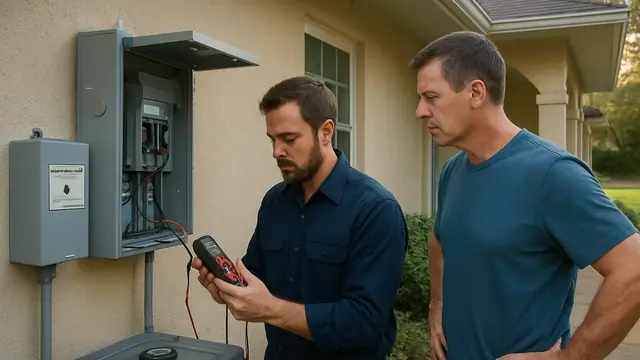
Look at the panel without removing its cover. A tripped breaker may rest between on and off. Move it fully off and then on once. If it trips again, leave it off and report which appliance or activity triggered it.
For a GFCI, unplug nearby devices and press reset once. Stop if the device will not reset, immediately trips, appears damp, or is damaged.
You may replace a bulb and visually inspect cords, faceplates, plugs, and covers. Stop for smoke, heat, odor, sparking, exposed wiring, or water.
What the Homeowner Should Not Attempt
Do not remove the electrical panel cover, touch internal components, replace a breaker, or install a higher-amperage breaker. The existing wiring may not safely carry additional current.
Do not bypass GFCI protection, remove grounding prongs, use adapters that defeat grounding, or tape a loose plug into an outlet. Do not open a wet exterior fixture or attempt to dry energized equipment.
Do-it-yourself repairs can leave incorrect polarity, loose terminals, or missing grounding hidden behind a working device.
When the Problem Becomes Urgent
Smoke, flame, burning odor, visible arcing, melted plastic, electrical shocks, a hot outlet or panel, and loud buzzing require immediate action.
Turn off the circuit only when the panel is safely accessible. Call emergency services for an active fire.
Water entering a panel, outlet, fixture, or service component is urgent. So are repeated immediate breaker trips, widespread flickering, unusual brightness changes, or partial power loss across unrelated rooms.
Do not delay merely because an intermittent symptom stops.
How a Licensed Electrician Diagnoses the Problem
The electrician starts with the history: affected rooms, equipment in use, timing, previous trips, moisture exposure, and recent appliance or renovation changes.
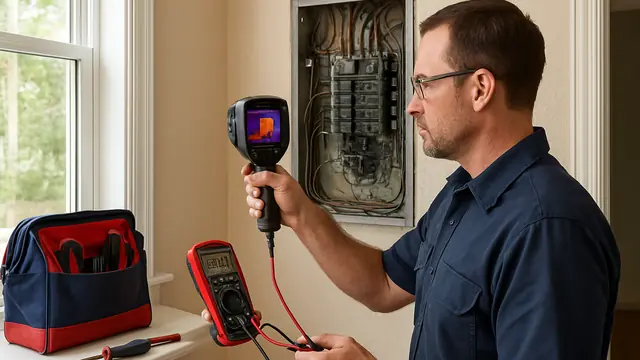
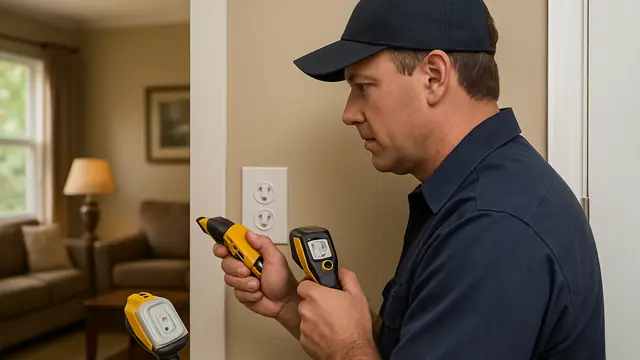
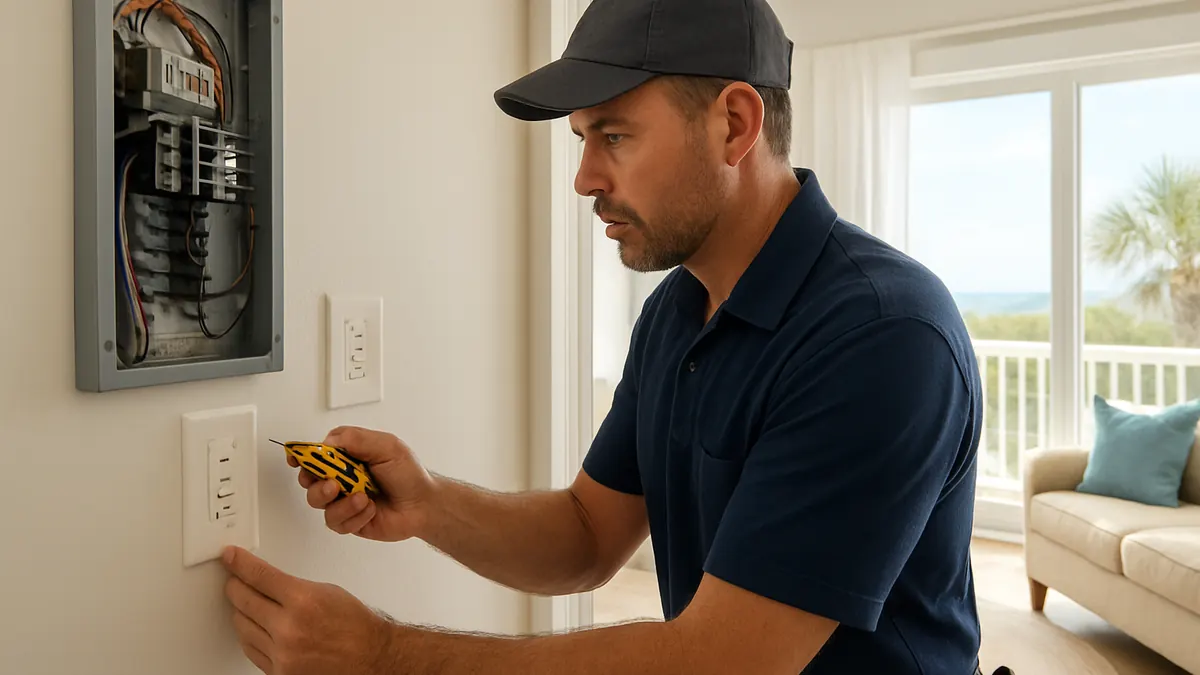
Testing can include voltage, current, grounding, polarity, GFCI response, and breaker operation. With power off, the electrician may inspect outlets, switches, junction boxes, exterior devices, and panel connections.
The diagnosis should separate appliance, circuit, panel, and service problems.
Repair Options Beginning With the Least Invasive
The least invasive repair may be removing a defective appliance, replacing a damaged cord, installing a correct bulb, or replacing one failed GFCI, receptacle, switch, fixture, or breaker.
- A loose connection may be repaired at an accessible device or junction box. Damaged exterior equipment may need a new weather-resistant receptacle, cover, gasket, box, or fixture.
- If normal guest use overloads a circuit, equipment may be relocated or a dedicated circuit added for a high-demand appliance.
- More extensive work may include damaged cable, panel connections, service repairs, or capacity upgrades. Full replacement should follow documented need.
Factors That Affect Electrical Repair Cost
Cost depends on the failed component, access to the fault, number of circuits involved, and time needed to reproduce the symptom. A visible damaged receptacle is usually easier to diagnose than an intermittent fault behind finished surfaces.
Other factors include panel type, device requirements, permits, exterior access, and occupied dates. The same tripping symptom can come from a simple appliance issue or involved wiring damage.
Prevention and Maintenance for a Vacation Rental
Include electrical items on every turnover checklist. Test GFCIs according to manufacturer instructions, operate lights and switches, and inspect outlets, exterior covers, cords, and power strips.
- Keep the panel directory readable. Label property-owned switches and controls so guests are less likely to disconnect essential equipment accidentally.
- Replace worn appliances and cords promptly. Provide convenient charging locations rather than relying on extension cords.
- Log breaker trips, flickering, dead outlets, and failed devices by room. Repeated reports from one location should be investigated.
- Request an electrical review after renovations, major appliance changes, or repeated full-occupancy problems.
Choose a Safe, Documented Repair
The most common electrical problems for vacation rentals in Freeport include appliance faults, overloaded circuits, repeated GFCI trips, loose receptacles, flickering lights, and damaged exterior equipment. Owners can unplug devices, perform a visual inspection, and attempt one safe reset. Repeated trips, shocks, heat, odor, water exposure, or unstable power require a licensed electrician.
About this guide: This resource provides general homeowner education, not a remote diagnosis. Actual conditions, code requirements, equipment, and safe repair options must be evaluated at the property.