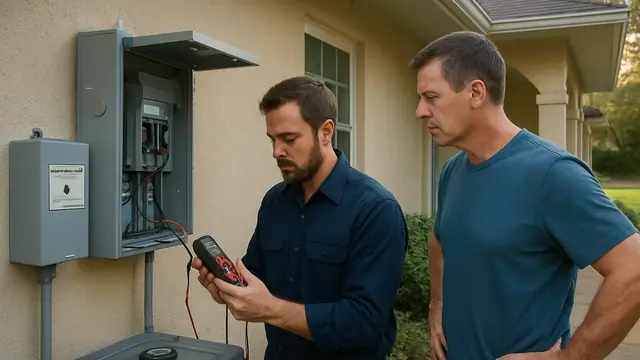
Do not remove an electrical panel cover, touch exposed conductors, bypass protection, or repeatedly reset a fault. Keep clear of smoke, sparks, burning odors, hot equipment, standing water near electricity, and downed lines, then call qualified help.
You come home after a storm or brief outage and discover several small problems at once. The Wi-Fi router has lost its settings, the smart thermostat is offline, and the refrigerator display is flashing. No breaker appears tripped, but the timing suggests that a brief voltage surge may have moved through the electrical system.
The safest immediate action is to stop using any device that smells burned, feels hot, or makes unusual sounds. Unplug portable electronics only if the outlet and area are dry and undamaged. Do not remove the electrical-panel cover. Whole-home surge protection is installed at or near the main panel, where it can limit excess voltage before it reaches household equipment.
What Does Whole-Home Surge Protection Actually Protect?
A whole-home surge protective device helps protect appliances, electronics, HVAC controls, lighting systems, and other connected equipment from short-duration voltage spikes.
That protection may include refrigerators, dishwashers, washers, dryers, ovens, televisions, computers, internet equipment, garage-door openers, smart switches, thermostats, pumps, and equipment with electronic control boards.
A surge protector reduces risk by diverting or limiting excess energy. It cannot guarantee protection from a direct lightning strike, and surge energy may enter through communication wiring as well as the electrical service.
Why a Brief Surge Can Cause Lasting Damage
Surges may last too briefly to notice, yet they can still stress sensitive electronics. A large event may destroy a circuit board immediately, while repeated smaller surges can contribute to error codes, lost programming, intermittent operation, or premature failure.
Standard circuit breakers are not designed to provide full surge protection. Breakers respond to overloads, short circuits, and certain fault conditions. A voltage spike may pass through too quickly to trip the breaker.
Common Causes of Electrical Surges
Lightning Near the Property
Lightning does not have to strike the house directly. A nearby strike may place high voltage on utility lines, communication wiring, or the ground. A whole-home protector can reduce surge energy entering through the electrical service, though it cannot guarantee protection from every lightning event.
Utility Switching and Outage Restoration
Utility switching or power restoration can create brief disturbances that reset or damage electronics.
Air Conditioners, Pumps, and Other Motors
Large motors can create smaller internal surges as they start and stop. Air-conditioning equipment, refrigerators, pumps, and workshop tools are common examples.
Loose Neutrals or Damaged Connections
A loose neutral or failing service connection can create abnormal voltage that resembles repeated surge activity. This is a potentially serious defect that requires diagnosis. Installing a protector without correcting the connection will not solve the underlying problem.
Safe Checks You Can Perform
Record when the problem began, what equipment was affected, and whether a storm or outage occurred. Note whether the issue is limited to one room or appears on several circuits.
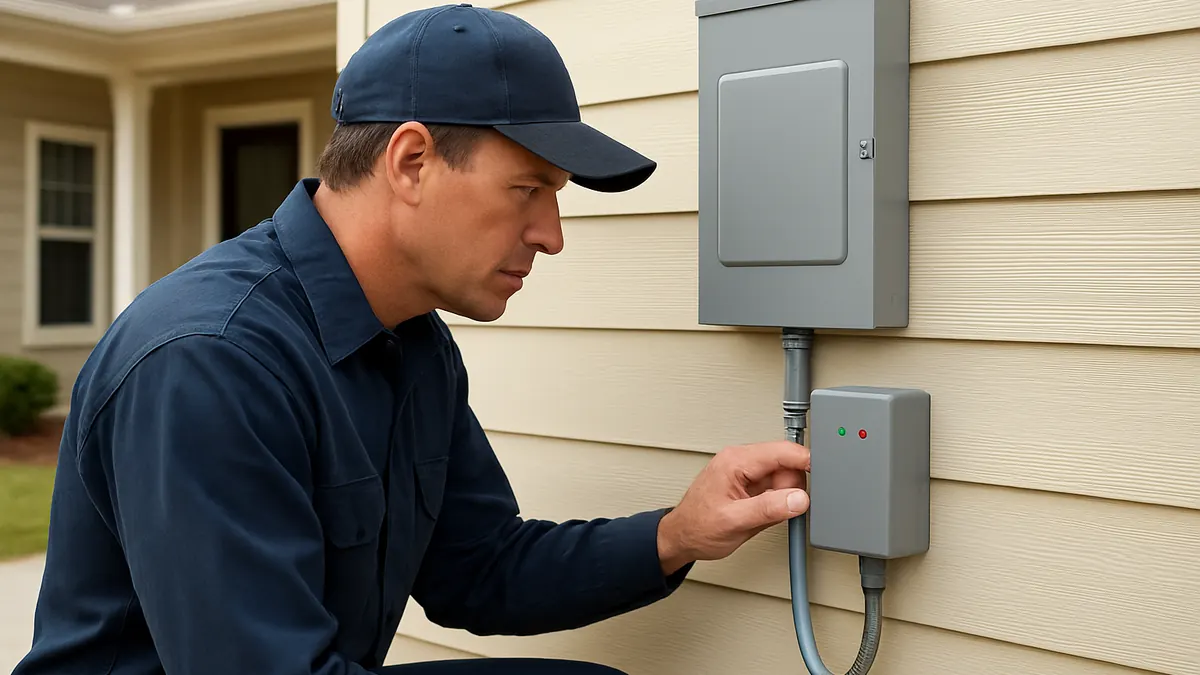
If a whole-home protector is visible, observe its status lights without touching the panel. A missing or warning light may indicate that protection has been lost, but indicator designs vary.
Check plug-in protectors for cracks, melting, heat, or failed status lights. Confirm that the unit is labeled for surge protection.
Blinking clocks, lost settings, repeated resets, and error codes are useful clues, but an electrician must rule out wiring faults and equipment defects.
What You Should Not Attempt
Do not remove the panel cover, loosen electrical connections, or touch service conductors. Some parts can remain energized even when the main breaker is switched off.
Do not purchase a panel device and install it in an empty breaker space without professional evaluation. Compatibility, breaker sizing, conductor routing, grounding, bonding, and manufacturer instructions all matter.
- Do not replace a tripping breaker with a larger breaker. The existing breaker is sized to protect the circuit wiring.
- Do not repeatedly reset a breaker that trips immediately. A damaged appliance, short circuit, or wiring fault may be present.
- Do not assume surge protection will correct flickering lights, overloaded circuits, loose wiring, or low voltage. Those problems require separate diagnosis.
Signs That Make the Problem Urgent
Call a licensed electrician promptly when you notice burning odors, smoke, melted plastic, scorch marks, buzzing, crackling, arcing, or heat at the panel, outlets, switches, or appliance connections.
Lights that become unusually bright in one area while dimming in another may indicate a loose neutral. That condition can place damaging voltage on household circuits and should be addressed quickly.
Several devices failing at the same time, shocks from appliances, breakers that will not stay on, or a whole-home protector showing failed status also require prompt attention. If smoke or fire is present, leave the building and call emergency services.
How a Licensed Electrician Diagnoses the Problem
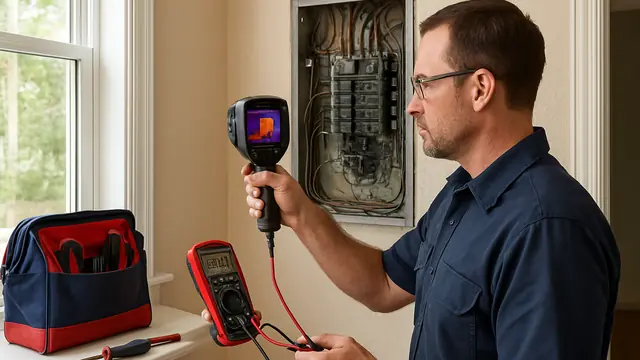
The electrician reviews whether the event followed lightning, an outage, generator operation, or a large appliance starting. Testing may include service voltage, neutral stability, grounding and bonding, and panel condition. The electrician looks for loose connections, overheating, damaged breakers, improper modifications, and electrical stress.
If surge protection is already installed, the electrician verifies the device rating, condition, connection method, and indicator status. Conductor length and routing are also important because a short, direct connection generally allows the device to divert surge energy more effectively.
Repair Options Beginning With the Least Invasive
The least invasive improvement is replacing worn plug-in protectors with listed devices for sensitive electronics.
If the home lacks panel-level protection, a compatible whole-home surge device can be installed at the main panel. The device may mount beside the enclosure or connect through designated breaker spaces.
When an existing protector has failed, replacement of that device may be all that is necessary. Poor routing or loose connections may sometimes be corrected without replacing the entire panel.
Grounding, bonding, neutral, or wiring defects should be repaired when found. A panel replacement should be recommended only when the panel is damaged, unsafe, severely deteriorated, overcrowded, or incompatible with needed equipment.
Factors That Affect Cost
Installation cost depends on the protector type and rating, panel design, available breaker space, access, conductor routing, and condition of the electrical system.
Additional work may be needed for grounding corrections, multiple panels, generator equipment, detached structures, or communication-line protection.
Prevention and Maintenance Guidance
Check the whole-home protector's status indicators periodically and after major storms or outages. A surge device can wear out after one severe event or many smaller events.
Use point-of-use protectors for valuable electronics. Replace units that are damaged or no longer show active protection. Avoid overloading strips or plugging one strip into another.
Have recurring flickering, frequent breaker trips, unexplained resets, or repeated electronic failures evaluated before more equipment is damaged.
Protecting Your Freeport Home
What does whole-home surge protection actually protect in Freeport? It helps reduce damaging voltage reaching appliances, HVAC systems, electronics, lighting controls, and other connected equipment. It cannot replace proper wiring, grounding, bonding, or professional repairs, but it provides an important layer of protection against brief electrical spikes.
If several devices failed after one event, the home has no known panel-level protection, or an existing protector no longer shows active status, the next step is a licensed electrical evaluation.
About this guide: This resource provides general homeowner education, not a remote diagnosis. Actual conditions, code requirements, equipment, and safe repair options must be evaluated at the property.